Where to Stay in Guiyang: A Neighborhood-by-Neighborhood Guide
Which part of Guiyang to book, from the Nanming riverside to Guanshanhu, with honest trade-offs on price, food, metro access and day-trip logistics.
For years, hardly anyone wrote about Guizhou. That is changing fast. Guiyang keeps surfacing for the same handful of reasons: it is the gateway to Huangguoshu, the biggest waterfall in Asia, its summers stay mild while the rest of China cooks, and the food scene is fermented, sour and spicy in a way that exists nowhere else in the country. What almost nobody settles is the practical question that decides the whole trip: which part of this hilly, high-rise city do you sleep in? Here is the version I would book, district by district, with the trains and the night markets factored in.
The short answer, for anyone deciding between trains and waterfalls: the best area to stay in Guiyang is Yunyan around Dashizi or the Nanming riverside near Jiaxiu Tower for a first, food-first visit, the blocks around Hebin Park for the cheapest bed by the river, and Guanshanhu only if you value the hotel over the neighborhood.
| Area | Best for | Typical price per night | Named pick |
|---|---|---|---|
| Yunyan (Dashizi, city center) | First-timers who want to walk everywhere | Mid-range | Novotel Guiyang Downtown (value), Kempinski Hotel Guiyang (splurge) |
| Nanming riverside | Food-first travelers, night markets | Mid-range | Sheraton Guiyang Hotel |
| Hebin Park blocks | Sleeping by the river on a budget | A fraction of the Sheraton's rate | Domestic chains only, bring a translation app |
| Guanshanhu | Business trips, space and quiet | Mid to high, strong value for the standard | Hyatt Regency Guiyang |
| Huaguoyuan | Tight budgets, local high-rise density | Budget | Cheap apartment-hotels, quality is uneven |
| Qingyan Ancient Town | A slow final night | Budget to mid | Guesthouses by the old town after the day crowds leave |
How Guiyang actually lays out
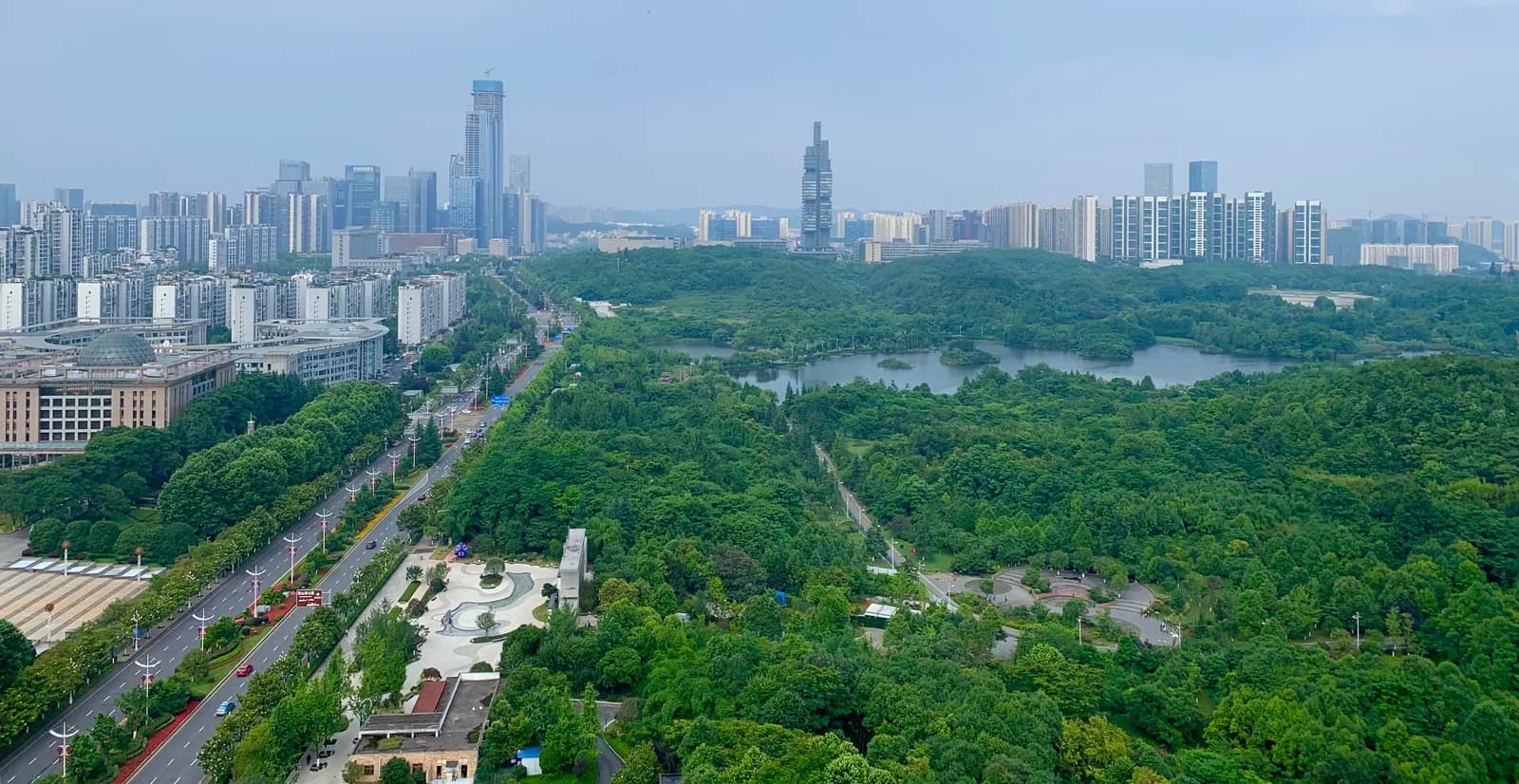
Guiyang is a mountain city, and the geography explains almost everything about where to stay. The old core is squeezed into a basin along the Nanming River: Yunyan district north of the river holds Dashizi, the Wenchang Pavilion and the walking streets, while Nanming district south of it holds Jiaxiu Tower, Qingyun Market and the Erqi Road food street. Qianling Park, the forested mountain full of wild macaques, sits right at the northwest edge of the center, close enough that locals treat it as a morning walk.
Everything newer spreads out from there. Guanshanhu, northwest of the center, is the showpiece district built around two lakes and the big-data industry that gave Guiyang its "China's Data Valley" nickname, and it is where the Hyatt Regency and the exhibition centers landed. Huaguoyuan, southwest of the center, is a forest of residential towers that claims to be one of the largest single housing developments in Asia. The metro stitches it together: Line 1 runs from Guiyang North railway station through the center, Line 2 connects the airport to downtown, and Line 3 passes through Huaguoyuan. If your hotel sits near a Line 1 or Line 2 station, the logistics of this city mostly solve themselves.
The day trips worth building in
Nobody comes to Guiyang only for Guiyang. The city works best as a comfortable base with three big excursions radiating out of it, and recent travelers are consistent about which three.
Three things worth booking
 The headline
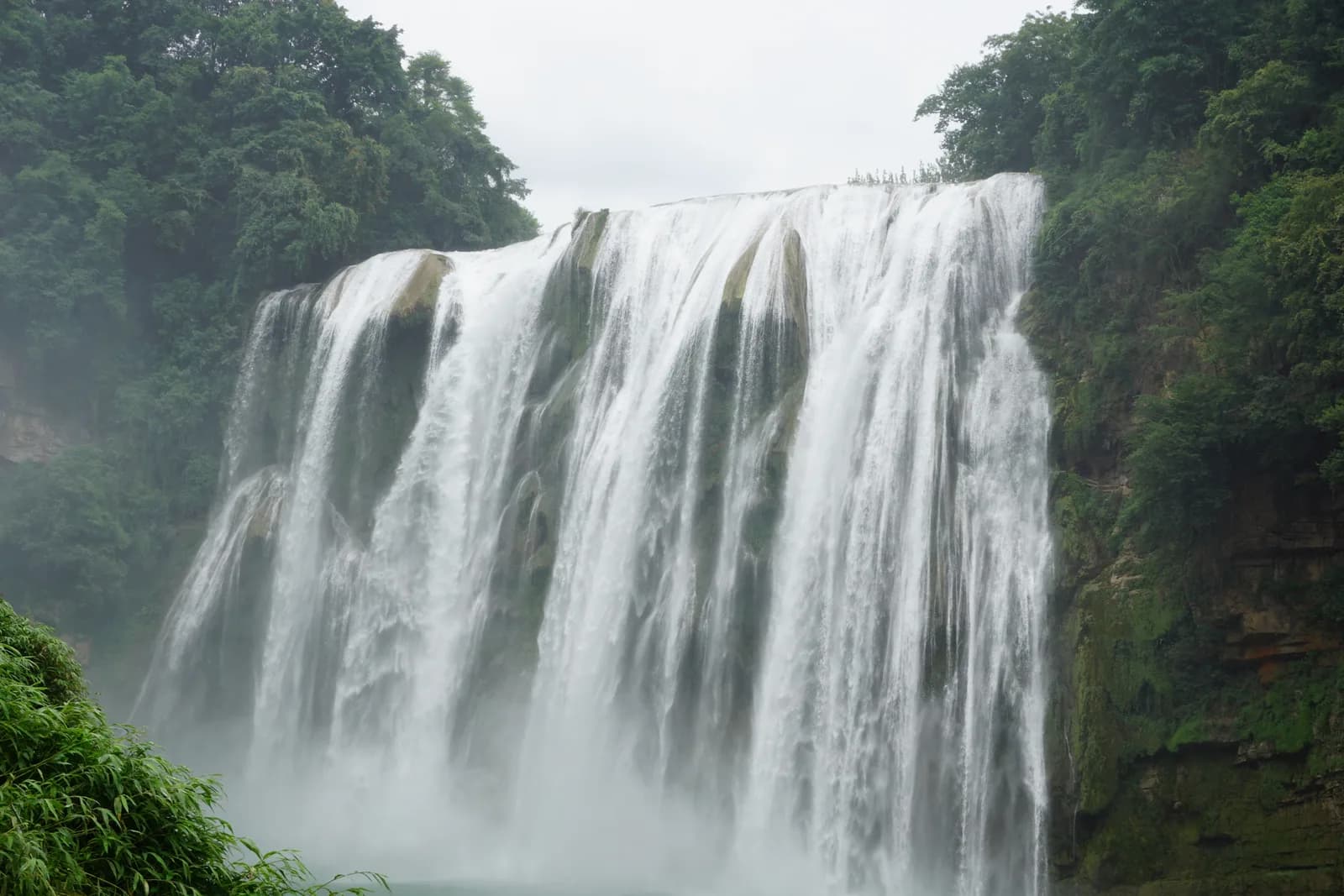
Huangguoshu Waterfall day trip
Asia's biggest waterfall, 30 minutes from Guiyang North by high-speed rail plus a shuttle. Book a tour or go independent, but leave by 8am, the park has three sections and needs the whole day.
Book this Worth the overnight
Xijiang Qianhu Miao Village
The largest Miao village in China, over 1,400 wooden households stacked up two hillsides. Doable in a day via Kaili South station, but the dusk view from the observation deck is why people stay the night.
Book this Easiest win
Qingyan Ancient Town and city classics
A 600-year-old walled garrison town about 40 minutes from downtown, often bundled with Qianling Park and Jiaxiu Tower on guided day tours. Come hungry, the food stalls are the point.
Book thisHuangguoshu is the one nobody skips, and the logistics matter more than they look. The high-speed train from Guiyang North to Anshun West takes about 30 minutes and costs around 47 yuan, then a shuttle bus or Didi runs the last 40 to 50 minutes to the ticket center for roughly 25 yuan. Entry is 160 yuan in peak season, March to November, with a winter list price of 150 yuan that provincial promotions sometimes cut further, and the ticket actually covers three separate scenic areas, with an internal shuttle at 50 yuan and an optional escalator down the gorge. Recent visitors keep repeating the same two tips: budget six hours or more, because the Doupotang and Tianxingqiao sections are worth as much as the main fall, and go in or just after the summer rains, when the water is at full volume. The last trains back to Guiyang run into the evening, so a day trip is comfortable if you start early. If you would rather not manage the transfers, a Huangguoshu day tour from Guiyang rolls transport and tickets into one booking.
Qingyan Ancient Town is the easy one, a Ming-dynasty garrison town of stone alleys and old gates about 40 minutes south of downtown, reachable by bus or a short Didi. Travelers rate it as much for eating as for walking: this is where you try the braised pig trotters the town is famous for, and the rose candy that one local family has been making for over a century. Xijiang Qianhu Miao Village is the bigger commitment and the bigger payoff. Take the high-speed train from Guiyang North to Kaili South, about 40 minutes for roughly 58 yuan, then a one-hour shuttle to the village gates. Entry is 100 yuan plus 20 for the internal sightseeing buses. It is doable as a long day, but the consistent advice in recent reports is to stay one night, because the thousand wooden houses lighting up at dusk is the image everyone came for.
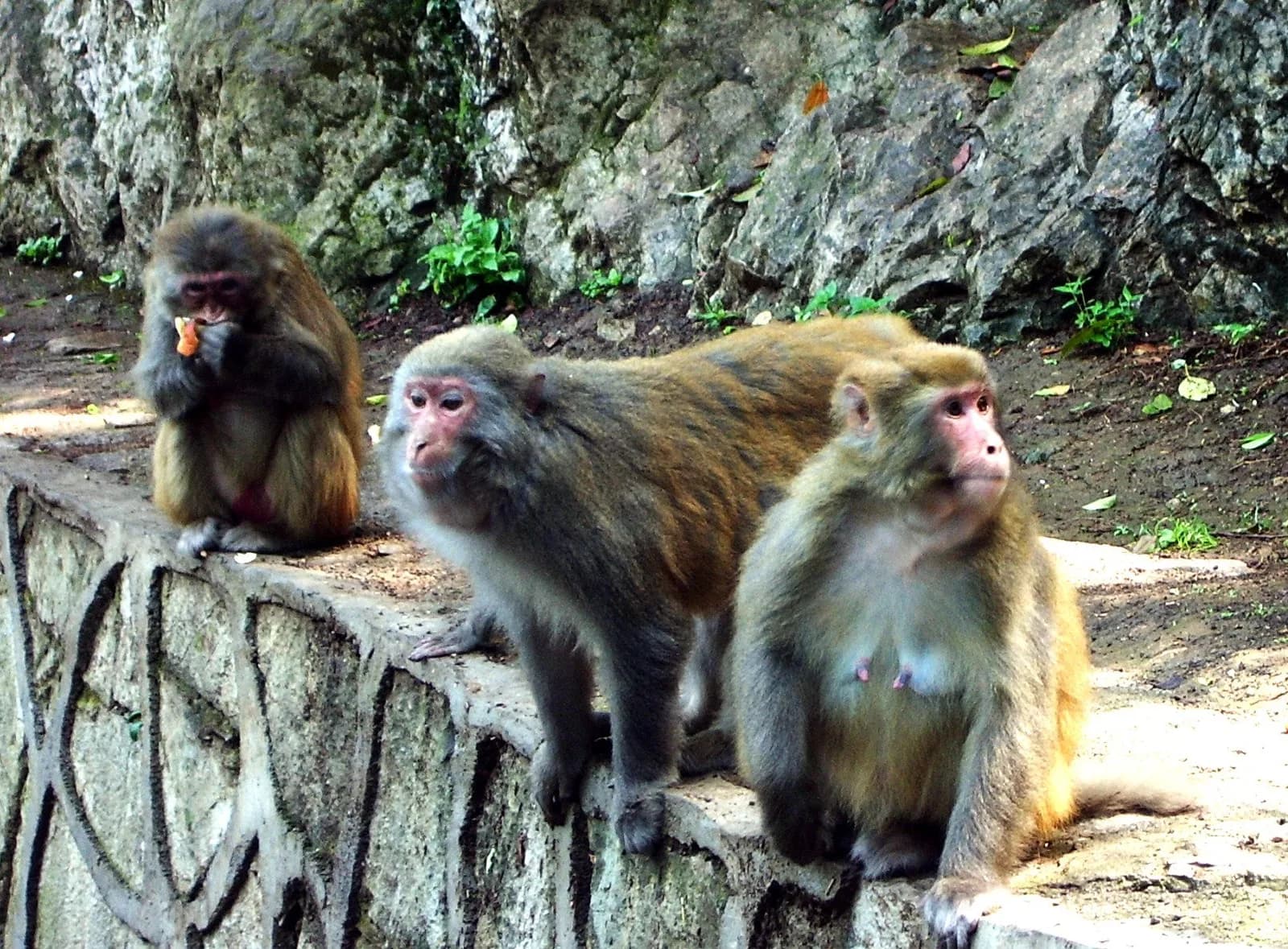
Inside the city, Qianling Park is the essential half-day. Entry costs a few yuan, the paths climb through genuine forest to Hongfu Temple at the top, and wild macaques own the middle stretch of the mountain. They are bold. Recent visitors repeat the same warning: keep food zipped away and hold your phone with intent, because the monkeys check bags. There is a cable car if the humidity wins.
What you are really here to eat
Guizhou food is the reason I want to film this province, and it is built on a flavor the rest of China mostly does not use: sour. Not vinegar sour, but fermented sour, the kind that comes from tomatoes and rice water left to work in a clay jar. Coming from a Japanese kitchen culture that treats fermentation as a craft, this is the part of the research that hooked me.
The dish to organize a first evening around is suan tang yu, sour soup fish, a Miao recipe of river fish simmered in that red fermented broth with wild herbs and chili. It turns up in every recent food report from the city, usually as hotpot, and the standard advice is to order it at a busy dedicated sour-fish restaurant rather than as a side dish elsewhere. Then work through the street tier: changwang noodles, the pork-intestine and blood-tofu breakfast bowl locals queue for; siwawa, translucent rice-flour wraps you stuff yourself from a tray of shredded vegetables and sour dressing; and lian'ai doufu, "love tofu," grilled cubes stuffed with chili and fished off charcoal at night stalls.
For the night-market crawl, two names dominate recent reports. Qingyun Market in Nanming is the polished one, a renovated food street that runs late and photographs well. Erqi Road, also in Nanming, is the older-school snack street where stalls from across the province crowd a few hundred meters. Staying within walking distance of these two is, honestly, half the argument for sleeping central, and it is the same logic I made for staying inside the ring in my Chengdu neighborhood guide: when the best thing a city does happens at 9pm, do not sleep a 30-minute Didi away from it.
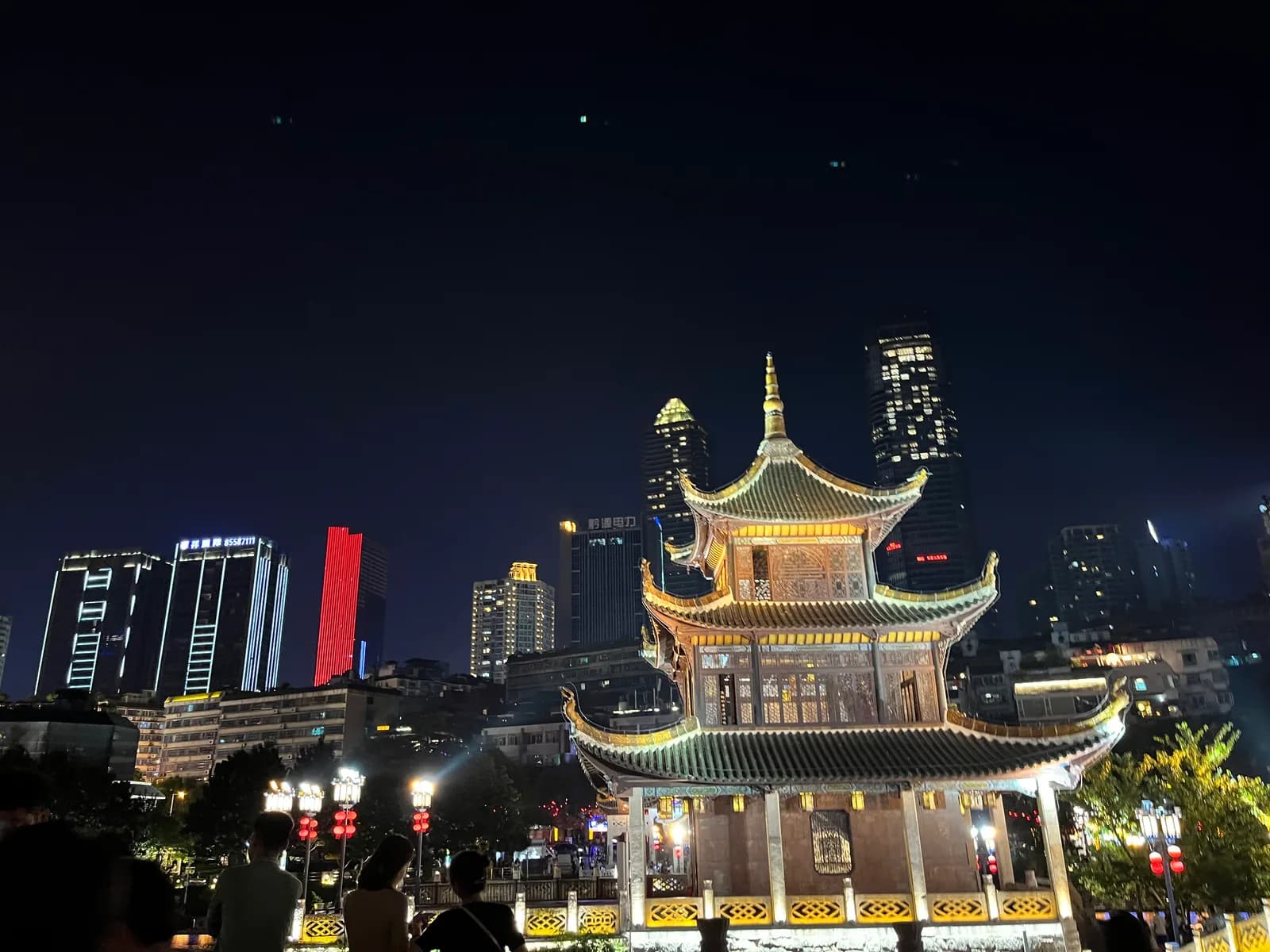
Where to stay in Guiyang, neighborhood by neighborhood
Here is the honest menu, ordered from easiest-for-first-timers to most-specialized, with the trade-offs recent guests keep flagging.
Three places to book in Guiyang
SplurgeKempinski Hotel Guiyang
The 53-story landmark of the central business district, a short ride from the Nanming River. Recent guests rate it around 9 on Booking.com and single out the breakfast; ask for a high floor for the view over the hills.
Check availability Best value
Novotel Guiyang Downtown
Two minutes on foot from the Grand Cross Square shopping crossroads, with big clean rooms and city views. Guests score the location 9.2; the recurring caveat is patchy English at the desk.
Check availabilityRiverside classicSheraton Guiyang Hotel
The long-standing five-star on the Nanming River, walkable to Jiaxiu Tower and the Qingyun and Erqi Road food streets. The pick if your evenings are built around the night markets.
Check availabilityYunyan: the old-city default
Yunyan, the old-city district north of the river, is the default for a first visit. You are around Dashizi and Grand Cross Square, near the Wenchang Pavilion and the walking streets, with Qianling Park a short ride away and metro Lines 1 and 2 crossing underneath you. Stay here if you want to walk out of the lobby into the thick of the city and eat your way home every night. The trade-offs are the usual central ones: traffic noise, dense crowds on weekends, and older buildings mixed in with the new. The Novotel Guiyang Downtown is the value pick recent guests keep naming here. Browse hotels in Yunyan if you want options.
Nanming riverside: where I would book
Nanming, the riverside district south of the water, is where I would personally book, and it is a close call. This is Jiaxiu Tower territory: the Ming pavilion glowing on the river after dark, Qingyun Market running late, Erqi Road a short walk away. Stay in Nanming if food is the organizing principle of your trip and you want the river promenade for a night walk. It is marginally less convenient than Yunyan for shopping and the Qianling side of town, and the area right around the train station is charmless, so aim for the river rather than the rails. The Sheraton Guiyang Hotel sits right on this stretch.
Hotels near Hebin Park: the budget riverside play
The quieter western end of Nanming has its own anchor: Hebin Park, the riverside park Guiyang has kept since 1942, where the hills come down to meet the water at Ruijin South Road. The blocks around it are thick with domestic mid-range and budget chains rather than international names, several of them freshly renovated, and hotels near Hebin Park are a reliable way to sleep on the river for a fraction of the Sheraton's rate. You get the park for a morning walk, the Hebin Park metro stop close by, and the Jiaxiu Tower stretch a short Didi away. The trade is the usual domestic-chain one: English at the desk will be close to zero, so this is the option for travelers who have their translation app and payment setup sorted. If that is you, it is quietly one of the best value-for-position moves in the city.
Guanshanhu district hotels: new, calm, and far from the food
Guanshanhu is the new Guiyang, the lake-and-parks district that the big-data industry built, and it only suits a specific traveler. Hotels here are newer, larger and often cheaper for the standard you get. The Hyatt Regency Guiyang is the district's flagship, sitting close to Guanshanhu Park with the Renaissance nearby, and it is consistently the best international five-star value in the city precisely because it is out here rather than downtown. The district works well if you have business at the exhibition center or simply want space and quiet. Stay in Guanshanhu knowing the trade: you are a metro ride or a 20 to 30 minute Didi from the old-city food streets, and the evenings around you are malls, not markets.
Huaguoyuan: the high-rise wildcard
Huaguoyuan is the wildcard that shows up in budget-minded reports. It is a vast forest of residential high-rises southwest of the center, anchored by the twin towers that light up at night, with endless cheap apartment-hotels and a Line 3 metro connection. Stay near Huaguoyuan if price per square meter is the priority and you do not mind crowds, uneven quality and a district that is pure local density rather than sightseeing. First-timers with a normal budget should stay central instead.
Qingyan Ancient Town: the slow final night
Qingyan Ancient Town, finally, is the slow option: spend your last night in a guesthouse by the old town after the day crowds leave. It is 40 minutes from the city and impractical as a base for everything else, but as a one-night wind-down it keeps coming up in recent itineraries.
| Zone | Best for | Vibe | Price tier | Watch out for |
|---|---|---|---|---|
| Yunyan (Dashizi) | First-timers | Dense, central, walkable | Mid | Noise, weekend crowds |
| Nanming riverside | Food-first travelers | Night markets, river walks | Mid | Station area is drab |
| Guanshanhu | Business, space seekers | New, calm, lakes and malls | Mid to high | Far from the food streets |
| Huaguoyuan | Tight budgets | High-rise local density | Budget | Uneven quality, crowds |
| Qingyan | A slow final night | Stone lanes after dark | Budget to mid | Impractical as a base |
If you want one line to stop the scrolling: book Yunyan or the Nanming riverside on a high floor, and let Guanshanhu be somewhere you visit for a lake walk, not somewhere you sleep.
The best hotels in Guiyang, name by name
Districts decide the shape of the trip, but in practice most international visitors end up choosing between the same three or four hotels in Guiyang, so here is the longer version on each. The usual honesty note applies: I have not slept in any of these, this is what recent guests keep reporting, cross-checked across the booking platforms.
Hyatt Regency Guiyang
The Hyatt Regency Guiyang is the hotel recent Western travelers rave about hardest, and the enthusiasm in 2025 reviews is striking: one guest called it one of the best hotel stays in a decade of traveling China. It is a big, polished machine of a property, 366 rooms including 57 suites, built into the Guiyang International Conference and Exhibition Centre complex in Guanshanhu, with an indoor pool, a spa and five restaurants, one of them dedicated to Guizhou cooking if you want a gentle introduction to sour soup before you brave the street version. Rates run well below what the same brand costs in eastern China, which is exactly why it keeps getting called the best five-star value in the city. The one thing to be clear-eyed about is the address: Guanshanhu Park is next door, but the old-city food streets are a metro ride or a 20 to 30 minute Didi away. Book it for the hotel, not the neighborhood.
Novotel Guiyang Downtown
The Novotel Guiyang Downtown is the opposite bet: a straightforward 243-room four-star where the location is the luxury. It sits two minutes on foot from Grand Cross Square in Yunyan, which puts the walking streets, the metro interchange and half the restaurants in this guide within a 15-minute radius, and guests score the location above 9. Recent reviews describe big, bright, well-soundproofed rooms and a front desk that goes out of its way, with mentions of free airport drop-offs and easy late check-outs. The recurring caveats are the honest kind: English at the desk is patchier than the brand suggests, and the odd guest has had to swap out of a room that smelled of smoke. For a first visit built around eating your way through the center, this is still the value pick I would start with.
Sheraton Guiyang
The Sheraton Guiyang is the old-guard five-star of the Nanming riverside, and its argument is entirely about position: Jiaxiu Tower is a five-minute walk, with Qingyun Market and Erqi Road close behind, so your evenings organize themselves. Recent guests praise the grand lobby and the long indoor pool, and reviews into early 2026 are consistent on the trade-off too: some rooms are showing their age, and you are paying for the address more than for the newest hardware in town. One booking quirk worth knowing: some platforms now list it under a longer local name, Sheraton Guiyang Guihang Hotel, but it is the same riverside tower. If the night markets are the point of your trip, this is still the name to beat.
Hotels elsewhere in Guizhou
If Guiyang is your gateway to the wider province, match the bed to the excursion rather than commuting everything from the capital. For a two-day run at Huangguoshu, sleep in Anshun, where a Four Points by Sheraton and a cluster of domestic hotels sit near the rail line to the falls. In Xijiang Miao Village, the guesthouses climbing the hillsides are the whole point, book one with a terrace facing the village and the thousand lights do the rest. Deeper southeast, Zhaoxing Dong village has guesthouses inside the old town itself, with Kaili as the practical railhead. But for hotel depth, English capability and transport, nothing else in Guizhou comes close to Guiyang's options, which is why almost every itinerary bases here and radiates out.
Getting there and getting around
Guiyang Longdongbao International Airport sits close to the city by Chinese standards, and Metro Line 2 runs from the terminal into downtown in about 30 minutes. There is even a high-speed railway station underneath the airport with direct trains toward Guiyang North and beyond, a genuinely unusual setup. If you are still choosing routes, it is worth comparing fares into Guiyang against flying to Chongqing or Kunming and taking the train in, since the high-speed network is the region's strength.
That network is also the better arrival story. Guiyang North station connects Chengdu and Chongqing in about 3.5 and 2 hours respectively, Guangzhou in around 4, and Kunming in under 3, which makes Guiyang an easy add-on to a Sichuan trip: pair it with a few days from my Chengdu guide and the train does the rest. In town, the metro is cheap and bilingual, Didi fills every gap for very little, and the one consistent friction in recent reports is language: English is thin outside the international hotels, so set up a translation app, Amap and Alipay or WeChat Pay before you land, not after.
A simple three-day base plan
Day one is the city. Qianling Park early, before the heat and the tour groups, macaques and Hongfu Temple included, then an easy afternoon around Dashizi and the Wenchang Pavilion, and Jiaxiu Tower after dark followed by Qingyun Market or Erqi Road for dinner. Day two is Huangguoshu, out on the early train from Guiyang North and back for a late sour-fish dinner. Day three is your choice of Qingyan for the stone lanes and pig trotters, or the longer run out to Xijiang Miao Village, which becomes an overnight if you can spare it. Every one of those days starts and ends better if your bed is central, which is the whole argument of this post in one paragraph.
When to go
Guiyang inverts the usual China calendar. Summer is the selling point: the city sits in the hills at around 1,100 meters, June to August averages roughly 24C and rarely crosses 30C, and domestic travelers treat it as a summer resort while Chongqing and Wuhan swelter. The trade is rain, which is frequent year-round and often arrives at night, and a winter that turns grey, damp and colder than the latitude suggests. Rain has an upside here: Huangguoshu is at its thundering best during and just after the summer wet. I would aim for May to October, dodge the National Day holiday week in early October when the whole province books out, and pack a light rain shell in any month.
Practical notes I would tell a friend
- Take the metro Line 2 from the airport instead of queueing for a taxi; it reaches the center in about half an hour.
- Book Huangguoshu entry and the Guiyang North to Anshun West train a day or two ahead in summer, and start by 8am.
- Keep snacks sealed and phones gripped around the Qianling Park macaques; they are practiced thieves.
- Order suan tang yu at a dedicated sour-fish restaurant, and ask for the fish weighed and priced before it goes in the pot.
- Set up Alipay or WeChat Pay, Amap and an offline translator before arrival, because English support drops fast outside international hotels.
- Carry a light rain layer every day, even under a blue morning sky.
- If Xijiang Miao Village is on the list, stay the night there rather than rushing it as a day trip.
- Treat Guanshanhu and Huaguoyuan as places to see the new Guiyang, not places to sleep on a short first visit.
Guiyang is opening up fast enough that any guide to it dates quickly, so if you have walked these districts recently and something has shifted, tell me and I will update it. But if you are booking now: sleep by the river or in Yunyan, give Huangguoshu a full day, and plan your evenings around a pot of sour fish. That is the trip this city is best at.
Frequently asked
Which area of Guiyang is best for first-time visitors?
The city center, either Yunyan around Dashizi and Wenchang Pavilion or the Nanming riverside near Jiaxiu Tower. Both put you on the metro, within walking distance of the night markets, and close to Qianling Park. The trade-off is density and traffic noise, so ask for a higher floor.
How many days do you need in Guiyang?
Three is the sweet spot. One day for the city itself, Qianling Park in the morning and Jiaxiu Tower plus the night markets in the evening, one full day for Huangguoshu Waterfall, and one for Qingyan Ancient Town or Xijiang Miao Village. Add a fourth night if you want to sleep in the Miao village, which recent visitors consistently say is worth it.
Can you do Huangguoshu Waterfall as a day trip from Guiyang?
Yes, and most travelers do. The high-speed train from Guiyang North to Anshun West takes about 30 minutes and costs around 47 yuan, then a shuttle bus or Didi covers the last 40 to 50 minutes to the ticket center. Leave by 8am, since the park has three scenic sections and needs six or more hours to see properly.
Is Guiyang easy to get around without Chinese?
Easier than its reputation suggests, but harder than Chengdu or Shanghai. The metro is bilingual and cheap, and Didi solves most other trips. Above ground, English is thin, including at hotel desks outside the international brands, so download a translation app and Amap before you land.
When is the best time to visit Guiyang?
Summer, which is unusual for China. Guiyang sits at altitude and markets itself as a summer resort city, with June to August averaging around 24C and rarely topping 30C. The catch is rain, which falls often and frequently at night, so pack a light rain layer whatever month you come.
What are the best hotels in Guiyang?
Four names dominate recent reports from international travelers: the Kempinski Hotel Guiyang in the central business district, the Novotel Guiyang Downtown by Grand Cross Square, the Sheraton Guiyang on the Nanming riverside near Jiaxiu Tower, and the Hyatt Regency Guiyang by Guanshanhu Park. All four have English-capable desks, which matters more here than in most Chinese cities. For cheaper rooms, the domestic chains around Hebin Park in Nanming put you by the river at a fraction of the price.
Is the Hyatt Regency Guiyang worth it?
Recent guests say yes, emphatically, with one caveat. Reviews from 2025 call it one of the best-run international hotels in China at the price, with big rooms, an indoor pool and spa, and five restaurants including a Guizhou one. The caveat is the address: it sits in Guanshanhu next to the exhibition centre, a metro ride or a 20 to 30 minute Didi from the old-city night markets, so it suits travelers who value the hotel over the neighborhood.
Which hotels are near Hebin Park in Guiyang?
The blocks around Hebin Park, at the quieter western end of Nanming where Ruijin South Road meets the river, are filled with domestic mid-range and budget chains rather than international names. They are one of the cheapest ways to sleep by the water in Guiyang, with the Hebin Park metro stop nearby and the Jiaxiu Tower stretch a short Didi away. Expect thin English at the desk and have a translation app ready.
Where should you stay in Guizhou outside Guiyang?
Match the bed to the excursion. For Huangguoshu, sleep in Anshun or by the falls themselves if you want two days there. For the Miao villages, stay overnight in Xijiang, where guesthouse terraces face the thousand lit-up houses. Deeper southeast, Zhaoxing Dong village has guesthouses inside the old town and Kaili works as a railhead base. For everything else, Guiyang has the province's deepest pool of hotels and the best transport, which is why most itineraries base there.
What food is Guiyang famous for?
Sour soup fish, suan tang yu, a Miao dish of fish simmered in a fermented tomato and rice-water broth. Beyond that, look for changwang noodles at breakfast, siwawa rice-flour wraps you fill yourself, grilled stuffed tofu, and the rose candy and braised pig trotters that Qingyan Ancient Town is known for.
More from the journal
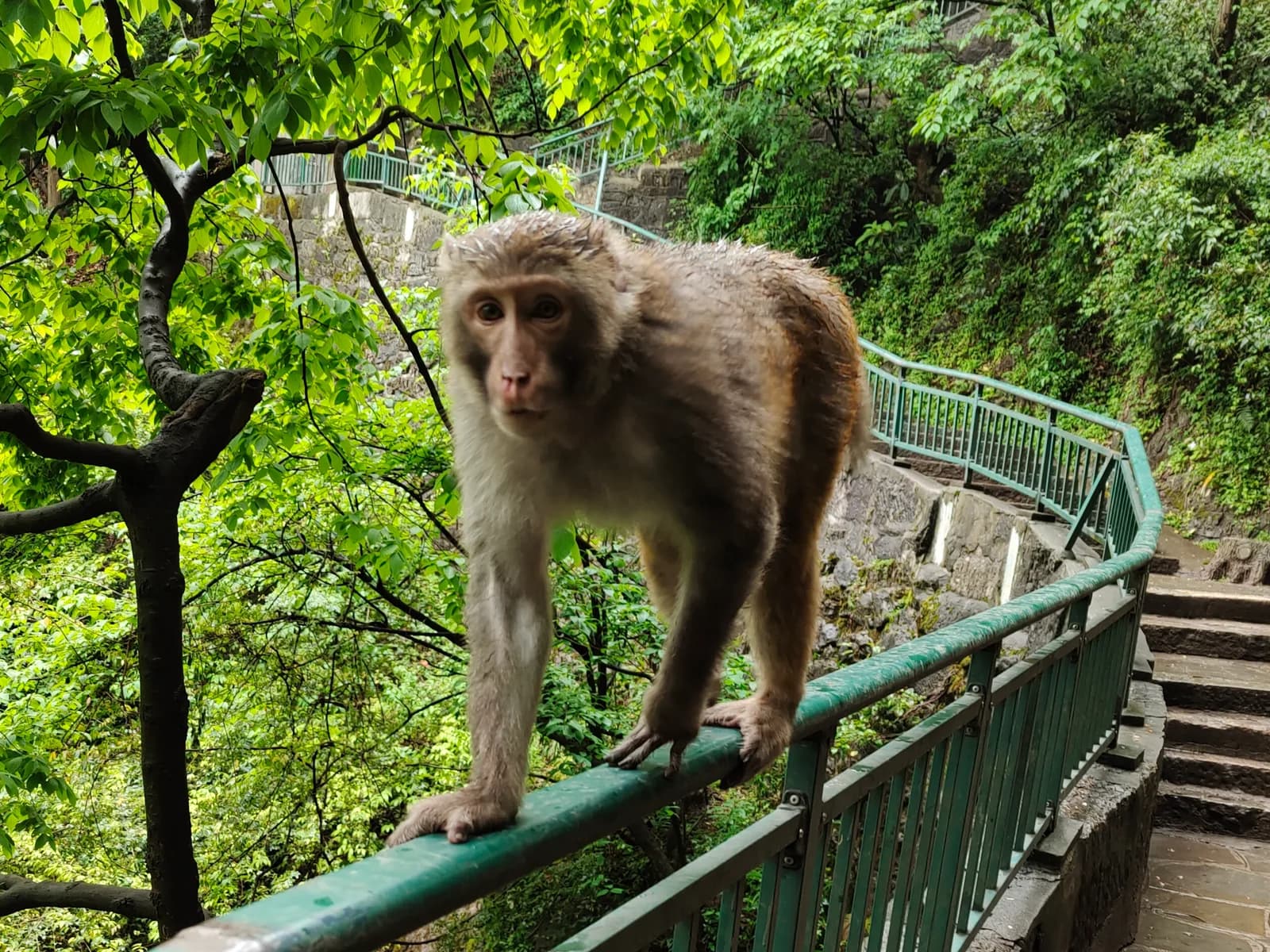
Qianling Park, Guiyang: The Macaques, Hongfu Temple and How to Visit Without Losing Your Snacks
Emeishan Day Trip from Chengdu: What One Day on Mount Emei Really Buys You (and When to Stay the Night)
Hong Kong to Shenzhen Border Crossings: All Seven Doors Compared, and Which One Your Day Actually Needs