Hong Kong to Shenzhen Day Trip: Border, Visas and What's Worth Crossing For
Most nationalities now cross visa-free, and dim sum runs a third of Hong Kong prices. The 2026 day-trip playbook: border, apps to install first, and what's worth it.
China's visa rules changed underneath the internet, and most of the English-language guides to a Shenzhen day trip have not caught up. They are still telling British travelers to budget an hour and a fistful of yuan for a visa on arrival at Lo Wu. As of 17 February 2026, British and Canadian passport holders do not need one. They walk through. The other thing those guides get wrong is the premise: they sell Shenzhen as a sightseeing destination with a list of landmarks, when the 6 million-plus trips Hong Kong residents made across that border every month in 2024 were overwhelmingly about food, spas and price. This is the version of the day trip I would actually book, starting with the only part that can genuinely ruin it.
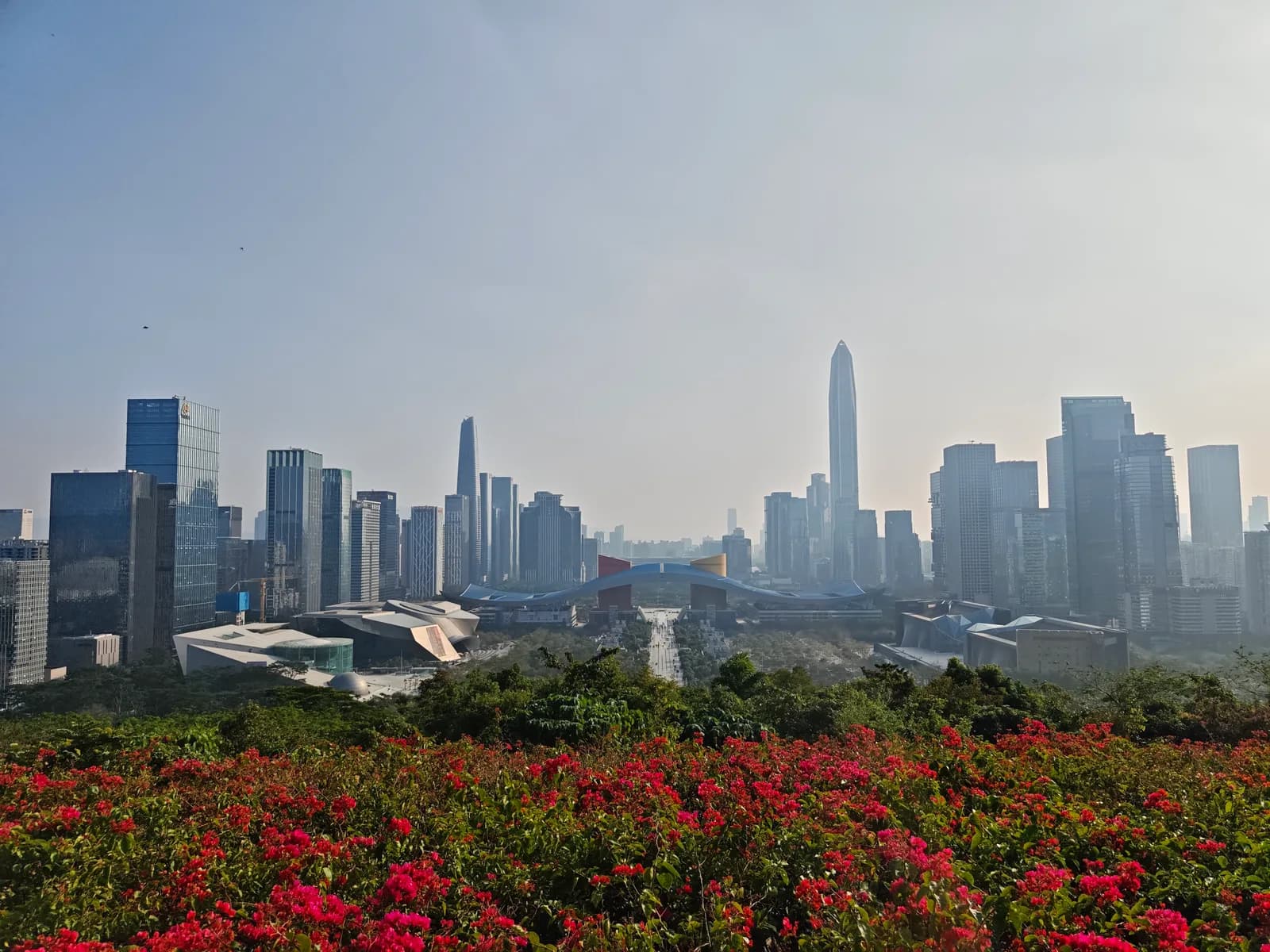
The visa situation in 2026
Start here, because everything else in the day depends on it. China's unilateral 30-day visa-free scheme now covers around 50 countries and territories, and roughly 79 nationalities have some form of visa-free access once mutual exemption agreements are counted. The scheme runs through 31 December 2026. The February 2026 addition of the United Kingdom and Canada is the change that broke every older guide, because those two nationalities were the classic visa-on-arrival customers at Lo Wu, and the advice to queue for one is now simply wrong.
If your passport is British, Canadian, Australian, New Zealand, Japanese, Korean, Singaporean, Malaysian, Brazilian, or from most of the EU, the day trip has no visa step at all. You cross at any checkpoint, including the high-speed rail at West Kowloon, and you get 30 days.
Americans are the conspicuous exception. The US is not on the unilateral list and there is no sign of it joining. That leaves two routes, and the difference between them matters more than the price.
The 240-hour visa-free transit covers 55 nationalities including the US, gives 10 days across 24 provinces, and costs nothing. Hong Kong West Kowloon Station became an eligible entry port on 5 November 2025, alongside the Hong Kong-Zhuhai-Macao Bridge, which is genuinely useful. The catch is structural and it defeats most day-trippers: transit means arriving from one country or region and departing to a different one. Hong Kong, Macau and Taiwan each count as a third region, so New York to Shenzhen to Hong Kong is valid. Hong Kong to Shenzhen and back to Hong Kong is not. Same origin, same destination, no transit. Border officers know the rule and enforce it.
Which leaves the 5-day Shenzhen SEZ visa on arrival as the realistic American option. It is issued at Luohu, Huanggang and Shekou only, never at Futian station or the airport, so the high-speed rail is off the table if this is your route. Sources put the US reciprocal fee at CNY 956 to 971, roughly US$135 to 140, against CNY 130 for most other eligible nationalities. It is single entry, valid only inside Shenzhen, and cannot be extended. Reports on the Luohu desk's hours conflict, with some listing the port's full 6:30am to midnight window and recent travelers describing a 09:00 opening, a lunch closure and daily quotas that can run out. Treat the pessimistic version as true: be there at 09:00 with RMB cash, a passport photo and a printed hotel or return booking.
| Your passport | What you need | Cost | Where it works |
|---|---|---|---|
| UK, Canada, Australia, NZ, Japan, Korea, Singapore, most EU, Brazil | Nothing. 30-day visa-free through 31 Dec 2026 | Free | Every crossing, including West Kowloon HSR |
| US and 54 others, on a genuine A → China → C route | 240-hour transit exemption | Free | Listed ports only. West Kowloon since 5 Nov 2025 |
| US, on a Hong Kong round trip | 5-day Shenzhen SEZ visa on arrival | ~CNY 950–970 (US$135–140) | Luohu, Huanggang, Shekou only. Shenzhen only. Single entry |
| Everyone else | Full L tourist visa, arranged in advance | Varies | All of China |
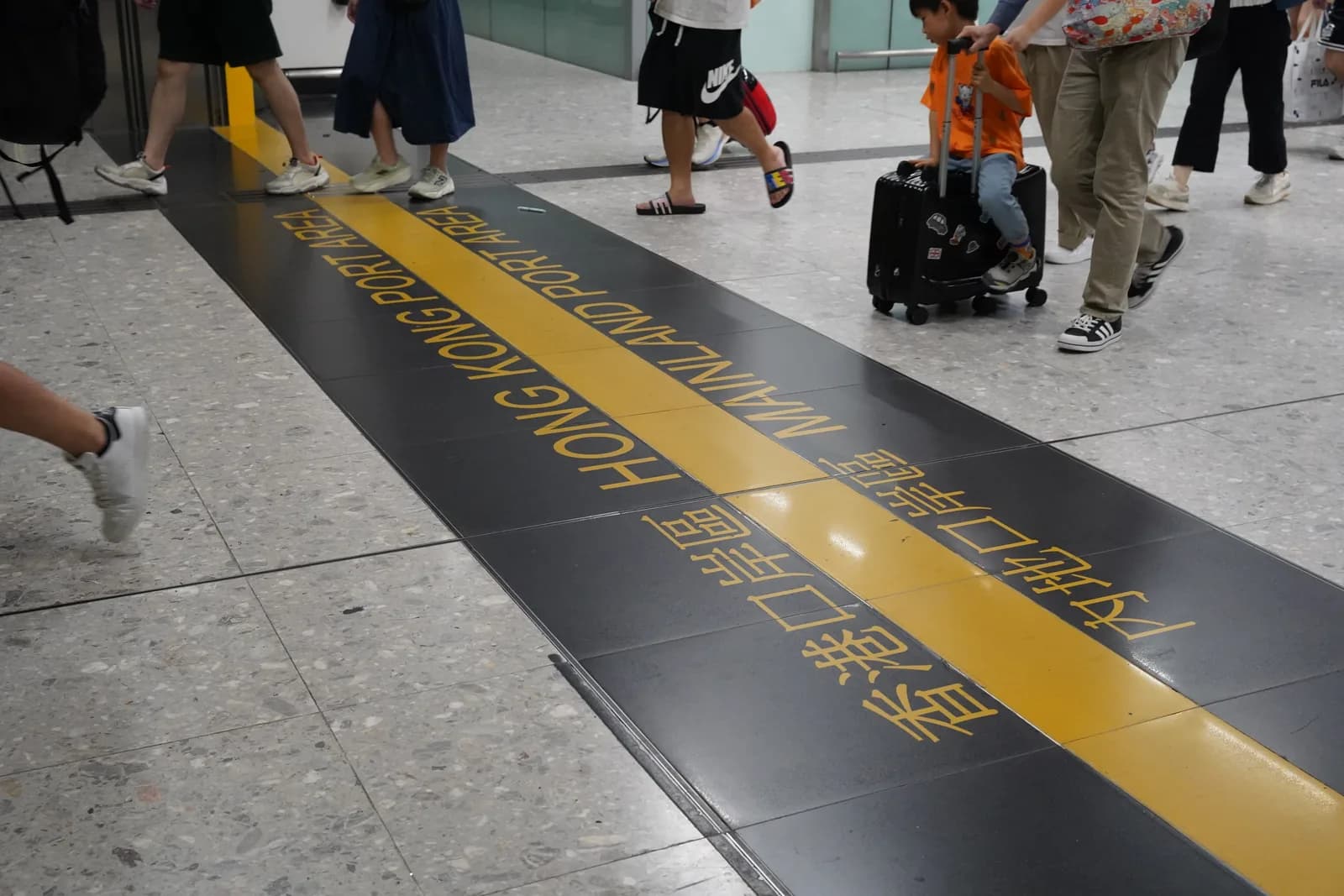
One caveat worth saying plainly: these rules have moved twice in eighteen months. Check the current list against your passport the week you travel, not the month before.
Choosing your border crossing
This section covers the day-trip call; if you want all seven crossings compared properly, hours, queues and which door matches which plan, that now has its own border crossing guide. If I were crossing next week on a visa-free passport, I would take the high-speed rail from West Kowloon and skip Lo Wu entirely. Fourteen to eighteen minutes, HK$75 to 90 in second class, immigration for both jurisdictions cleared inside West Kowloon before boarding, and you surface at Futian station on metro Lines 2, 3, 4 and 11 in the middle of the city rather than at its eastern edge. Futian is also the district I would book if the day turns into a night. Security takes three to five minutes and there is no paper ticket. Against a 40 to 50 minute MTR run plus a 20 to 60 minute queue at Luohu, the extra HK$30 or so buys back most of a morning.
The case for Lo Wu survives in two situations. If you need the visa on arrival, it is the desk you want. And if the entire point of the day is Dongmen and Luohu Commercial City, Lo Wu drops you at their doorstep on Line 1 while the rail leaves you a metro ride away.
| Route | Time | Cost | Lands you at | Best for |
|---|---|---|---|---|
| HSR from West Kowloon | 14–18 min | HK$75–90 (2nd class), up to HK$224 business | Futian or Shenzhen North | Speed, and the only rail port valid for 240-hour transit |
| MTR East Rail to Lo Wu | 40–50 min plus queue | HK$49.60 from Admiralty on Octopus, plus metro | Luohu, Line 1 | Dongmen, Luohu Commercial City, the visa-on-arrival desk |
| MTR East Rail to Lok Ma Chau | 40–50 min | ~HK$48 from Admiralty on Octopus, plus metro | Futian checkpoint, Lines 4 and 10 | Shorter queues than Lo Wu |
| Cross-border coach | 50–90 min | HK$60–150 | Varies by operator | Door-to-door from Causeway Bay, TST or Mong Kok |
| Ferry | 30–50 min | HK$120–200 | Shekou | Nanshan, Shekou and Sea World |
Hours matter for the return leg. Lo Wu runs roughly 6:30am to midnight and the East Rail service stops well before the port does. Huanggang is the 24-hour crossing, reached by coach rather than MTR, and it is the reason the cross-border bus operators Eternal East and CTS still have a business. Cross in the quiet windows, 10 to 11am or 2 to 4pm on a weekday, and avoid Friday evenings, weekends and public holidays entirely.
One booking note that catches people out: the evening return high-speed trains sell out. The 19:19, 20:35, 21:26, 21:52 and 22:31 departures are the ones every day-tripper wants, and they go two to three days ahead. Book the return the moment you book the outbound.
What to set up before you cross
This section is short and it is the one that saves the day. Do all of it on Hong Kong wifi, the night before, because half of it becomes impossible the moment you are on the mainland side of the line.
Alipay first. The 2026 consensus among recent visitors is unambiguous: Alipay handles foreign Visa and Mastercard more reliably than WeChat Pay, and it is the app that boards the metro. Install it, link your card, verify your identity with your passport, and test it on something small. Foreign credit cards on their own largely do not work in Shenzhen, and neither does an Octopus card, though some Hong Kong visitors use a UnionPay QR as a fallback. The same setup carries across the rest of the country, which is why it is the first thing I would tell anyone heading to Chengdu or Guiyang too.
Then the VPN, and this is the trap. Google, Gmail, WhatsApp and Instagram are all blocked. VPN provider websites are also blocked, so you cannot download or activate one once you are across. Install it in Hong Kong, open it, confirm it connects, and leave it configured. An eSIM that routes traffic through an overseas carrier is the cleaner solution and skips the block entirely, and it is what I would buy for a one-day crossing rather than fighting a VPN.
Then Didi, the ride-hailing app, which works in English and spares you the taxi negotiation. And download an offline map, because your usual one may not resolve.
Nothing here takes more than twenty minutes. Skipping it turns a good day into a stressful one at the first metro gate.
What's actually worth crossing for
Here is the honest framing that the ranking guides avoid: Shenzhen has no obvious tourist center. It is a 17-million-person city that was a fishing village in 1980, and it never grew an old quarter or a signature monument. If you cross looking for the Shenzhen equivalent of the Peak Tram you will spend the day faintly disappointed. This is the opposite of a city like Chengdu or Guiyang, where the sights arrange the itinerary for you. Cross for the arithmetic instead. Dining runs roughly 48 to 50 percent cheaper than Hong Kong, and that gap is the entire reason for the traffic.
Three things worth booking
 Best value
Nantou Ancient City
A 1,700-year-old walled town restored into a lane of cafes, small museums and food stalls, free to walk into. Go on a weekday morning; it is a photo destination for locals and it fills up fast at weekends.
Book this Traveler favourite
Dongmen Old Street night food crawl
Grilled octopus skewers at ¥15, octopus balls at ¥15 for six, hand-shaken lemon tea at ¥10. A full evening of eating comes to about ¥85, roughly US$12, and it is walkable from the Luohu crossing.
Book this Worth the trek
Shenzhen Science & Technology Museum
The Zaha Hadid-designed museum that opened in 2025, and the closest thing Shenzhen has to a landmark worth the metro ride. Be honest about the distance: it is far north in Guangming and it will eat half your day.
Book thisFood is the real answer, and it is worth being specific: dim sum in Shenzhen runs at roughly a third of Hong Kong prices for comparable quality. I have gone deeper on where to eat and what to order in the Shenzhen food guide, so I will not duplicate it here beyond the one instruction that matters, which is to eat lunch on the mainland side rather than before you cross.
Spas are the second pillar and the one Hongkongers are quietest about. Entry prices are low and the model is unfamiliar: Queen Spa in Luohu charges around ¥98 for 24-hour entry, Tangquan Life TENZ near Futian Port around ¥300 for an eight-hour bath ticket, Heat Joy Spa at Chegongmiao around ¥250. A standalone foot massage runs ¥100 to 200. The gotchas at Queen Spa specifically are worth consolidating in one place, because they appear only scattered across reviews: a 13 percent service charge is added automatically, a three-tier tipping prompt then arrives pre-printed on the receipt with minimums of roughly ¥30 for massage and ¥20 for pedicure, therapists reliably upsell mid-treatment without naming the price, and the building has no windows and heavy indoor smoking despite the signage. Go in expecting the final bill to be well above the entry price and it is still good value. Go in expecting the sticker price and you will feel worked over.
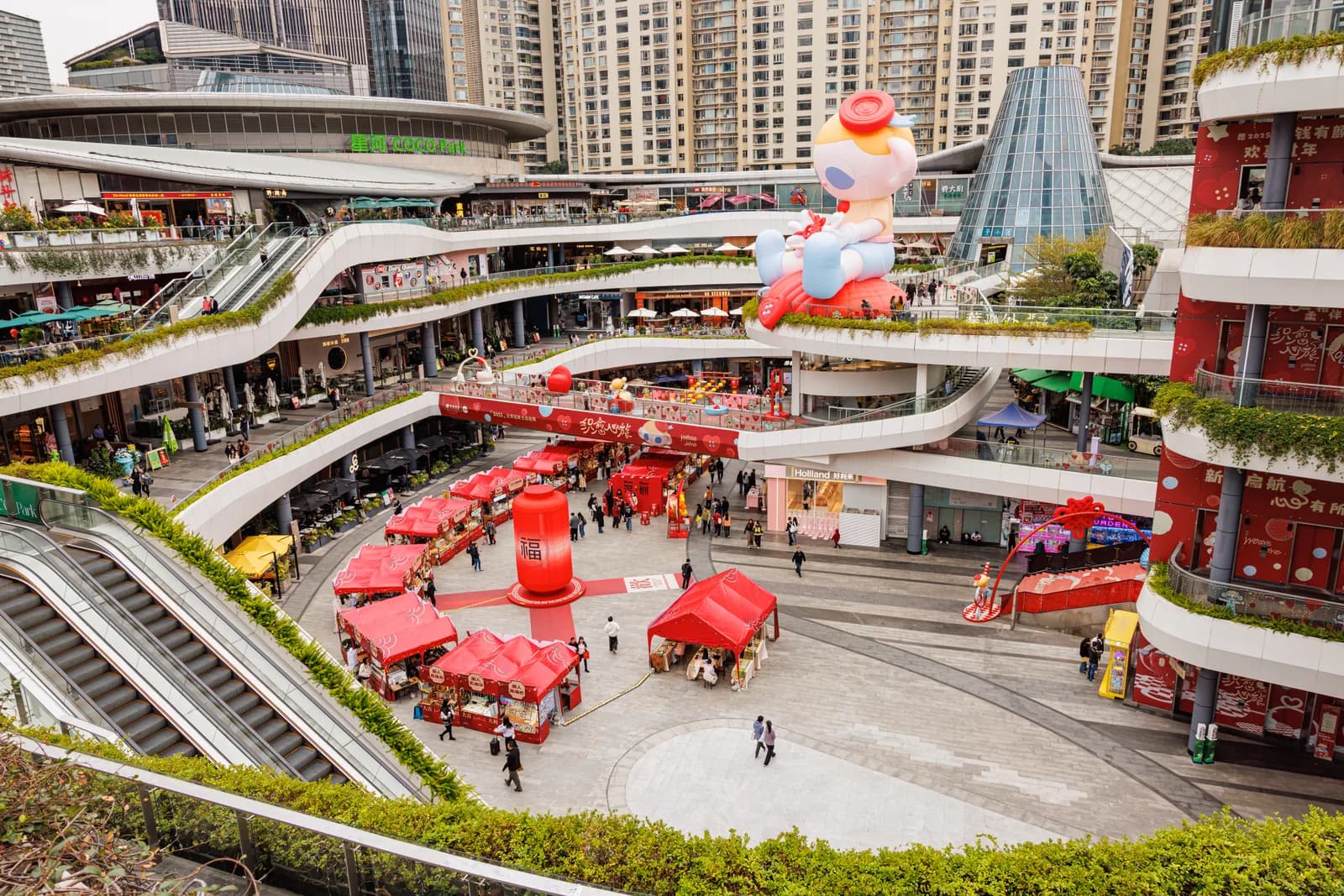
Then there is the shopping, which is less romantic and more honest about why people cross. Costco Longhua opened in 2024 and has over 200,000 members, around 35,000 of them from Hong Kong, spending an average of about RMB 900 a trip. Sam's Club runs dedicated shopper buses. Coco Park in Futian is the mall Hongkongers name most, and Shenzhen Bay Park gives you 13 kilometres of waterfront if you want the day to include air. Luohu Commercial City is the bargaining arena next to the Luohu crossing, where the rule travelers repeat is to start at 30 percent of the asking price.
A word on the scams, which are mild but real and cluster exactly where tourists cluster. Short-changing on cash at Luohu Commercial City, taxi drivers at the stations claiming no change or taking the long route, the friendly English-speaking approach that ends at an expensive teahouse, and touts working the border halls. Alipay solves most of these by removing cash from the transaction entirely.
Where to stay if you extend overnight
Plenty of people cross for a day and end up booking a room, because Shenzhen hotels cost a fraction of Hong Kong's for the same standard. I have written the full district-by-district breakdown in the Shenzhen where-to-stay guide, which is the one to read if you are actually choosing. The compressed version for a day trip that overran:
Book Futian if you came by high-speed rail and want to leave the same way. You are on top of Futian station, the metro lines that matter, Coco Park and Huaqiangbei, and you can be back at West Kowloon in under twenty minutes the next morning. The trade is a CBD that goes quiet and corporate after office hours.
Book Luohu if you crossed at Lo Wu, came for Dongmen and the massage places, and want cheaper rooms. It is the older, scruffier, better-fed side of the city, and everything in this post's food and spa section is walkable from it.
Book Shekou if you arrived by ferry or are leaving on one, and want Sea World's international restaurants and a calmer harbour evening rather than another mall.
Getting there and when to go
For most readers this is a Hong Kong trip with a Shenzhen day inside it, so the flight question is really a Hong Kong question. If you are still shaping the route, it is worth comparing fares into Hong Kong against flying into Shenzhen Bao'an directly, since a mainland arrival changes your visa maths completely and Bao'an sits on metro Line 11.
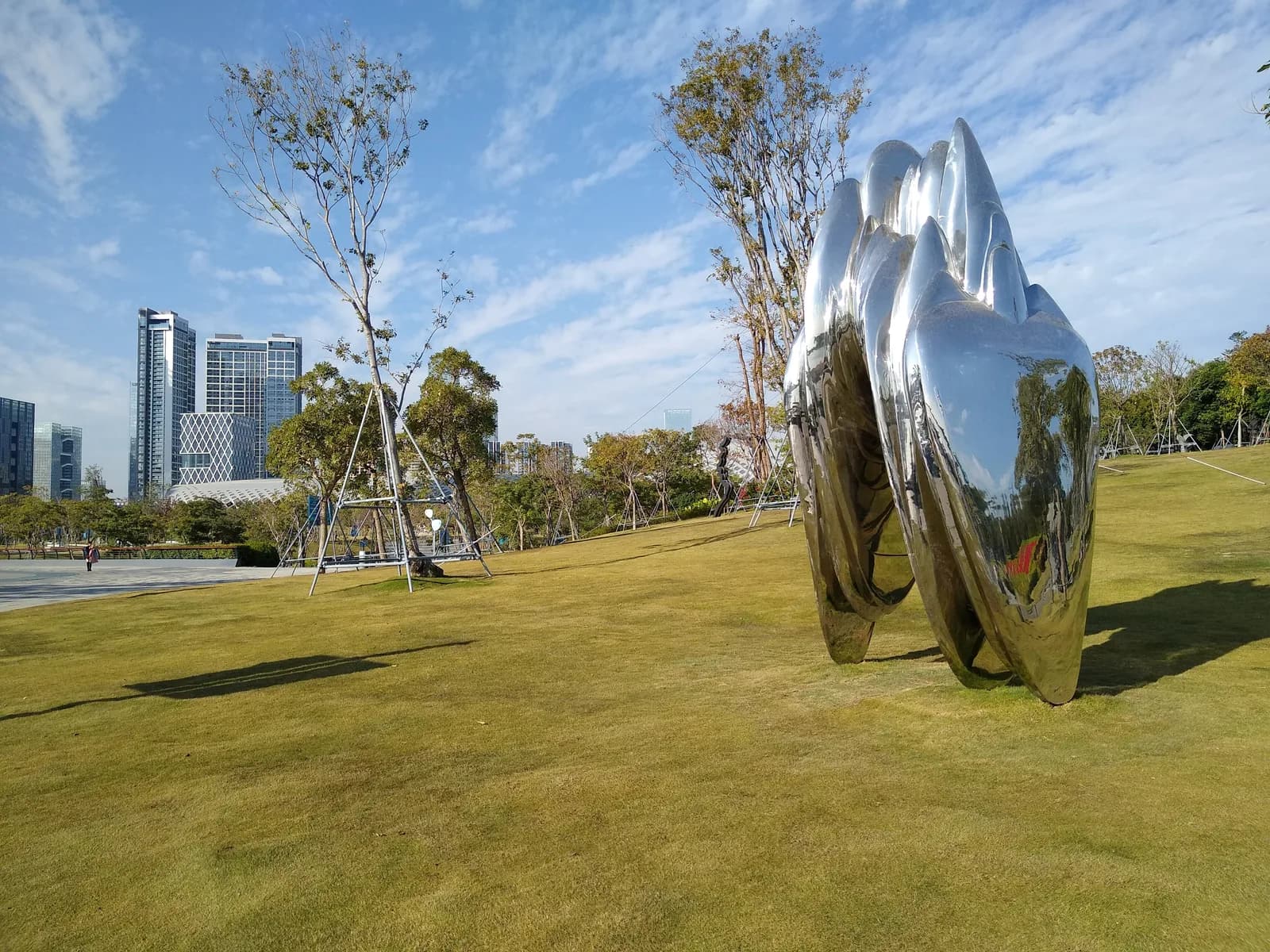
Timing the day beats timing the season. Cross by 10am, eat lunch on the far side, take the afternoon slowly, eat again at Dongmen, and be on a booked evening train. That shape works year-round. For the season itself, October to December and March to early May are the comfortable months. Summer is hot and sticky and typhoon season peaks from July to September, when a direct hit can close the border crossings for a day. Chinese public holidays, particularly Golden Week in early October and Lunar New Year, are the periods to avoid outright: the queues are the whole story, and roughly 2 million Hong Kong residents crossed by land over Easter 2025 alone.
Practical notes I would tell a friend
- Check the visa-free list against your passport the week you travel, not the month before; it has changed twice in eighteen months and it currently expires 31 December 2026.
- If you are American on a Hong Kong return trip, do not plan around the 240-hour transit; it needs a different departure region than your arrival one, and Luohu is your desk.
- Book the return high-speed train at the same time as the outbound, because the 19:19 through 22:31 departures sell out two to three days ahead.
- Install and test Alipay and a VPN or overseas eSIM on Hong Kong wifi, since VPN sites are blocked from the mainland side.
- Cross on a weekday between 10 and 11am or 2 and 4pm, and treat Friday evenings, weekends and Chinese holidays as a different, worse trip.
- Bring RMB cash only if you are applying for the visa on arrival; otherwise Alipay covers the metro, the stalls and the taxis.
- Budget above the sticker price at any Shenzhen spa: a 13 percent service charge, tiered tipping and mid-treatment upsells are the norm, not a scam.
- Start bargaining at 30 percent of the asking price at Luohu Commercial City, and count your change there specifically.
- Eat lunch and dinner on the Shenzhen side and skip the Hong Kong meal entirely; the food guide has the specifics.
- Give Nantou Ancient City a weekday morning if you want the one part of the day that is not transactional.
- If the day stretches into a night, book Futian for the rail link or Luohu for the food, and use the district guide to choose properly.
The single most useful thing in this post is the first section, so I will repeat it: if you hold a British or Canadian passport, every guide telling you to queue at Lo Wu for a visa on arrival is describing a country that stopped existing in February 2026. Walk through. And if you go in understanding that Shenzhen is a place you cross for a meal, a massage and a mall rather than for a view, it is one of the best-value days available anywhere near Hong Kong. If something here has shifted by the time you cross, and with Chinese visa policy it might, tell me and I will update it. If you are giving the city more than a day, the district guide is the next thing to read.
Frequently asked
Do I need a visa for a day trip from Hong Kong to Shenzhen?
Probably not, and this is the detail most guides still get wrong. British and Canadian passport holders were added to China's 30-day visa-free scheme on 17 February 2026, joining Australia, New Zealand, Japan, Singapore, most of the EU and around 50 countries in total, valid through 31 December 2026. If that is your passport, you walk through immigration with no paperwork and no fee. US citizens are the main exception and still need either the 240-hour transit exemption or the 5-day Shenzhen visa on arrival.
Can US citizens do a day trip to Shenzhen from Hong Kong?
Yes, but not for free. The US is not on the 30-day visa-free list, so the practical route is the 5-day Shenzhen Special Economic Zone visa on arrival, issued only at Luohu, Huanggang and Shekou for roughly CNY 950 to 970 (about US$135 to 140). It is single entry, Shenzhen only, and cannot be extended. The 240-hour transit exemption is free but requires you to continue to a different country or region than the one you arrived from, so a Hong Kong return trip does not qualify.
What is the fastest way to get from Hong Kong to Shenzhen?
The high-speed train from Hong Kong West Kowloon to Futian station, at 14 to 18 minutes for about HK$75 to 90 in second class. Immigration for both sides is cleared inside West Kowloon before you board, so you step off already in Shenzhen and onto metro Lines 2, 3, 4 and 11. It is also the only rail crossing that counts as an eligible entry port for the 240-hour transit exemption, added on 5 November 2025.
Do I need a VPN in Shenzhen?
If you want Google, WhatsApp, Instagram or Gmail, yes, and you must install and activate it while you are still on Hong Kong wifi. VPN provider sites are blocked from inside mainland China, so arriving without one set up means arriving without one. An eSIM that routes through a Hong Kong or overseas carrier is the simpler alternative and sidesteps the block entirely.
Is a Shenzhen day trip worth it?
It depends on what you want from it. Shenzhen has no single tourist center and no signature sight, so if you are hunting landmarks you will be disappointed. Go for the price arbitrage instead: dim sum at roughly a third of Hong Kong prices, foot massages at CNY 100 to 200, and warehouse shopping. Hong Kong residents made over 6 million trips a month into Shenzhen in 2024, and almost none of them are going for the scenery.
How much cash do I need in Shenzhen?
Almost none, but set up Alipay before you cross. QR payment runs everything from metro gates to street stalls, and recent visitors consistently report Alipay handling foreign cards more reliably than WeChat Pay. Foreign credit cards largely do not work directly. The exception is the Shenzhen visa-on-arrival desk, where bringing RMB cash avoids any payment friction on arrival.
When should I cross the border to Shenzhen?
Weekday mid-morning, roughly 10 to 11am, or early afternoon between 2 and 4pm. Those are the quietest windows at every checkpoint. Avoid Friday evenings, weekends and Chinese public holidays, when queues at Luohu can stretch past an hour. Around 2 million Hong Kong residents crossed by land during Easter 2025 alone, which tells you what a holiday border looks like.
More from the journal
Qianling Park, Guiyang: The Macaques, Hongfu Temple and How to Visit Without Losing Your Snacks
Emeishan Day Trip from Chengdu: What One Day on Mount Emei Really Buys You (and When to Stay the Night)
Hong Kong to Shenzhen Border Crossings: All Seven Doors Compared, and Which One Your Day Actually Needs