Best Restaurants in Shenzhen: Urban Villages, Chaoshan Beef and Cheap Dim Sum
The best restaurants in Shenzhen are not Cantonese and not in malls: Chaoshan beef hotpot, urban village kitchens, and dim sum at half Hong Kong prices.
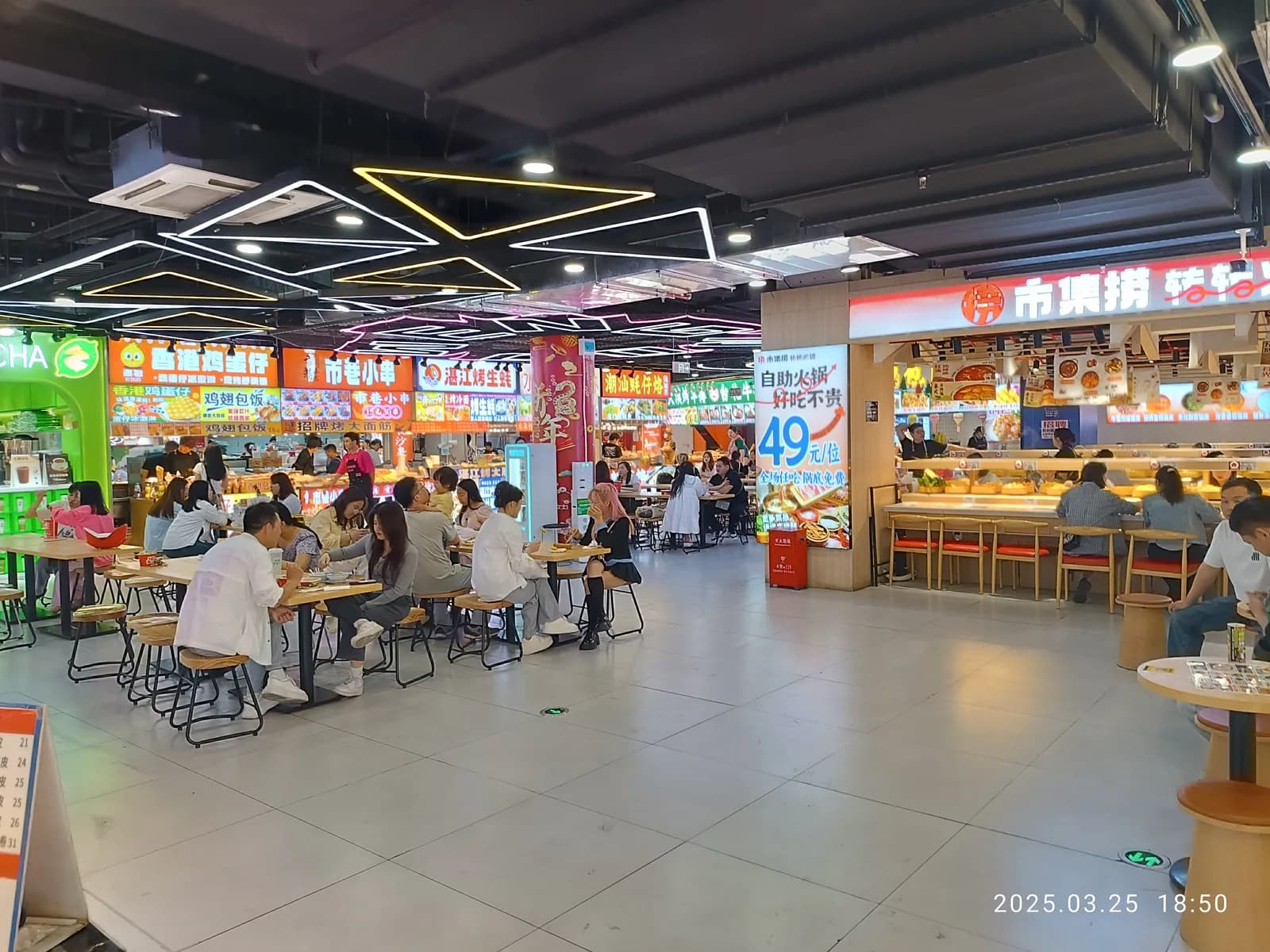
Shenzhen was a fishing village 45 years ago. Everyone repeats that line, and almost nobody follows it to its conclusion: a city built in four decades entirely out of arrivals does not have a native cuisine, it has everyone else's. The best food in Shenzhen is not Cantonese. It is Chaoshan, Hakka, Hunanese and Sichuanese, cooked by the people who brought it, and it is concentrated in the urban villages rather than the hotel malls where visitors are steered. Every English guide to the city writes "dim sum and street food" and stops there. That is half a sentence about a food city of 17 million. Here is the rest of it, starting with why the map looks the way it does. If you are coming over from Hong Kong for the day, my day trip guide handles the border; if you are staying a while, the district guide handles the bed.
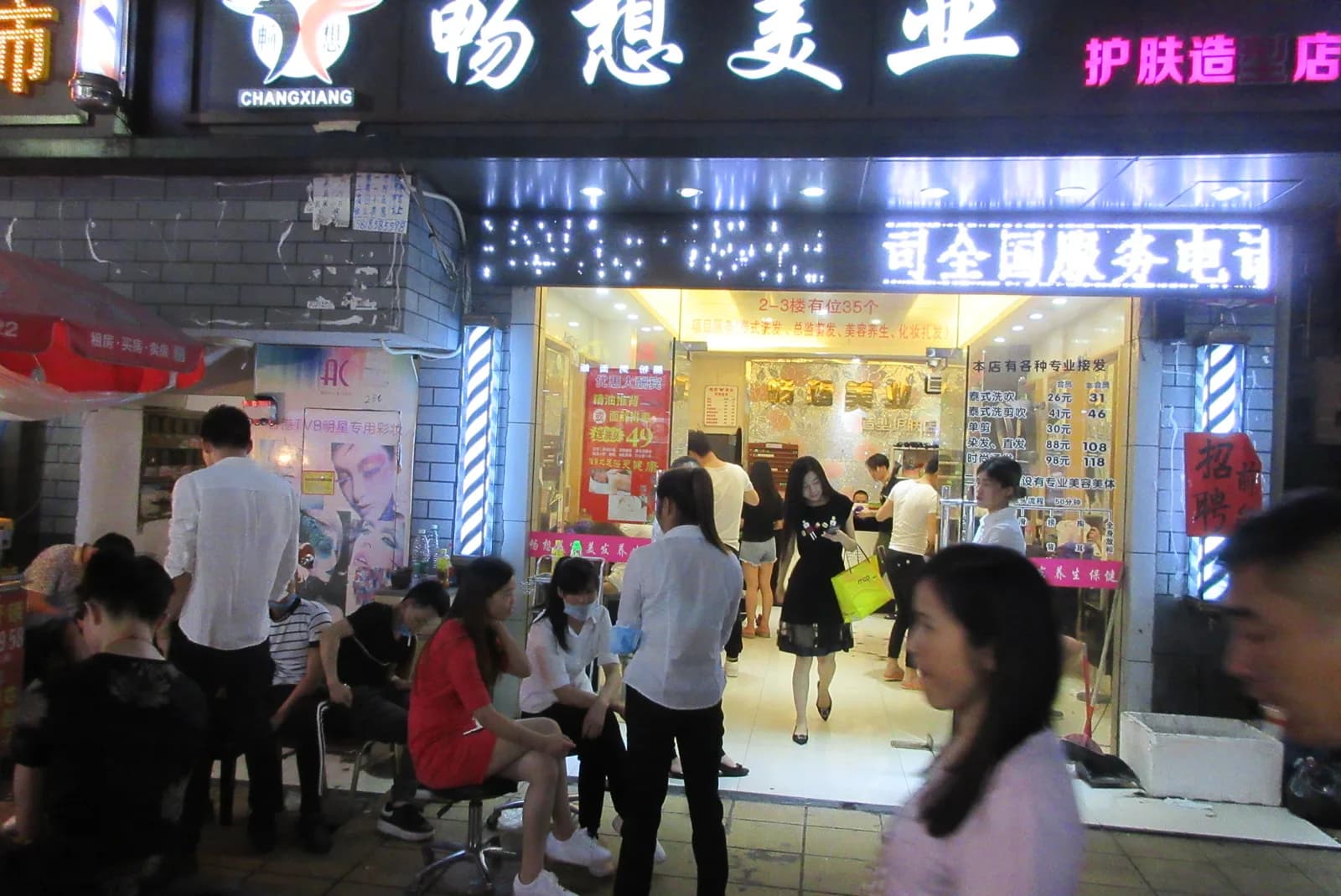
Why Shenzhen tastes like everywhere but Shenzhen
The demographic fact drives the whole food map. Shenzhen sits in Guangdong, so visitors assume Cantonese, then eat a mediocre version of it. The Shenzhen-based writers at Chinese Cooking Demystified put it bluntly in February 2026: despite its location, Shenzhen is not a Cantonese city, it is a migrant city. The Teochew, from the Han river estuary around Chaozhou and Shantou, are the largest subgroup, and they set the city's basic dining patterns. Hakka are second, down from the northern Guangdong hills around Meizhou and Heyuan. Hunanese migrants form the backbone of the working-class population and with it the city's fast-food culture. The Sichuanese are numerous enough to sustain dishes you would struggle to find outside Sichuan itself.
The second fact is architectural. A 城中村, an urban village, is what happened when Shenzhen's farmland was sold to developers and the original villages kept their land rights. They built upward and inward instead, producing dense grids of walk-up blocks ringed by towers. Chinese Cooking Demystified describes them as haphazard and favela-like, and as holding the best street life in the city and often the best food. The reason is economics: rent inside a village runs a fraction of the rent across the road, so a Hunanese cook can open a nine-table room that does one province's food properly and survive on thin margins. In a mall, that shop pays CBD rent and becomes a chain. It is why the good addresses in this guide have village names in them.
Chaoshan beef hotpot, the thing to eat first
If there is one meal to spend in Shenzhen, this is it, ahead of dim sum. The argument is straightforward: Hong Kong does dim sum better and Shenzhen only does it cheaper, but Shenzhen's Chaoshan cooking is a genuine claim to being one of the best Teochew eating cities in China, and nobody writing in English frames it that way.
Chaoshan beef hotpot is a discipline rather than a dish. The broth is deliberately plain, usually beef bone with radish, because it is there to poach rather than to season. The beef is the point, and it is butchered and sliced to order by individual muscle, sold by part rather than as generic "beef": chuck flower, three-layer belly flank, brisket cap, hanging tender. Each cut arrives on its own plate with its own dip time, counted in seconds rather than minutes. Roughly eight seconds for the leanest slices, longer for the fattier ones, and pulling them late is the one unrecoverable error. A shop lives or dies on how fast the beef gets from the block to the pot, which is why the good ones butcher on site.
The hand-beaten beef balls are the other test. Real ones are rump pounded with metal batons until the meat turns to paste, which gives a bounce a food processor cannot fake. They are made in limited daily batches, and reviewers of Chaoshan Damu Beef Hot Pot at Coco Park in Futian repeat the same warning: order them early, because they sell out. Chao Fa Chaoshan Beef Hotpot, on the second floor of Wanxiang Shijia on Meiyuan Road, is the other name surfacing in recent Futian reports. Sit down before 7pm if you want a full range of cuts still on the board.
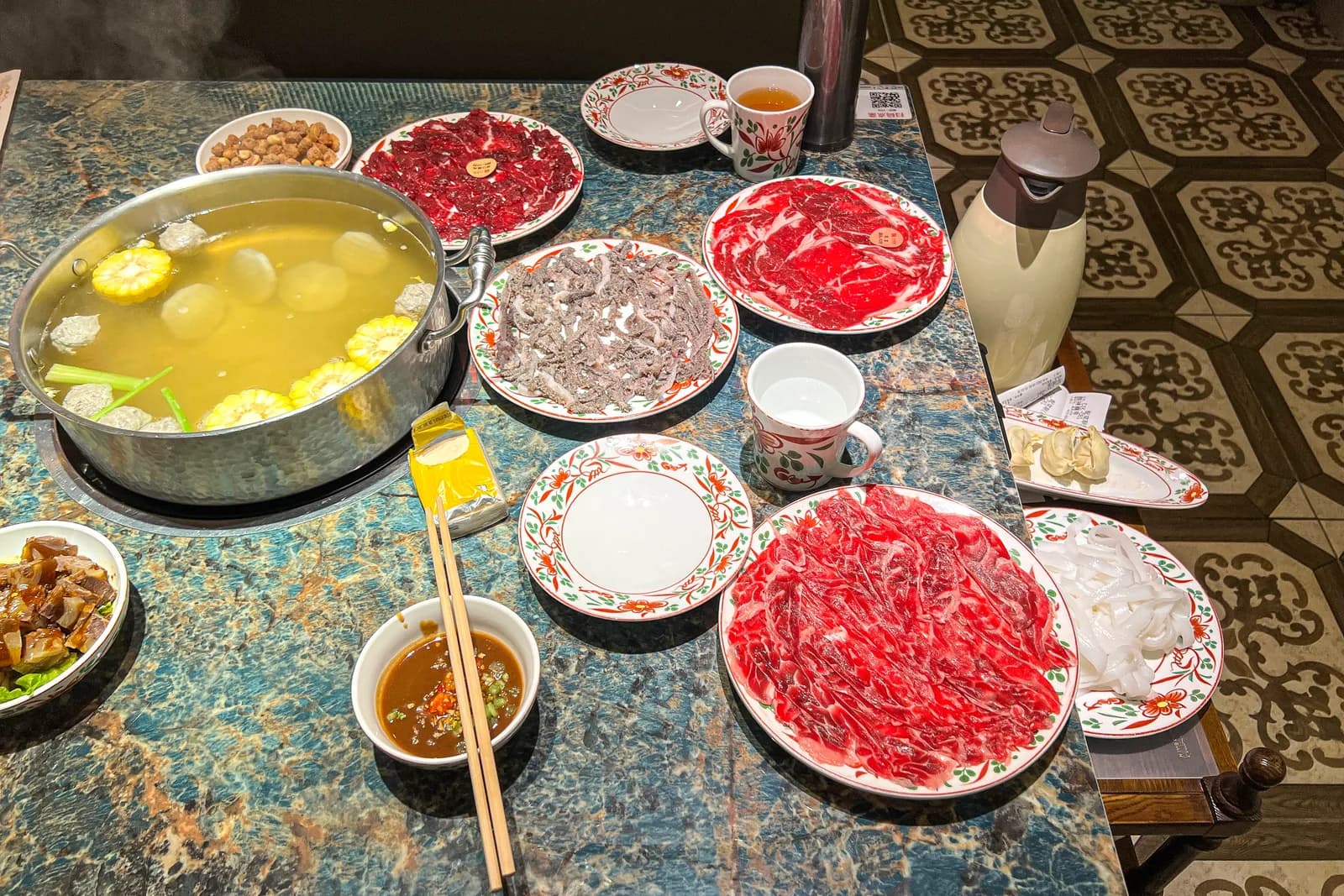
The other hotpot worth a meal is coconut chicken, the closest thing Shenzhen has to an invention of its own. The base is Hainanese, but the format was built here: clear coconut water, a whole Wenchang chicken sliced in front of you, young coconut meat and bamboo fungus, and staff who do the cooking. Runyuan Siji (润园四季), founded in 2009, created the category and remains the benchmark, with branches across the city including Coco Park, KK Mall and Sea World in Shekou. Expect ¥70 to ¥100 per person, the signature bamboo fungus and water chestnut chicken around ¥149 for the whole bird.
Dim sum, and the Hong Kong price arbitrage
This is the reason most people actually cross. Nobody is claiming Shenzhen out-cooks Hong Kong at dim sum. The claim is narrower and more persuasive: it is close enough, at a third to a half of the price. The South China Morning Post ran the comparison and found a like-for-like day of dining about 48 to 50 percent cheaper on the mainland side.
| Item | Hong Kong | Shenzhen |
|---|---|---|
| One basket of har gow | ~US$7 | ~US$5 |
| Dim sum brunch, per person | from ~US$14 at a Central or Tsim Sha Tsui teahouse | from ~US$8 |
| Full dim sum for three, no alcohol | commonly US$100 and up | ~US$50 at Grand Restaurant, Guomao |
| Mid-range dim sum house, per person | rarely under US$20 | ¥80–100 (~US$11–14) at Fanlou, Huaqiang North |
| A comparable day of eating and drinking | baseline | roughly 48–50% less (SCMP) |
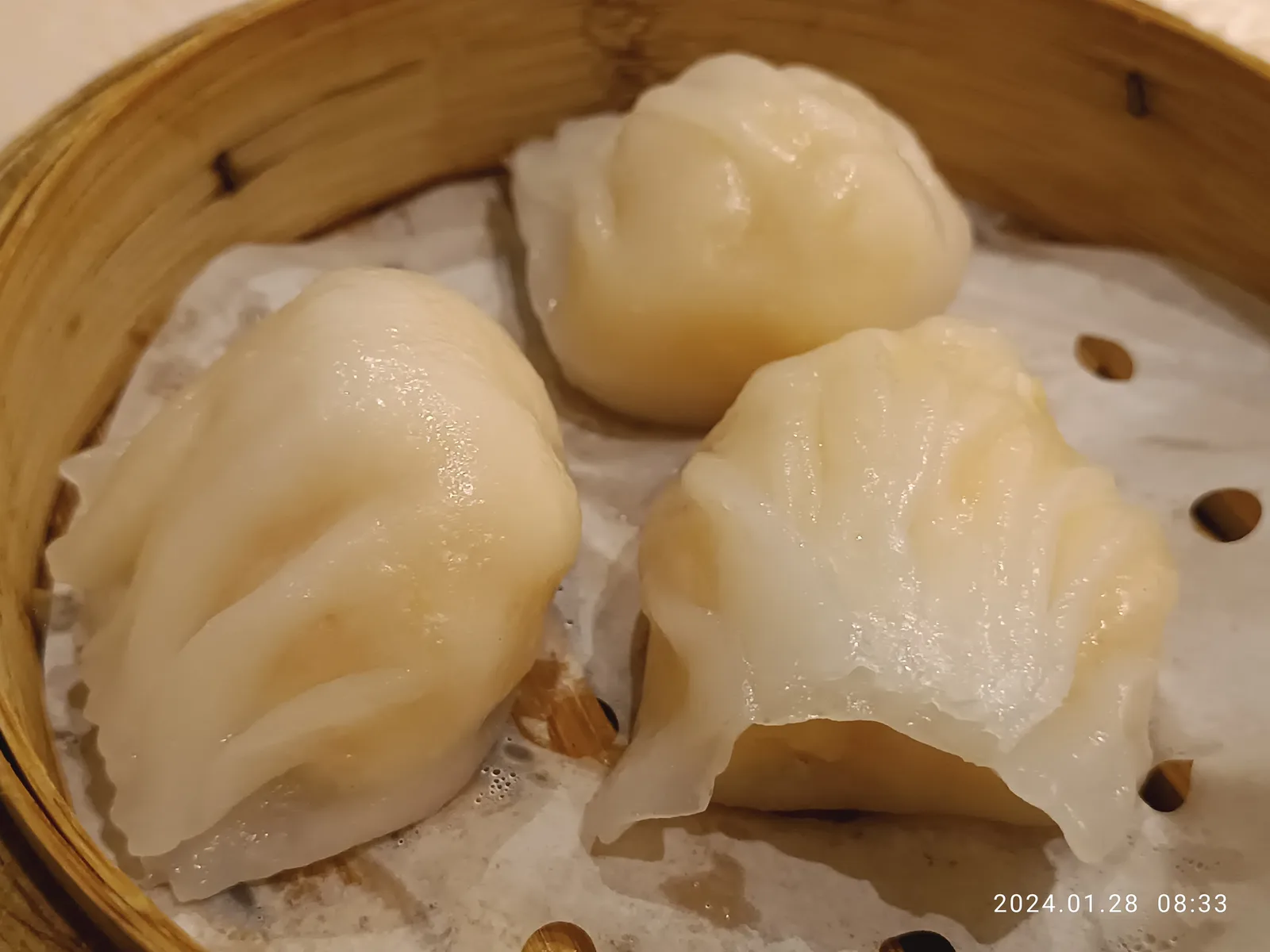
Three names are worth writing down. Grand Restaurant, on the fifth floor of the Renaissance Hotel at Guomao in Luohu, is the easy one: a full dim sum spread for three came to about US$50 without alcohol in a late-2024 account. Fanlou (泛楼), at the Huaqiang North branch on the ground floor of the Huali Decoration Building, 118 Zhenhua Road, is the one locals queue for: har gow packed with three whole shrimp, baked snow mountain BBQ pork buns, satay beef tripe, crispy red rice noodle rolls, Liwan sampan porridge, at ¥80 to ¥100 a head. A 2026 report describes waitlists running to 300 tables by 9am on holidays, so arrive before 8:30am, take the QR queue ticket, and walk Huaqiangbei until your number moves. Laurel Restaurant (丹桂轩) is the old-guard Cantonese house, and the Luohu branch is the one to aim for; its OCT Portofino location closed in 2025, so ignore any guide still sending you to Overseas Chinese Town for it.
If you are timing a crossing around a dim sum service rather than the other way round, the Hong Kong to Shenzhen day trip guide covers which checkpoint puts you closest to which table.
The urban villages, mapped
Four pockets carry most of what is worth eating, and all four are ordinary residential neighborhoods rather than attractions.
Shuiwei and Huanggang, in Futian, are the pair to start with, adjacent villages either side of Fumin Road, a few minutes from Futian Checkpoint and Shuiwei station on Line 3. Shuiwei Cun runs a night market of small shops down its lanes, Chaoshan hotpot among them, and it stays busy late. Huanggang is where Chinese Cooking Demystified sends people for Xinxiangcun Dawan Cai (新乡村大碗菜), a Youxian Hunanese room in a village alley off Fumin Road doing blood duck and pounded chili with century egg alongside hard, fast stir-fries and rice. This is the Hunan of migrant kitchens rather than restaurant Hunan, and it is worth the walk even if the room looks like nothing.
Shangmeilin, further north in Futian, holds the single most specific recommendation in the entire spine source: Gaosanjie Douhua (高三姐豆花店), in Shangmeilin New Village, doing Sichuan douhua fan, tofu rice, at a level that only exists because Shenzhen's Sichuanese population is large enough to demand it. The timing is not optional. Arrive by 4:45pm for dinner or 10:45am for lunch, or you are queuing. That is a narrow window, and it tells you something about how the good rooms here work. If that thread interests you, the same cuisine at its source runs through my Chengdu guide.
Southern Luohu, around Guomao and Laojie stations, is the oldest part of the city and holds its densest concentration of small, cheap, unbranded eating. Grand Restaurant sits here too, so a Guomao morning can be dim sum upstairs and a village crawl downstairs. It is also the cheapest district to sleep in.
Xinzhou, in Futian's west, rounds out the set and is the one visitors reach last. Nothing here is signposted in English. That is the point of the format, and it is why the ordering section below matters more than the addresses.
Street food and night markets
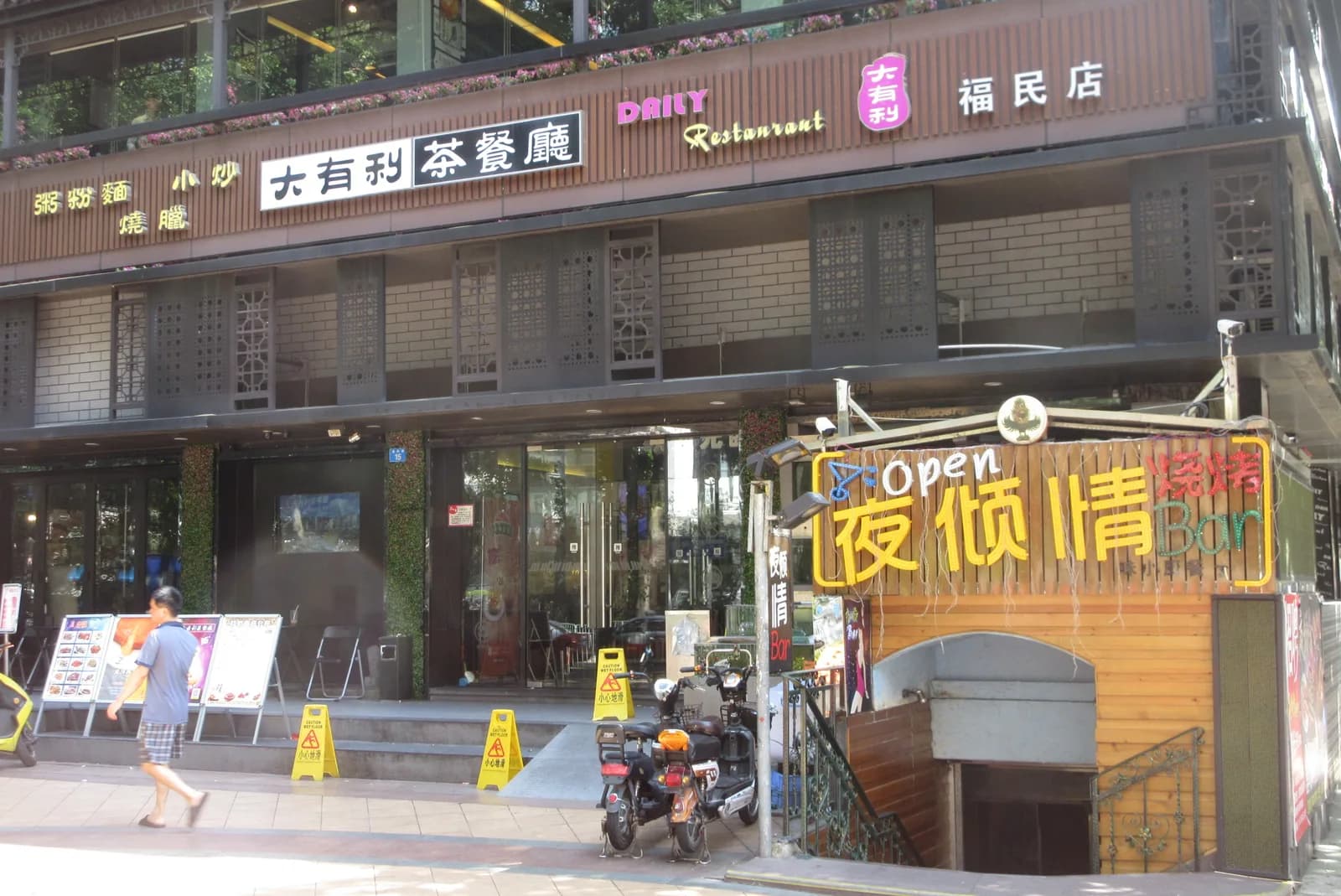
Dongmen Old Street in Luohu earns its place despite the crowds. It is Shenzhen's oldest commercial district, now a pedestrian grid of neon and stalls that runs comfortably to midnight. Prices sit in the ¥10 to ¥20 band: hand-shaken lemon tea about ¥10, a grilled baby octopus skewer around ¥15, six octopus balls about ¥15, a meat pie around ¥20. A 2025 account put a full evening's grazing at roughly ¥85, about US$12, and the Dongmenting food court keeps a sit-down meal under ¥100 a head. Go at night; the daytime version is a shopping street with the atmosphere drained out.
Huaqiangbei is the sleeper. Everyone knows it as the electronics market and almost nobody eats there deliberately. On the ground floor of Building 3, Huakang Courtyard, 109 Zhenxing West Road, there is a Guizhou room that has run for 25 years: Miao and Dong cooking, sour soup fish hotpot with river catfish, garlic shrimp, fermented potato slices. Guizhou sour is one of the most distinctive flavor profiles in China and one of the least exported, built on fermented tomato and rice water rather than vinegar. Finding a quarter-century-old version of it in a parking-lot building behind the world's biggest electronics market is the Shenzhen story in miniature. My Guiyang guide covers where that cooking comes from, and the Chengdu guide does the same for the Sichuan thread running through Shangmeilin.
Booked food experiences
If the language barrier is the thing stopping you from committing a day to this, a guided crawl is a reasonable way to buy the first one and then repeat it alone.
Three things worth booking
 Best first move
Shenzhen street food and night market tour
A guided run through the night market stalls, which mostly buys you the ordering rather than the food. Worth it on day one so you can do the urban villages unaccompanied on day two.
Book this Eat this first
Chaoshan beef hotpot
Pre-booked seats and set platters at the city's signature migrant cuisine, including all-you-can-eat formats around Huaqiangbei. Order the beef balls in your first round.
Book this The local invention
Coconut chicken hotpot
Clear coconut broth, a whole Wenchang chicken cut at the table, and staff who run the pot for you. The gentlest hotpot in the city and the easiest with kids.
Book thisFor an English-language option on the western side of the city, GetYourGuide runs a Shekou food tour with four tastings, which suits anyone based around Sea World.
How to actually order
This is the part every English guide skips, and it is the part that decides whether you eat well.
Dianping (大众点评) is the tool. It is the local Yelp, and it has a language setting almost nobody mentions: Profile, then the menu icon, then Settings, then Language. Switch it to English and the interface becomes navigable even though the reviews stay Chinese. Its ratings are the real signal in a city where Google Maps is both blocked and empty of anything useful. It also handles the two mechanics you cannot avoid: queue tickets, listed as 取号, which give a live position and wait estimate, and group-buy vouchers, listed as 团购, prepaid set menus that are often the cheapest way to order at hotpot chains.
Alipay is not optional. It runs the metro gates, taxis, table ordering and the stalls, it links to overseas Visa and Mastercard, and a foreign credit card alone is close to useless outside international hotels. Install it, verify it, and add your card before you cross, because verification can take a day. Dianping accepts Alipay sign-in, which saves a second registration. My Hong Kong to Shenzhen day trip guide covers app setup, visa-free rules and the VPN question in full; the short version is that Google, WhatsApp and Instagram are blocked, so sort things out before you arrive.
Table mechanics. Most mid-range restaurants have moved to QR ordering, which puts a Chinese menu inside your own phone, which means translation works fine. Point at the neighboring table when it does not. At Chaoshan hotpot the beef board is usually a physical list at the counter, and staff are used to people ordering by pointing at cuts.
Where to stay for the food
The full district breakdown lives in my where to stay in Shenzhen guide, so here is only the food-access version of it.
Futian is the right answer for a food-led trip and it is not close. Shuiwei, Huanggang and Shangmeilin are all in this district, Coco Park's hotpot cluster is walkable, Huaqiangbei is on its northern edge, and Futian station puts Hong Kong 14 minutes away. Book around Coco Park specifically if you want to roll out of dinner and into bed.
Luohu is the value pick and the dim sum pick: Guomao, Laojie, Dongmen's night stalls and Grand Restaurant all sit within a few stops of each other, and hotels run cheaper than Futian for the same standard. The streetscape is scruffier and the weekend crowds are relentless.
Nanshan and Shekou is the one to pick only if you want English-friendly ease and Sea World's international restaurants. On food access it is the weakest of the three: you are 30 to 40 minutes by metro from Luohu's best eating, and the trade is comfort for proximity. The full district guide weighs the rest of the trade-offs, including border access and metro lines.
Recommendations
- Spend your one big meal on Chaoshan beef hotpot rather than dim sum; Hong Kong does dim sum better, but Shenzhen's Teochew cooking is what you cannot get as well elsewhere.
- Order hand-beaten beef balls in your first round at any Chaoshan hotpot, because they are made in daily batches and reviewers report them gone by evening.
- Set Dianping to English before you cross, and treat its ratings, not Google, as the real map of the city.
- Install and verify Alipay with a linked overseas card at least a day before you travel.
- At Gaosanjie Douhua in Shangmeilin, arrive by 4:45pm for dinner or 10:45am for lunch, or accept the queue.
- At Fanlou in Huaqiang North, arrive before 8:30am and take the QR queue ticket.
- Eat at least one meal inside an urban village: Shuiwei or Huanggang off Fumin Road is the easiest first attempt.
- Do Dongmen Old Street at night, not by day, and budget about ¥85 for an evening of grazing.
- Ignore any guide still sending you to Laurel Restaurant at OCT Portofino; that branch closed in 2025 and the Luohu one is the live option.
- Sit down to hotpot before 7pm if you want the full range of cuts still on the board.
The reframe is the thing worth carrying out of this. Shenzhen is not a Cantonese city that happens to be cheap, it is a migrant city whose best cooking arrived with the people who built it, and the Hong Kong price gap is a reason to come rather than the reason it is good. Book Futian, put one Chaoshan hotpot and one urban village meal on the itinerary before anything else, and let the dim sum be the bonus it is. If you have eaten somewhere in the villages that deserves to be here, tell me and I will add it.
Frequently asked
What food is Shenzhen known for?
Not Cantonese food, despite sitting in Guangdong. Shenzhen was a fishing village 45 years ago and is now a city of migrants, so its defining cuisines are the ones people brought with them: Chaoshan (Teochew) beef hotpot above all, then Hakka, Hunan and Sichuan. Coconut chicken hotpot is the one genuinely local invention, popularised by Shenzhen chains from a Hainanese base.
Is dim sum cheaper in Shenzhen than in Hong Kong?
Yes, substantially. Recent visitors put Shenzhen dim sum at roughly a third to a half of Hong Kong prices, and the South China Morning Post measured a comparable day of dining at about 48 to 50 percent cheaper. A dim sum brunch that runs US$14 or more per person at a Central teahouse starts around US$8 in Shenzhen. This price gap is the single biggest reason Hong Kong residents cross the border on weekends.
Where should I eat in Shenzhen?
In the urban villages, not the hotel malls. Shuiwei and Huanggang in Futian, Xinzhou, and southern Luohu around Guomao and Laojie stations hold the highest concentration of good, cheap regional food, because low rents let small specialist kitchens survive. The Shenzhen-resident writers at Chinese Cooking Demystified make exactly this case, and it is the opposite of what most English guides tell you.
What is an urban village in Shenzhen?
A 城中村, literally a village inside the city. When Shenzhen's farmland was sold to developers, the original villages kept their land rights and built densely upward, producing tight grids of walk-up blocks surrounded by towers. Rents inside them are a fraction of the rents outside, which is why the food is better and cheaper there than anywhere else in the city.
Do I need Alipay to eat in Shenzhen?
Effectively yes. QR payment covers everything from metro gates to night market stalls, foreign credit cards are near-useless at small restaurants, and Alipay now links to overseas Visa and Mastercard. Install and verify it before you cross the border, not while standing at a counter. Dianping, the local restaurant app, also accepts Alipay sign-in and handles queue tickets and vouchers.
What is Chaoshan beef hotpot and where do I eat it in Shenzhen?
It is a clear-broth hotpot built on beef so fresh it is cut to order by individual muscle, with each cut given its own dip time measured in seconds. Chaoshan Damu Beef Hot Pot near Coco Park in Futian and Chao Fa Chaoshan Beef Hotpot on Meiyuan Road are two of the named spots in recent reports. Order the hand-beaten beef balls early in the meal, because reviewers consistently report them selling out.
Is Shenzhen worth visiting just for the food?
For anyone already in Hong Kong, yes. The border crossing takes 14 minutes by high-speed rail to Futian, food runs at roughly half Hong Kong prices, and Shenzhen has arguably the best concentration of Chaoshan cooking outside Chaoshan itself. A single day gets you one hotpot, one dim sum service and one urban village crawl, which is a fair trip on its own terms.
More from the journal
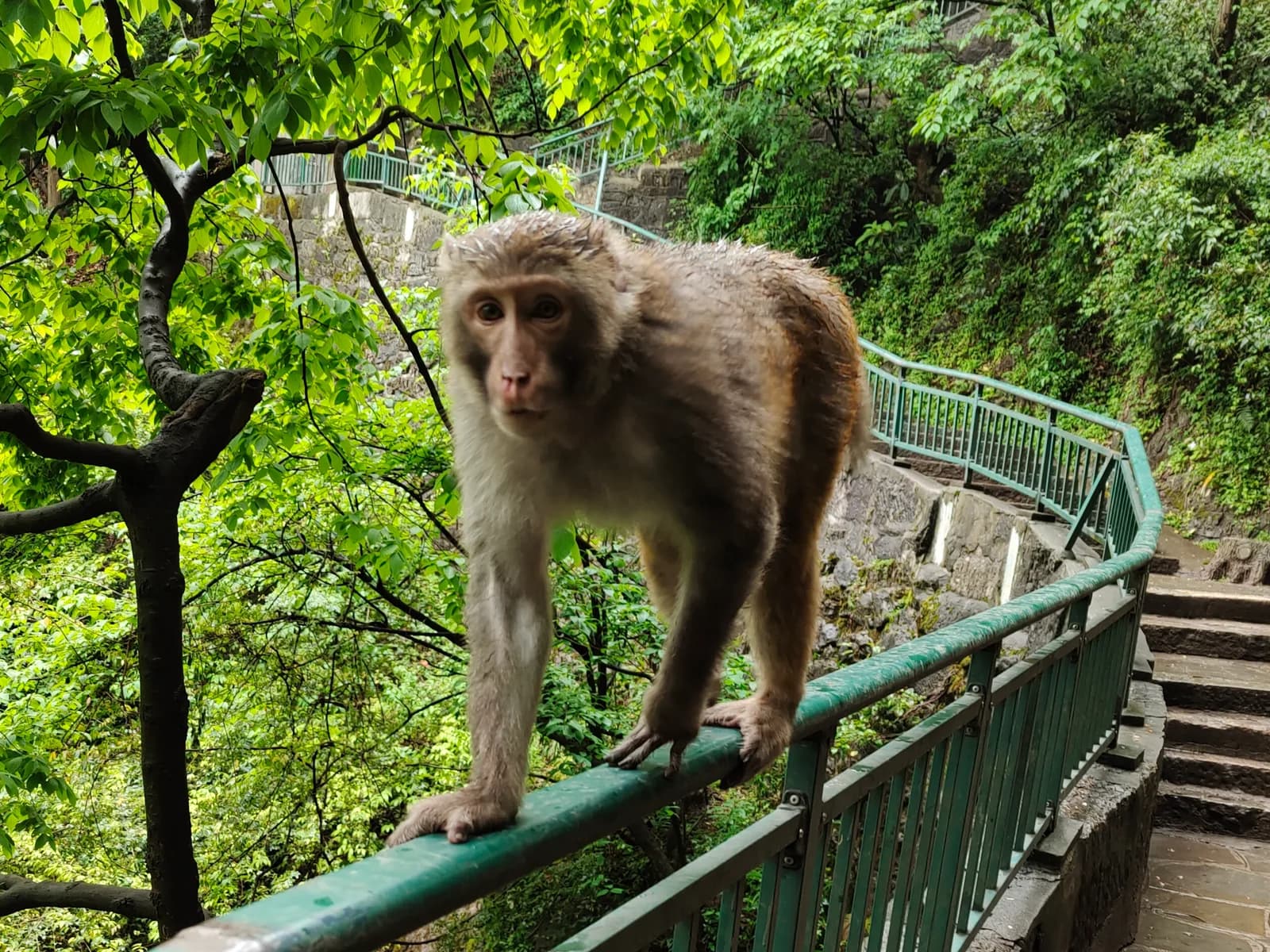
Qianling Park, Guiyang: The Macaques, Hongfu Temple and How to Visit Without Losing Your Snacks
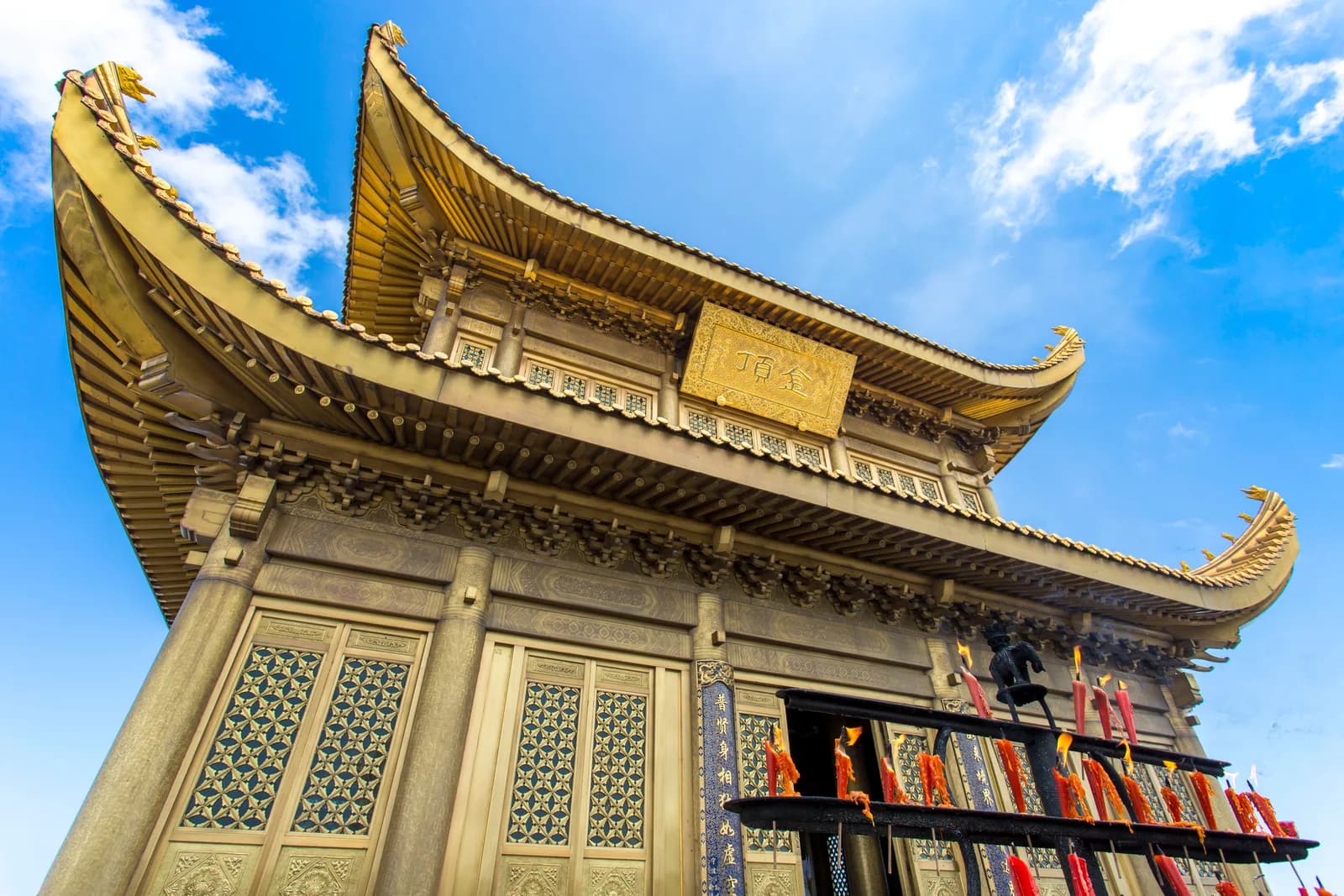
Emeishan Day Trip from Chengdu: What One Day on Mount Emei Really Buys You (and When to Stay the Night)
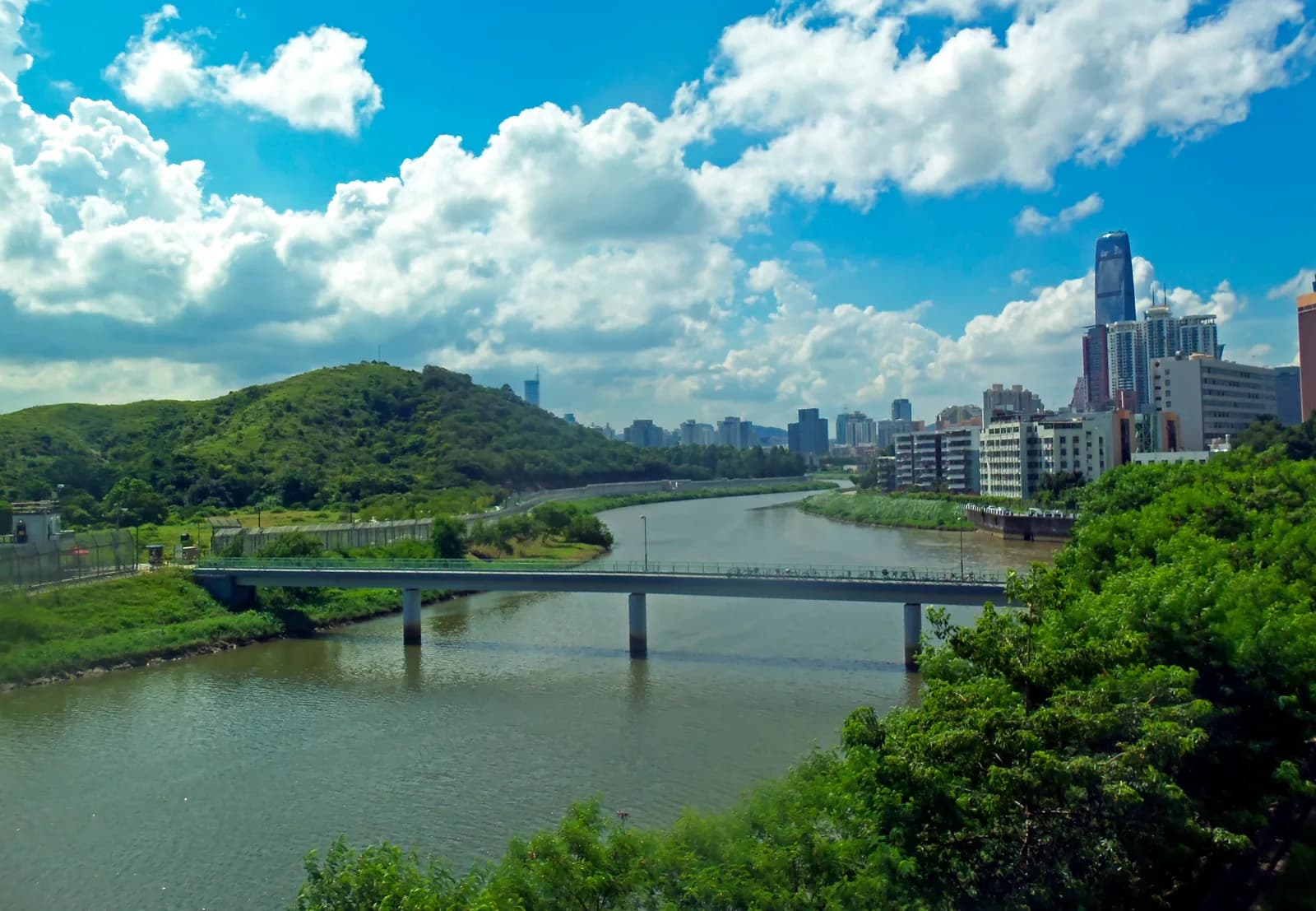
Hong Kong to Shenzhen Border Crossings: All Seven Doors Compared, and Which One Your Day Actually Needs