Things to Do in Bacalar: Boat Tours, Sunrise Kayaks and the Stromatolites
How to spend your days on the Lagoon of Seven Colors: sailboat vs pontoon tours, sunrise kayaks, Los Rápidos, Cenote Azul, and the rules that protect the stromatolites.
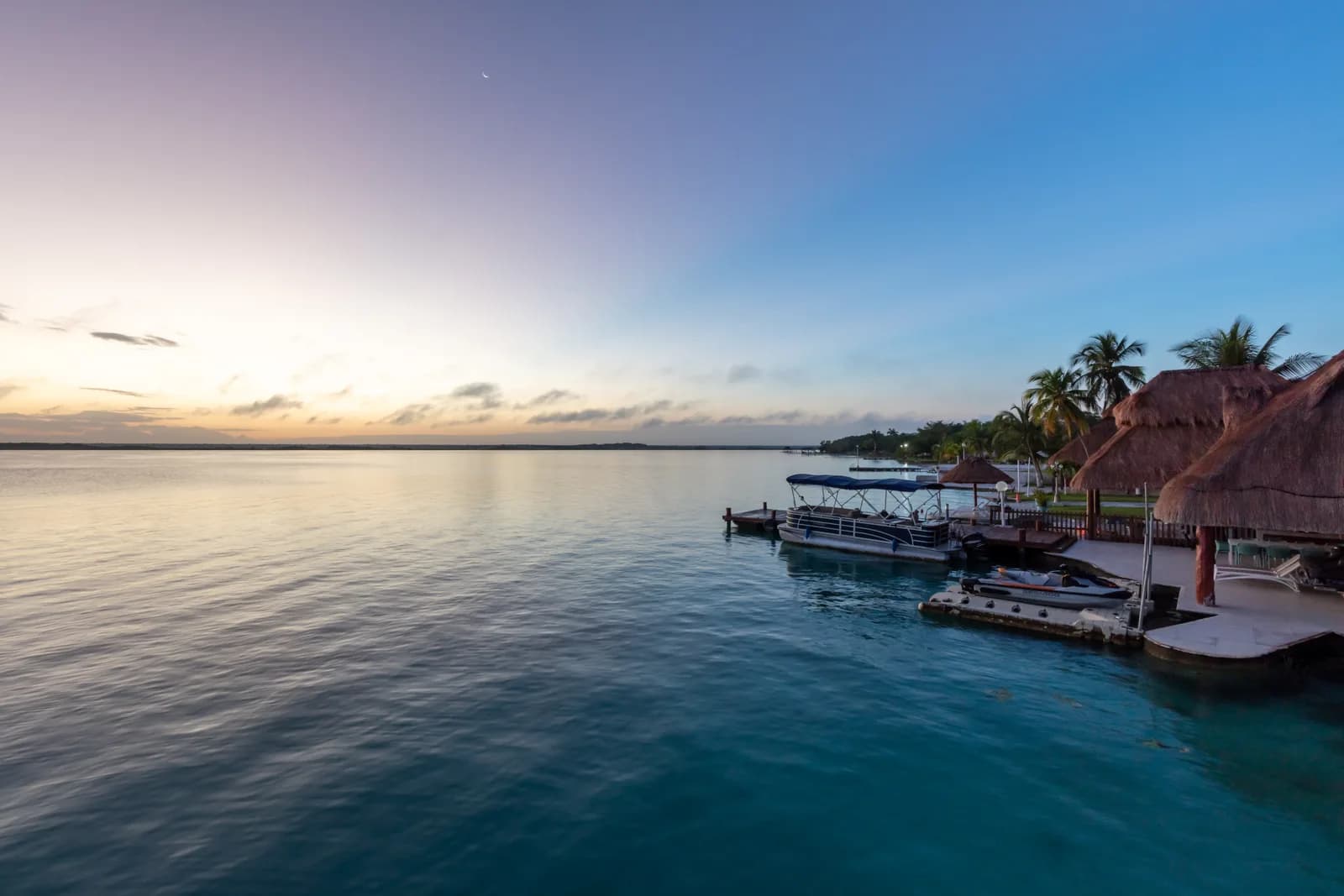
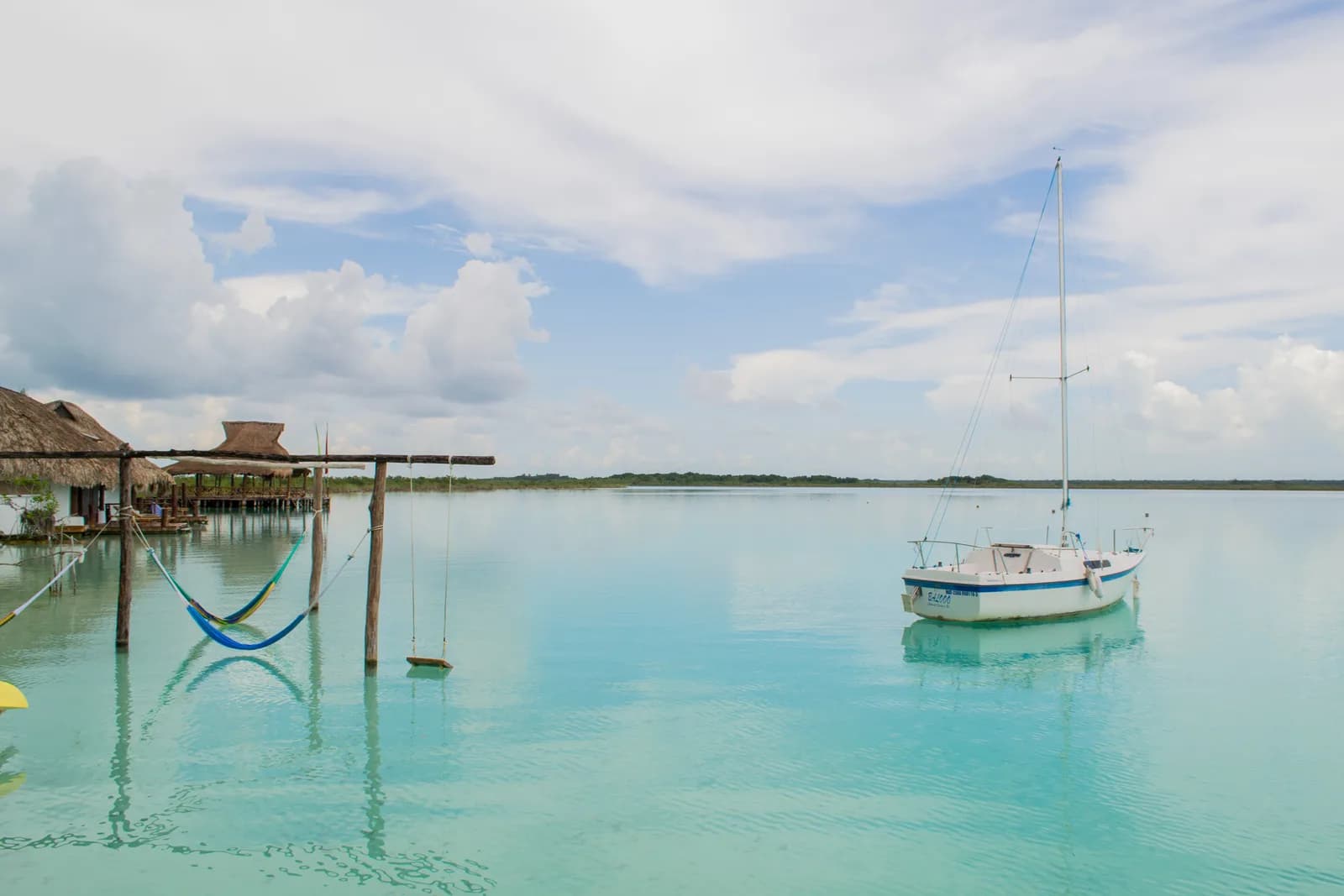
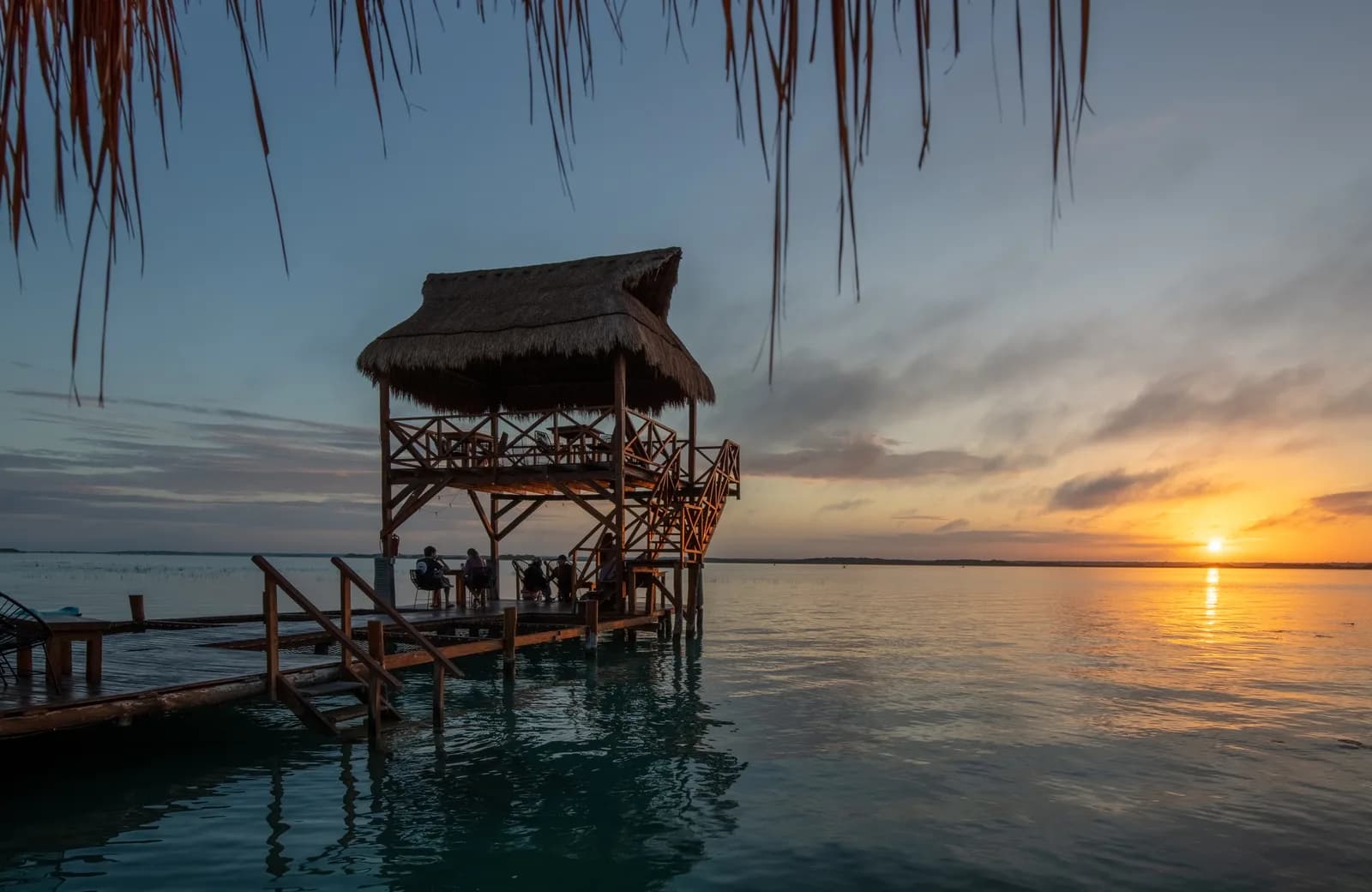
Bacalar rewards a specific rhythm, and most day-trippers get it exactly backward. They arrive at midday when the wind has already flattened the color and roughed up the water, do one loud pontoon lap, and leave. The travelers who love this place are the ones who understood that the lagoon has a schedule: glassy and luminous at dawn, busy and breezy by noon, calm again at dusk. The map for spending two or three days here well starts with getting on the water before anyone else does. Here is the version I would book.
The three things worth building your days around
If you do nothing else, do these: a boat trip across the color bands, a sunrise paddle, and Los Rápidos. Everything else is a bonus.
Three things worth booking
 Worth the splurge
Sailboat lagoon tour
A quiet sail across the seven colors to the Pirate Channel, Bird Island and Cenote Negro, usually with an open bar. No motor wake, gentler on the stromatolites, and the format travelers rate highest.
Book this Do this first
Sunrise kayak or paddleboard
Glassy, mirror-still water before the wind arrives, with coffee and breakfast included on most tours. The single most-loved Bacalar experience in recent reports, and the reason to book a dawn start.
Book this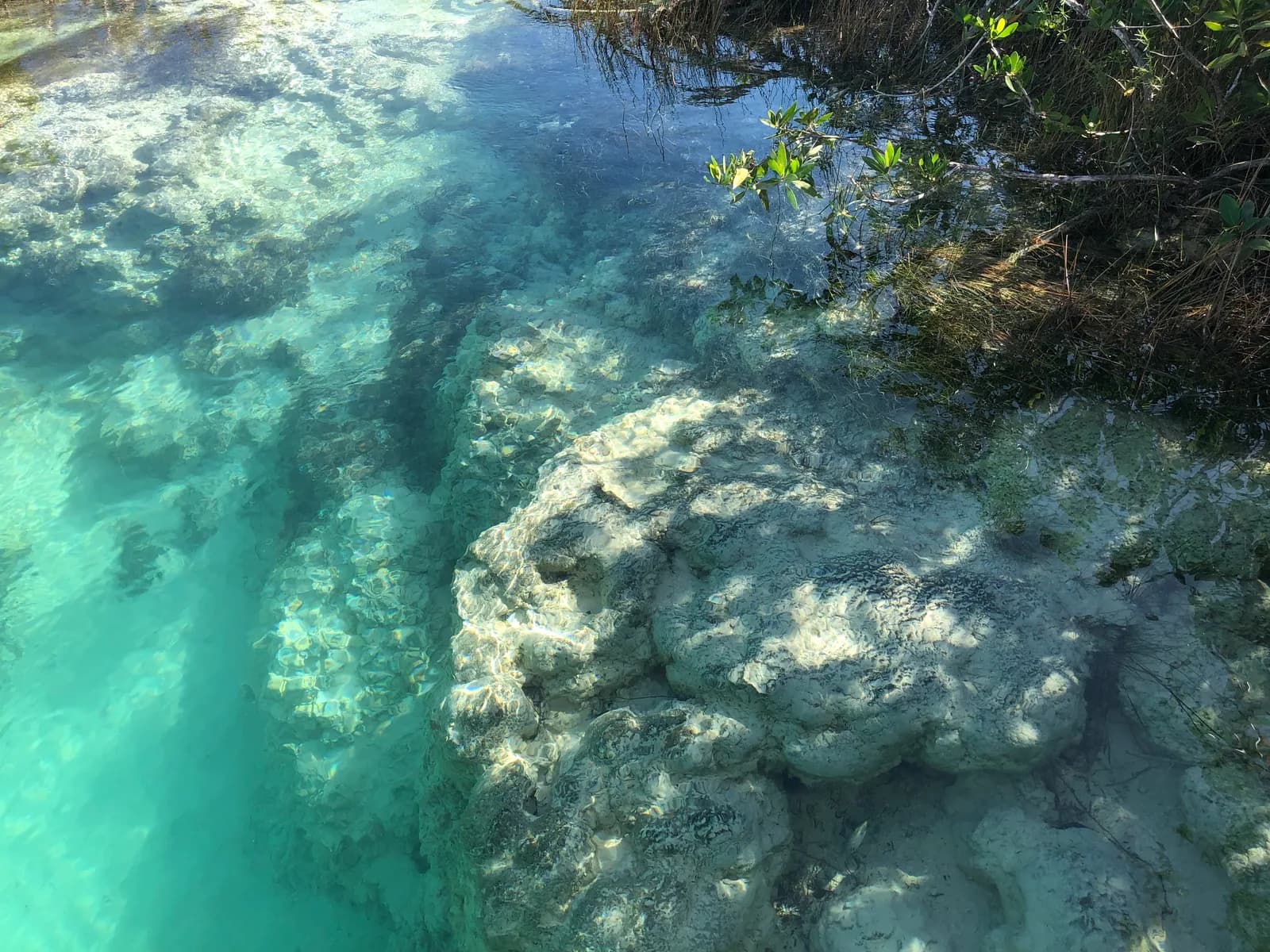 Traveler favourite
Los Rápidos lazy river
A natural channel where a gentle current floats you along past stromatolites, about 12 km south. Arrive at opening, wear a life vest, and skip the cruise-excursion days when it fills up.
Book thisThe boat tour is the centerpiece, and the choice is sailboat versus pontoon. Sailboats and small catamarans, capped at eight to ten people, run quiet four-to-five-hour trips with an open bar and no engine noise, and because they make no wake they are the responsible way to move past the stromatolites; operators like Amir AdvenTours and Sailing Colibri draw hundreds of recent five-star reviews and sell out. Motor pontoons are cheaper and cover more ground faster, hitting the Pirate Channel, Bird Island, Cenote Negro and a Cocalitos swim, but the big midday party pontoons are loud and rushed. Neither is a scam; the trick recent travelers repeat is to book something small and go early. The sunrise paddle is the other non-negotiable, and it is exactly what it sounds like: a kayak or paddleboard onto water so still it doubles the sky, before the wind turns up around mid-morning. Every cenote fee, Los Rápidos and the boat tour options are compared in my Bacalar cenotes and lagoon tours guide.
The stromatolites, and the rules that keep them alive
This is the part that makes Bacalar more than a pretty lagoon. Stromatolites are layered structures built over millennia by microbial mats, a lineage billions of years old, and Bacalar holds one of the largest freshwater colonies anywhere. They look like unremarkable beige rock just under the surface, which is exactly the problem: people stand on them without realizing what they are.
The rules are strict and, since a 2025 round of new lagoon regulations, increasingly enforced. Never touch or stand on the stromatolites, enter the water only from marked boardwalks and docks, and above all wear no sunscreen, repellent, makeup or lotion in the water near them, because those chemicals kill the microbes. Apply reef-safe sunscreen at least an hour before you swim, or just swim in a rash guard and a hat, which is what the most conscientious recent visitors do. The 2025 navigation zoning also set speed limits and restricted motorized boats in the most delicate areas, including Los Rápidos and the Pirate Channel, so a no-wake sailboat is now both the nicer and the more responsible choice.
Cenote Azul, the fort and the town
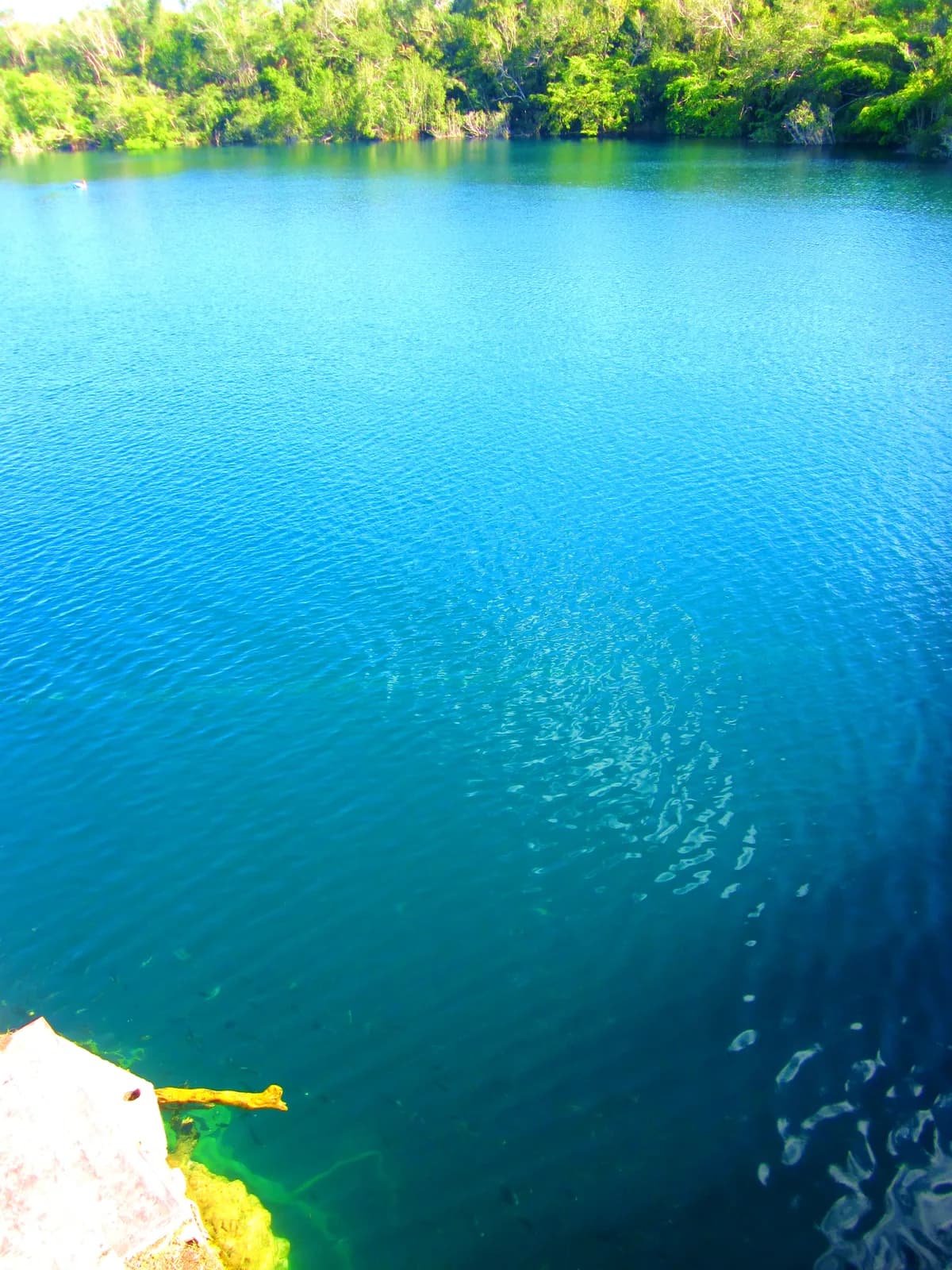
Bacalar is not only the lagoon. On the southern edge of town, Cenote Azul is a deep sinkhole, around 90 meters down, a startling dark blue against the pale lagoon, open for swimming for about 50 pesos with life vests to rent and a restaurant on the rim. It is the perfect afternoon activity when the wind is up and the open water has lost its shine.
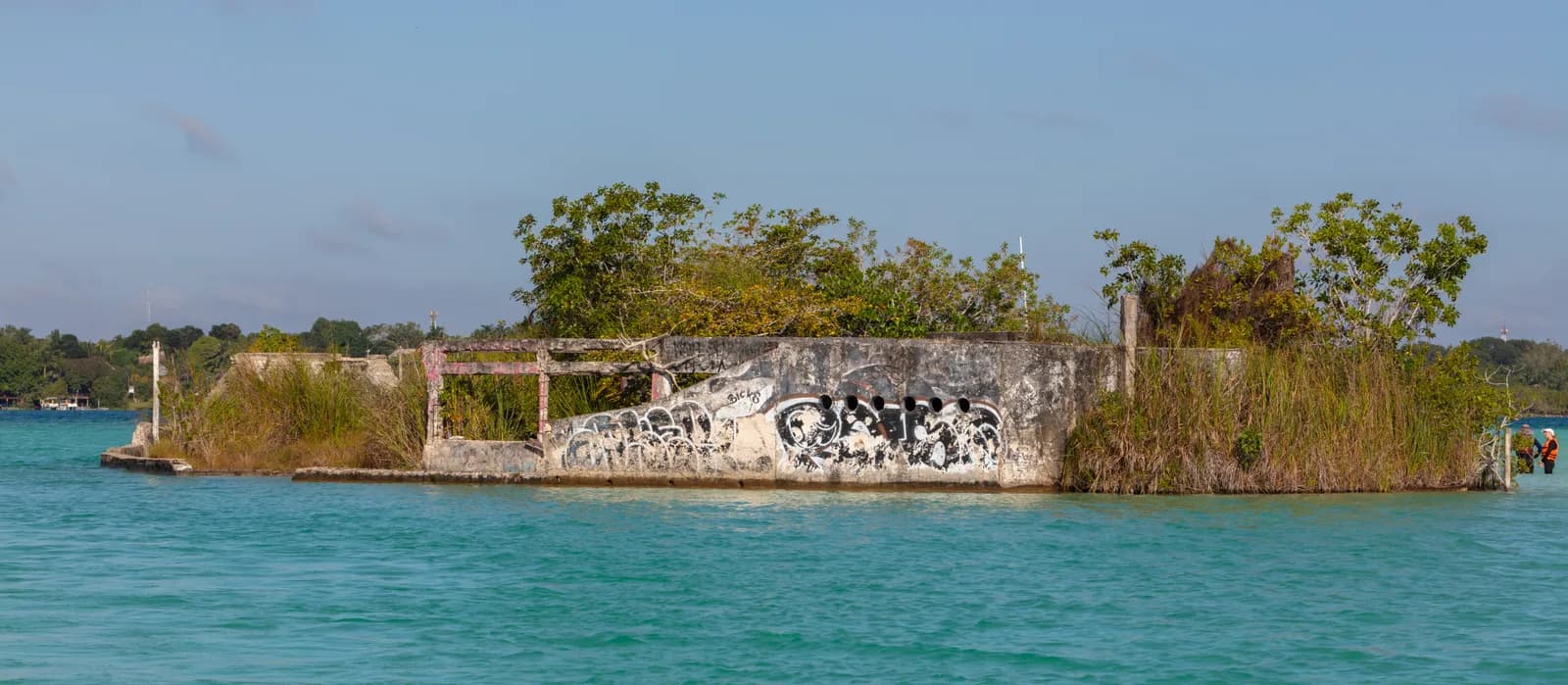
In the center, Fort San Felipe is a small 18th-century stronghold built against pirates, now a pirate-history museum, with the best elevated lagoon view in town from its ramparts. It is around 110 pesos for foreigners, closed Mondays, and worth an hour. After that, the town does its part: taco carts and marquesita stands on the Zócalo at night, standout kitchens like La Playita on the water and Nixtamal for open-fire seafood, and Mango y Chile for the vegetarian crowd. Where you sleep shapes how easily you reach all of this, which is the whole subject of my where to stay in Bacalar guide: the lagoon-front hotels put a swim dock and free kayaks at your door, while the town center puts the food and the fort at yours.
A simple two-day plan
Day one is the water. Start with a sunrise kayak or paddleboard while the lagoon is glass, have a long breakfast, then take a mid-morning sailboat out to the Pirate Channel and Cenote Negro with a swim at the stromatolites, going reef-safe or covered up. Spend the hot, windy afternoon slow: a hammock over the water, or the deep blue of Cenote Azul when the open lagoon chops up. Eat tacos and a marquesita on the Zócalo after dark.
Day two goes south to Los Rápidos at opening, before the crowds and the cruise-excursion buses, to float the natural channel and eat shrimp tacos on site. Back in town, climb Fort San Felipe for the view and the pirate history, then close the trip with a sunset swim off a dock. If you have a third day, this is where the Caribbean coast comes in: Mahahual is about an hour east, and the reef there is the saltwater counterpart to all this freshwater. I have mapped that side out in the Mahahual where-to-stay guide.
Getting around to all of it
Most of the lagoon activities launch from town or from your hotel dock, so a central or lagoon-front base keeps things simple. Los Rápidos and Cenote Azul are a taxi ride south, roughly 200 to 250 pesos each way, and worth agreeing before you get in. Colectivos run the Chetumal highway cheaply but drop you on the road with a walk. The recurring practical warning is money: Los Rápidos, Cenote Azul, the fort and the colectivos are cash-only, and the town's few ATMs sometimes run dry, so carry small pesos. If you are still sorting how you reach Bacalar in the first place, the transport breakdown, Chetumal versus Tulum versus the Maya Train, is in the where to stay guide.
Practical notes I would tell a friend
- Get on the water at sunrise; the glassy color and calm are gone by late morning when the wind arrives.
- Book a small sailboat over a big pontoon, and reserve the popular operators ahead in high season.
- Go reef-safe or swim covered near the stromatolites, and never stand on them; the rule is enforced and the science is real.
- Do Los Rápidos at opening and avoid the days packed with cruise excursions.
- Carry small pesos; the natural swim spots and the fort are all cash-only.
- Use the windy afternoons for Cenote Azul, the fort or a hammock, not for the open lagoon.
- Add a couple of nights on the coast at Mahahual to pair the freshwater lagoon with the reef.
Bacalar's rules and crowds are both shifting quickly as it absorbs more visitors. If you have been recently and something here has changed, tell me and I will update it. But if you are booking now: paddle at dawn, sail rather than motor, protect the stromatolites, and let the lagoon set the pace. For choosing which shore to sleep on, my where to stay in Bacalar guide has the full zone-by-zone breakdown.
Frequently asked
What is the best boat tour in Bacalar?
For most people, a small sailboat or catamaran trip is the one worth paying for: quieter, no motor wake, and gentler on the stromatolites, usually four to five hours with an open bar for around 40 to 60 dollars. Motor pontoons are cheaper at 25 to 50 dollars and cover more stops in less time, but the big midday pontoons are the closest thing Bacalar has to a tourist-trap format. Go small and early either way.
What are the stromatolites in Bacalar and can you touch them?
Stromatolites are living rock-like structures built by microbes, among the oldest lifeforms on Earth, and Bacalar has one of the largest freshwater colonies in the world. You must never stand on or touch them, and no sunscreen, repellent or lotion is allowed in the water near them because the chemicals kill them. Enter only from marked boardwalks and docks at spots like Cocalitos and Los Rápidos.
Is Los Rápidos worth it in Bacalar?
Yes. Los Rápidos is a natural channel between the lagoon and Xul-Ha where a gentle current carries you along like a lazy river, about 12 km south of town. Entry is around 200 pesos, life vests are provided and required, and travelers say to arrive at opening and avoid the busy cruise-excursion days. Two to four hours is enough, and there is a restaurant on site.
How much does it cost to do things in Bacalar?
Boat tours run roughly 25 to 60 dollars, a sunrise kayak or paddleboard tour about 360 pesos with breakfast, Los Rápidos around 200 pesos, Cenote Azul about 50 pesos plus a life-vest rental, and Fort San Felipe around 110 pesos for foreigners. Most of the natural swim spots are cash-only, so carry small pesos.
Do you need to book Bacalar tours in advance?
For popular sailboat operators in the December to April high season, yes, since the best ones sell out. Sunrise kayak and paddleboard tours and the standard pontoon trips can often be arranged a day ahead through your hotel or a tour desk. Booking the marquee sailing trips online before you arrive avoids the dock touts.
What is the best time of day to be on the Bacalar lagoon?
Early morning. The water is glassy and mirror-still at sunrise, which is why the sunrise kayak and paddleboard tours are so highly rated, and the color reads brightest before the wind arrives. By late morning the breeze picks up, the surface chops, and the magic fades until evening. Plan water activities for the morning and save the town and cenotes for the afternoon.
Can you swim in Cenote Azul in Bacalar?
Yes. Cenote Azul is a deep natural sinkhole, around 90 meters deep, on the southern edge of town, open to swimmers for a small entry fee of about 50 pesos with life vests available to rent. It is a striking deep blue and a good afternoon add-on, with a restaurant on site. It is cash-only, so bring pesos.