Emeishan Day Trip from Chengdu: What One Day on Mount Emei Really Buys You (and When to Stay the Night)
Mount Emei as a day trip from Chengdu: 2026 train, bus and cable car route to the Golden Summit, the new ticket caps, monkeys, and when to stay overnight.
Every Chengdu itinerary eventually collides with the same question: Leshan is the easy day trip, but what about the mountain behind it? Mount Emei is the bigger prize on paper, one of Chinese Buddhism's four sacred mountains, 3,077 meters, a golden statue above a sea of clouds. It is also, per almost every recent traveler report I have read, the day trip most likely to disappoint people who plan it casually. I have not filmed Emeishan yet, but the pattern across accounts from the last two years is unusually consistent: the one-day version works only if you accept that it buys the Golden Summit and nothing else, the sunrise belongs to people who stayed the night, and since May 2026 a renovation-era ticket cap means the summit is no longer something you can decide on at the gate. This guide lays out the train-bus-cable-car route leg by leg, the honest cost, the monkeys, and the point at which a day trip should quietly become an overnight.
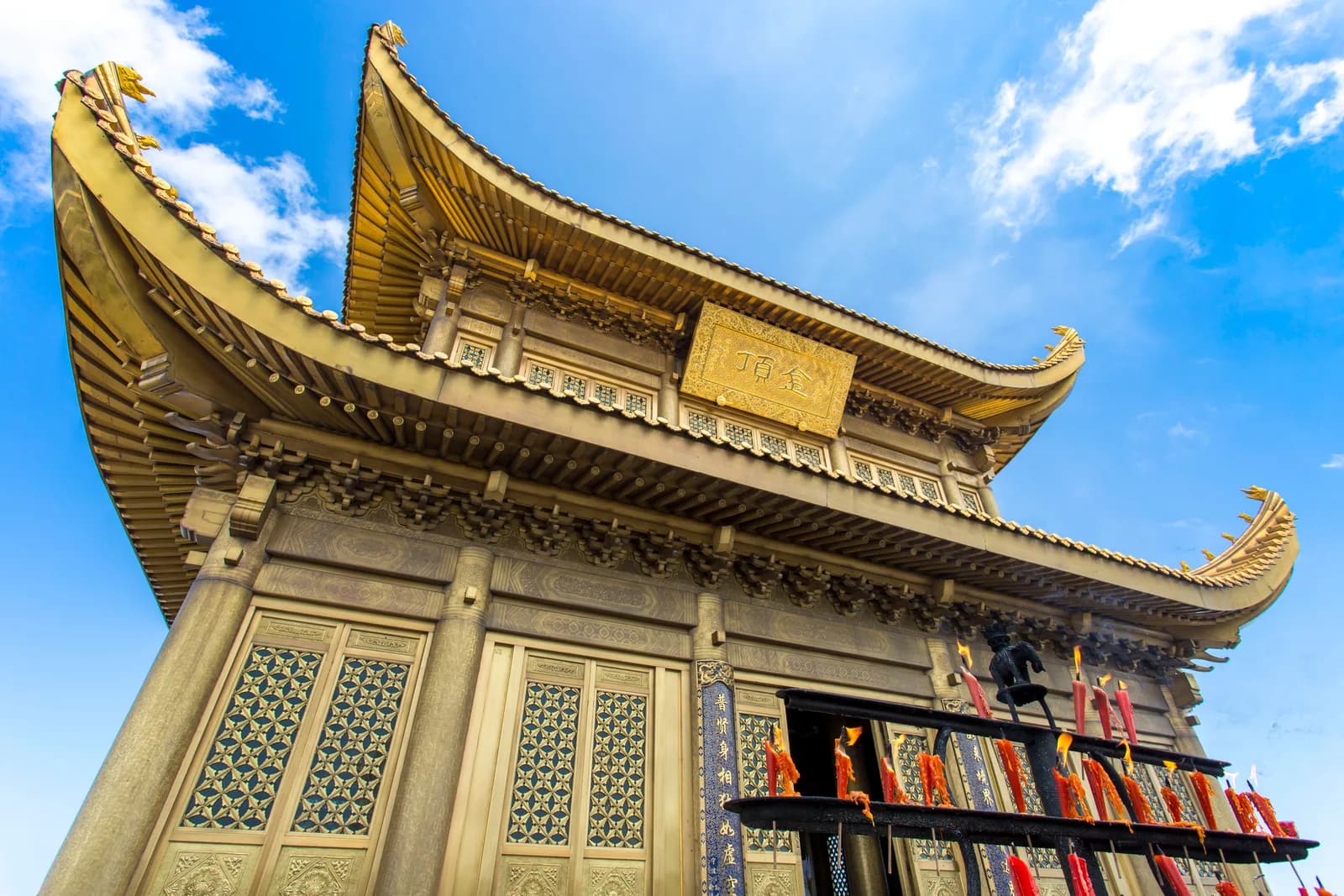
What one day actually buys you
Start with the geometry, because it explains everything else. Emeishan is not a viewpoint, it is a whole mountain range folded into a scenic area, with something like 50 km of pilgrim trails, dozens of temples, and a summit that sits a full two-hour bus ride above the entrance gate. The classic multi-day hike that older guides describe, the one where you sleep in monasteries and climb the 99 Bends on foot, has almost nothing to do with the day trip. They just share a ticket.
A day-tripper's Emeishan is one thing: the Golden Summit. Bus up, cable car, two hours on top, bus down. A traveler who reviewed the route in September 2025 put the arithmetic plainly: the eco bus alone takes about an hour and 40 minutes each way, and you should plan six hours or more on the mountain from the moment you leave the railway station. Add the hour-plus train from Chengdu at each end and the day is spoken for. The lower trails, Qingyin Pavilion, the crag-and-stream scenery that made a French hiking couple call the left-flank trail the best part of the whole mountain, none of that fits. Recent guides updated in January 2026 say the same thing without romance: a day trip works "only if your goal is focused."
That is not an argument against going. The summit is genuinely one of the great sights in Sichuan, a 48-meter golden statue of Puxian facing ten directions and a cluster of temples floating above the cloud line on a clear day. It slots naturally into the same Chengdu day-trip menu as the pandas and Leshan. It is an argument for going with the right expectations, and for knowing in advance which version of the mountain you are buying.
The route, leg by leg
Leg one: the train. The same intercity high-speed line that serves Leshan continues to Emeishan station: 60 to 90 minutes from Chengdu East or Chengdu South, about ¥65 in second class, with dozens of departures a day. Everything is real-name and paperless, booked through 12306 or Trip.com, and your passport is the ticket. The booking advice from my Leshan guide transfers wholesale: sales open about two weeks out, weekend trains genuinely sell out under the 240-hour visa-free surge, and locking a specific evening return matters even more here, because the mountain will happily eat your buffer. For the day-trip math to work, aim to be on a train that has you at Emeishan station by 8am or so.
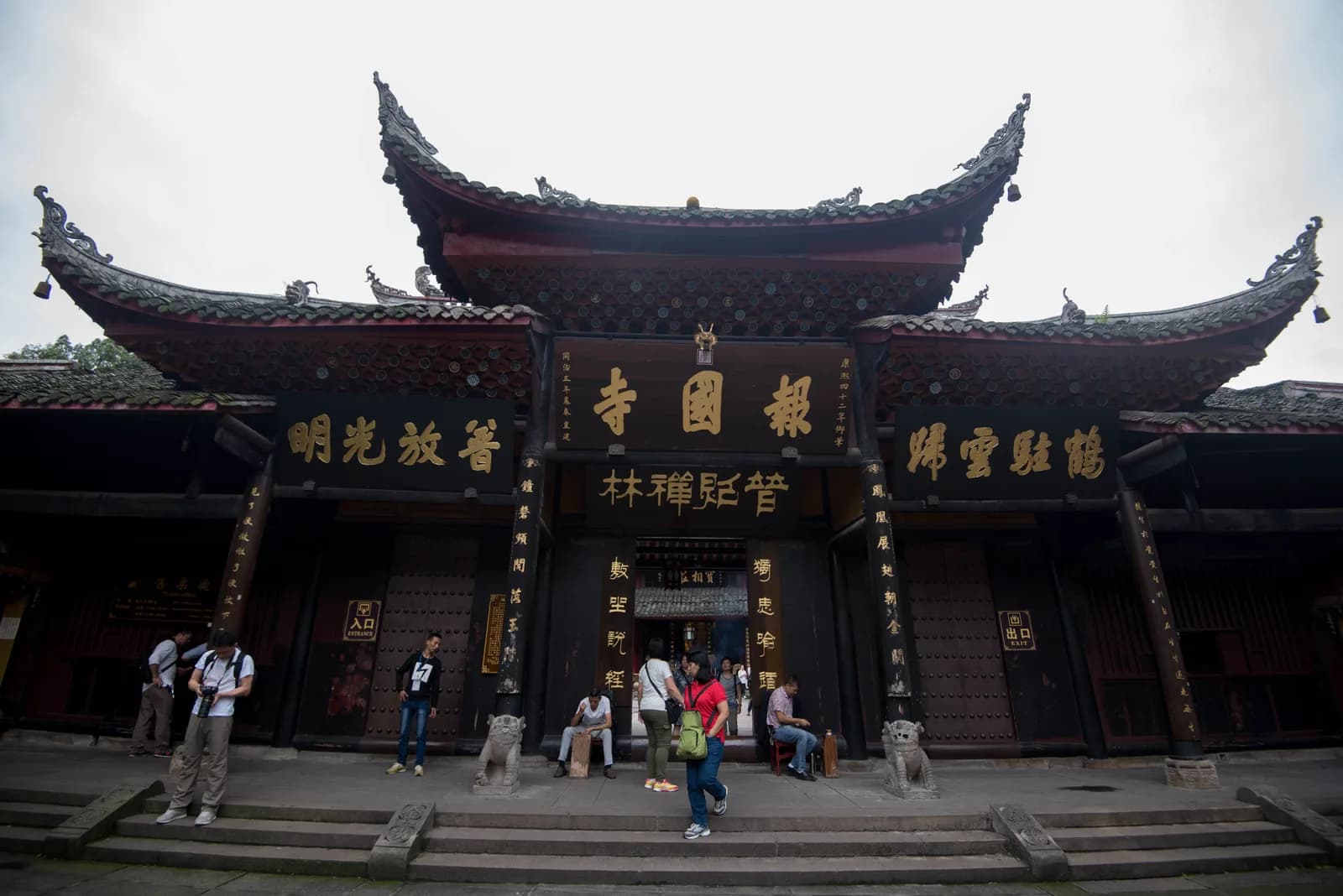
Leg two: station to mountain gate. Emeishan station sits in town, not on the mountain. City bus 5A or 12 covers the run to the Baoguo Temple tourist center in about 20 minutes for ¥1–2, and a taxi or Didi does it in 10 to 15 minutes for ¥10–16. This is where the entry formalities happen: the scenic-area ticket is ¥160 in high season (¥110 from mid-December to mid-January), real-name, scanned against your passport.
Leg three: the bus to Leidongping. The sightseeing bus from the Baoguo area to Leidongping at 2,430 meters is the long leg: ¥90 round trip, departures every half hour from 6am in high season (7am in winter), and roughly two hours of switchbacks each way. Multiple recent accounts describe it as the part of the day nobody warns you about. There is no shortcut; this is the only motorized route to the top of the mountain.
Leg four: the walk and the cable car. From Leidongping a stone path climbs about 1.5 km to Jieyin Hall, 20 to 30 minutes at altitude, and this stretch doubles as prime monkey territory. The Golden Summit cable car then does the final jump in a few minutes: ¥65 up and ¥55 down in high season, ¥30/¥20 in the winter low season, first car about 20 minutes before sunrise, last around 6pm. On holidays the queue is the wildcard; one January visitor described a two-hour wait for the car down. From the top station it is a short walk to the statue, Huazang Temple and the cliff-edge viewing terraces.
| Leg | Time | Cost (high season) |
|---|---|---|
| HSR Chengdu East/South to Emeishan | 60–90 min | ~¥65 each way |
| Bus 5A/12 or taxi to Baoguo Temple | 10–20 min | ¥1–2 bus, ¥10–16 taxi |
| Entry ticket | – | ¥160 (¥110 low season) |
| Sightseeing bus to Leidongping | ~2 hrs each way | ¥90 round trip |
| Walk to Jieyin Hall | 20–30 min | free, monkeys included |
| Cable car to Golden Summit | ~5 min | ¥65 up / ¥55 down |
| Realistic all-in from Chengdu | 12–14 hrs door to door | ~¥490–500 |
Run the timeline forward and the shape of the day is fixed: at the summit around midday, two hours up top, back at Leidongping by 4pm to be safe with the bus, evening train to Chengdu. It works. It just has no slack in it, which is exactly why the next section matters.
The 2026 catch: summit caps and pre-booking
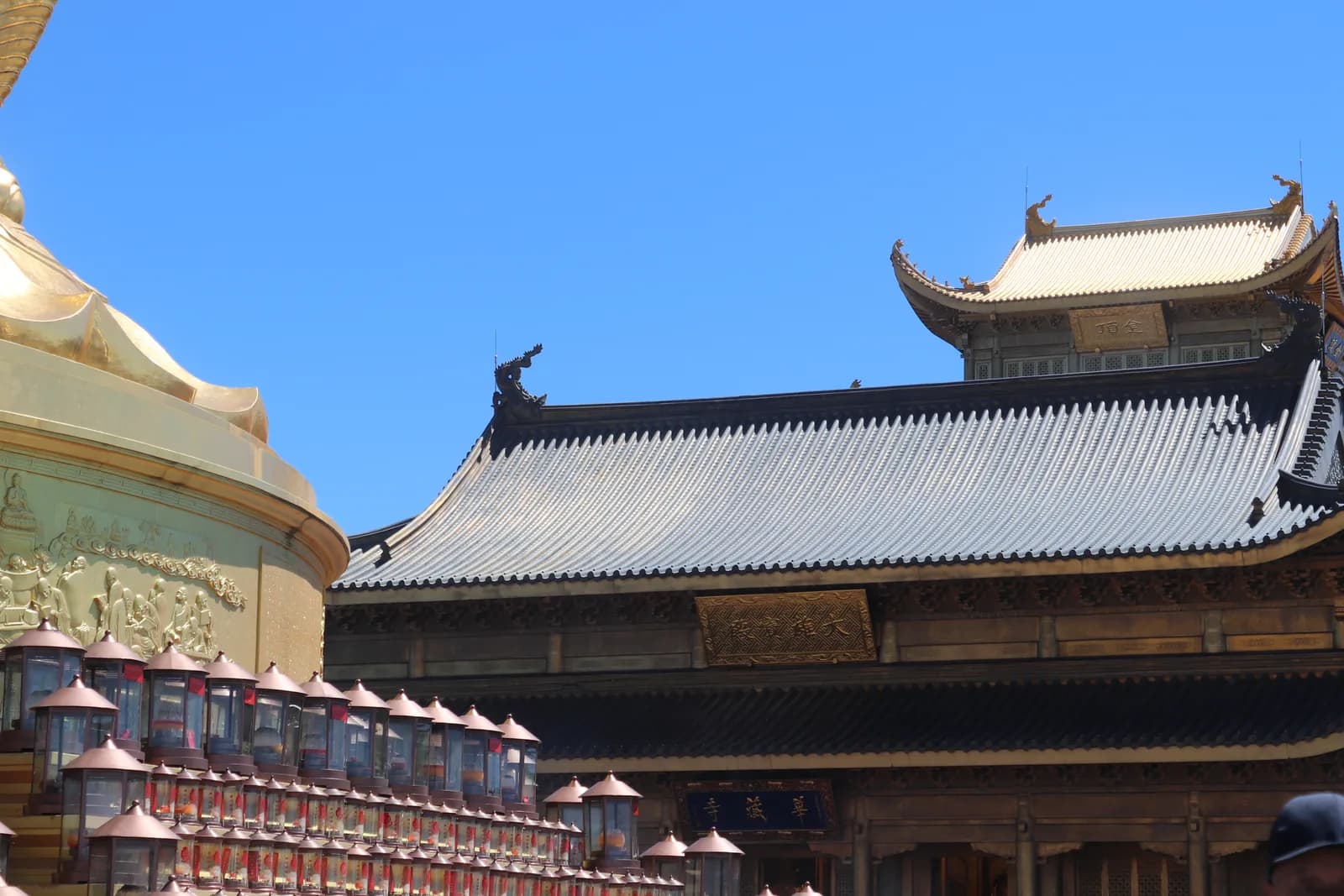
Here is the piece most older guides have not caught up with. Since May 23, 2026, the mountain has been running a renovation program on the Jinding cableway and the Leidongping bus station, scheduled to finish around the end of 2027. While it runs, the operator releases just 8,000 Golden Summit entry slots per day, and sightseeing-bus ticketing to Leidongping is limited to match. In practice that converts the summit from a walk-up decision into something you book the way you book the train: in advance, real-name, against your passport. On an ordinary Tuesday you would probably have squeezed in anyway. On a weekend, a summer holiday, or anything adjacent to Golden Week, the cap is the difference between a summit day and an expensive bus ride to the mid-mountain.
Check the current rules before you commit to a date; renovation-era arrangements shift, and the official channels and big booking platforms track them faster than English-language blogs. If you would rather compress the whole stack of bookings into one purchase, the packaged options are legitimate here, with the usual trade: the tour clock replaces your own. Beyond the Klook picks below, the guided Golden Summit day trip travelers keep reviewing on GetYourGuide runs the same route with an English-speaking guide handling the tickets.
Three things worth booking
 Easiest logistics
Mount Emei day tour from Chengdu
One booking covers transport, entry and the summit slot, which matters more under the 8,000-a-day cap. The trade is arriving at the cable car at the same hour as every other coach.
Book this DIY essential
Mount Emei entry and cable car tickets
Pre-booked entry and cable car tickets sidestep the Chinese-language machines at Baoguo and lock your summit slot before the daily cap bites.
Book this The sane combo
Leshan + Mount Emei two-day combo
Buddha on day one, mountain with an overnight on day two. This is the version recent travelers rate; the one-day double-header mostly delivers the temples at the mountain foot.
Book thisDay trip or overnight: the sunrise question
The honest fork in Emeishan planning is not bus versus hike. It is whether the sunrise matters to you, because the mountain's two most photographed moments, dawn breaking over the sea of clouds and the statue going gold in first light, are structurally unavailable to day-trippers. The first cable car leaves about 20 minutes before sunrise. To be on it, you slept on the mountain.
| One-day dash | Overnight | |
|---|---|---|
| Golden Summit | Yes, midday | Yes, at dawn |
| Sunrise / sea of clouds | No | If the weather cooperates |
| Lower trails and temples | No | Yes, on day two |
| Crowds at the top | Peak, with the tour buses | Thin until mid-morning |
| Beds | Your Chengdu hotel | Monastery, Leidongping or summit hotel |
| Weather risk | Take what midday gives | Two windows instead of one |
The overnight comes in three price tiers. Cheapest are the monastery guesthouses scattered along the trails, around ¥40–80 for a basic bed; a long-running hiking blog updated in July 2025 describes them as spartan but memorable, and the vegetarian meals cheap and hearty. To me this reads as the Emei version of something I know well from Japan, the shukubo temple stay, with the same deal: thin walls and early bells in exchange for having a sacred mountain to yourself at the hours that matter. Mid-tier is Leidongping, which recent Chinese-language trip reports recommend precisely because it is cheaper than sleeping at the top and still puts the first cable car within reach. The top tier is the handful of summit hotels, the Golden Summit Hotel and its neighbors; a May 2025 visitor staying near the top wrote that they watched the sunset from their room and rode the cable car up rather than hiking, which is about as efficient as an Emei sunrise gets.
And then there is the fog, the variable no itinerary controls. A March 2024 reviewer called their summit visit "a waste of time" in thick fog; a December visitor described the peak wrapped in cloud while the base sat clear, and recommended watching the live summit webcam before committing. That cuts both ways: the overnight gives you two weather windows instead of one, which is quietly its strongest argument.
The monkeys are not a bit
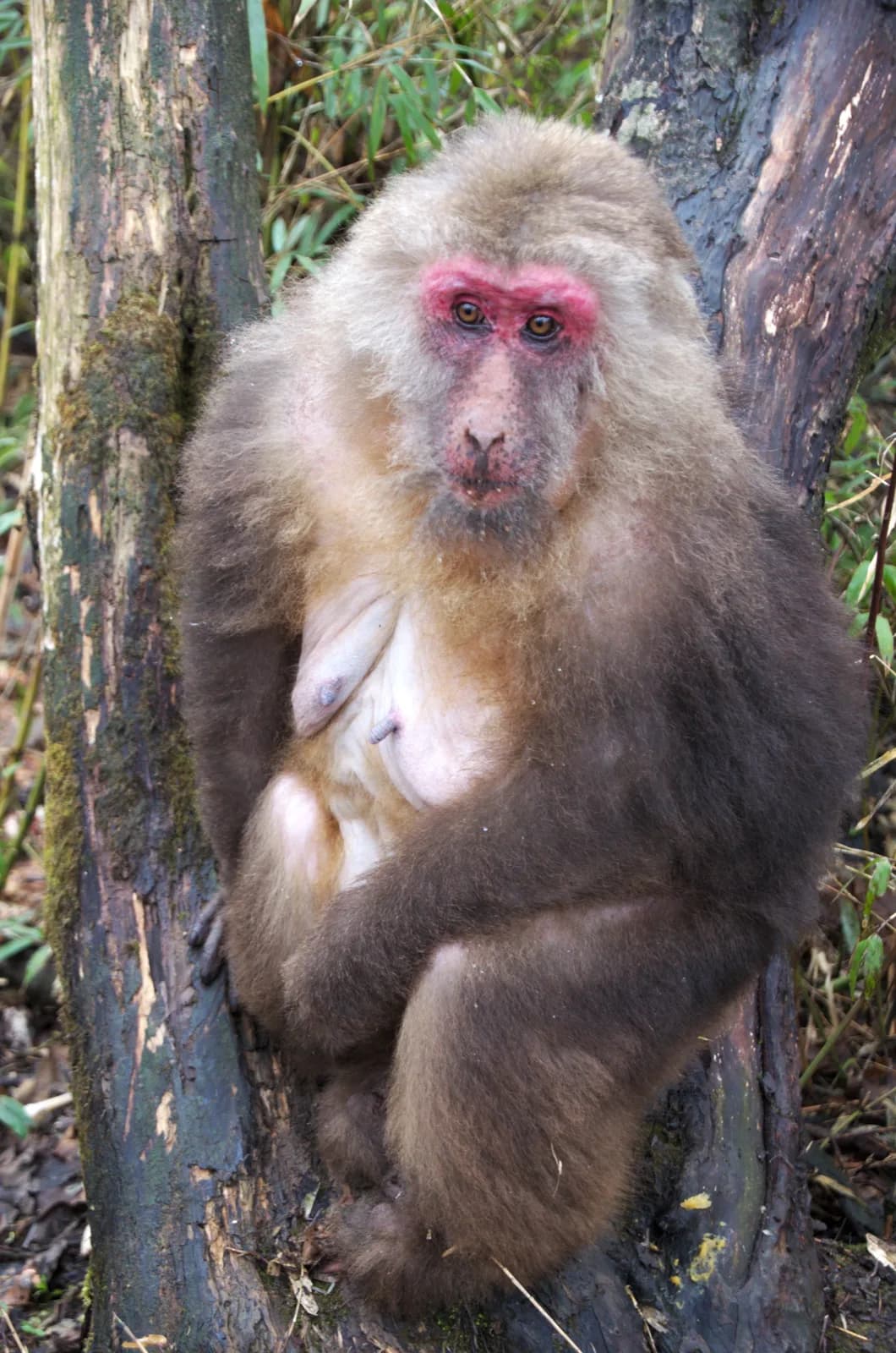
Every Emei report eventually gets to the Tibetan macaques, and the tone has shifted over the years from "cute photo op" to "manage this." A September 2024 visitor described the stretch near the top as "another long walk with vicious monkey and endless food hawkers." The guidance that recent guides converge on is unglamorous: keep food sealed inside your bag, do not open zips or rustle plastic in front of them, do not carry visible snacks, and keep distance from mothers with infants. The concentration points are the ecological monkey zone on the lower Qingyin trail and the path between Leidongping and Jieyin Hall, which is exactly the stretch every summit-bound day-tripper walks. Vendors sell bamboo sticks for about ¥3, which function more as a walking aid and a confidence prop than a weapon; a French couple whose Emei guide is still one of the most detailed online put it best, advising hikers to move briskly through the tourist-fed zones and then enjoy the monkeys higher up, where they behave like wild animals instead of muggers.
Plan B: the fog-day mountain
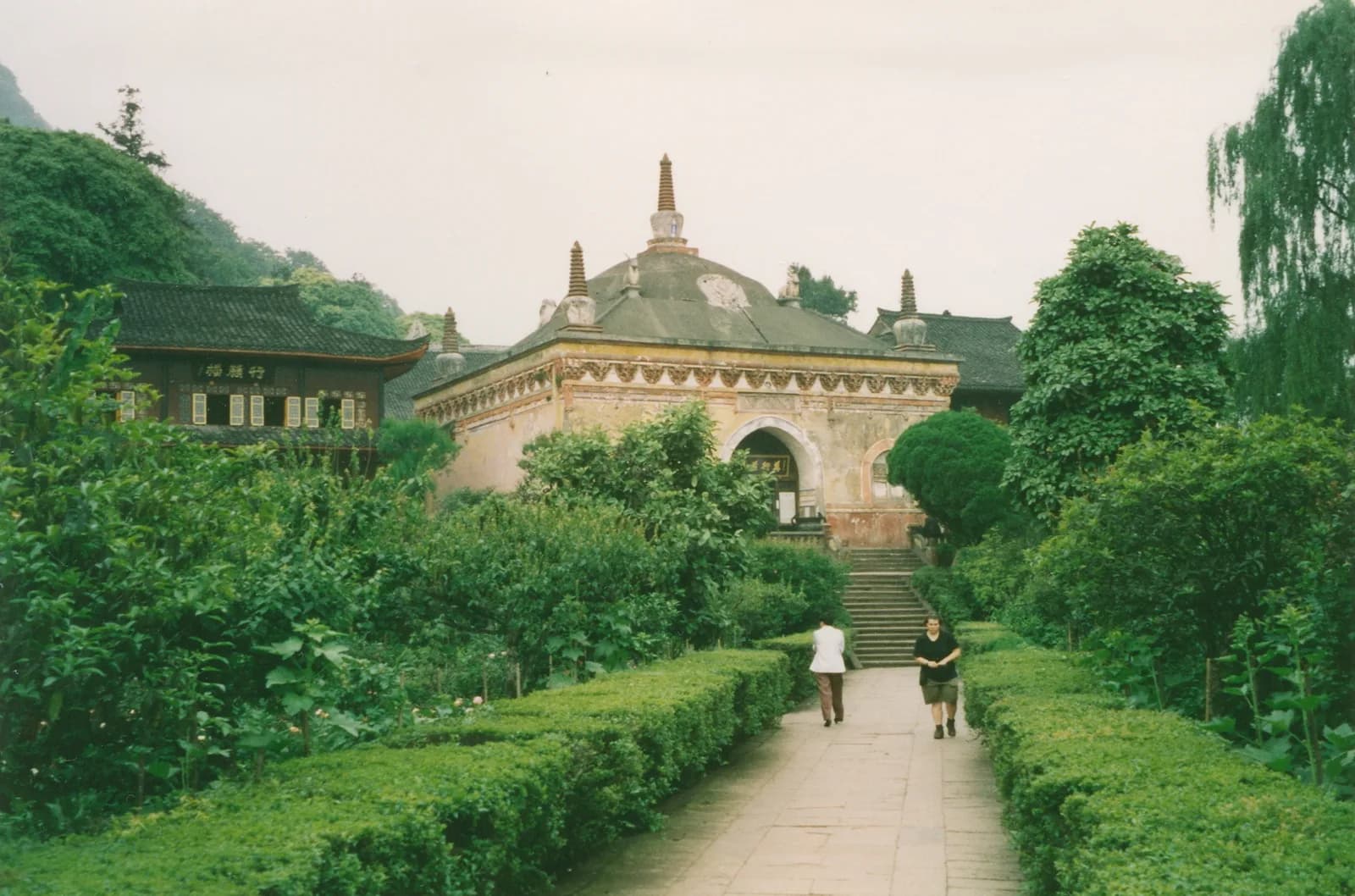
If the webcam shows the summit socked in, the mountain has a second act that day-trippers rarely consider: skip the ¥90 bus to Leidongping and spend the day mid-mountain instead. The Wannian cable car (¥65 up, ¥45 down in high season) climbs to Wannian Temple, home to a Song-dynasty bronze statue of Puxian on his six-tusked elephant, and from there a trail loop drops through forest to Qingyin Pavilion, where two streams meet under old pavilions. This is the stretch that multi-day hikers consistently call the most beautiful part of the mountain, it sits below the cloud line more often than the summit, and it costs a fraction of the summit stack. It is not the Golden Summit. On a fog day, it is better than the Golden Summit, because it is actually visible.
Should you combine it with Leshan?
I answered this from the Leshan side in my Leshan day-trip guide, and the answer survives the trip across the valley: not in one day. The two sit 11 to 23 minutes apart on the same rail line for ¥11–32, which makes the combo look free. But a guide updated in January 2026 says it flatly, advising "strongly" against the single-day double-header, and the one-day combo tours resolve the time problem by giving you the temples at the foot of Emei instead of the summit. Stacking the Buddha's staircase queue on top of Emei's two-hour bus is how both sights end up half-seen.
The pattern that recent travelers actually rate is the two-day chain: Leshan on day one (Buddha in the morning, the food crawl in the afternoon, it is one of Sichuan's great eating towns and the English internet barely covers it), then the short train hop to Emeishan, sleep at the mountain foot or higher, summit at dawn on day two, direct train back to Chengdu from Emeishan station. Same total transit as two separate day trips, twice the mountain.
Where to sleep it from
The default answer is the same as Leshan's: base in Chengdu and treat Emeishan as the long excursion it is. Chengdu has the hotel depth, the metro to Chengdu East, and the food to come home to; my Chengdu neighborhood guide makes the zone-by-zone case, and staying near Chunxi Road keeps the 7am train painless. Stay in the Baoguo Temple area at the mountain foot if you are doing the overnight version: it puts the 6am bus at your door, and the hot-spring hotels there, led by the Hongzhushan, turn a mountain day into something closer to an onsen trip, a logic I recognize instantly from Japanese mountain towns. Sleep on the summit or at Leidongping only if sunrise is the mission; beds up top are basic and cold-weather, and that is the price of a two-minute walk to dawn.
Three places to book in Emeishan
 Hot-spring base
Hongzhushan Hotel
The classic mountain-foot base, 200 meters from Baoguo Temple with dozens of hot springs and a shuttle from the railway station. Recent guests rate the location above everything else.
Check availability Splurge
Anantara Emei Resort & Spa
The international-brand option about 10 km from the station, for turning the mountain into a two-night resort trip rather than a logistics exercise.
Check availability Sunrise logistics
Golden Summit Hotel
One of only a handful of beds on the summit itself. Basic and cold, and travelers plan whole Sichuan trips around securing a room here for dawn.
Check availabilityRecommendations
- Book the train and the Golden Summit slot together and early; under the renovation-era cap of 8,000 summit tickets a day, the mountain sells out before the train does.
- Be at Emeishan station by 8am for a day trip; every later hour comes straight out of your summit time.
- Carry the passport you booked with; train, entry gate and cable car are all real-name.
- Treat the sightseeing bus as two hours each way, not the 90 minutes the schedule implies, and be back at Leidongping by 4pm.
- Check the live summit webcam the night before, and swap to the Wannian-Qingyin mid-mountain loop if the top is fogged in.
- Pack a warm layer even in August; the summit sits at 3,077 meters and runs 15 degrees colder than Chengdu, and padded coats rent at the top for a few yuan more than dignity costs.
- Zip food deep in your bag before Leidongping and keep it there until the cable car.
- If sunrise is the point, sleep at Leidongping or the summit and ride the first car; the dawn crowd is a fraction of midday's.
- Do Leshan and Emeishan as two days on the same rail line, not one; the combo tour trades the summit for a checklist.
- In the December-to-January low season, entry drops to ¥110 and the cable car to ¥30, the honest budget play if you can live with snow and shorter hours.
The day trip is real, and done with an early train and pre-booked tickets it delivers one of the best single sights in Sichuan by lunchtime. But Emeishan is the rare place where the research pushed me toward the slower version: the monastery bell, the first cable car, the clouds doing their thing at dawn. If one day is what the itinerary allows, take the summit and enjoy it. If two days are possible, give the mountain its night and spend the spare afternoon eating your way through Leshan next door. Either way, start from a good Chengdu base, and if you have ridden that first sunrise cable car recently, tell me how the renovation queues are running and I will update this. The rest of the Chengdu plan will be waiting when you get down.
Frequently asked
Can you do Emeishan as a day trip from Chengdu?
Yes, but one day buys you the Golden Summit and almost nothing else. Take an early high-speed train from Chengdu East or Chengdu South to Emeishan station (about an hour, around 65 yuan), then it is roughly a two-hour scenic bus to Leidongping, a 1.5 km walk to Jieyin Hall and a short cable car to the 3,077-meter summit. Budget six hours or more on the mountain itself and book an evening train back. Sunrise and the lower trails need an overnight.
How do you get from Chengdu to Emeishan by train?
The intercity high-speed line runs from Chengdu East and Chengdu South through Leshan to Emeishan station in roughly 60 to 90 minutes, around 65 yuan in second class, with dozens of departures a day. Book on 12306 or Trip.com with your passport, which doubles as your boarding document. From Emeishan station, bus 5A or 12 reaches the Baoguo Temple visitor center in about 20 minutes for 1 to 2 yuan, or a taxi does it in 10 to 15 minutes for 10 to 16 yuan.
How much does a Mount Emei day trip cost?
Around 490 to 500 yuan per person all-in from Chengdu: roughly 130 yuan for round-trip second-class trains, 160 yuan entry (110 in the mid-December to mid-January low season), 90 yuan for the round-trip sightseeing bus to Leidongping, and about 120 yuan return on the Golden Summit cable car. Food, coat rental and the odd taxi push a comfortable budget toward 550 to 600 yuan.
Is it worth staying overnight on Mount Emei instead of day-tripping?
If the sunrise or the sea of clouds is the reason you are going, yes. The first cable car leaves about 20 minutes before sunrise, so dawn on the summit belongs to people who slept at Leidongping, at one of the handful of summit hotels, or in a monastery lower down. Monastery beds run about 40 to 80 yuan and are basic; summit hotels cost more but put the sunrise a short walk from your door. Day-trippers arrive mid-morning with the tour buses and take the weather they are given.
Are the monkeys on Mount Emei dangerous?
They are bold rather than dangerous, but recent visitors consistently describe the Tibetan macaques as aggressive around food. They concentrate in the ecological monkey zone on the Qingyin trail and along the path between Leidongping and Jieyin Hall. Keep food buried in your bag, do not open zips or wave plastic bags in front of them, and give mothers with infants space. Vendors sell bamboo sticks for a few yuan, though distance works better than deterrence.
Can you combine Leshan and Emeishan in one day from Chengdu?
You can buy a combo tour that does both, but recent travelers consistently say it delivers the temples at the foot of Emei rather than the Golden Summit, plus a rushed hour at the Buddha. The two sit 11 to 23 minutes apart on the same rail line, so the better pattern is two days: Leshan as its own day trip, then Emeishan with an overnight for the sunrise, or each as a separate day from Chengdu.
What is the best time of year to visit Mount Emei?
Autumn gets the most consistent praise in recent reports: clearer air, better odds above the clouds, bearable crowds. Spring is a good second. Summer brings haze, storms and the biggest queues, and winter buys snow scenery and low-season prices but shorter bus hours. Fog is the real lottery in any season; check the live summit webcam the night before and be ready to swap your summit day for the mid-mountain temples.
More from the journal
Qianling Park, Guiyang: The Macaques, Hongfu Temple and How to Visit Without Losing Your Snacks
Hong Kong to Shenzhen Border Crossings: All Seven Doors Compared, and Which One Your Day Actually Needs
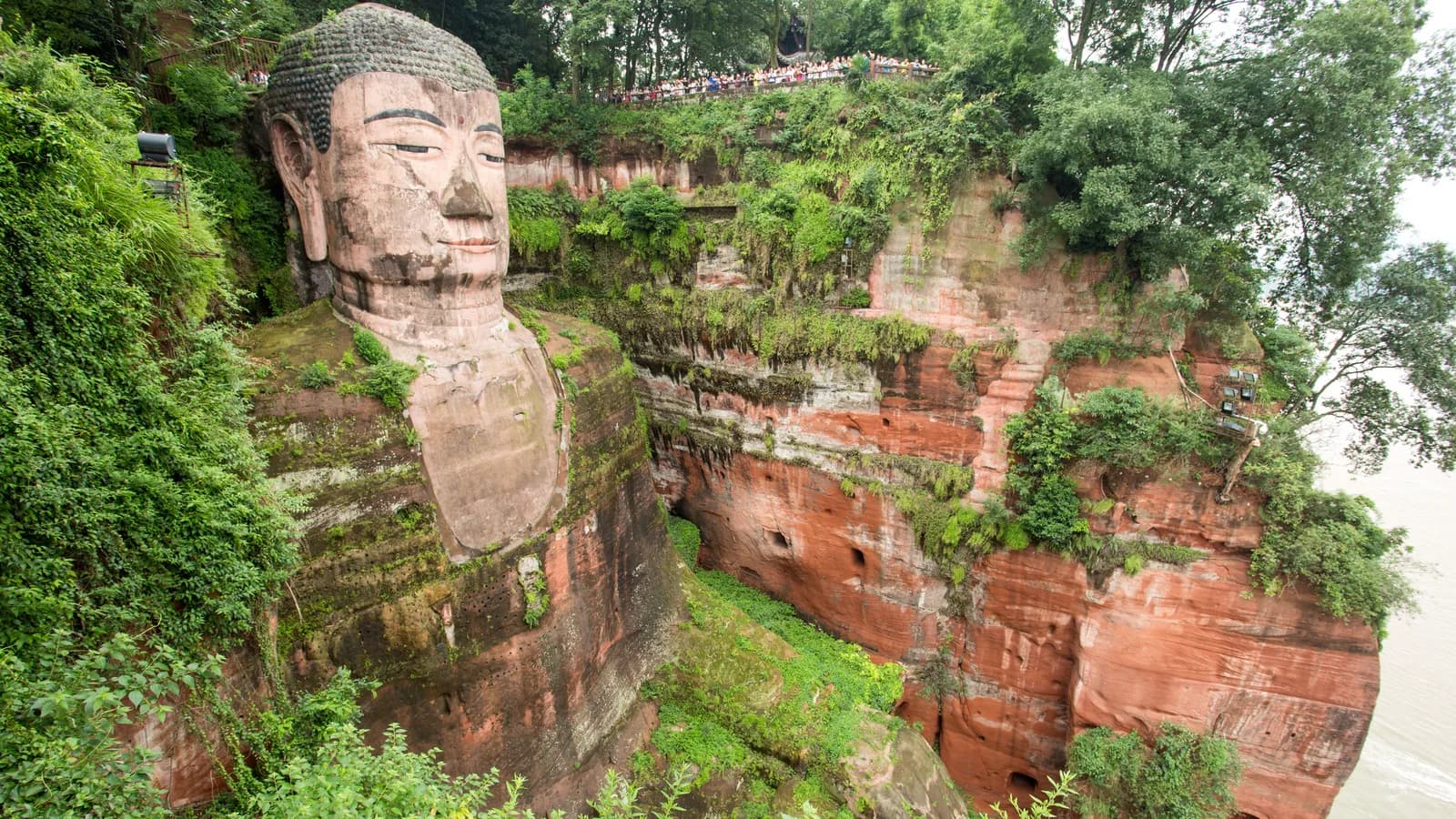
Leshan Day Trip from Chengdu: The Giant Buddha, the Boat Question and China's Quietest Great Food City