Where to Stay in Lunahuaná: Plaza, River Road, Vineyards or Cañete Town
Lunahuaná's four sleeping zones compared: plaza hotels, riverside lodges toward Uchupampa, vineyard country stays, and Cañete town as a budget fallback.
My things to do in Lunahuaná guide keeps sending readers off with one question unanswered: fine, but where do I actually sleep? Fair. Lunahuaná is a valley strung along a single road, and a bed at the wrong kilometer marker can mean mototaxi rides for every meal or a plaza party under your window until 2am. I have not filmed the valley myself yet, so this is the researcher's version: recent guest reviews, booking data and traveler reports from the last year and a half, sorted into the four zones that actually matter. The short answer is that the town plaza, the river road toward Uchupampa, the vineyard country around Catapalla, and Cañete town down the hill serve four different weekends, and picking between them is most of the decision.
How the valley organizes itself
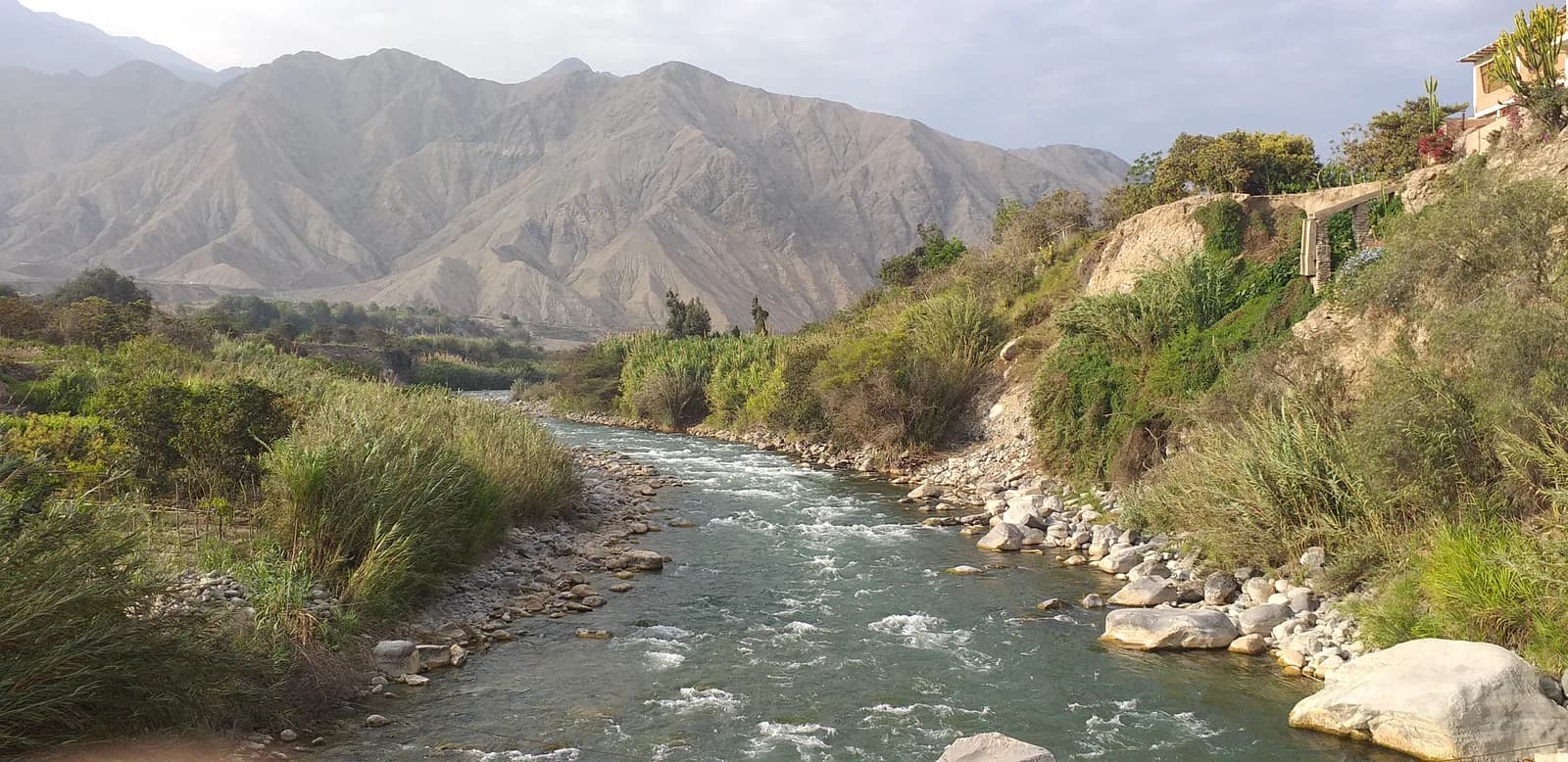
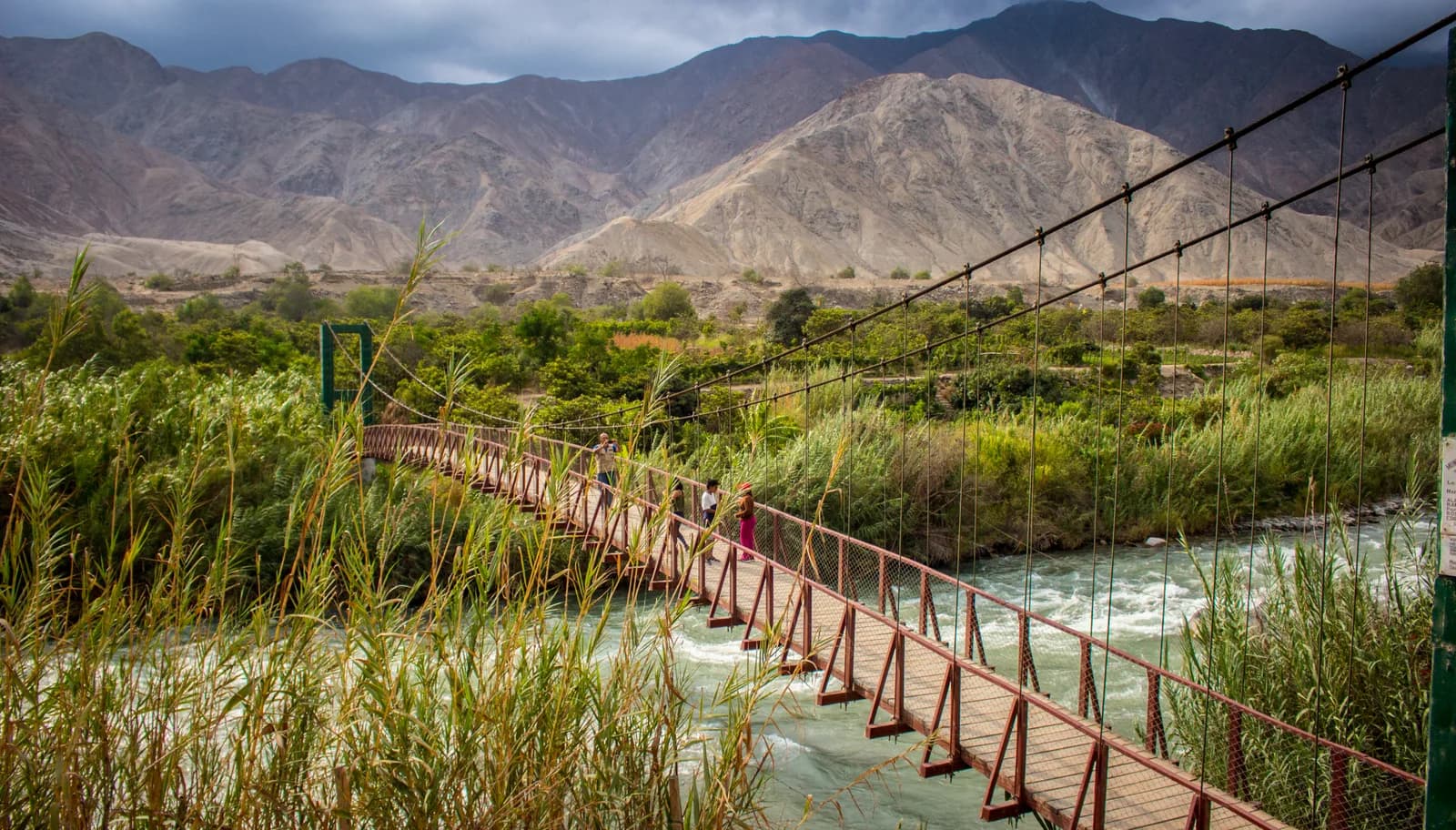
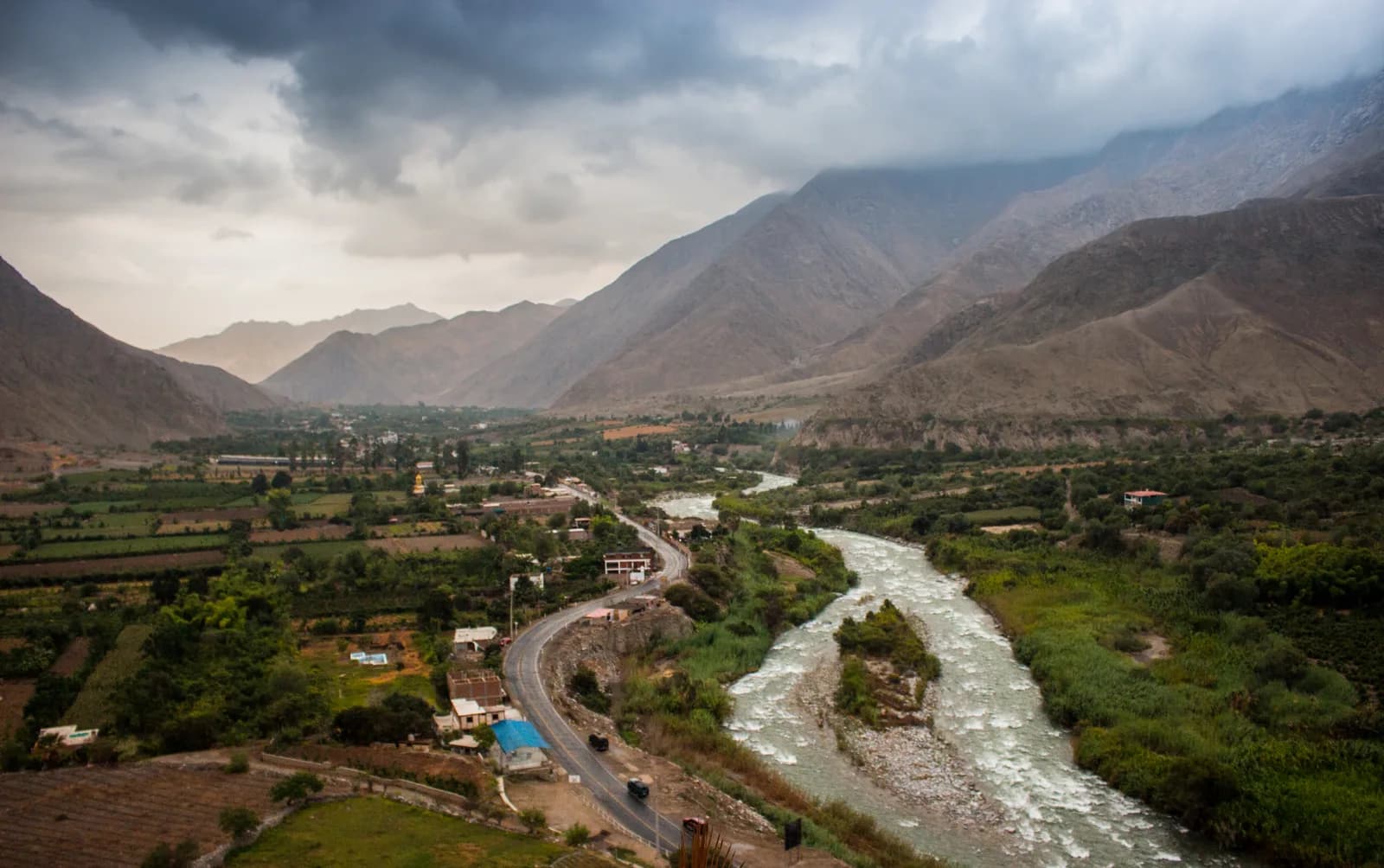
Lunahuaná runs on kilometer markers, not neighborhoods. The Cañete-Yauyos road follows the Río Cañete up from the coast, and everything hangs off it: San Vicente de Cañete near the Panamericana, the annex of Paullo where rafting runs finish, the town proper around km 39 with its Plaza de Armas and church, then the lodge strip through Condoray (km 40) and Uchupampa, and finally Catapalla around km 45, where a hanging bridge crosses to the bodega side of the river. Mototaxis hop between annexes for a few soles, and rafting operators shuttle their own clients, so no base locks you out of anything. What a base does change is what you wake up to: plaza noise, river white noise, vines, or a bus terminal.
One framing note before the zones. Decide what your weekend is for first. If the answer is rafting, ziplines and a pisco crawl, my activities rundown covers operators, seasons and prices; this post assumes you have a rough plan and just need the right bed. And if you are still assembling the Lima end of the trip, my where to stay in Lima guide and the Miraflores vs Barranco comparison pair naturally with a valley weekend, since almost everyone stages this trip from the capital.
Lock the activities before the bed
Where you sleep should follow what you have booked, because the two big activity clusters sit at opposite ends of the valley: rafting and ziplines around town and the river road, bodegas out past Catapalla. These are the three bookings recent travelers converge on, and each one nudges you toward a different zone.
Three things worth booking
 Traveler favourite
Río Cañete rafting day trip from Lima
Transport, the rafting run, riverside lunch and a pisco tasting in one long day. If this is your plan, you may not need a room at all; if you upgrade to a night, base near the river road.
Book this One-day sampler
Adventure combo: rafting, canopy and winery
The packaged version of the whole valley: river, ziplines over the Cañete and a bodega stop. Overnighters can book the same pieces cheaper in cash at the plaza agencies.
Book this Slow afternoon
Pisco and wine bodega tasting circuit
Family bodegas like Reina de Lunahuaná and Los Reyes pour their own pisco and valley wine, and a December 2024 visitor did the Reina tour entirely in Spanish. Sleep Catapalla-side if this is the headline.
Book thisIf you only skim: the three bookings that keep coming up
Across recent reviews, three properties dominate the conversation, one per zone that matters.
Three places to book in Lunahuaná
 Most loved
La Confianza Hotel
Bungalows inside an old vineyard on the Catapalla side of the valley, with about 1,800 reviews averaging 4.9 on Tripadvisor. Recent guests rave about the A-frame cabins and homemade food from local ingredients.
Check availability Splurge
Hotel Los Palomos
The valley's closest thing to a resort splurge: riverside gardens with tree swings, a design pool and meals included, scoring 8.9 from about 190 Booking.com guests at around $148 a night.
Check availability Best value
Villasol Hotel
A central pick steps from the Plaza de Armas, with a pool, a bar and over 200 Tripadvisor reviews averaging 4.6. Guests keep citing the staff and the price; the trade is simpler rooms and weekend plaza noise.
Check availabilityThose three are the shortcut. The longer answer is the zones themselves, because the same $80 buys a very different night at km 39 than at km 45.
The town center: walk everywhere, hear everything
Stay in the town center if this is a first visit without a car and you want zero logistics. The tour agencies cluster on the Plaza de Armas, so booking the morning's rafting means a two-minute walk, and dinner is never more than a few blocks. The hotel stock is honest rather than glamorous: Villasol and the plaza-adjacent Hotel Rumi Wasi are the names that recur in recent reviews, both with pools, both praised for location and staff, with the recurring gripes being patchy wifi and thin weekend sleep. In-town doubles start around $30-45 midweek, which makes this the cheapest zone inside the valley itself.
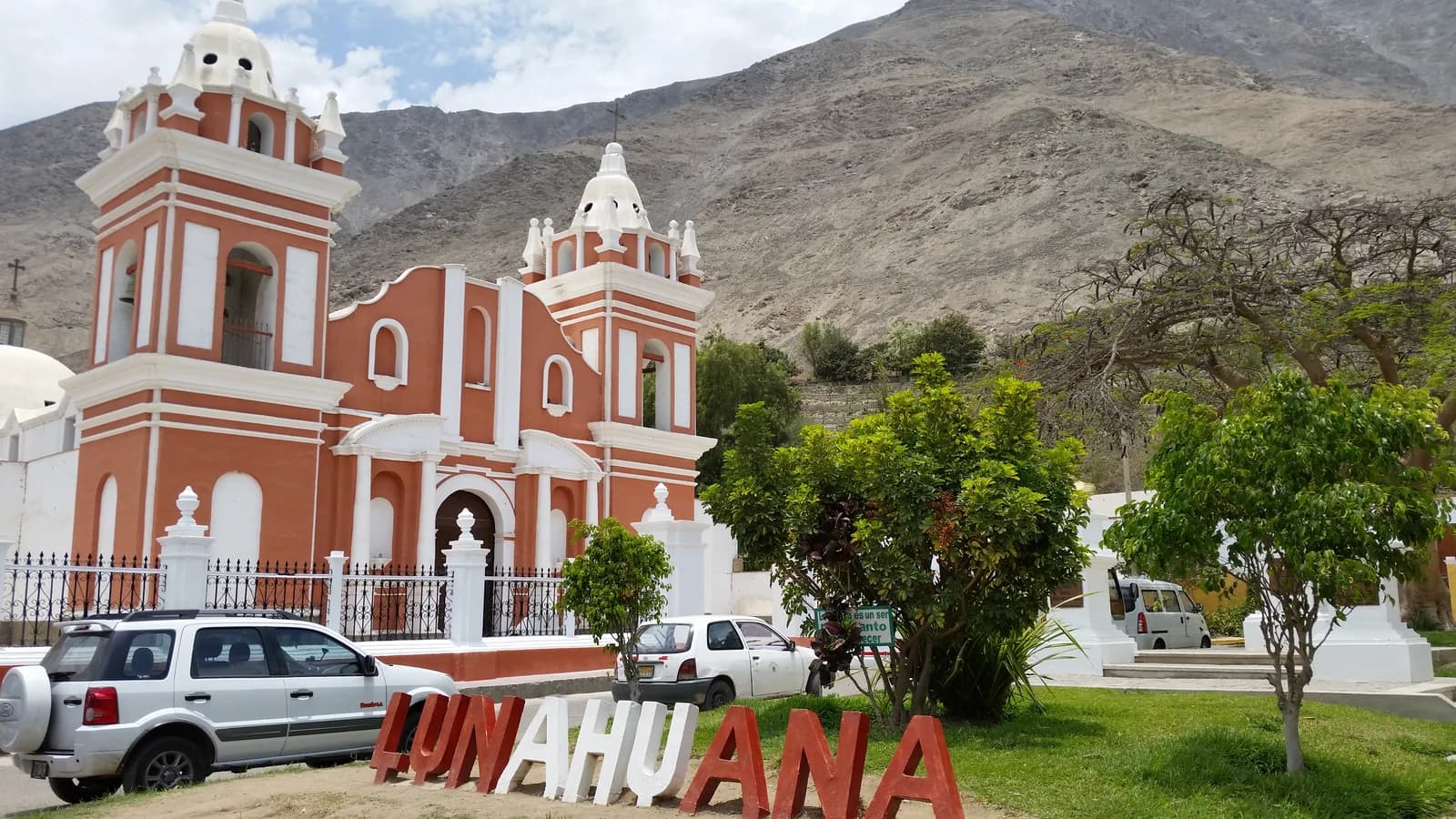
The catch is the weekend rhythm. Lunahuaná is Lima's adventure escape, and on Saturdays the plaza runs loud and late: tour touts, anticuchera smoke, music from more than one direction. Multiple recent accounts recommend weekday visits precisely to skip this. If your dates are Friday and Saturday and you value sleep over convenience, the river road is the better trade.
The river road: Condoray and Uchupampa lodges
Stay along Condoray and Uchupampa if the river is the point. This is the strip of the Cañete-Yauyos road just past town, roughly km 40 to 42, where most of the pool-and-garden lodges sit and where falling asleep to actual white noise is the amenity you are paying for. The anchor properties are all verifiable in current listings: the Lunahuaná River Resort at km 40 in Condoray, with a heated pool, jacuzzis and direct river access; Hotel Los Palomos with its riverside gardens; El Molino Hotel y Restaurant, scoring 9.4 from recent Booking guests at about $145 with a well-regarded kitchen; and the simpler Mirador de Uchupampa for a fraction of that. Newer boutique entries like Jalara, around $70 with two pools and a 9.6 from its first waves of guests, show how fast this strip is professionalizing.
This is also the practical base for rafting-first trips: several operators launch or finish near these lodges, and hotels here are used to arranging activities at the desk. The trade-off is that everything else requires a mototaxi, a few soles and five minutes each way, which stops being charming in week two but is painless for a weekend. Rooms mostly run $70-110, rising toward $150 for the riverside names. If I were booking a first anniversary-grade weekend from Lima, this zone is where the money goes.
Vineyard country: Catapalla and Paullo
Stay around Catapalla if the bodegas outrank the rapids. The far end of the valley, past the hanging bridge at km 45, is where the vineyard-adjacent country hotels live: La Confianza's bungalows sit inside an old vineyard, Rio Lindo Ecolodge fronts the river in the Catapalla annex with porches facing the water and rooms from about $94, and the family bodegas are close enough to make a slow tasting afternoon the default plan. A backpacking couple who based near here over Christmas 2024 paid about $34 a night for a homestay with its own pisco grape orchard and pool, which says a lot about the price ceiling once you leave the resort strip.
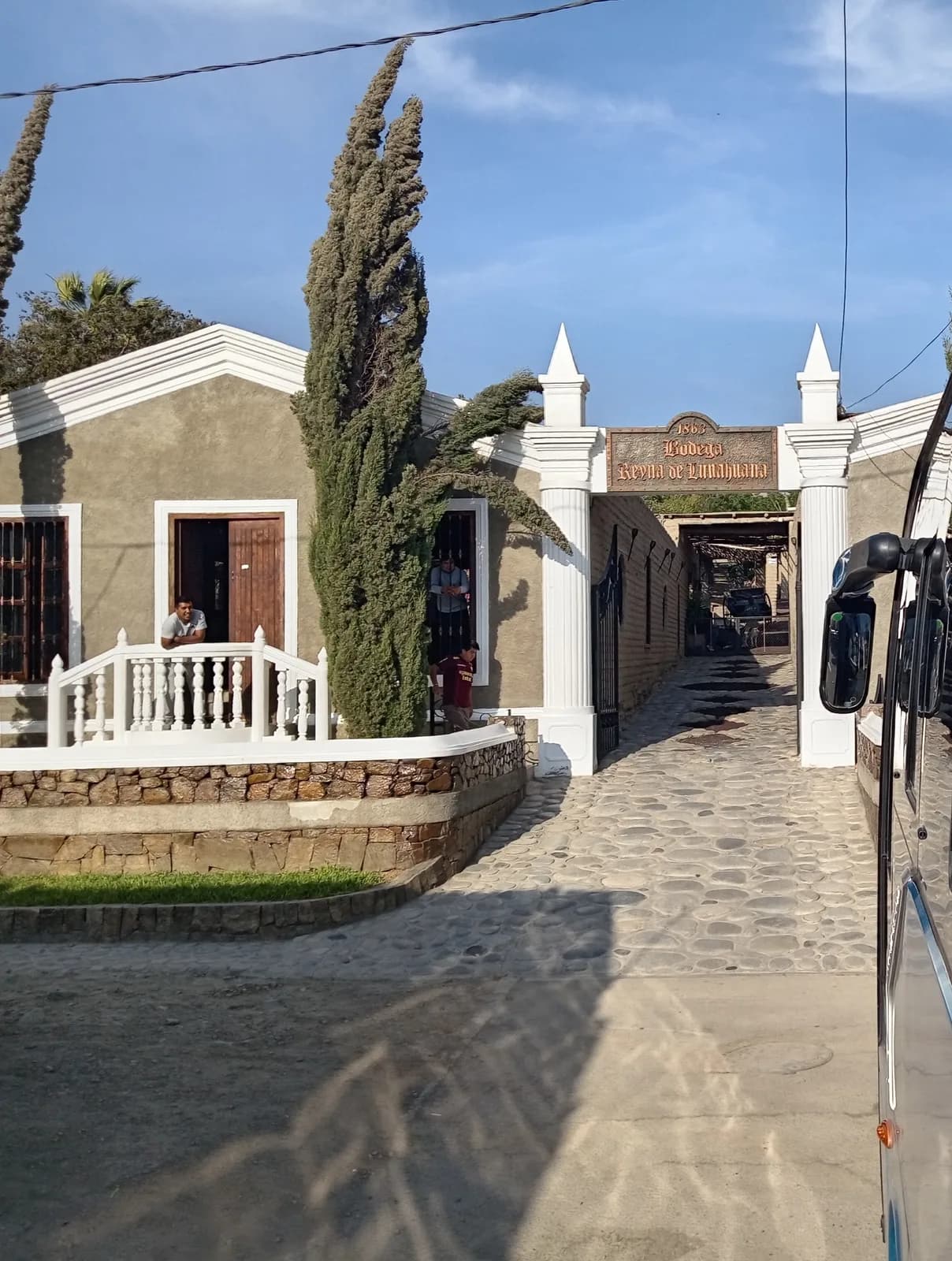
The down-valley annex of Paullo belongs in the same family: farmhouse quiet, orchards, and the adobe Refugio de Santiago Ecolodge cooking from its own garden. Coming from a Japanese family, the comparison I cannot shake is a countryside ryokan: you stay for the property and its kitchen, not the location, and the silence is the amenity. Either annex means mototaxis for everything and no nightlife whatsoever. That is either the whole point or a dealbreaker, and you already know which camp you are in.
Cañete town: the budget and logistics fallback
Stay in San Vicente de Cañete only when it solves a problem. The provincial capital sits down on the Panamericana about 40 minutes from the valley, and it is where the long-distance buses actually stop, which makes it the sane overnight if you roll in late from Lima or are catching an early southbound bus toward Paracas or Ica. It is also the pressure valve when a holiday weekend sells the valley out. Hotels are urban and unromantic but solid value: the three-star Gran Hotel Villa del Sur, an eight-minute walk from the bus station with rates around $30-50 and hundreds of positive reviews, is the standout, and the wider town starts near $25-35 a night.
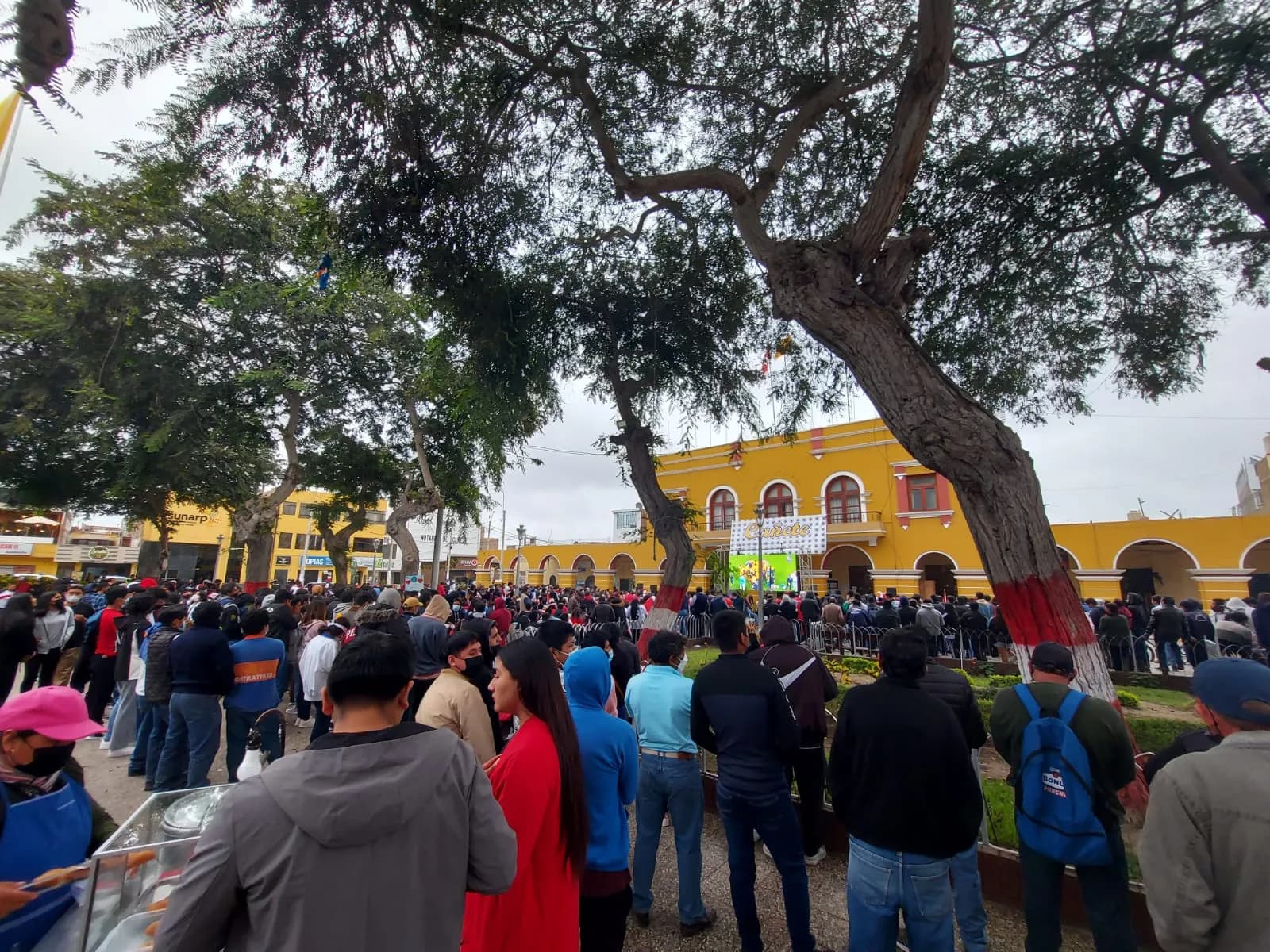
Be honest with yourself about what you are buying, though. Nothing about Cañete feels like the valley: no river sound, no vines, a working agricultural town going about its business. As a money-saver for one traveler it works; for two people splitting a $45 in-town Lunahuaná double, the savings rarely justify the 40-minute combi each way.
| Zone | Best for | Typical midweek price | The trade-off |
|---|---|---|---|
| Town center (km 39) | First visit, no car, walk-to-everything | $30-60 | Weekend plaza noise, simpler rooms |
| River road: Condoray-Uchupampa (km 40-42) | Pools, river views, rafting logistics | $70-150 | Mototaxi for every errand |
| Catapalla & Paullo (km 43-45) | Bodegas, silence, character stays | $35-100 | Far end of the valley, no nightlife |
| San Vicente de Cañete | Budget beds, bus connections | $25-50 | None of the valley atmosphere, 40 min away |
If one line settles it: first-timers on foot book the plaza, river people book Condoray or Uchupampa, wine people book Catapalla, and Cañete is for arrivals after dark and blown budgets.
Weekend vs weekday: the pricing reality
Lunahuaná's hotel market breathes with Lima's work week, and the swing is measurable, not folklore. Aggregated rate data for the valley shows averages around $142 midweek against $173 on weekends, with Friday the single most expensive night to book and Tuesday the cheapest. Zoom out to seasons and the same data puts the December to February high season around $114 a night on average against roughly $94 from June to August, with July often the cheapest month of the year to book.
Holiday weekends are their own regime. Semana Santa, Fiestas Patrias in late July, and the year-end holidays reliably fill the valley, and recent traveler reports describe rooms and activity prices roughly doubling while the better lodges sell out days or weeks ahead. The March harvest season around the Fiesta de la Vendimia adds one more demand spike. The practical playbook that falls out of all this is simple. If your dates are flexible, go midweek or Sunday-to-Monday and enjoy the same valley at two-thirds the price with half the crowd. If you are locked to a normal Saturday, book the specific lodge you want a week or two out. If you are locked to a holiday weekend, book as early as you can, expect double, and have Cañete town as the fallback.
Two booking realities worth knowing beyond the calendar. First, plenty of the valley's smaller hospedajes never appear on booking sites at all; they fill by phone, WhatsApp and walk-ins, so the 47-odd listed properties are not the whole market, and turning up midweek without a reservation is genuinely fine. Second, the valley runs on cash and there is no reliable ATM in town, so however you book, arrive with enough soles to cover the room, the mototaxis and the tastings.
Getting there, and squeezing the stay
The standard route is the one I detailed in the things to do guide: a Soyuz or similar bus from Lima to San Vicente de Cañete in about two and a half hours for S/15-18, a one-sol colectivo to Imperial, then a combi up the valley for about S/6, call it 3 to 3.5 hours door to door. Drivers do it in under three hours down the Panamericana Sur, and recent guides argue for letting someone else handle the Lima traffic end of that drive. The distance is exactly why the where-to-stay question matters: day trips from Lima exist, with full-day rafting packages around $55 covering transport, lunch and a tasting, but you spend more hours in a van than in the valley.
If a night is on the table, the timing follows from the pricing section: arrive midweek if you can, book activities for the morning after you arrive, and keep the last morning for a bodega or a long camarones lunch rather than anything with a departure time. For travelers building a bigger Peru loop, Cañete's bus connections make the valley an easy first or last stop on the southbound run toward Paracas and Ica, and flights in and out of Lima are worth comparing early since Jorge Chávez is the hinge of the whole trip.
Booking rules I would give a friend
- Book Friday and Saturday nights one to two weeks out in the December to April season; midweek needs no planning at all.
- Treat holiday weekends as a different country: double prices, sold-out lodges, and Cañete town as the escape hatch.
- Price the same room for Tuesday and Saturday before committing, since the gap often funds an extra tasting day.
- Pick the zone before the property: plaza for logistics, river road for the pool-and-river weekend, Catapalla or Paullo for wine and silence.
- Bring all the cash you need from Lima, because there is no reliable ATM and small hospedajes and mototaxis do not take cards.
- Ask riverside lodges for a river-facing room specifically; guests at Rio Lindo and Los Palomos consistently flag those as the rooms worth having.
- If traveling with light sleepers, avoid plaza-adjacent rooms on Saturdays or lean on the river road instead.
- Confirm breakfast and dinner arrangements at Catapalla and Paullo stays, since the annexes have few restaurants and the good lodge kitchens book out.
The honest summary
I built this from recent guest reviews, rate data and traveler reports rather than my own nights in the valley, so if you have slept at one of these places since and something has shifted, tell me and I will update it. But the pattern in the research is unusually clean for a small destination: four zones, four different weekends, and a price calendar that rewards anyone who can dodge Saturday. Book the zone that matches your plan, carry cash, and if the plan itself is still fuzzy, start with what the valley actually offers and work backwards to the bed. The version I would book from Lima next week: a Tuesday-to-Thursday run, a river-facing room on the Condoray strip, and the last afternoon on the Catapalla side of the bridge with a tasting glass.
Frequently asked
What is the best area to stay in Lunahuaná?
For a first visit without a car, the town center around the Plaza de Armas is the practical pick, since the tour agencies and restaurants are on your doorstep. If the weekend is about the river, the lodge strip along the valley road through Condoray and Uchupampa holds the best pools and river views. Catapalla suits travelers who care most about the bodegas and quiet.
How much do hotels in Lunahuaná cost?
Simple in-town doubles start around $30-45 midweek, the riverside lodges mostly sit in the $70-110 range, and the top riverside properties like Hotel Los Palomos and El Molino run about $145-150 a night. Recent booking data puts the average around $94 a night in the June to August low season and about $114 in the December to February high season.
Are Lunahuaná hotels more expensive on weekends?
Yes, consistently. Aggregated booking data shows average rates rising from about $142 midweek to $173 on weekends, with Friday the most expensive night to book and Tuesday the cheapest. On holiday weekends like Semana Santa and Fiestas Patrias, recent travelers report rooms and activities roughly doubling in price and selling out ahead of time.
Do I need to book Lunahuaná hotels in advance?
For a normal weekday or low-key Sunday-to-Monday stay, no; the valley has around 47 listed properties plus many small hospedajes that take walk-ins. For Saturdays in the December to April season, and for any holiday weekend, book ahead, since the well-rated riverside lodges sell out first and prices climb as Lima empties into the valley.
Should I stay in Lunahuaná town or by the river?
Stay in town if you want to walk to the plaza agencies, book rafting in person and stroll to dinner. Stay on the river road if the point of the trip is a pool, a river-facing terrace and quiet nights, and you are happy taking mototaxis into town for a few soles. Most first-timers without a car are better off in town; most repeat visitors move to the river.
Is it worth staying in San Vicente de Cañete instead of Lunahuaná?
Only as a budget or logistics fallback. Cañete town is about 40 minutes down the valley, has solid three-star hotels from roughly $30-50 a night near the bus terminals, and works if you arrive late from Lima or the valley is booked out on a holiday weekend. It has none of the river or vineyard atmosphere, so treat it as a base of convenience, not the destination.
Can you visit Lunahuaná without staying overnight?
Yes, full-day tours from Lima bundle transport, rafting, lunch and a bodega stop for around $55 per person. But recent travelers keep saying the same thing: it is six-plus hours of road for one rushed day, and the valley is at its best in the evening after the tour vans leave. One night makes the trip.