Lunahuaná Rafting Guide: River Seasons, Operators, Prices and How to Get There from Lima
Rafting the Río Cañete at Lunahuaná: class by season, 2026 prices in soles, which operators travelers rate, the bus from Lima, and the pisco-and-camarones afterparty.
I have not run the Cañete myself yet, so this is the researcher's version, built from operator price lists, municipal rules, and a stack of 2025-2026 traveler reviews. My things to do in Lunahuaná guide covers the whole valley; this is the deep dive on the one activity that fills every van heading south from Lima on a Saturday. The pattern across recent reports is consistent: the river has two personalities depending on the month, the actual rafting lasts under an hour, the local cash price is a fraction of what tour sites charge, and the best day is a river morning followed by a pisco-and-shrimp afternoon. Here is how the season, prices, operators and the bus from Lima fit together, and where I would spend the money.
What the Cañete run actually is
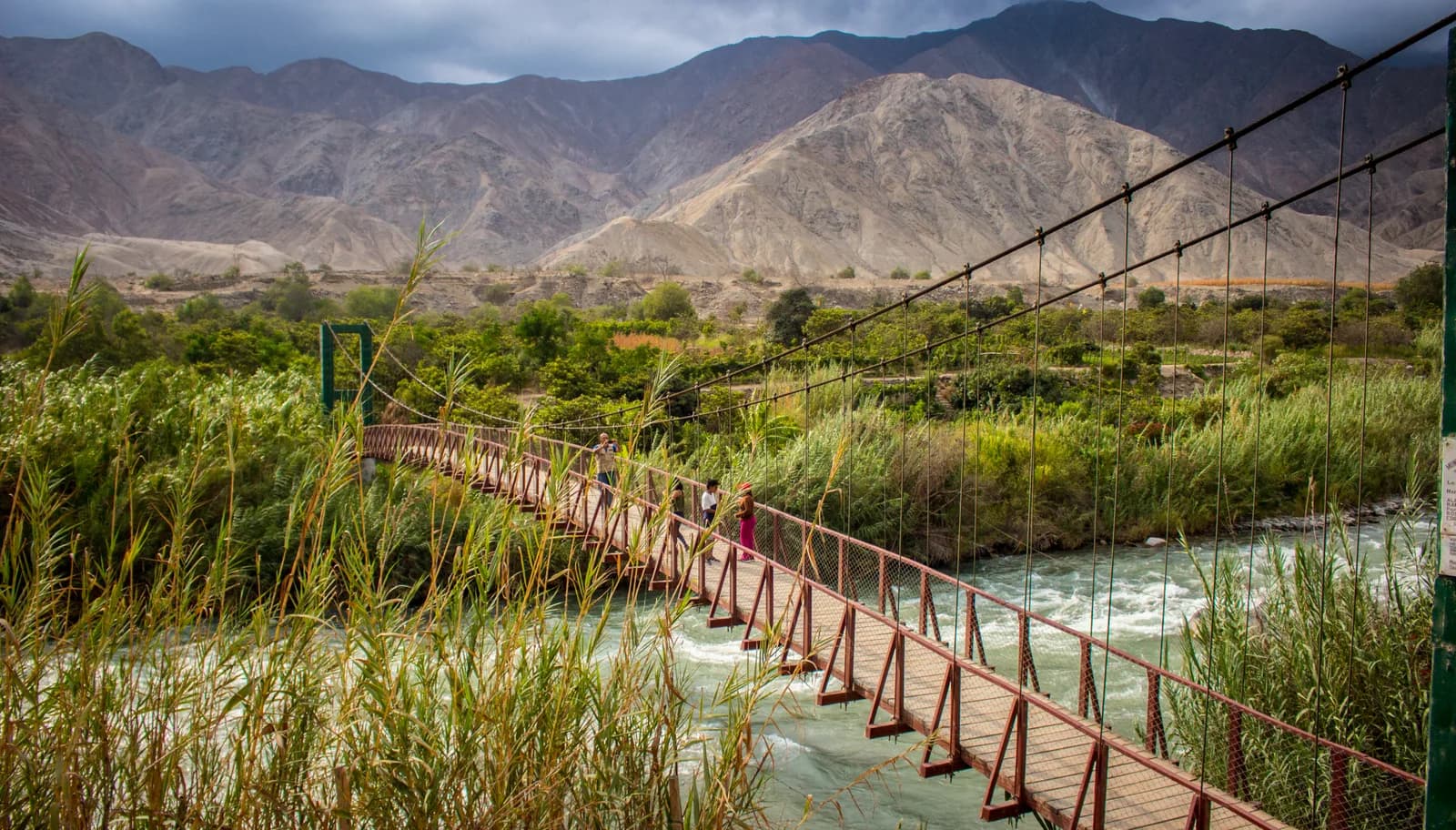
The Río Cañete comes out of the Andes and drops through a narrow valley, and the rafting happens on a string of short sections between the annexes along the Cañete-Yauyos road. The names to know, from up-valley to down-valley: the hanging bridge at Catapalla around km 45, Lunahuaná town at km 39, then Paullo and Socsi below town toward the coast. Every agency sells some combination of these, and the section you are sold determines the class, the duration and the minimum age.
The most-cited route breakdown, published by the Peruvian adventure directory De Aventura and matching what operators quote, looks like this:
| Section | Class | Distance | Time on water | Minimum age | Who it suits |
|---|---|---|---|---|---|
| Paullo to Socsi | II-III | 7 km | ~30 min | 8 (municipal rule) | First-timers, families, high-water beginners |
| Catapalla to Lunahuaná | II-III | 6 km | ~50 min | 8 (agencies claim 5) | The standard plaza-agency run |
| Hanging bridge to Lunahuaná | II-III | 9 km | ~2 hrs | 8 | Anyone who wants more river per sol |
| Lunahuaná to Paullo | III-IV+ | 8.2 km | ~50 min | 18 | Experienced paddlers in the wet season |
| Catapalla to Lunahuaná, advanced | III-IV+ | 6 km | ~30 min | 18 | Thrill run at peak water |
Two things jump out. First, the standard tourist run is 6-8 km and 30-50 minutes on the water. Recent reviewers on Viator and Tripadvisor say versions of the same sentence: the river was moving so fast the rafting was over too quickly. For a proper river day, ask for the 9 km bridge run or the 13 km route a Tripadvisor reviewer of Lunahuaná Rafting Perú recommends, and expect to pay a little more. Second, the municipality bans rafting for children under 8, even though some agencies advertise 5-year-olds with parental consent. Treat 8 as the real floor.
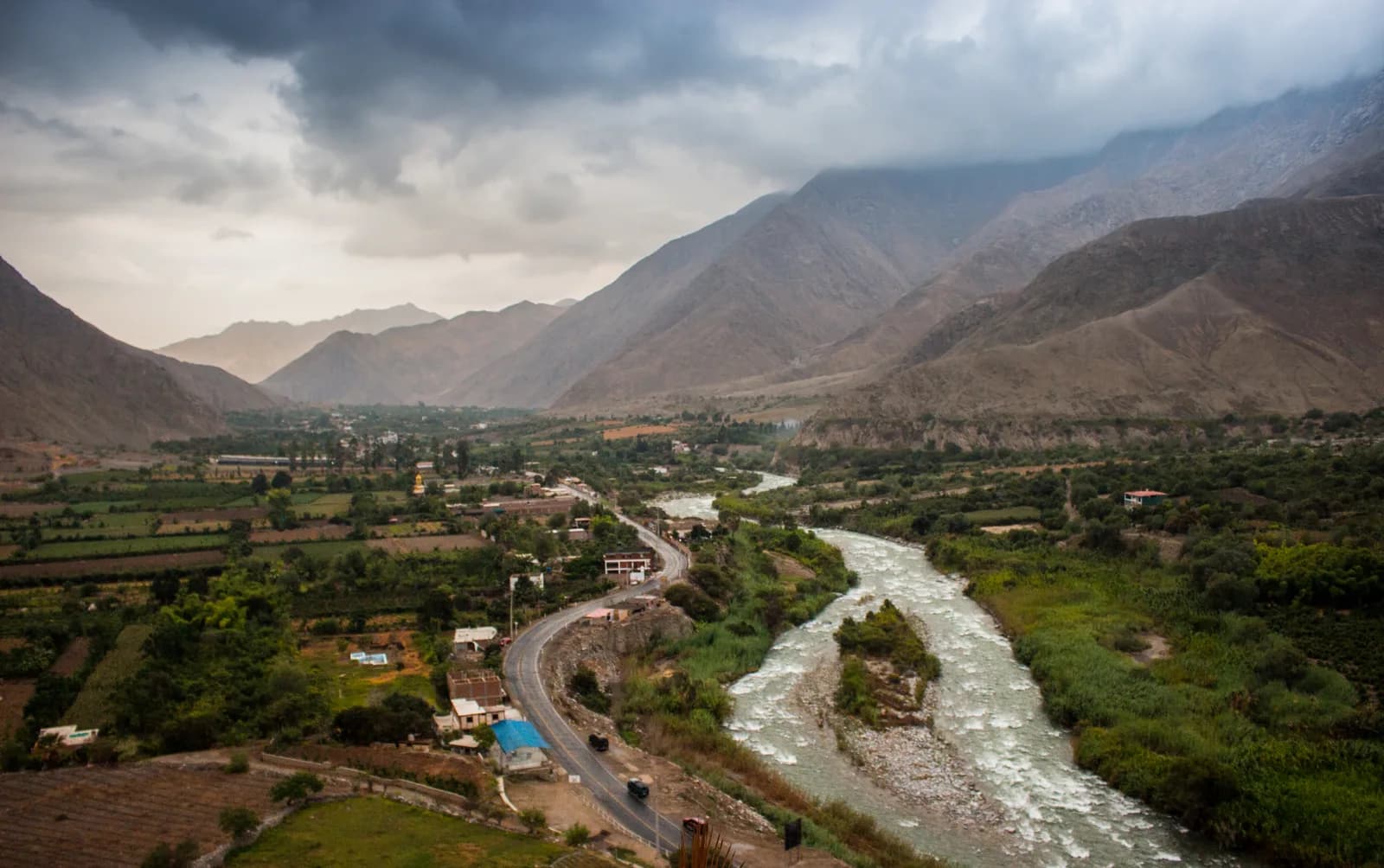
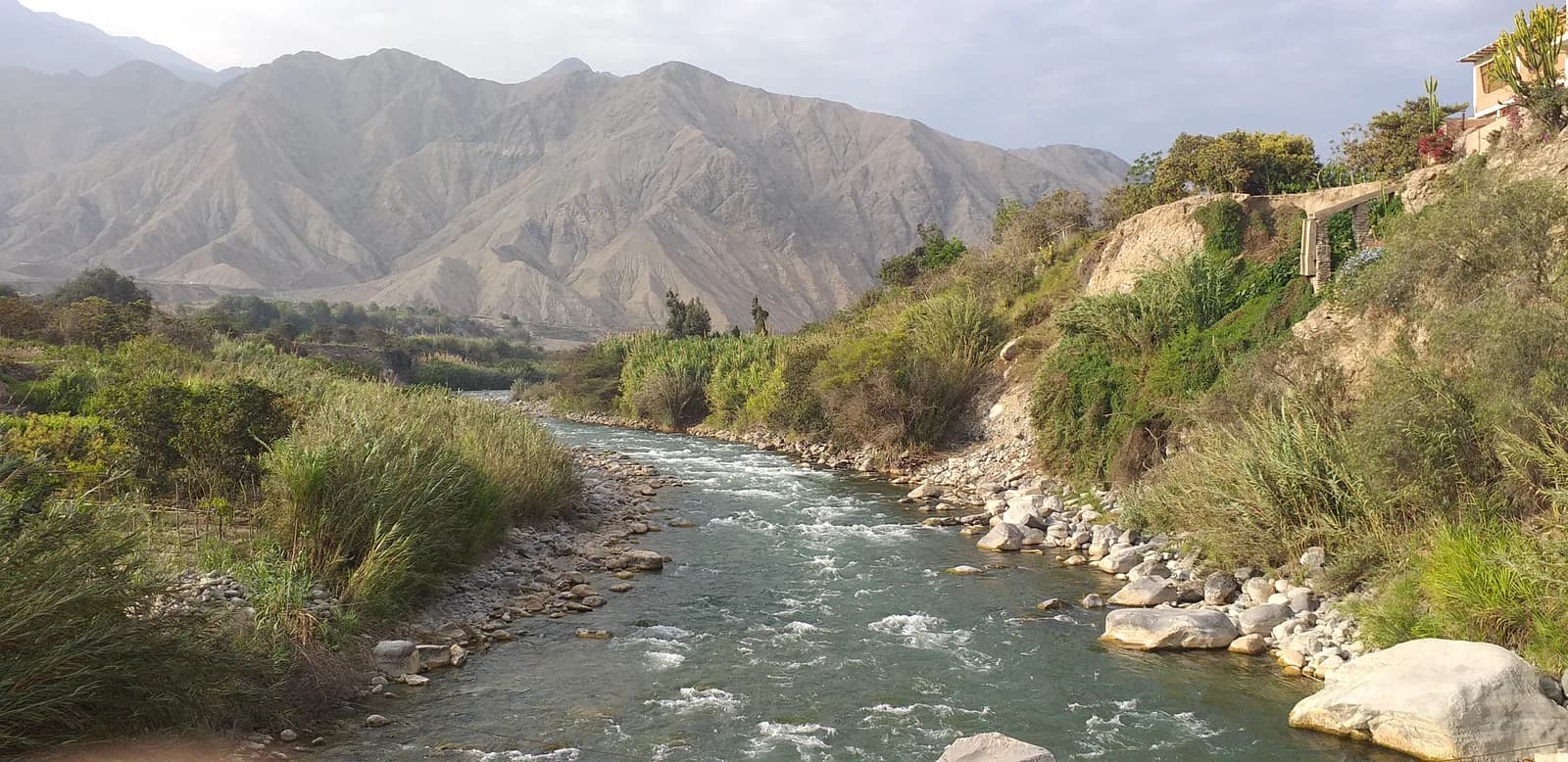
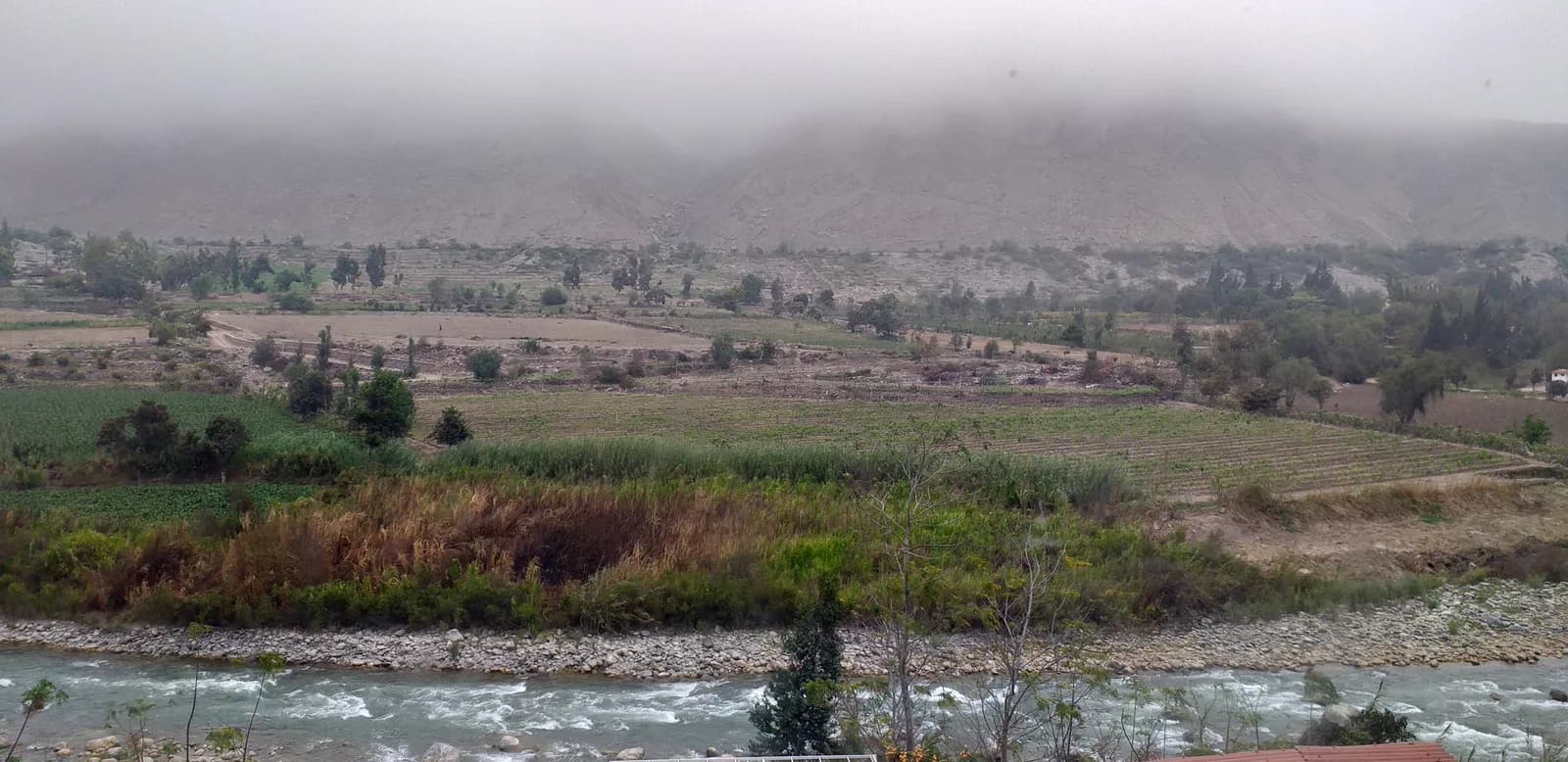
What the run looks like, from the photos and videos travelers post: a milky-green to brown river between boulders and cane fields, bare hills rising steeply on both sides, a safety kayaker alongside, and a shuttle van at the take-out. It is not a canyon expedition. It is a sunny, short blast of whitewater a few hours from a city of ten million, which is exactly why Lima loves it.
High water versus low water: reading the season
The single most useful thing to understand before booking is that the Cañete is two rivers. Peru's state news agency Andina quoted the numbers: in the low season the river runs around 20 cubic meters per second and the 7 km Catapalla to Lunahuaná section takes about 50 minutes; in the summer high season the flow climbs toward 180-200 cubic meters per second and the same distance takes roughly 15 minutes. When the water is that high, operators shift beginners down to the Paullo to Socsi section and reserve the town-to-Paullo stretch for adults who want Class IV.
| Months | River | Class on the main runs | Best for |
|---|---|---|---|
| Late December to April | High, fast, brown | III-IV, IV+ at peak | Adults chasing big water; Lima's summer weekends |
| April and November | Transition | II-III with punch | The months guides name as the sweet spot |
| May to October | Low, clear, gentle | I-II to II-III | Families, first-timers, anyone from 8 up |
Sources disagree on exact boundaries because the Andes do not read calendars; some operators describe white water from January, others from November. What every guide agrees on is that April and November are the best months to raft: enough water to be exciting, not so much that beginners get pushed onto the shortest section. The valley is raftable year-round and sunny while Lima sits under grey winter fog, which is half the appeal for people escaping Miraflores or Barranco for a weekend.
What it costs in 2025-2026
Prices in Lunahuaná are sold two ways, and the gap between them is the whole game. On the Plaza de Armas, agencies run price boards and sell activities individually in cash. Booked that way, the 2025-2026 rates from operator listings and tour price sheets line up closely:
| Activity | Local price (cash, plaza) | In USD (S/3.35-3.40) | Duration | Notes |
|---|---|---|---|---|
| Rafting, standard 6-8 km | S/35-50 | $10-15 | 30-50 min on water | Cheapest agencies quote S/25-35 midweek |
| Rafting, longer 9-13 km run | S/60-80 | $18-24 | 1-2 hrs | Ask; not always on the board |
| Canopy zipline | S/50-60 | $15-18 | 1-2 hrs, 2-5 cables | Minimum 2 people |
| Cuatrimoto (ATV), single | S/30-35 | $9-10 | ~40 min | Double ATV S/40-45 |
| Rappel | S/50 | $15 | 30 min | Minimum 2 people |
| Horse ride to the bridge | S/25 | $7 | 40 min | Starts at Catapalla park |
| GoPro rental / photo pack | S/25 / S/15 | $7 / $4 | Per activity | Video is often free with combos |
| Full-day tour from Lima (Peruvian operators) | S/95-120 | $28-36 | 14-16 hrs | Activities usually extra |
| Full-day rafting tour from Lima (GetYourGuide) | $49-89 | 12-16 hrs | Rafting, lunch, tasting included | |
| Private rafting, canopy and winery from Lima (Viator) | ~$240 | 12 hrs | Private van, English guide |
A few readings of that table. A rafting-canopy-ATV afternoon bought at the plaza costs S/115-145, call it $35-45, all in. The Peruvian full-day operators (Rutas Incas, Inca Trilogy and a dozen others sold on Teleticket) charge S/95-120 for the bus, guide, Cerro Azul stop, bodega and bee farm, then add rafting at S/50 and canopy at S/60 on site, with one operator's fine print adding S/50 per person on holidays. The GetYourGuide listings bundle transport, the river, lunch and a tasting from $49, or $80-89 with ATV and canopy stacked in. The Viator combo at around $240 is the private-van, English-guide version, worth it only if Spanish is zero and time is short.
The cash rule from my Lunahuaná overview applies twice here: there is no reliable ATM in the village, operators prefer soles, and cash at the plaza gets the lowest rate. Kayaking exists too. Lunahuaná Rafting Perú lists it, but it is sold on request rather than off the board, so ask for a quote if you would rather paddle your own boat. For a different kind of paddling altogether, the flat turquoise water of Bacalar is the opposite end of the spectrum.
Operators, and how to book from Lima or on arrival
Only a handful of names are verifiable enough to print. Lunahuaná Rafting Perú, at Jr. Grau 180 near the plaza, is the most-reviewed operator on Tripadvisor at 4.8 from about 173 reviews; recent reviewers name their guides, praise the condition of the boats and mention the safety kayak. Expediciones Lunahuaná, on Malecón Araoz 101 by the river, claims 20 years on the Cañete and sells rafting, canopy, ATV, rappel and horses from one desk. From the Lima side, Condor Xtreme packages a 15 km, two-hours-on-water run with bilingual guides and a buffet, and Eric Adventures sells a private Class III-IV+ run of about 8 km for around $75 per person with a four-person minimum, plus transport. Beyond those, the plaza agencies are interchangeable enough that recent travelers walk up, compare boards and book the next slot.
Three things worth booking
 Traveler favourite
Lunahuaná River rafting day trip from Lima
Pickup in Miraflores or Barranco around 5am, the Cañete run with all gear, a riverside lunch and a pisco tasting, back by evening. The version to book if Spanish is thin and a night away is not possible.
Book this Most river per day
Lunahuaná extreme all-in: rafting, ATV, canopy and Cerro Azul
The stacked day: rafting, ziplines over the river, a cuatrimoto loop and a beach stop at Cerro Azul on the way. Long, loud and good value against buying each piece at the plaza plus the bus.
Book this If rafting is not the point
Paracas and Ballestas Islands day trip from Lima
Same southbound highway, twice the distance, sea lions and penguins instead of rapids. The sane comparison if you have one free day and are choosing between wildlife and whitewater.
Book thisOn timing: the from-Lima tours leave between 4am and 6:30am and return between 7pm and 9pm, a 14-16 hour day for under an hour on the river. Booked on arrival, agencies run trips until around 5:30pm, and overnighters consistently report that a 9am slot the morning after arriving is quieter than any tour-van afternoon. Holiday weekends (Semana Santa, Fiestas Patrias in late July, the year-end run) sell out and double, and are the one time to pre-book even the plaza operators by WhatsApp.
Safety and what the gear looks like
Lunahuaná has run commercial rafting for decades and the record in recent reviews is clean: I did not find a single 2024-2026 report describing an accident, and the recurring praise is for guides taking the briefing seriously. The municipality also regulates the trade on paper, requiring accredited adult guides with at least a year of experience (two for single-boat trips) and Class III river training, Class V life jackets with a neck pad, and properly fitted vests for every body size.
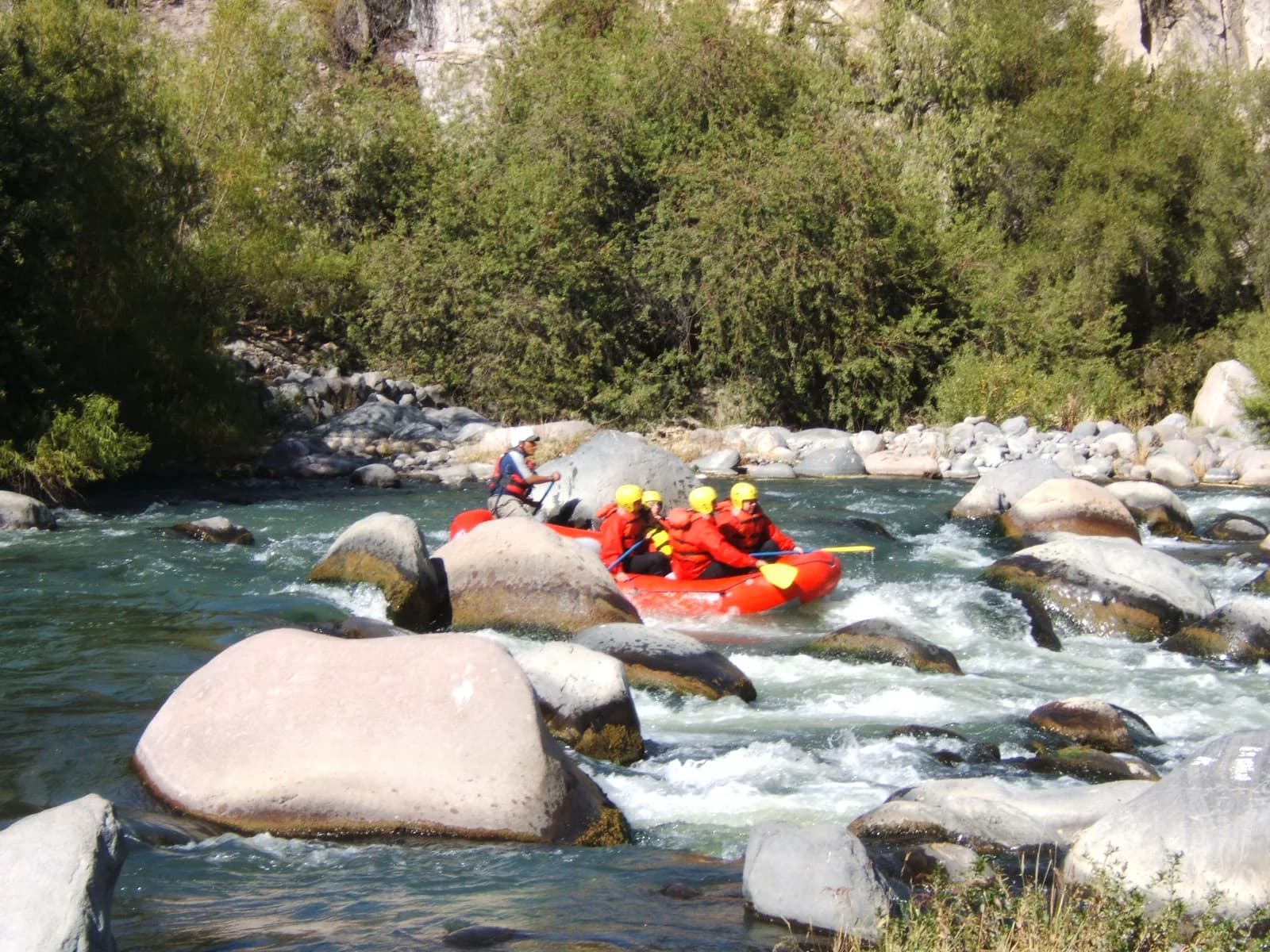
In practice that means: helmet, life jacket and paddle supplied, a shore briefing on commands and what to do if you fall in, a guide at the back of every raft and, with the better operators, a safety kayaker alongside. Wetsuits are not standard on the low-water runs because the valley is warm; in the wet season, when the water is colder and faster, ask for one and check the boat before paying. Quality varies between the cheapest plaza desks and the established names, and the honest advice from recent visitors is to pay the extra S/10-15 for an operator whose rafts and vests look new.
Bring quick-dry synthetics (no cotton), shoes that can get soaked, sunscreen, and a dry change of clothes for the van. Leave phones and cameras on shore; as El Comercio put it, abandon any hope of carrying a phone on the river. The agencies rent GoPros for about S/25 and most combos include a video anyway. Insect repellent is not a rafting item, but every Lunahuaná report mentions the mosquitoes, so pack it for the riverside lunch.
Getting there from Lima
There is no direct public bus to Lunahuaná, but the three-leg route is cheap, well worn and takes 3 to 3.5 hours. The alternatives are the tour buses and the drive.
| Option | Time | Cost per person | How it works |
|---|---|---|---|
| Bus + combi + colectivo | 3-3.5 hrs | S/25-35 ($8-10) | Soyuz from Av. México 280, La Victoria (S/20-25), or Flores, Catur and Perú Bus from opposite Mall del Sur (S/13-15) to San Vicente de Cañete; combi to Imperial S/1.50-2; colectivo from Jr. Ayacucho, Imperial, to Lunahuaná S/6-8, 45 min |
| Full-day tour bus | 14-16 hr day | S/95-120 or $49-89 | Pickups 4-6:30am across Lima; activities on site; back 7-9pm |
| Driving | 2.5-3 hrs | Fuel plus rental | Panamericana Sur to km 144 at Cañete, then the Cañete-Yauyos road up the valley; Lima's southern tolls have been suspended through 2026 |
| Private transfer | 2.5-3 hrs | Quote, split by group | Eric Adventures and others charge about $74 per person from Lima on top of the rafting |
Soyuz is the name that comes up most for the bus, with departures from Av. México near the Metropolitano station and a Cañete terminal on Jr. Unanue. From there, ask any mototaxi for "el paradero a Imperial", and in Imperial the Lunahuaná cars leave from Jr. Ayacucho when full. Drivers report the 184-197 km run in under three hours, with Lima traffic the variable; leaving Miraflores before 7am on a Saturday is the difference between 2.5 hours and 4.
The Lima end deserves planning too. Where you sleep matters for a 5am pickup: most operators collect from Miraflores, Barranco and San Isidro but charge extra for the airport or Callao. My where to stay in Lima guide breaks the districts down, and if Lima is your Peru gateway it is worth comparing flights into Jorge Chávez early, since every southbound plan hinges on it.
Day trip or overnight
Here is the decision as recent travelers frame it. A from-Lima tour is a 14-16 hour day: 5-6 hours in a van, a Cerro Azul beach stop, 30-50 minutes on the river, lunch, a bodega, the drive home. It works, and for a group with one free day and no Spanish it is the right call. But the arithmetic is unkind: the thing you came for is the shortest item on the schedule.
An overnight flips it. Arrive on the afternoon bus, book a 9am slot at the plaza, raft while the tour vans are still on the Panamericana, then spend the afternoon on the slow side of the valley. Bus, a mid-range room and the rafting in cash come to roughly S/200-300 per person, and you get the river at its quietest. The where to stay in Lunahuaná post is built for exactly this version. One night for a better river morning: I would take it, the same way I would give Salento a night rather than day-tripping it for the coffee farms.
After the river: pisco, wine and camarones
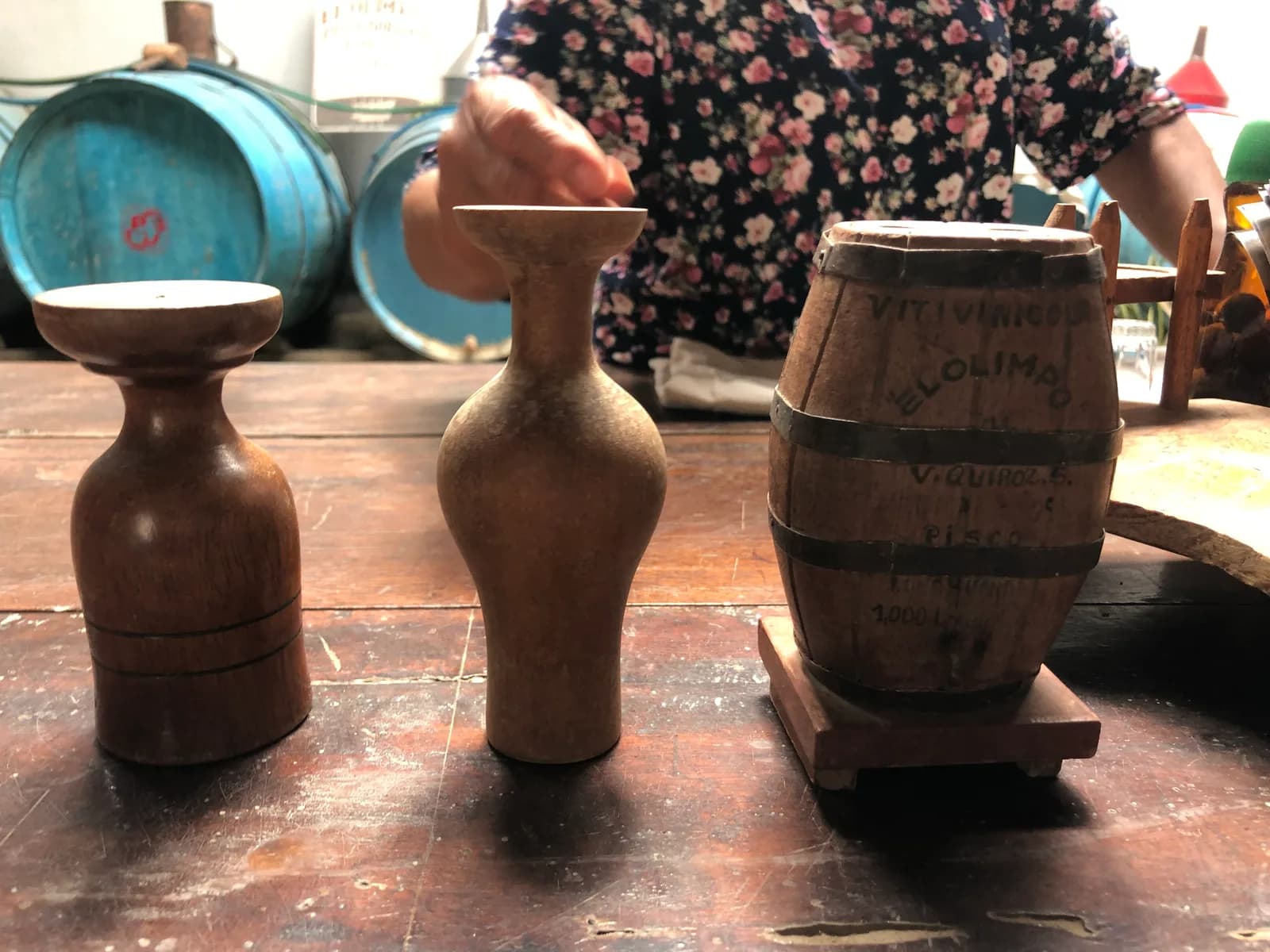
The rafting ends by early afternoon, and the second half of a good Lunahuaná day is the valley's other identity. The bodegas come first. The family names that recur across recent accounts are La Reyna de Lunahuaná out toward Catapalla, Bodega Los Reyes with its free weekend tastings, and Santa María with its valley views. What matters for a post-rafting plan is proximity: the Catapalla put-in sits a mototaxi hop from the bodega side of the river, so the cleanest sequence is raft, change, cross the hanging bridge, taste.
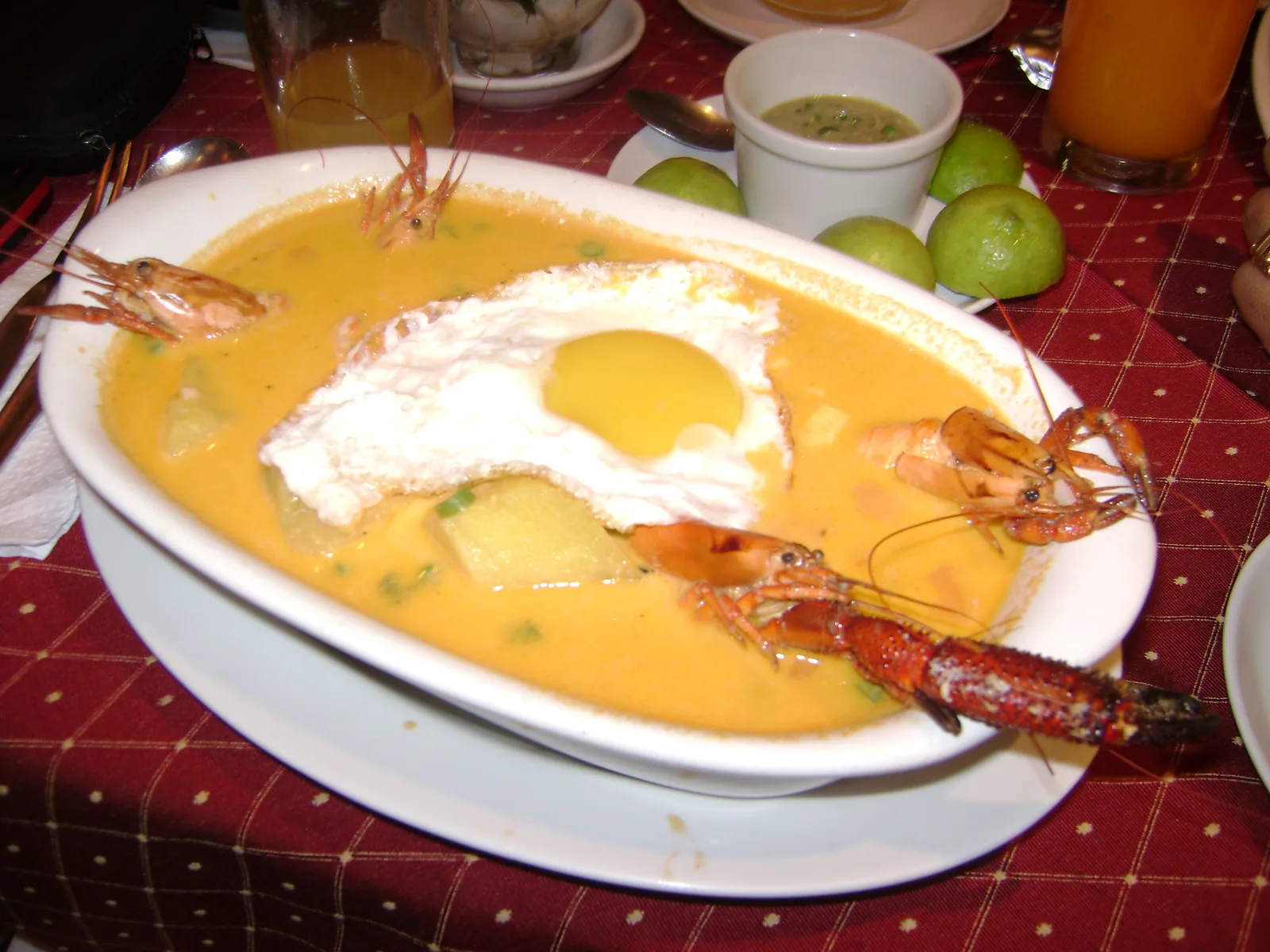
Then the shrimp. Camarones, the river shrimp pulled from the Cañete itself, are the valley's signature plate, served as chupe de camarones (the big chowder with an egg dropped in), chicharrón de camarones, or picante in chili cream. The rooms travelers keep naming are Mi Rosedal in Uchupampa for the shrimp and El Molino's riverside restaurant in town, first of the valley's restaurants on Tripadvisor at 4.8 and attached to a hotel with a pool. Coming from a Japanese family, the after-river lunch logic feels familiar: a long, unhurried meal is the point, not a refuel. One caveat: river shrimp have a closed season in the early months to protect stocks, so between January and March ask whether the camarones are fresh local catch. If you plan trips around eating, this is the same instinct behind my where to eat in Medellín guide.
Where to stay for a rafting weekend
If the river is the reason for the trip, sleep near it. Three properties keep appearing in recent reviews, one for each way of doing the weekend.
Three places to book in Lunahuaná
 Rafting base
Lunahuaná River Resort
Direct river access, a pool with a slide and a tour desk that books rafting for the morning, scoring about 8.1 from 450-plus Booking guests at around $108. The practical pick for a river-first weekend.
Check availability Best kitchen
El Molino Hotel y Restaurant
Riverside rooms in town with the valley's top-rated restaurant downstairs and a pool for the post-river afternoon. Around $122-145 a night; guests rate the food and the river views above everything.
Check availability Quiet riverside
Rio Lindo Ecolodge
River-facing porches at the bodega end of the valley from about $94, a few minutes from the Catapalla put-in. For travelers who want the tasting side of the day within walking distance.
Check availabilityStay in the town center if you are arriving by bus and want to book tomorrow's rafting at the plaza on foot; rooms start around $30-45 midweek and the trade is Saturday noise. Stay on the Condoray and Uchupampa river road if the weekend is river, pool and pisco sour in that order; operators launch and finish near these lodges and the desks arrange slots. Stay in Catapalla if the bodegas outrank the rapids and you like the idea of walking to the put-in. The full zone-by-zone breakdown, with midweek versus weekend pricing, is in the where to stay in Lunahuaná guide.
Recommendations
- Book the river for the morning after you arrive, not the day you leave; bus timings and afternoon wind both eat late slots.
- Ask which section you are being sold. Catapalla to town is the standard; the 9 or 13 km runs are worth the extra soles for real time on the water.
- Treat 8 as the real minimum age, whatever an agency's sign says, and 18 for anything advertised as Class IV.
- Aim for April or November if you can choose; guides name them as the best rafting months, and Lima's holiday crowds are elsewhere.
- Carry all your cash from Lima or Cañete. Plaza prices in soles beat every online rate, and the village has no dependable ATM.
- Pay the extra S/10-15 for an operator with new-looking vests and a safety kayaker rather than the cheapest desk on the plaza.
- Skip Semana Santa and Fiestas Patrias weekends unless you enjoy double prices and sold-out rafts.
- Raft first, then the bodegas, then the long camarones lunch. Do it in that order or you will be sunburnt and tipsy on the river.
- If one day is all you have, take the from-Lima tour and accept the van hours; if a night is possible, the valley is a different place once the buses leave.
I built this from operator price lists, municipal regulations and recent traveler reviews rather than from my own paddle, so if you have run the Cañete this season and the prices or the water have moved, tell me and I will update it. For the rest of the valley, start with the things to do in Lunahuaná guide. And if city-plus-adventure-weekend is your travel style, the same logic runs through my Medellín guide, where Guatapé plays the role the Cañete plays for Lima.
Frequently asked
How much does rafting cost in Lunahuaná?
Booked in cash at the plaza agencies, a standard 6-8 km run costs about S/35-50 per person (roughly $10-15) in 2025-2026, with the canopy zipline at S/50-60 and a single ATV at S/30-35. Full-day tours from Lima run about S/95-120 with Peruvian operators, with rafting often sold as an add-on, and $49-89 on GetYourGuide with transport, lunch and a tasting bundled. Expect roughly double on holiday weekends.
What class of rapids is the Cañete River at Lunahuaná?
It depends on the month. From roughly December to April, Andean rain pushes the river to Class III-IV, reaching IV+ on the Lunahuaná to Paullo stretch, and operators restrict that run to adults. From May to November the same river drops to Class II-III, which is the friendly, family version most visitors actually raft. Guides consistently name April and November as the sweet-spot months.
What is the minimum age for rafting in Lunahuaná?
The Lunahuaná municipality prohibits children under 8 from rafting, and the beginner Paullo to Socsi section is officially rated for 8 and up. Some agencies advertise 5-year-olds with parental consent on the gentlest routes, but the municipal rule is 8, and the Class III-IV+ high-water runs are for 18 and over. Ask which section you are being sold before paying.
How long does the Lunahuaná rafting trip take?
Time on the water is short: about 30-50 minutes for the standard 6-8 km sections, and up to two hours for the 9 km hanging-bridge run. Add the safety briefing, gearing up and the shuttle back and the whole activity takes about 1.5-2 hours. In high water the current is so fast that recent reviewers describe the run ending sooner than they wanted.
How do you get from Lima to Lunahuaná?
Take a southbound bus (Soyuz from Av. México in La Victoria, or Flores, Catur and Perú Bus from opposite Mall del Sur) to San Vicente de Cañete for S/15-25, about 2-2.5 hours. A combi to Imperial costs S/1.50-2, then a colectivo from Jr. Ayacucho in Imperial runs 45 minutes up the valley for S/6-8. Total around S/25-35 and 3-3.5 hours. Driving the Panamericana Sur takes 2.5-3 hours.
Is Lunahuaná worth it as a day trip from Lima?
As a rafting-only mission, yes: a from-Lima tour gets you on the river, fed and back the same night. But the day is 12-16 hours with 5-6 of them in a van, and the rafting itself lasts under an hour. Recent travelers who stayed a night got a morning run without the tour crowds plus a slow afternoon at the bodegas. If a night is possible, take it.
Do I need experience or a wetsuit for rafting in Lunahuaná?
No experience is needed for the Class II-III sections; guides brief everyone on paddling and commands before launch. Operators supply helmet, life jacket and paddle, and a safety kayaker escorts most rafts. Wetsuits are not standard on the low-water runs, so wear quick-dry synthetics and water sandals, and leave phones and cameras on shore unless you have rented a GoPro from the agency.