Xijiang Miao Village: The Complete Visit-and-Overnight Guide
How to reach Xijiang Qianhu Miao Village from Guiyang, what tickets cost, which guesthouse zone to book, and why the dusk light-up earns an overnight.
Recent reports from Xijiang Qianhu Miao Village split cleanly into two camps. One calls it the most memorable night in Guizhou: more than 1,400 wooden houses lighting up two hillsides at dusk while mist works down the valley. The other calls it a tourist trap with an entry fee. Both camps saw the same village, and the difference is almost always the same two decisions: whether they stayed the night, and whether they climbed above the main street. This is the full plan, extending the day-trip logistics from my things-to-do guide to Guiyang: how to get here from Guiyang or Kaili, what the tickets actually cover, which guesthouse zone to book, and how to time the banquet, the performances and the light-up.
What Xijiang actually is
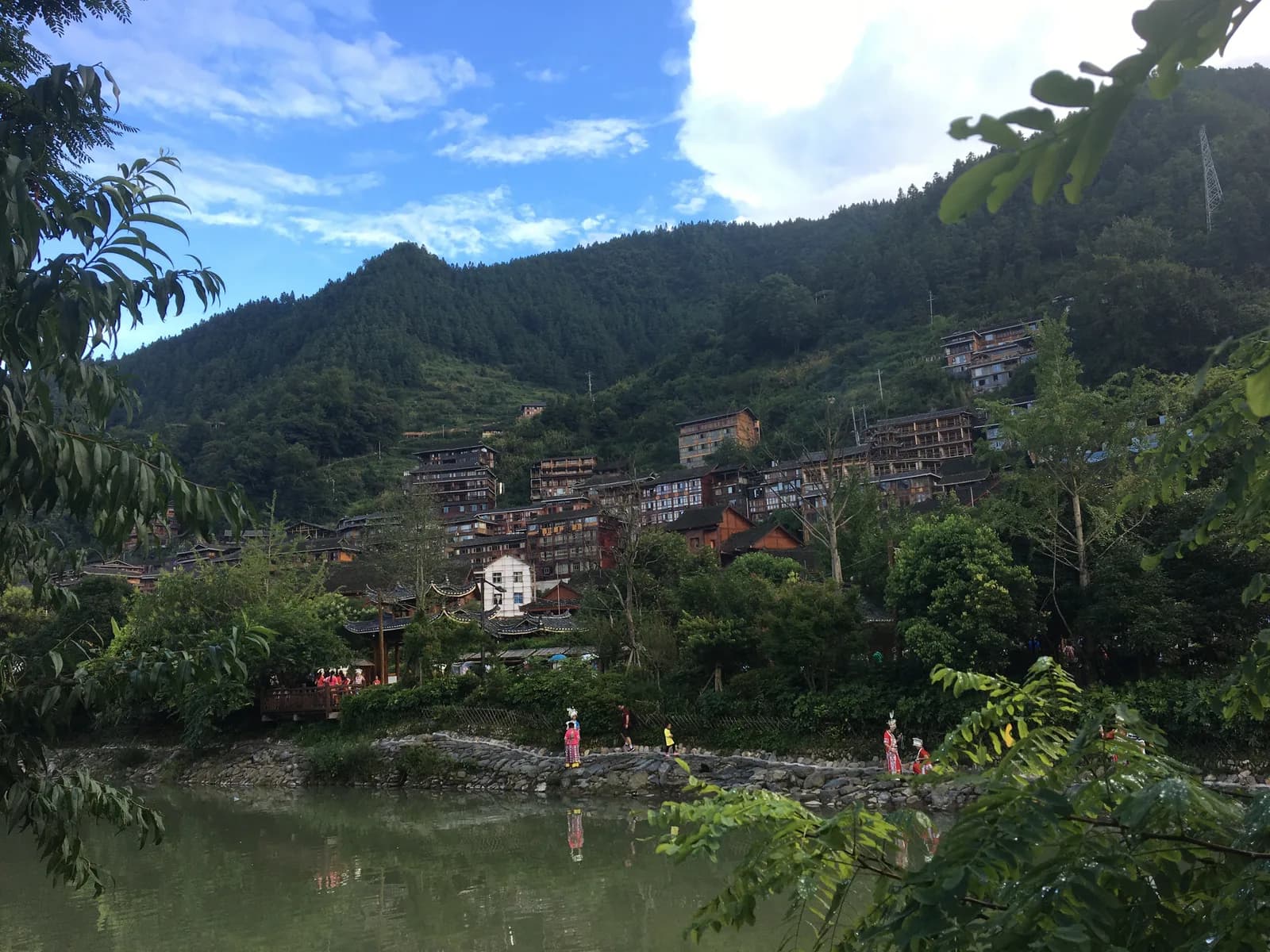
Xijiang Qianhu Miao Village, "the thousand-household Miao village of Xijiang," is the largest Miao settlement in China: more than ten natural villages that grew into each other across two hillsides in Leishan County, southeast Guizhou. The count that gives it its name now sits above 1,400 wooden stilt households, the tiered diaojiaolou that climb the slopes on timber legs. The Baishui River runs through the middle, crossed by covered wind-and-rain bridges, with the commercial pedestrian street along the water and an observation deck on the opposite bank looking back at the whole amphitheater.
Now the honest part, because recent visitors debate it loudly. Xijiang is a ticketed scenic area, not a sleepy hamlet. The main street is wall-to-wall silver shops, photo studios renting Miao costumes, bars and grilled-snack stalls, and more than one recent account says the neon blur felt interchangeable with any other renovated old town in China. All of that is true, and it is also only the bottom thirty vertical meters of the village. Walk ten minutes up any stone lane and the shops give way to woodsmoke, chickens, drying chilies and families who have lived on these terraces for generations. The morning view, when mist pools over the roofs before the day-trippers arrive, belongs almost entirely to the people who slept there. Treat the main street as the village's shopfront rather than its substance, and the trip makes sense.
Getting there from Guiyang, step by step
The route is simpler than it looks on a map, and it runs through Kaili, the prefecture hub. From Guiyang, the sequence recent travelers consistently report:
- High-speed train, Guiyang North to Kaili South. About 40 minutes, roughly ¥58 second class. Trains run all day, but summer and weekend departures sell out, so book a day or two ahead on the 12306 app or Trip.com. The station logistics on the Guiyang end are covered in my Guiyang neighborhood guide; sleeping near a Line 1 metro stop makes the early start painless.
- Direct shuttle, Kaili South to the village gates. Tourist shuttles wait outside the station and run straight to Xijiang's north gate in about an hour for ¥25 to ¥30. They leave when full at busy times and on a timetable when not.
- Gate to village. The ticket gate sits about 1.5 kilometers from the houses themselves; the internal sightseeing buses (covered below) or a flat walk close the gap.
From Kaili city itself, buses and Didi runs cover the 35 kilometers in under an hour, which matters if you base in Kaili for the surrounding villages. And if the transfers sound like work, one-day tours from Guiyang bundle the transport and entry into a single booking, at the cost of leaving before the light-up. Coming from further afield, the same high-speed line continues from Chengdu through Guiyang, so Xijiang slots naturally into the route I mapped in my Chengdu guide.
Three things worth booking
 Zero transfers
Xijiang Miao Village day tour from Guiyang
Door-to-door from Guiyang with entry included: the easy version of a long day. The trade is leaving before the dusk light-up, so treat it as the fallback when an overnight will not fit.
Book this Independent travel
Xijiang entry ticket and transfer packages
Pre-booked tickets and Kaili transfers skip the gate queue on busy weekends. Pair with the train from Guiyang North and you control your own clock, including the night.
Book this The deep cut
Multi-day Guizhou minority-villages tour
Multi-day itineraries thread Xijiang with Langde, Datang and the Kaili-area villages that day-trippers never reach, usually with a village overnight built in.
Book thisTickets, buses and how the village is laid out
Entry is ¥100, and the ¥20 internal bus ticket is worth adding at the gate: it covers four rides on the green sightseeing buses that loop between the north gate, the main street area and the observation deck across the river. The climb to the deck is a sweaty half hour on foot in summer, so most visitors ride up and walk down through the lanes, which is also the best single walking route in the village. Hold on to your ticket; it gets checked at the internal bus stops, and multi-day visitors should confirm re-entry rules at the gate when they buy.
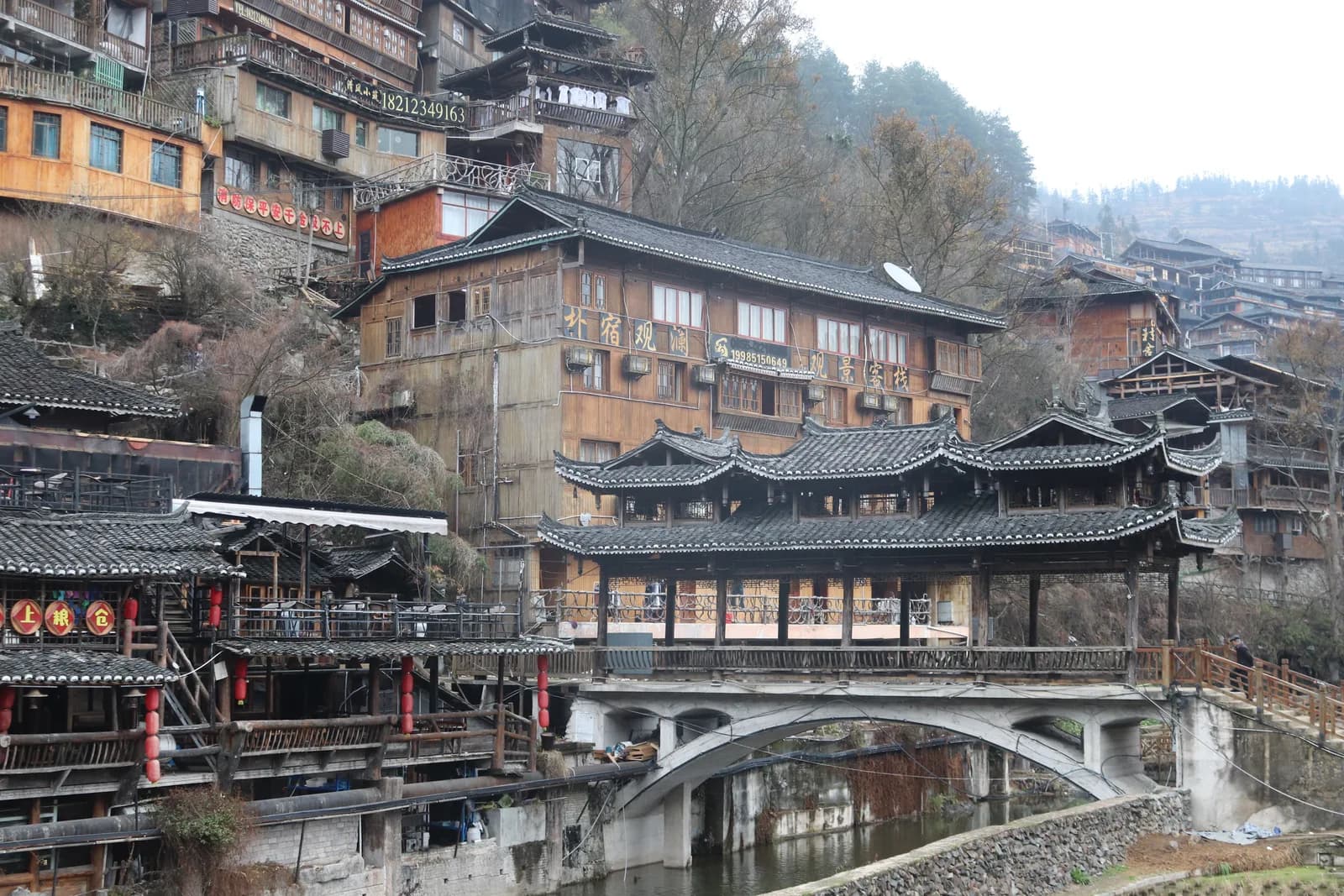
The layout takes about an hour to internalize. East bank: the residential hillside, the old lanes, the main pedestrian street along the river, the performance square, the Miao museum and the drum house. West bank: the observation deck and the guesthouses built around its viewline. The wind-and-rain bridges stitch the two sides together, numbered one through several as they climb the river, and they double as the best low-effort photo spots in the village when the lights come on.
Day trip or overnight: the argument for staying
Here is the comparison recent reports keep resolving in the same direction.
| Day trip | Overnight | |
|---|---|---|
| Time in the village | 4-6 hours, midday | 24 hours across two days |
| The light-up | Missed, or rushed before the last shuttle | Watched from the deck or your window, at leisure |
| Morning mist over the roofs | No | Yes, before the day crowds arrive |
| Crowds experienced | Peak midday density | Quiet evening lanes, empty mornings |
| Cost difference | Train and shuttle only | Adds ¥150-400 for a guesthouse night |
| Verdict | Acceptable if the schedule forces it | The version worth traveling for |
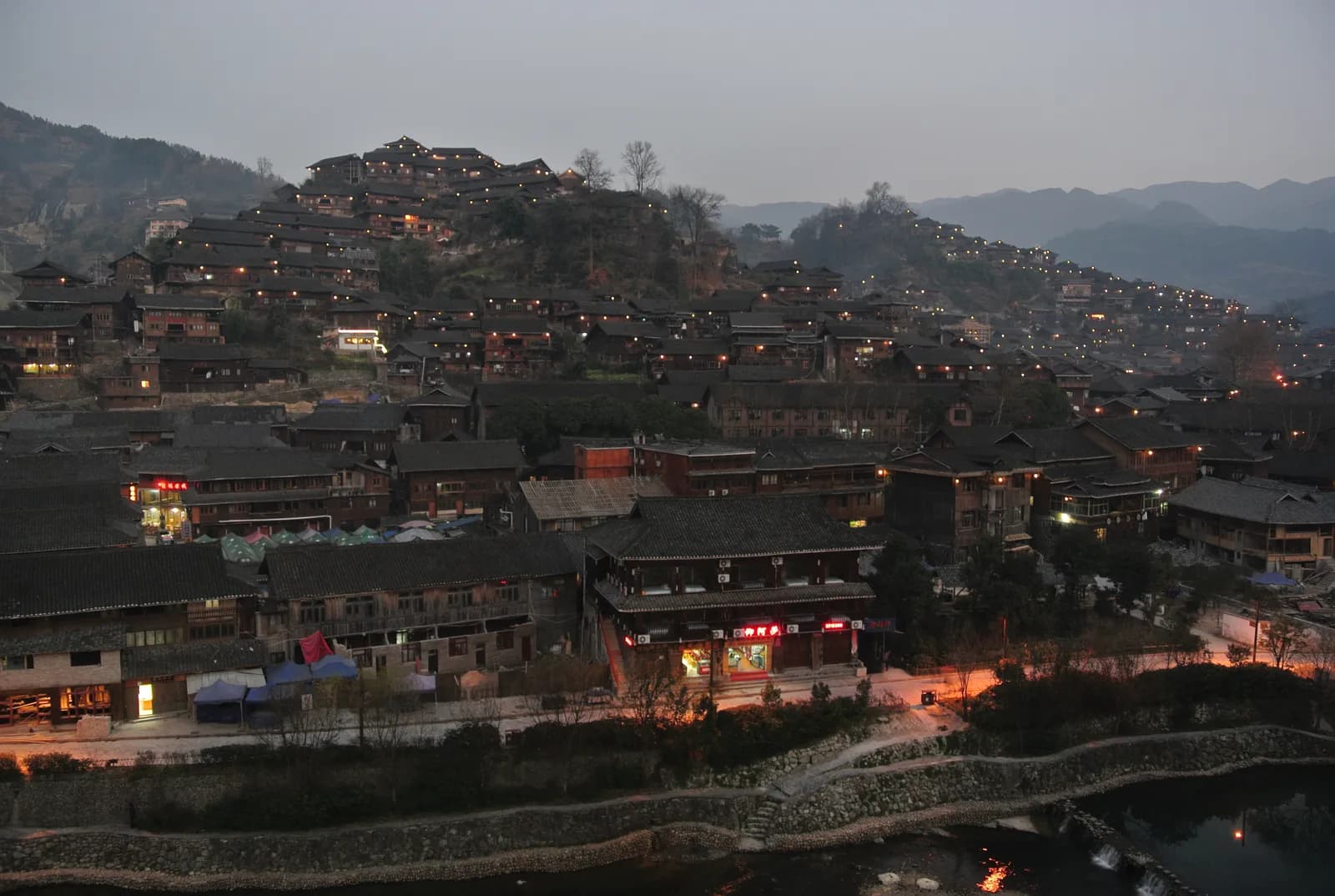
The village's defining hour starts around 6:30pm, when the lights come on under the eaves of every stilt house and the two hillsides turn into a slow constellation; the glow runs to nearly midnight. Day-trippers spend that hour on a shuttle back to Kaili South. Overnighters spend it on the observation deck, then again at dawn, when mist sits over the rooflines and the cooking smoke starts to rise. One night converts Xijiang from a crowded midday walk into the two views everyone actually came for. The math in the Guiyang day-trips guide already leaned this way; after a deeper pass through recent accounts, I would call the overnight non-negotiable unless your rail tickets say otherwise.
Where to sleep inside the village
Guesthouses here are family-run wooden houses, hundreds of them, and platform listings translate their names so inconsistently that naming three specific properties would be a coin flip. Zones are the reliable way to book, and the trade-offs between them are consistent across recent stays.
The observation-deck hillside on the west bank is the one recent visitors rave about: rooms with balconies facing the full sweep of the village, so the night light-up and the dawn mist happen from your bed. The trades are real, though. Access means steep stone steps or waiting on the internal bus, luggage is a haul (many hosts meet guests at the bus stop to help, a detail that recurs in recent reviews), and rooms with the view price above the village average. Stay here if the panorama is the point of the trip, and pack an overnight bag rather than dragging a suitcase up the hill.
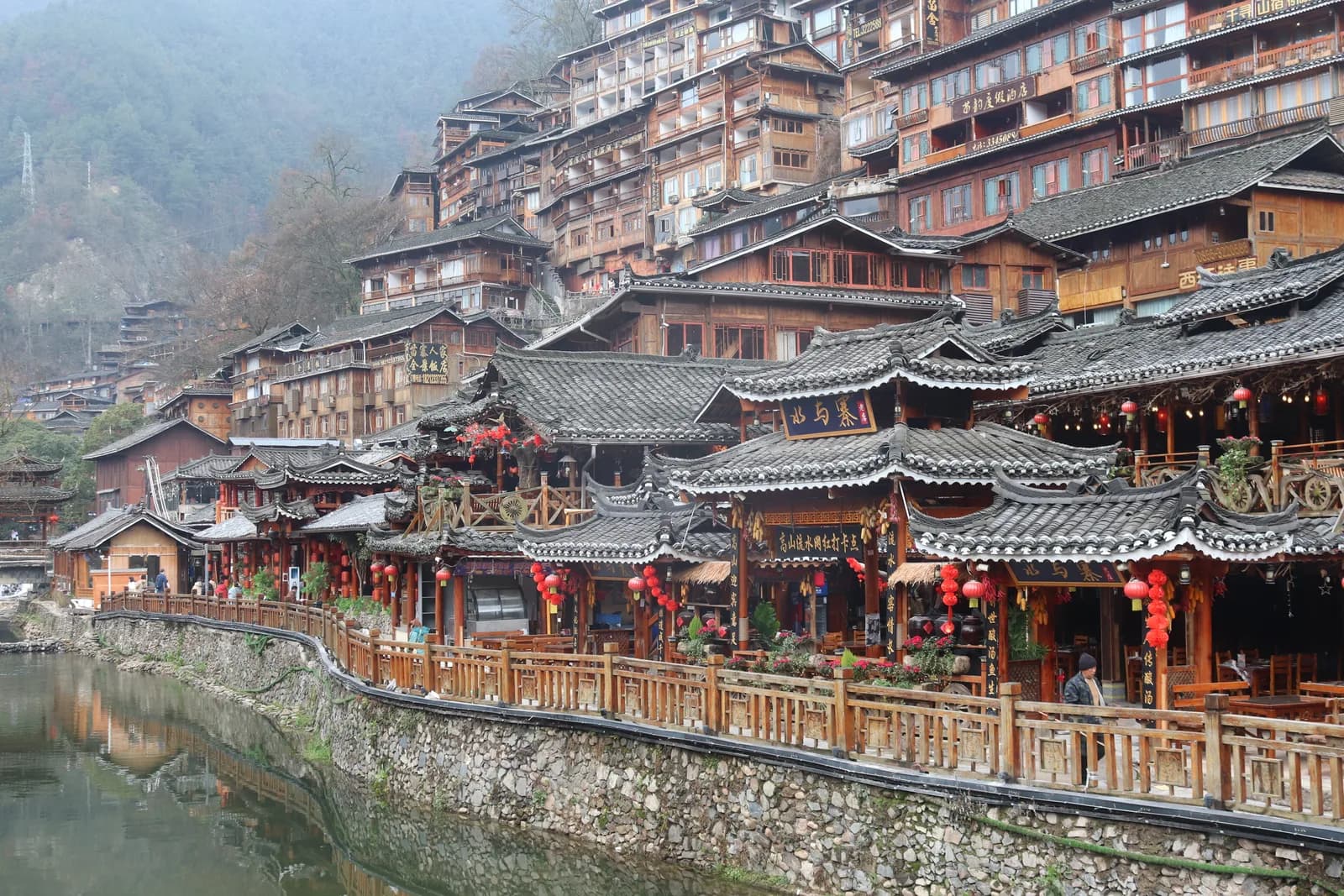
The riverside is the practical middle: flat walking, the wind-and-rain bridges outside your door, food within two minutes and the observation deck a bus ride away. Stay here with older travelers, kids or heavy bags. You give up the in-room view and keep everything else.
The main-street area puts you inside the night economy: barbecue smoke, rice-wine bars, music until late. Stay here if you want the village at full volume and sleep through noise easily; the street runs loud past 11pm on weekends.
And Kaili city is the fallback base: cheaper business hotels, easier trains, and the right anchor if you are stringing several villages together over a few days. It costs you the light-up unless you take a late shuttle back, which is exactly the trade this whole post argues against making.
The long-table banquet, sour soup fish and the rice-wine gauntlet
Food is where Xijiang stops feeling staged, because the Miao table is built on fermentation, and that does not perform for tourists; it just takes months in a clay jar. The dish to organize your evening around is sour soup fish, river fish simmered in a red broth of fermented tomatoes and rice water, sharpened with wild herbs and chili. It is the same dish I flagged in the Guiyang food section, but this valley is its home ground, and the fermented backbone of this table is the tradition I most want to film in Guizhou: a sour built by time rather than vinegar, which reads very differently to a palate raised on Japanese pickles.
The long-table banquet is the communal version. Tables are joined into one continuous line, and the spread runs sour soup fish, cured and "drum-stored" pork, five-color glutinous rice and mountain vegetables, typically ¥60 to ¥80 a head. Banquets are sized for groups of ten to fifteen, so solo travelers and couples join a shared table, which is the better experience anyway. Then comes the rice wine. The "high mountain flowing water" toast is the signature: a line of Miao women tips bowls one into the next so the wine cascades into the guest at the bottom, and the polite escape is to keep your hands away from the bowl, because touching it means you have agreed to finish what flows. A gentler version greets arrivals at the gates, where singers in silver offer horn cups of sweet rice wine as a welcome. The wine is low-proof and drinkable; the volume is the trap.
Silver, embroidery and the performances
Miao festival dress is a full-body silver architecture of horns, crowns and layered neck rings, and Xijiang is one of the easiest places in China to see the craft up close. The lanes off the main street hold working silver forges, embroidery studios and batik workshops, several offering short hands-on sessions, and the Xijiang Miao Museum plus the drum house above the square carry the context. Rented festival dress with a photographer is a whole local industry; the results fill social feeds, and it is harmless fun if the queue does not eat your afternoon.
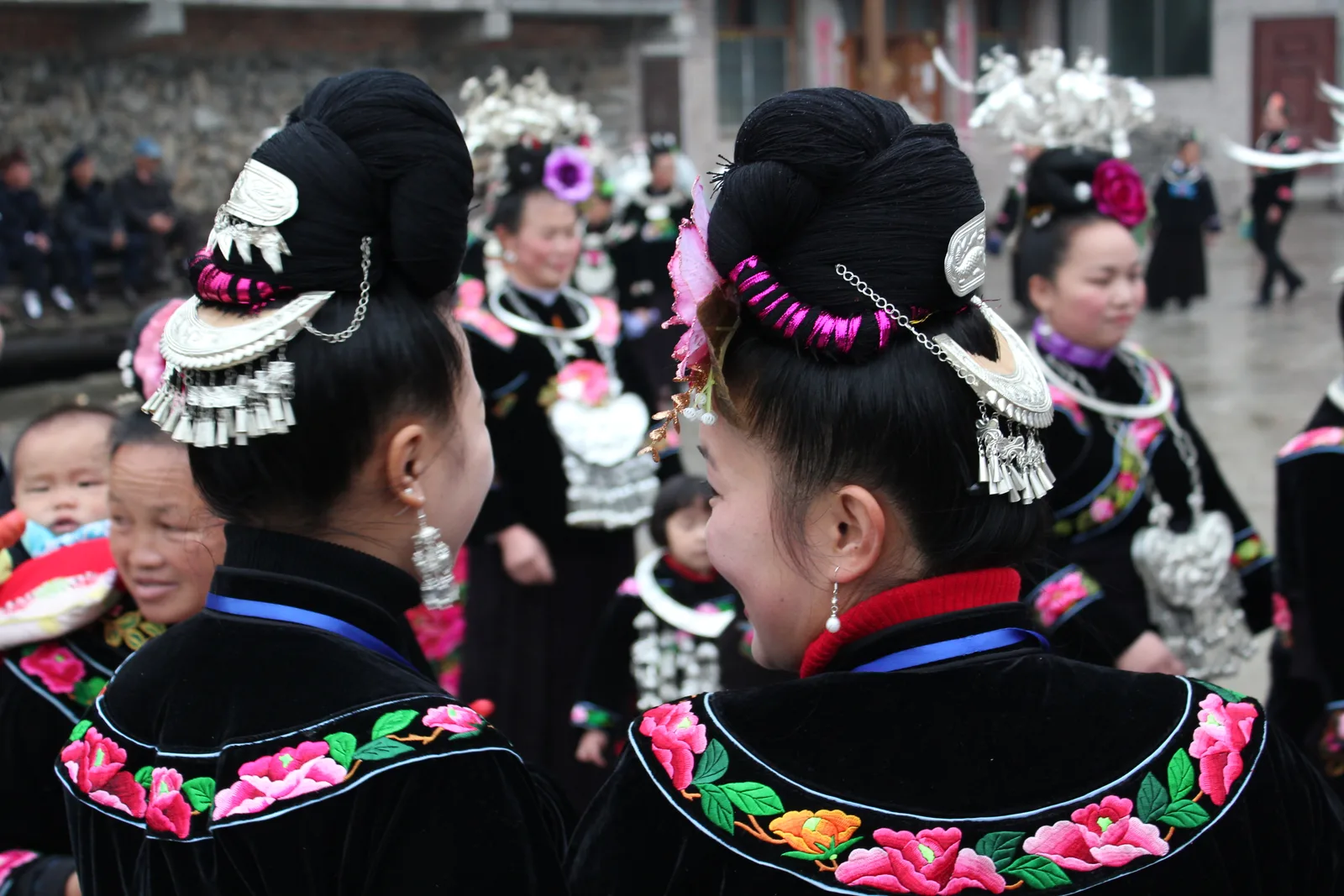
Performances anchor the daily rhythm. A free song-and-dance show runs at the performance square around 11:30 each morning, included with entry, with lusheng pipes, whirling skirts and the elders' antiphonal singing; recent listings also report a free late-afternoon slot around 5pm and a separate ticketed evening production. Times drift season to season, so confirm the day's schedule at the gate when you buy your ticket, and treat the morning show as the dependable one.
Beyond Xijiang: Langde and Datang
If Xijiang's crowds leave you wanting the quieter version, it exists 40 minutes away. Langde Upper Village (Langde Shang), about 28 kilometers from Kaili, is the counterpoint recent travelers keep recommending: no entry fee, a fraction of the visitors, and a welcome ceremony that predates the tourism boom, twelve stations of "block-way" rice wine lining the path from the village foot to the gate. It has been called the hometown of Miao song and dance, and performances happen when groups arrive rather than on an amplified schedule. Datang, south of Leishan, is known for its short-skirt Miao communities and granary architecture, and appears in recent itineraries as the stop for textile and costume traditions. Neither replaces Xijiang's scale; both restore the quiet that Xijiang's main street trades away. With a night in the village and a night in Kaili, all three fit into a two-day loop.

When to go
The calendar peak is Miao New Year, which lands in November by the lunar reckoning and turns Leishan County into the biggest Miao celebration in China. The 2025 edition ran from early November into late December, opening with a ten-thousand-person costume parade, massed lusheng pipes and a long-table banquet at county scale, with Xijiang holding its own celebration in late November. It is the best and busiest time to be here; guesthouses book out and rates double, so commit early. Outside festival season, spring and autumn midweek dates give you green or gold terraces and workable crowds, and summer brings the same mild highs that make Guiyang a resort city, with rain that mostly arrives at night and makes the morning mist better. Skip the National Day week in early October, when the whole province is traveling, and expect winter to be cold, quiet and atmospheric in equal measure.
Recommendations
- Stay the night. Every other decision in this post matters less than this one.
- Book the Guiyang North to Kaili South train a day or two ahead in summer and around any festival date.
- Buy the ¥20 internal bus ticket, ride up to the observation deck, and walk back down through the lanes.
- Be on the deck by 6pm for the light-up, and again at dawn for the mist; both belong to overnighters.
- Pack a small overnight bag and leave the suitcase in a Guiyang or Kaili hotel; the lanes are steep and stepped.
- Join a shared long-table banquet rather than ordering restaurant sour fish alone; the toasting is half the meal.
- Keep your hands off the wine bowl during the high mountain flowing water toast unless you mean to finish it.
- Climb ten minutes above the main street at least once; the working village starts where the shops stop.
- Add Langde on the way back through Kaili if crowds dulled the magic; it is the calibration Xijiang needs.
Xijiang rewards the traveler who plans around its clock: arrive midday, climb high, eat long, and let the day-trippers drain away before the lights come on. If you have slept there recently and the prices or shuttle patterns have moved, tell me and I will update this. The Guiyang end of the logistics lives in the city stay guide, and the rest of the province's day trips are ranked in the things-to-do guide. Between the three, the trip books itself.
Frequently asked
Is Xijiang Miao Village worth visiting, or is it too commercialized?
Both things are true. The main street is heavily commercial, with souvenir shops, bars and neon that recent visitors compare to every other Chinese old town. But the setting is real: over 1,400 wooden stilt houses stacked up two hillsides, most still lived in, and the lanes above the shopping street stay quiet. Go for the dusk light-up and the morning mist, not for an untouched village, and it delivers.
How do you get to Xijiang Miao Village from Guiyang?
Take the high-speed train from Guiyang North to Kaili South, about 40 minutes for roughly 58 yuan, then the direct shuttle bus from the station to the village gates, about one hour for 25 to 30 yuan. Book the train a day or two ahead in summer and on weekends. Door to door it takes around two hours, which is why day tours from Guiyang also sell well.
How much does Xijiang Miao Village cost?
Entry is 100 yuan, plus 20 yuan for the internal sightseeing buses that shuttle between the gate, the main street and the observation deck. Budget 25 to 30 yuan each way for the Kaili South shuttle and about 58 yuan each way for the train from Guiyang. A riverside or mid-hill guesthouse room typically runs 150 to 400 yuan a night outside festival dates.
Can you do Xijiang Miao Village as a day trip from Guiyang?
Yes. With an early train you can be inside the village by late morning, see the 11:30 performance, eat sour soup fish and still make an evening train back. The catch is that the dusk light-up, the single image most visitors come for, happens right when day-trippers are leaving. If you can spare the night, stay.
Where should you stay in Xijiang Miao Village?
Pick your zone by priority. The observation-deck hillside on the west bank has the panoramic night view from your window and the steepest access. The riverside is flat, central and close to the wind-and-rain bridges. The main-street area puts you in the thick of the food stalls but takes the most night noise. Book ahead for weekends and any November festival dates.
When is the best time to visit Xijiang Miao Village?
For the biggest spectacle, Miao New Year, which falls in November on the lunar calendar; the 2025 Leishan festival season ran from early November to late December with parades, lusheng performances and mass long-table banquets. For quieter visits, spring and autumn midweek dates are the sweet spot. Avoid the National Day week in early October, when the village is at its most crowded and rates spike.
More from the journal
Qianling Park, Guiyang: The Macaques, Hongfu Temple and How to Visit Without Losing Your Snacks
Emeishan Day Trip from Chengdu: What One Day on Mount Emei Really Buys You (and When to Stay the Night)
Hong Kong to Shenzhen Border Crossings: All Seven Doors Compared, and Which One Your Day Actually Needs