Things to Do in Guiyang: Waterfalls, Macaques and the Sour-Fish Nights
Guiyang's attractions ranked for 2-4 days: Huangguoshu Waterfall, Qianling Park's macaques, Qingyan Ancient Town, Tianhetan and the night markets.
Guiyang is the Chinese city travelers keep discovering by accident, booked as a one-night transit stop on the way to Huangguoshu Waterfall and then, in report after recent report, regretted as exactly that. Researching where to stay in Guiyang left me with a folder of recent traveler accounts that all bend the same way: the capital of China's least-touristed famous province deserves days, not hours. The waterfall is the headline, and it is only one of four big excursions the city serves. Here is how I would spend two to four days, based on what recent visitors consistently rate, book and regret skipping.
How to think about Guiyang
The useful mental model from recent itineraries: Guiyang is one city day plus a menu of day trips, and the ranking of those day trips is remarkably consistent. Huangguoshu Waterfall is the unmissable one. Qingyan Ancient Town is the easy half-day. Xijiang Qianhu Miao Village is the big commitment with the big payoff. Tianhetan is the local karst fix when you cannot spare a full waterfall day. Everything works best from a central bed near the Nanming River or in Yunyan, which is the argument the stay guide makes at length: the trains leave early, the food streets run late, and sleeping between the two is the whole trick.
The in-town attractions: towers, macaques and a museum that explains the province
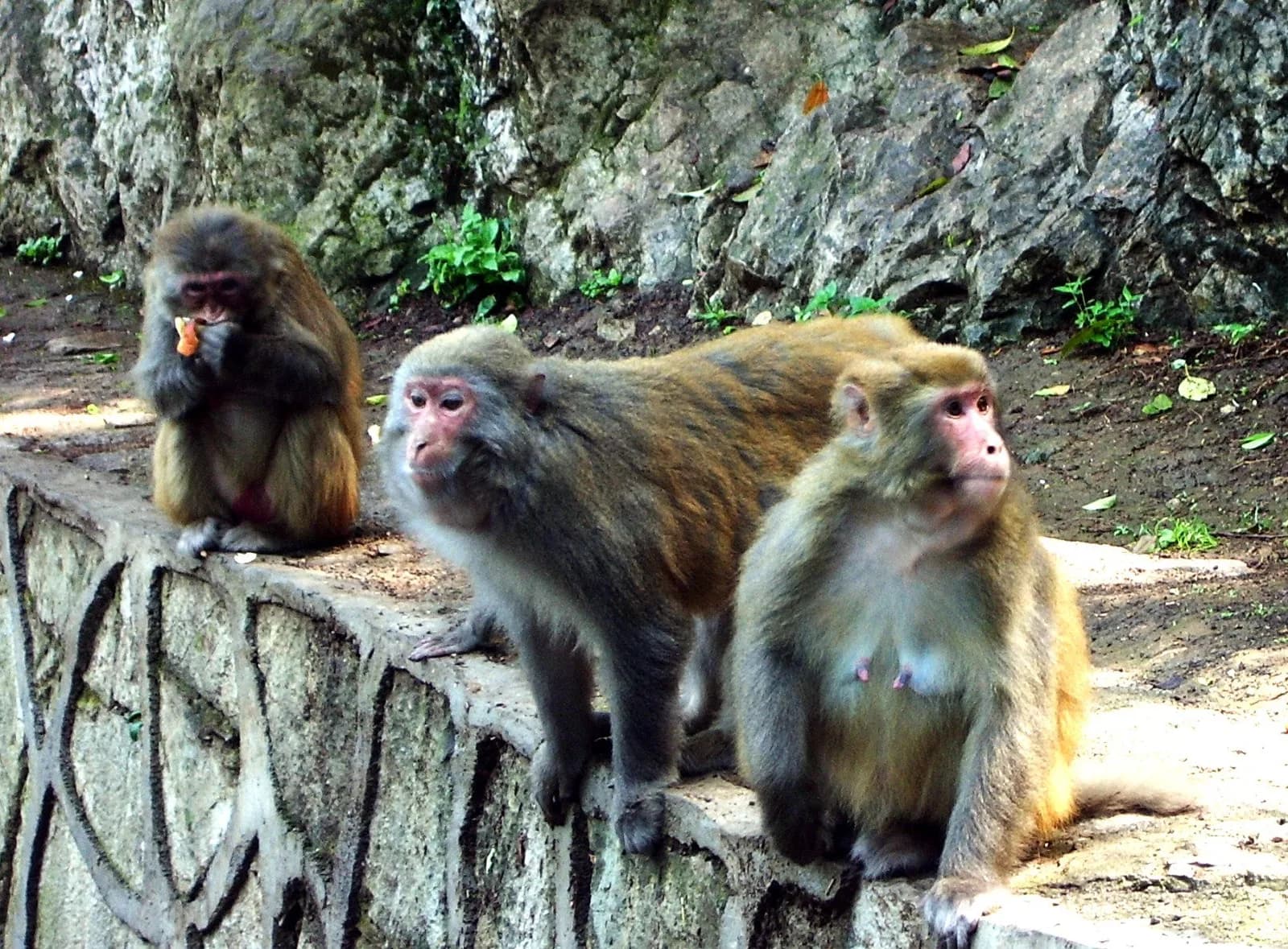
Start with Qianling Park, the forested mountain at the northwest edge of the center. Entry costs a few yuan, the paths climb through genuine forest to Hongfu Temple, a Qing-era complex at the summit, and the middle stretch of the mountain belongs to wild rhesus macaques. Recent visitors are unanimous on two points: the monkeys are the best free entertainment in the city, and they are practiced thieves, so keep food zipped away and grip your phone. A cable car waits for anyone the humidity defeats. I have written a full Qianling Park guide covering the 2026 reservation rule, the cable car and how to keep your snacks.
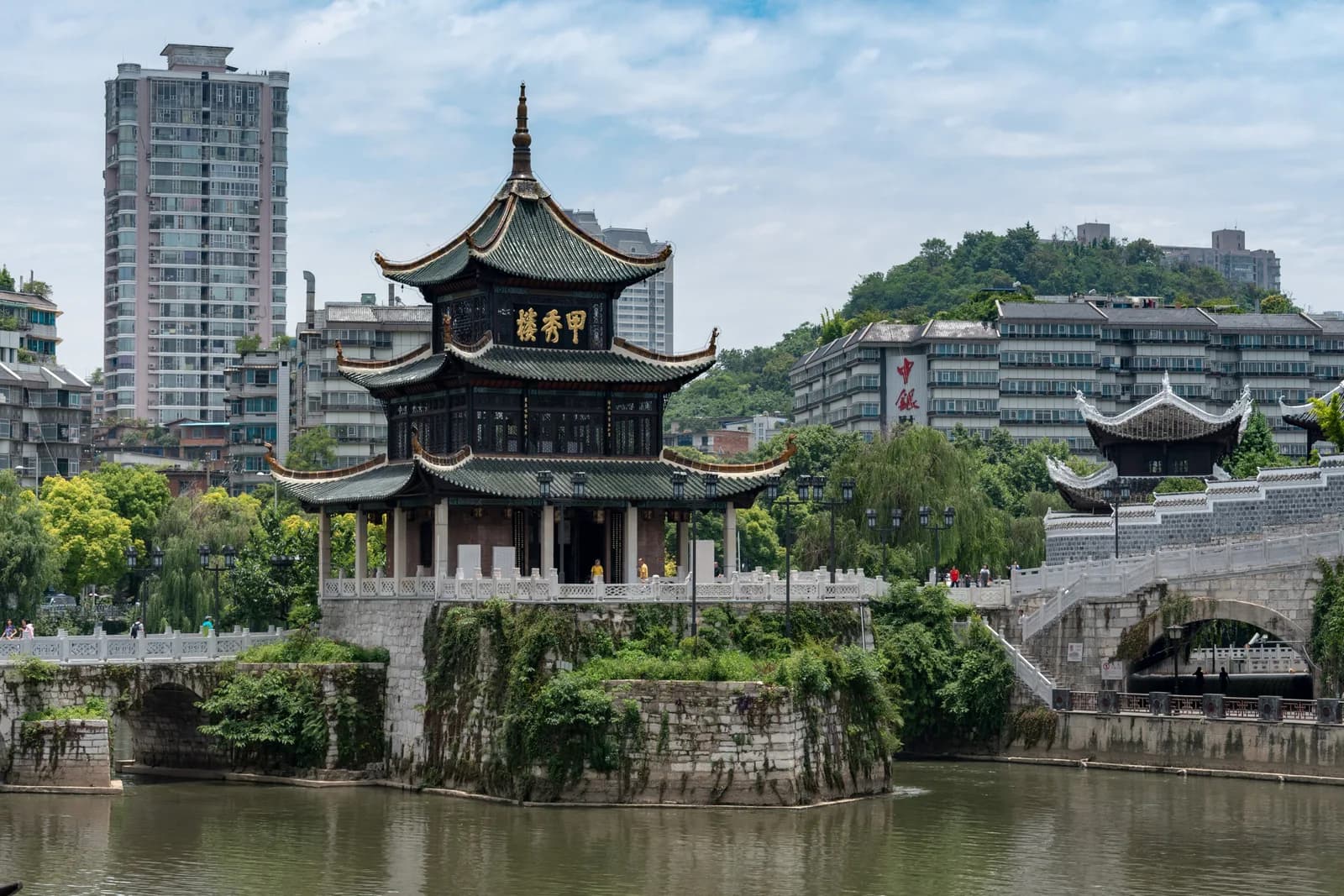
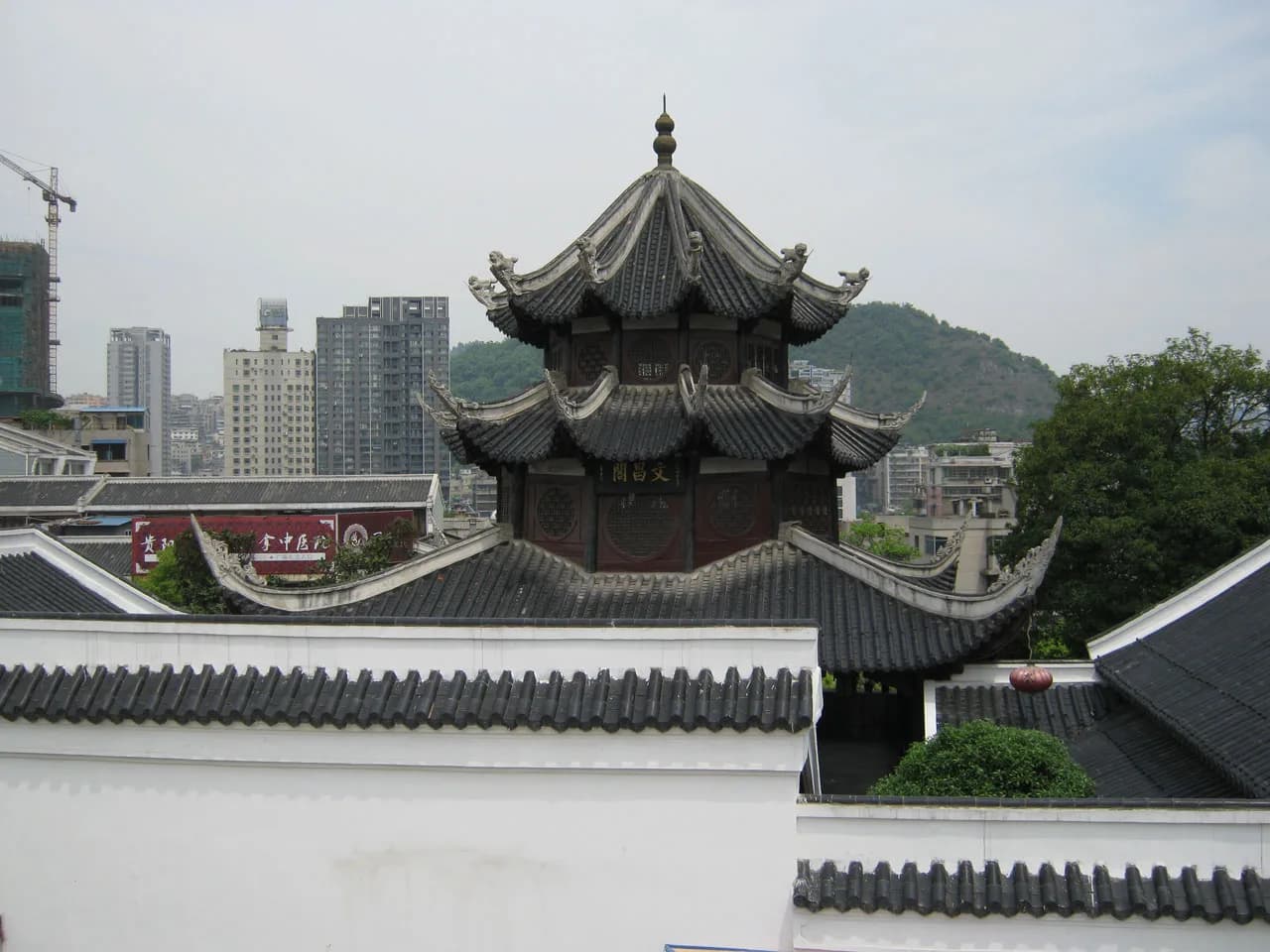
The afternoon belongs to the old center. The Wenchang Pavilion, a late-Ming tower from 1596 built on a surviving stretch of the old city wall, anchors a small quarter of tea houses and noodle shops, and it photographs best from the wall itself. From there it is a walkable line through Dashizi to the Nanming River and Jiaxiu Tower, the three-story pavilion that has stood on its rock in the river since 1598 and is the reason to save this stretch for after dark, when the lights come on and the promenade fills.
If the weather turns, the Guizhou Provincial Museum in Guanshanhu is the indoor hour that earns its detour: recent visitors call it the best single introduction to the province's Miao, Dong and Buyi cultures, which is context the villages and the food both reward. It is free, like most provincial museums in China, and the metro reaches it.
The day trips, ranked
Three things worth booking
 The headline
Huangguoshu Waterfall day trip
Asia's biggest waterfall: 30 minutes to Anshun West by high-speed rail, then a shuttle to the gates. Three scenic sections need six or more hours, so leave by 8am. Bundled tours remove the transfers.
Book this Worth the overnight
Xijiang Qianhu Miao Village
Over 1,400 wooden Miao households stacked up two hillsides, 40 minutes to Kaili South by train plus an hour's shuttle. Doable in a day; the dusk light-up from the observation deck is why recent visitors stay the night.
Book this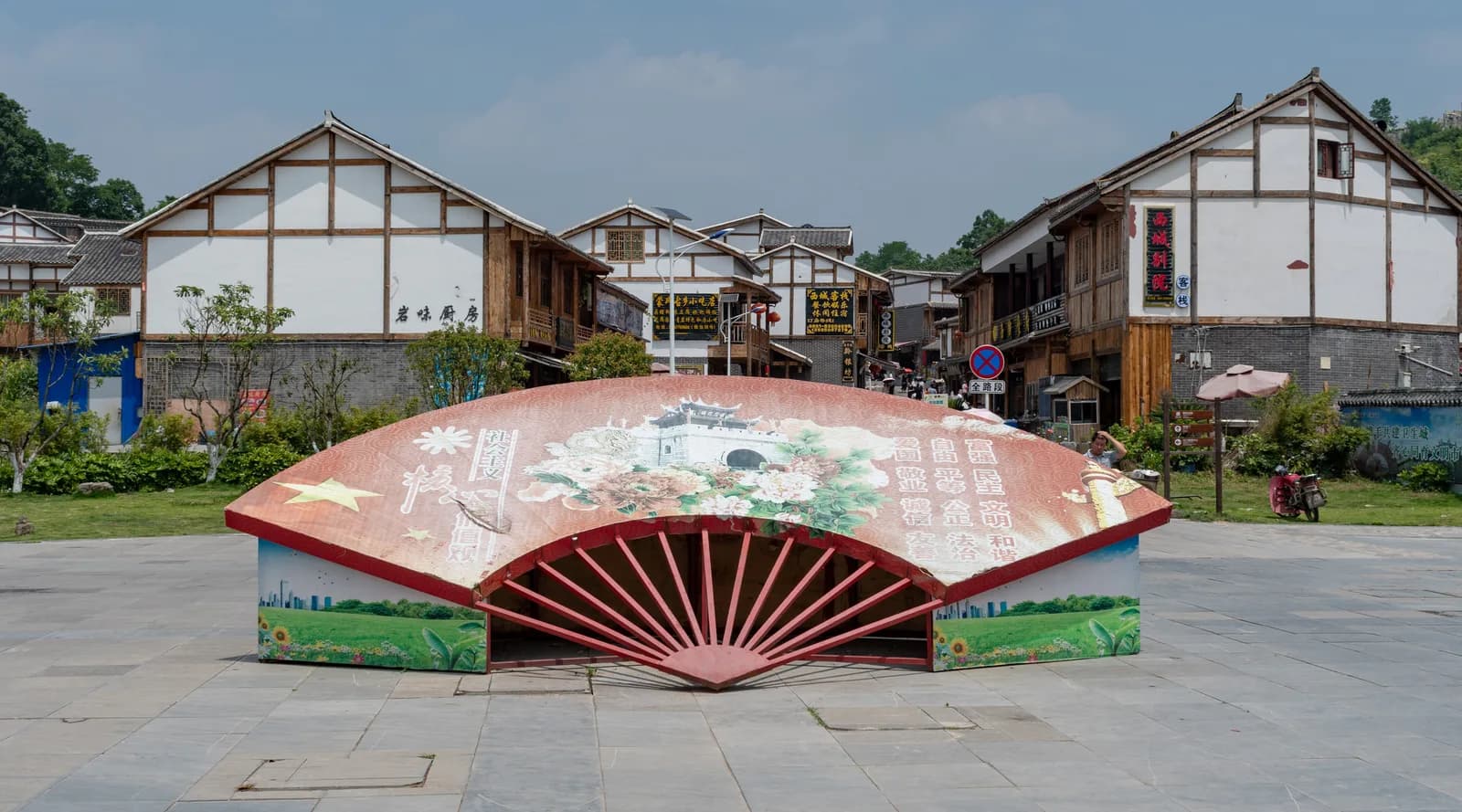 Easiest win
Qingyan Ancient Town half-day
A 600-year-old walled garrison town 40 minutes south of downtown, often bundled with Qianling Park and Jiaxiu Tower on guided city tours. Come hungry: the pig trotters and rose candy are the point.
Book thisHuangguoshu is the reason most travelers are here at all, and the logistics reward attention. The high-speed train from Guiyang North to Anshun West takes about 30 minutes for around 47 yuan, a shuttle or Didi covers the last 40 to 50 minutes, and the 160-yuan peak-season ticket (150 list in winter, often discounted) covers three separate scenic areas with an internal shuttle at 50 yuan. Recent visitors keep repeating the same advice: budget six hours or more because Doupotang and Tianxingqiao are worth as much as the main fall, and go during or just after summer rain when the water runs at full width. Book the train and entry a day or two ahead in summer.
Xijiang Qianhu Miao Village is the bigger commitment. Train from Guiyang North to Kaili South, about 40 minutes for roughly 58 yuan, then a one-hour shuttle to the gates; entry is 100 yuan plus 20 for the internal buses. The consistent verdict in recent reports: doable as a long day, better as an overnight, because the thousand wooden houses lighting up at dusk is the image everyone came for.
Qingyan Ancient Town is the easy one, a Ming-dynasty garrison town of stone alleys about 40 minutes south by bus or Didi, and travelers rate it as much for eating as walking: braised pig trotters, the rose candy one family has made for over a century, and tofu grilled at the gates. Go on the same day as the city sights if time is short; guided day tours bundle it with Qianling and Jiaxiu.
Tianhetan is the one most English guides skip and recent domestic travelers do not: a karst scenic area on the city's southwestern edge where a gorge waterfall, boat rides and a long cave system sit in one compact park. The Metro S1 line now runs to Tianhetan station, bus 211 makes the trip in about 40 minutes, and the through ticket costs around 50 yuan with the caves included. It is the right call when you want Guizhou's karst without spending a full day reaching it. Further out in Kaiyang County, about 54 kilometers from the city, the Nanjiang Grand Canyon stacks dozens of waterfalls along a rafting river; it appears in recent reports as the repeat visitor's day trip, the one you do when the big three are done.
| Day trip | Time from center | Cost (approx.) | Effort | Verdict |
|---|---|---|---|---|
| Huangguoshu Waterfall | ~1.5 hrs door to gate | ¥160 entry + ~¥100 transport | Full day, lots of walking | Unmissable |
| Xijiang Miao Village | ~2 hrs | ¥100 entry + ~¥120 transport | Full day or overnight | Stay the night if you can |
| Qingyan Ancient Town | ~40 min | Under ¥50 all-in | Half day | Easiest win |
| Tianhetan | ~40 min (Metro S1 or bus 211) | ~¥50 through ticket | Half day | Best karst-per-hour |
| Nanjiang Grand Canyon | ~1.5 hrs | Varies with rafting | Full day | For repeat visitors |
The food, which is half the argument
Guizhou eats sour, and nowhere else in China does. The base note is fermentation, tomatoes and rice water worked in clay jars, and the dish to organize a first evening around is suan tang yu, sour soup fish, usually served as hotpot at busy dedicated restaurants. Order it there rather than as a side dish elsewhere, and ask for the fish weighed and priced before it goes in the pot. Coming from a Japanese kitchen culture that treats fermentation as craft, this is the province I most want to eat my way through, and the recent food reports only sharpen that.
The night markets decide where you should sleep. Qingyun Market in Nanming is the polished renovated food street that runs late; Erqi Road nearby is the older-school version where stalls from across the province crowd a few hundred meters. Between them work through changwang noodles at breakfast, siwawa rice-flour wraps you fill yourself, and lian'ai doufu, the grilled stuffed tofu fished off charcoal at night stalls. Staying within walking distance of these streets is half the argument of the stay guide, and the same logic I applied in Chengdu: when a city peaks at 9pm, do not sleep a 30-minute ride from it.
Where to stay for all of this
The short version of the full neighborhood guide: sleep central, near the river or in the old city, and let the new districts be places you visit.
Three places to book in Guiyang
 Best value
Novotel Guiyang Downtown
Two minutes from the Grand Cross Square crossroads with big clean rooms; recent guests score the location 9+. The recurring caveat is patchy English at the desk, which is true nearly everywhere here.
Check availability Night-market base
Sheraton Guiyang Hotel
The long-standing five-star on the Nanming River, walkable to Jiaxiu Tower, Qingyun Market and Erqi Road. The pick if your evenings are built around the food streets, which they should be.
Check availability Space and quiet
Hyatt Regency Guiyang
The flagship of the new lake district, consistently the best international five-star value in the city because it sits out here. The trade is a 20 to 30 minute ride back from the night markets.
Check availabilityStay in Yunyan for the classic first-visit base, walking distance to the Wenchang Pavilion and the shopping streets with metro Lines 1 and 2 underneath. Stay on the Nanming riverside if food is the organizing principle, with Jiaxiu Tower and both night markets in walking range and the cheaper rooms clustering around Hebin Park at the district's western end. Stay in Guanshanhu only for space, quiet or business at the exhibition center, accepting the ride back from everything above.
Getting there and when to go
Guiyang Longdongbao airport sits unusually close to the city, with Metro Line 2 running from the terminal to downtown in about 30 minutes and a high-speed rail station directly beneath the runways. The rail network is the better story: Chengdu and Chongqing in about 3.5 and 2 hours, Kunming under 3, Guangzhou around 4, which is why Guiyang slots so naturally into a longer China route alongside Chengdu or an entry through Hong Kong and Shenzhen. If you are still choosing routes, compare fares into Guiyang against flying to Chongqing or Kunming and taking the train in.
Summer is the season, and that is unusual for China. The city sits at about 1,100 meters, June to August averages around 24C, and the frequent rain mostly falls at night and feeds the waterfall you came for. May to October is the window I would book, dodging the National Day week in early October when the province sells out.
Recommendations
- Give Guiyang three days, not the one-night transit stop most itineraries default to.
- Book Huangguoshu trains and entry a day or two ahead in summer, and be on the 8am departure.
- Do Qianling Park at opening, before the heat and the tour groups, and keep snacks sealed around the macaques.
- Save Jiaxiu Tower and the Wenchang Pavilion quarter for the same evening walk, then eat at Qingyun Market or Erqi Road.
- Take Metro S1 to Tianhetan for a half-day karst fix when a full Huangguoshu day does not fit.
- Stay the night at Xijiang Miao Village rather than rushing it; the dusk light-up is the payoff.
- Set up Alipay or WeChat Pay, Amap and a translation app before landing; English is thin outside the international hotels.
- Order sour soup fish at a dedicated restaurant on the first night, and let it recalibrate what you think Chinese food covers.
Guizhou is opening up fast enough that guides to it date quickly, so if you have walked these places recently and something has moved, tell me and I will update this. But the shape of the trip is stable: sleep by the river, spend the days on trains to waterfalls and villages, and end every one of them at a night market with a pot of sour fish. Few Chinese cities this size reward a traveler this well for this little money.
Frequently asked
Is Guiyang worth visiting?
Yes, and mostly as a base. The city itself fills one good day with Qianling Park, Jiaxiu Tower, the Wenchang Pavilion and the night markets. Its real value is what radiates out of it: Huangguoshu Waterfall, Qingyan Ancient Town, Xijiang Miao Village and the karst scenery at Tianhetan, all reachable on cheap, fast transport. Travelers who treat it as a two-hour transit stop consistently report wishing they had stayed longer.
How many days do you need in Guiyang?
Three is the sweet spot: one for the city, one for Huangguoshu Waterfall, and one for Qingyan Ancient Town or Xijiang Miao Village. A fourth day fits Tianhetan or turns Xijiang into the overnight recent visitors recommend. With only one day, do Qianling Park in the morning and Jiaxiu Tower plus the Qingyun Market food street after dark.
Can you visit Huangguoshu Waterfall as a day trip from Guiyang?
Comfortably. The high-speed train from Guiyang North to Anshun West takes about 30 minutes for around 47 yuan, then a shuttle or Didi covers the last 40 to 50 minutes to the ticket center. Entry is 160 yuan in peak season, and the ticket covers three scenic sections that need six or more hours together, so leave by 8am. Tours that bundle transport and tickets exist if you would rather not manage the transfers.
What is Tianhetan and is it worth the trip?
A karst scenic area on Guiyang's southwestern edge combining a gorge waterfall, boat rides and an extensive cave system, reachable on the Metro S1 line to Tianhetan station or bus 211 in around 40 minutes. The through ticket runs about 50 yuan. It is the best half-day option for seeing Guizhou's karst landscape without committing to a full Huangguoshu day.
When is the best time to visit Guiyang?
Summer. The city sits at about 1,100 meters and stays around 24C from June to August while the rest of China cooks, which is why domestic travelers treat it as a resort. Summer rain is frequent, often at night, and it has an upside: Huangguoshu runs at full volume during and just after the wet. Avoid the National Day week in early October, when the whole province books out.
Do you need Chinese to travel in Guiyang?
No, but you need preparation. The metro is bilingual and Didi replaces most negotiation, while English above ground is thin, including at hotel desks outside the international brands. Set up a translation app, Amap and Alipay or WeChat Pay before you land and the city runs smoothly; arrive without them and every transaction becomes a mime performance.
More from the journal
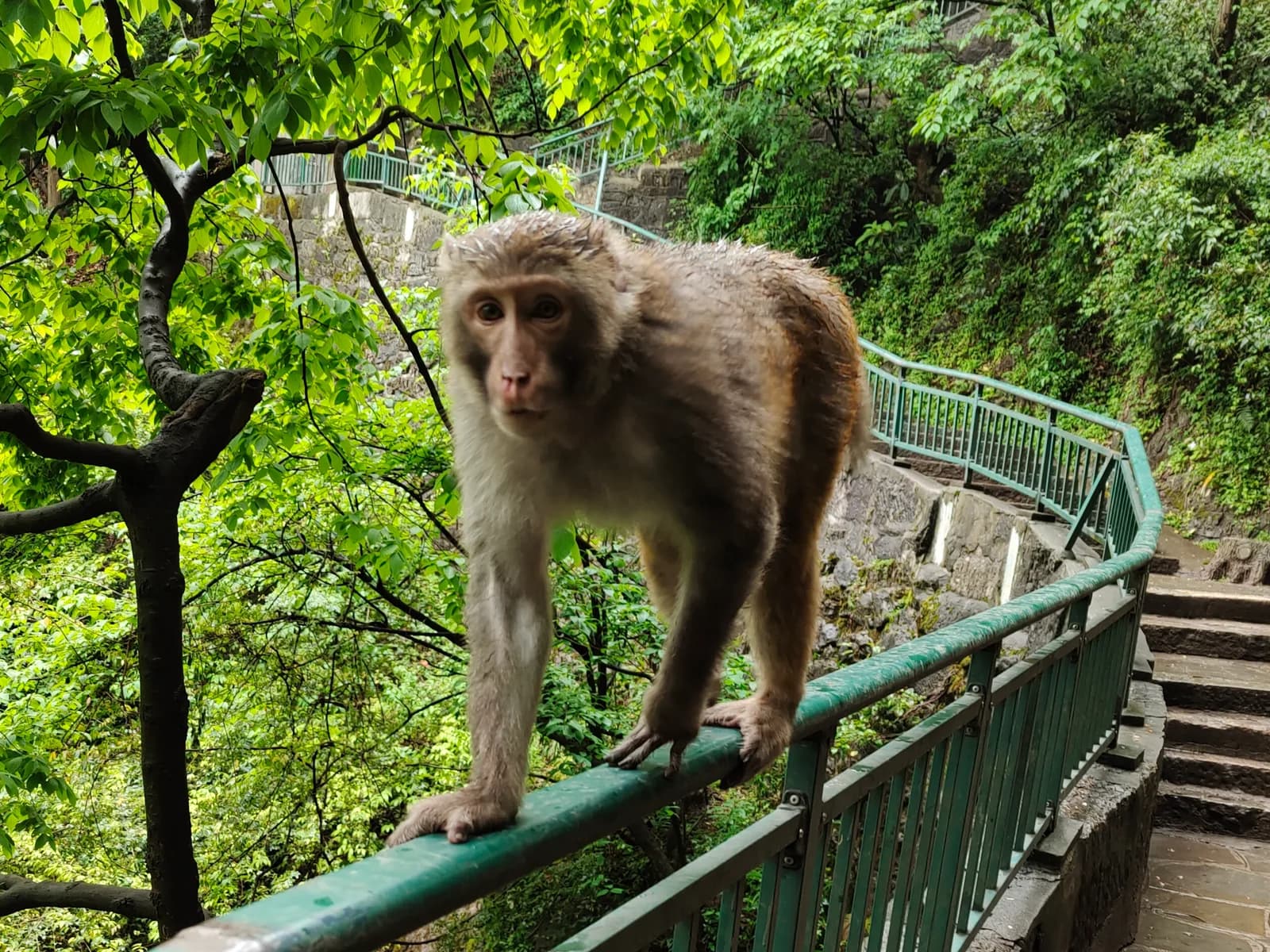
Qianling Park, Guiyang: The Macaques, Hongfu Temple and How to Visit Without Losing Your Snacks
Emeishan Day Trip from Chengdu: What One Day on Mount Emei Really Buys You (and When to Stay the Night)
Hong Kong to Shenzhen Border Crossings: All Seven Doors Compared, and Which One Your Day Actually Needs