Huangguoshu Waterfall Day Trip from Guiyang: The Complete Logistics Guide
How to do Huangguoshu Waterfall as a day trip from Guiyang: train and shuttle steps, 2026 ticket prices, the three scenic areas ranked, and where to sleep.
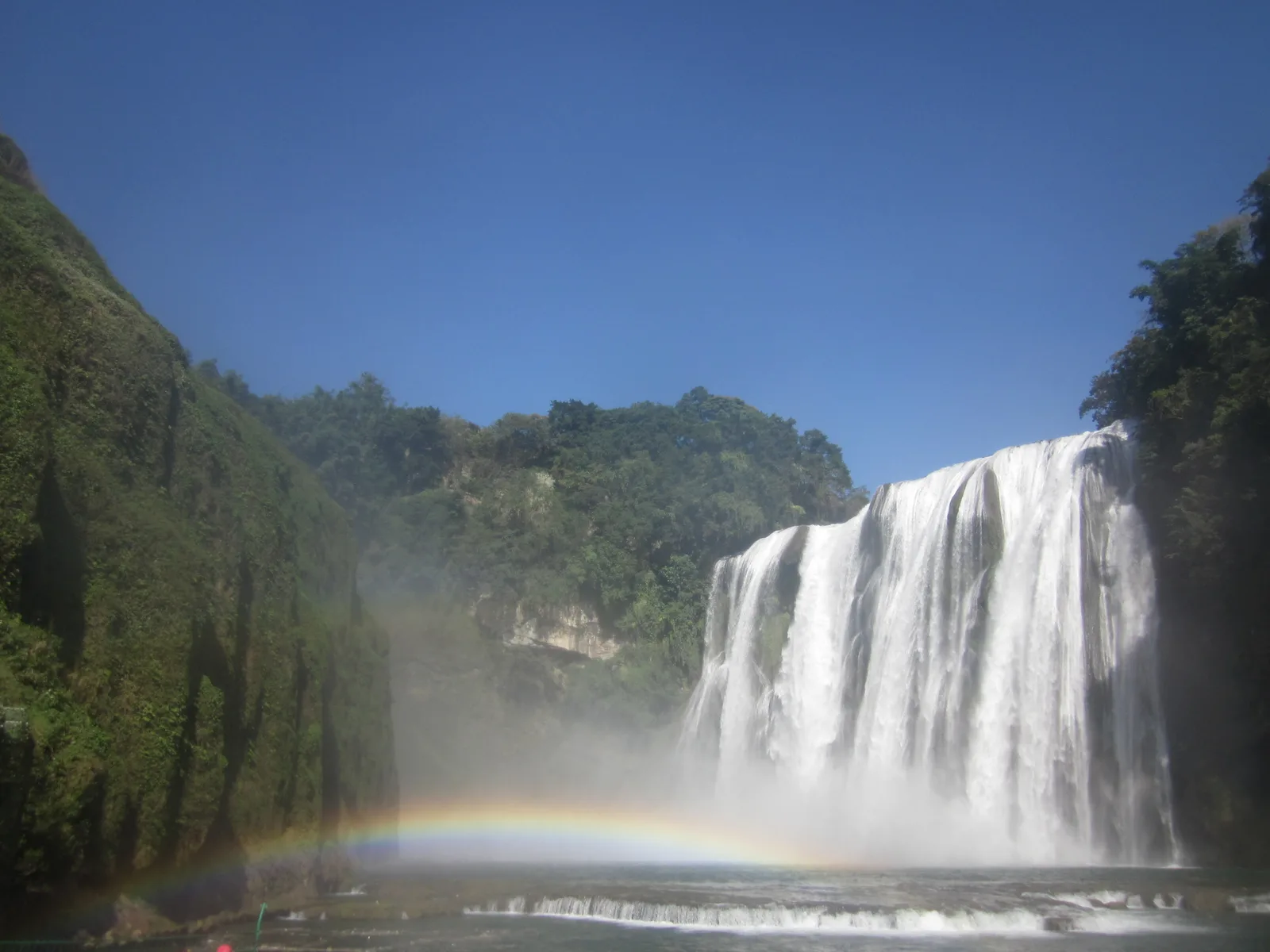
Every Guizhou itinerary bends around the same fixed point: Huangguoshu, the widest waterfall in Asia, 67 meters of white water dropping into Rhinoceros Pool about 90 minutes from Guiyang. It is the reason most travelers come to the province at all, and it is also the day trip people most often get wrong. Recent reports repeat the same mistakes: arriving at 11am, skipping Tianxingqiao to save time, discovering too late that the "waterfall" is actually three separate scenic areas spread along six kilometers of river. This is the logistics guide I wish those travelers had read, built from what recent visitors consistently report: exact trains, 2026 ticket prices, the three sections ranked, and an honest answer to whether you should sleep in Guiyang or Anshun.
Why Huangguoshu earns a full day
The single most useful thing to know: the entry ticket covers three separate scenic areas, not one viewpoint. Doupotang is a wide, roaring fall a kilometer upstream. The main Huangguoshu falls, with Water Curtain Cave running behind the water, is the postcard. Tianxingqiao, six kilometers downstream, is a three-to-four-hour karst walk that many recent visitors quietly rate above the headline waterfall. A shuttle bus links the three, and seeing them properly takes six to seven hours on your feet.
That math is why the half-day version fails. Travelers who treat Huangguoshu as a two-hour photo stop end up seeing one waterfall from one platform, with the two sections that reward the trip left unticked. Give it the full day, start early, and it becomes one of the best-value nature days in China. I made the same argument in my things-to-do-in-Guiyang guide: of all the excursions radiating out of the capital, this is the one nobody skips and nobody should rush.
Getting there from Guiyang, step by step
The DIY route is straightforward and cheap, and recent travelers describe it as painless if you book the train ahead.
Step 1: the train. Take a high-speed train from Guiyang North to Anshun West, about 30 minutes for around ¥47 in second class. Around 37 trains run daily between roughly 7am and 9pm, so frequency is never the problem; summer availability is. Book a day or two ahead on Trip.com or 12306 in July and August, and aim to be on a departure by 8am.
Step 2: the shuttle. Anshun West sits about 40 kilometers from the falls. Outside the station, shuttle buses run to the Huangguoshu ticket center in 40 to 50 minutes for roughly ¥22 to ¥25, though departures can be irregular outside peak hours. A Didi covers the same road for not much more split between two or three people, and it is the better call if you land at the station after 9am and want to protect your six hours in the park.
Step 3: coming back. Reverse the same chain. The last shuttles leave the scenic area in the late afternoon and evening, and trains from Anshun West to Guiyang North run past 9pm, so a full park day still gets you back for a late bowl of sour soup fish near your hotel. If your base is central, and my where-to-stay-in-Guiyang guide argues it should be, the night markets will still be running when you get in.
If you would rather not manage three legs each way, two alternatives exist and both are legitimate.
Three things worth booking
 Easiest logistics
Huangguoshu day tour from Guiyang
Coach or small-group tours roll pickup, the two-hour drive, tickets and the internal shuttle into one booking. The trade is a fixed departure time and less control over how long you linger at Tianxingqiao.
Book this DIY with backup
Huangguoshu ticket and transfer packages
Pre-booked entry sidesteps the ticket-center queue, which matters in July and August when same-day slots sell out. Some packages add the Anshun West transfer, keeping the day fully independent.
Book this The Anshun double
Huangguoshu + Longgong Dragon Palace combo
Pairs the falls with Longgong Dragon Palace, an underground river cave toured by boat past lit stalactites. Operators run it as one packed day or a two-day loop with an Anshun overnight.
Book thisHere is how the three approaches actually compare, based on what recent travelers report paying and experiencing.
| Option | Cost per person (approx.) | Door-to-falls time | Best for | The catch |
|---|---|---|---|---|
| DIY train + shuttle | ¥140–170 transport round trip + entry | ~1.5–2 hrs each way | Independent travelers, budget trips | Three legs each way, irregular shuttle times |
| Guided day tour | ¥350–600 all-in | ~2 hrs direct | First-timers, no-Chinese travelers | Fixed schedule, group pacing |
| Private driver | ¥800–1,200 per car | ~2 hrs direct | Families, groups of 3–4 | Costs the most unless the car is full |
The honest read: the train is so fast and cheap that a tour only wins on convenience, not speed. Take a tour if the three-transfer chain in a province with thin English sounds like the wrong kind of adventure. Go private if you are three or four people, because per head it converges on tour pricing while keeping your schedule your own. The same logic applies across China's high-speed corridors, and it is exactly how I framed the border run in my Hong Kong to Shenzhen day trip guide: rail plus a short last-mile hop beats a coach almost every time you can manage it.
Tickets: what ¥160 actually covers
Entry costs ¥160 per person in peak season, March 1 through November 30. The off-season list price drops to ¥150 from December through February, and Guizhou's aggressive winter tourism promotions have pushed it as low as ¥100 in recent years, so check the posted rate if you are traveling in the cold months. The ticket covers all three scenic areas and stays valid for two consecutive days, with each area admitted once, a detail that matters if you sleep nearby and split the park across two mornings.
What it does not cover:
- Internal shuttle bus, ¥50. Effectively mandatory. The three areas are spread along six kilometers of gorge and the shuttle is how you move between them.
- The escalator, ¥50 round trip or ¥30 one way. It drops you from the main entrance level down the gorge to the big falls. Recent visitors call the ride down a nice-to-have and the ride up a knee-saver; in July and August the queue for it can pass an hour.
- Tianxingqiao cableway, ¥10. A short lift at the end of the Tianxingqiao circuit that saves a final climb.
Tickets are real-name, so bring your passport; it doubles as your entry document at the gates. Ticket sales end around 4pm and the park runs roughly 7am to 6pm in peak season, slightly shorter in winter. Buy in advance in summer, either through the official channels or a pre-booked entry package, because recent reports mention same-day sellouts on holiday weekends.
The three scenic areas, ranked
Rankings from recent traveler reports are surprisingly consistent, and they do not match the postcard hierarchy.
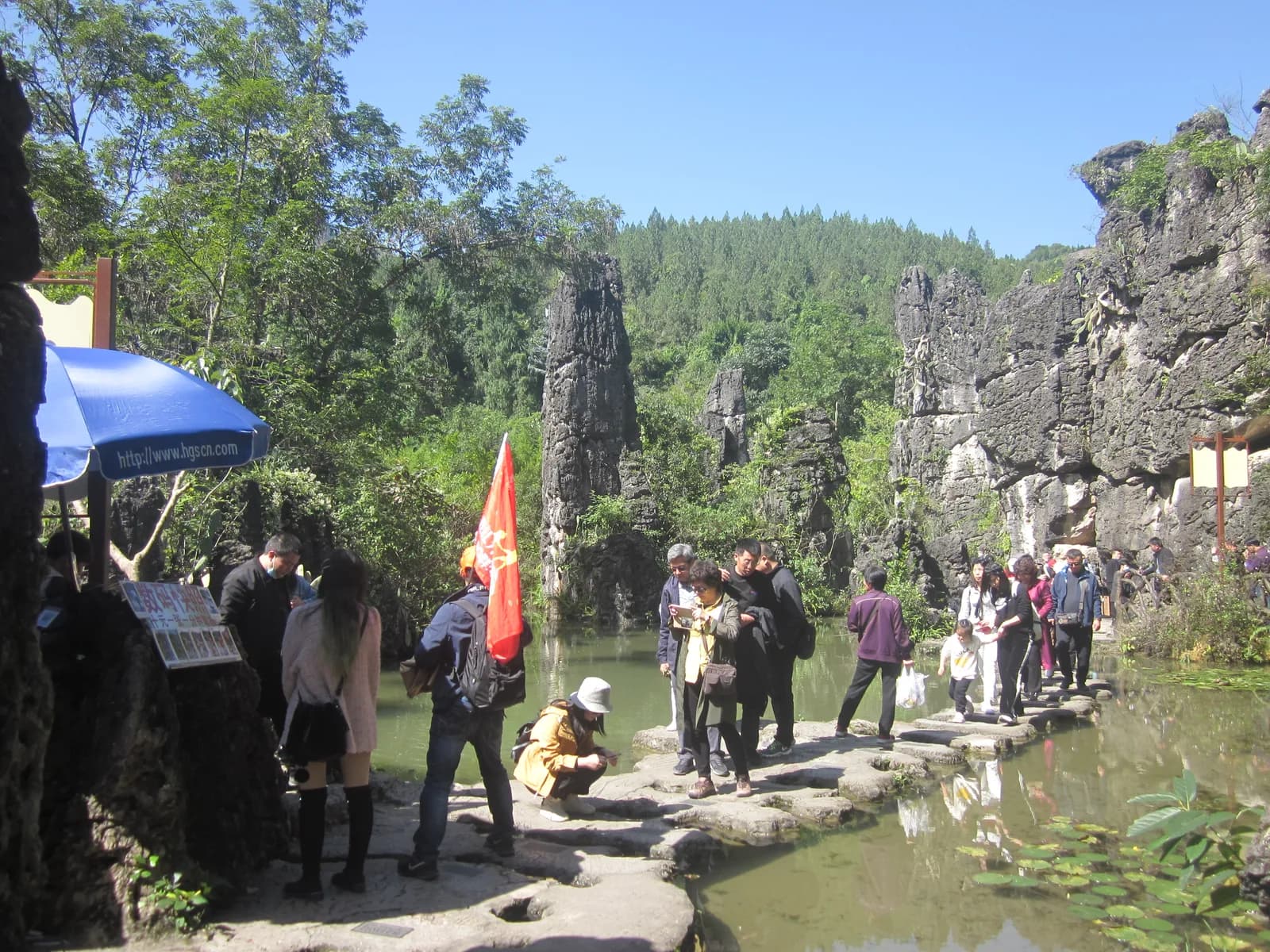
1. Tianxingqiao. The long section, six kilometers downstream, and the one repeat visitors defend hardest. It is a three-to-four-hour walk through what the park calls a natural bonsai garden: stepping-stone paths across pools, a stone forest growing out of water, the 150-meter Tianxing Cave, and the Yinlianzhuitan waterfall at the far end, a silver-chain cascade that photographs like poured mercury. It is also reliably less crowded than the main falls, because tour groups on tight schedules cut it first. If you must trim it, walk the first half and turn around; the consensus is that the opening stretch holds the best scenery.
2. The main falls and Water Curtain Cave. The headline: 67 meters high, 83 meters wide, viewable from six angles, and genuinely loud after rain. The circuit takes 1.5 to 2 hours through the bonsai garden and along Rhinoceros Pool, and the singular feature is Water Curtain Cave, a 134-meter passage carved into the cliff directly behind the falling water, 40-odd meters up the face. Walking behind a waterfall this size is the moment recent visitors describe most, and also where they queue longest; the corridor bottlenecks badly midday in summer. The park can restrict the cave when flow peaks after heavy rain, so treat it as a probable highlight rather than a guarantee.
3. Doupotang. The upstream fall, 105 meters wide and 21 meters high, the widest single curtain in the park and the one that appeared in the 1986 Journey to the West series. It takes 30 to 60 minutes and sits nearest the shuttle hub, which makes it the perfect warm-up rather than a destination in itself. Ranked third only because the other two are that good.
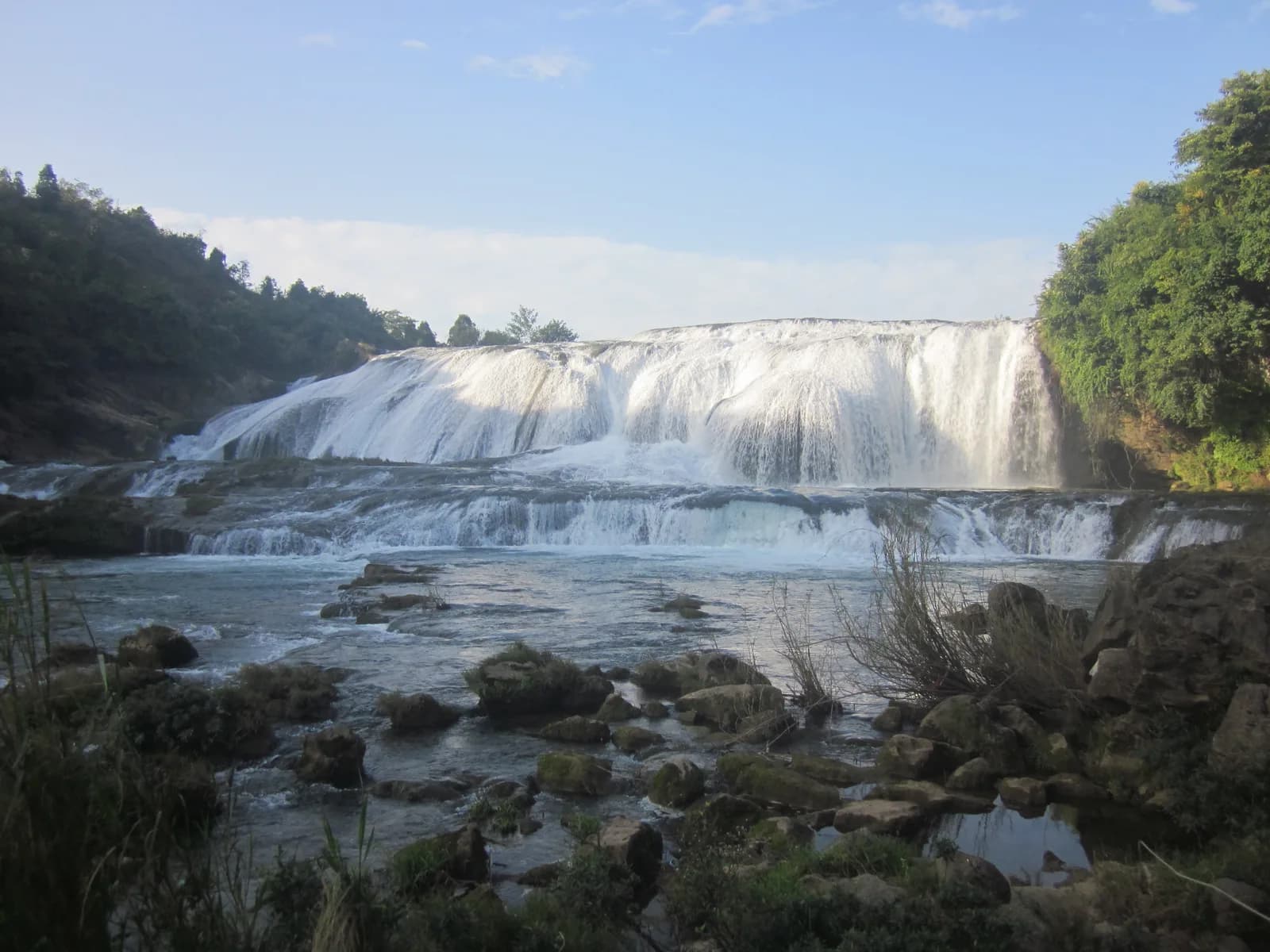
The route that beats the crowds: Doupotang first thing as a 30-minute warm-up, Tianxingqiao through the late morning and lunch window while the tour groups mob the main falls, then the main falls and Water Curtain Cave after 2 or 3pm, when day-tour coaches start pulling out and the platforms clear. Recent visitors who ran this order describe near-empty viewing decks at the big falls in the late afternoon light, which is also when the rainbows appear in the spray.
Best season and timing
Huangguoshu is a rain-powered spectacle, and the calendar matters more here than at almost any other big-ticket sight in China. June through October is the window, with the falls at maximum volume during and just after the summer wet; this is the same summer sweet spot that makes Guiyang itself a hill-station escape, as covered in the Guiyang guide. July and August are the most thunderous and the most crowded, since they overlap the domestic school holidays; May to June and September to October trade a little water for a lot of breathing room. Winter is the honest compromise: cheaper tickets and empty walkways, but a visibly thinner curtain of water.
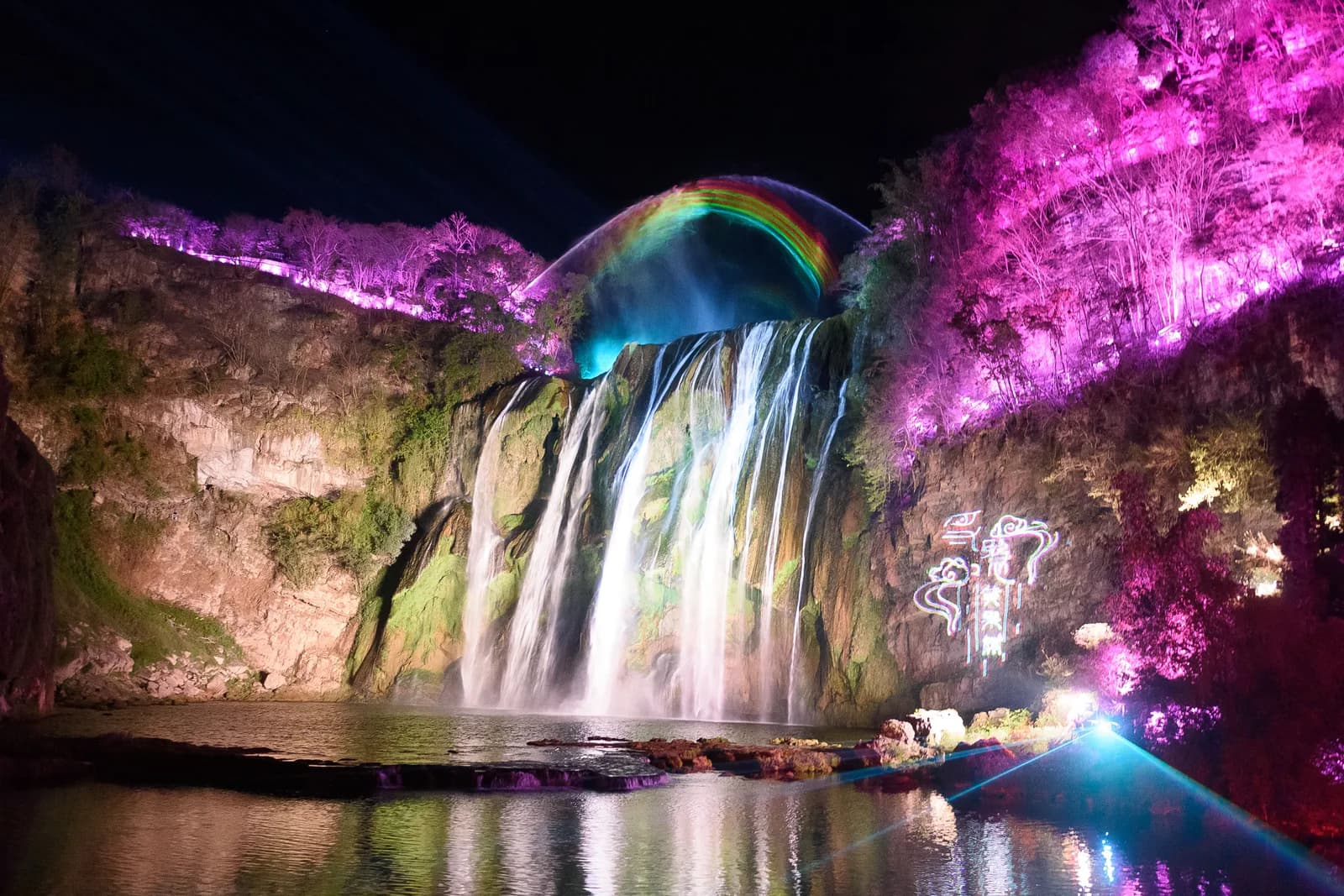
Two timing notes worth planning around. First, arrive at opening or run the afternoon-falls route above; the 10am-to-2pm window is when every coach in Guizhou is inside the park. Second, the park now runs an evening illumination program at the main falls, with light projections on the water into the late evening. Day-trippers from Guiyang will miss it, which is the single best argument for the Anshun overnight below.
Where to sleep it from: Guiyang base or Anshun overnight
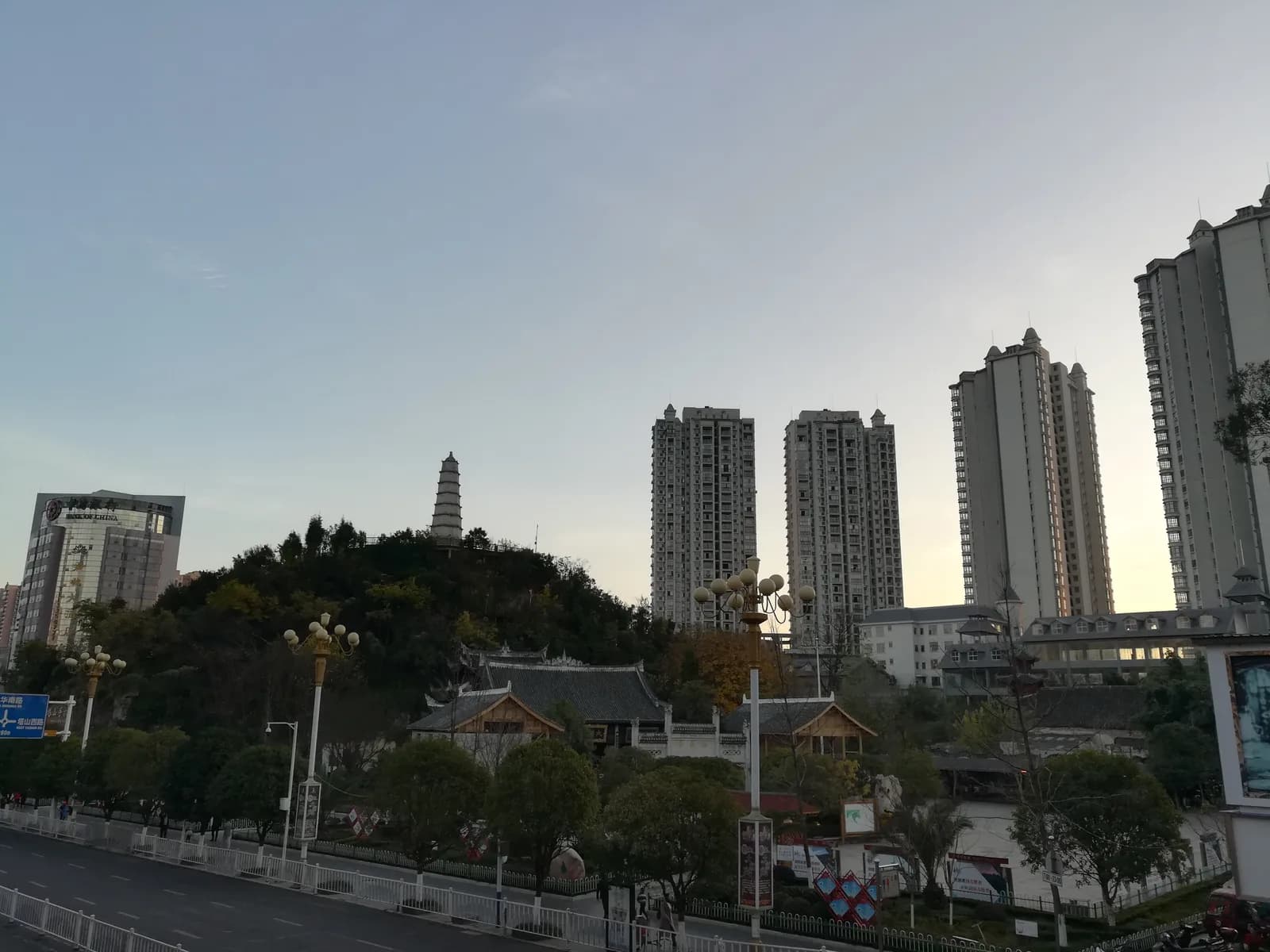
For most travelers this is not close: base in Guiyang and day-trip the falls. The capital has the international hotel stock, the night markets, the sour-fish restaurants and the onward trains, and the 30-minute rail hop makes the falls feel local. Sleep central, near the river or in the old city, and the whole day runs on rails in both senses; the full neighborhood breakdown covers exactly which blocks to book.
Sleep in Anshun or by the falls themselves if one of three things is true: you want to be at the gates at 7am ahead of every coach, you want the evening illumination show, or you are pairing Huangguoshu with Longgong Dragon Palace and need a base between them. The city itself is a modest prefecture town, but the hotel situation near the falls has matured fast. The Four Points by Sheraton Anshun is the dependable international pick a short drive from the scenic area, and the Huangguoshu Bailian Hotel keeps coming up in recent domestic reports as the hot-spring resort option beside the park, the kind of place where you soak out six hours of stairs. Otherwise, guesthouses cluster in Huangguoshu town by the ticket center at very gentle prices.
Recommendations
- Be on a train from Guiyang North by 8am; the whole day inherits the quality of that one decision.
- Book trains and entry a day or two ahead in July and August, when both genuinely sell out.
- Bring your passport; tickets are real-name and it is your entry document at every gate.
- Pay the ¥50 shuttle without hesitation and skip the escalator queue in peak season by walking down.
- Do the park in the order Doupotang, Tianxingqiao, main falls, and hit Water Curtain Cave after 3pm.
- Pack a light rain shell twice over: for Guizhou's weather and for the cave, which soaks people in summer.
- Wear real walking shoes; the day involves thousands of wet stone steps, and travelers in sandals regret it.
- Carry snacks and water in; food inside the park is thin and overpriced by Guizhou standards.
- If the illumination show or a Longgong pairing tempts you, flip the plan to an Anshun overnight and walk in at opening.
Huangguoshu rewards exactly the kind of traveler who reads a logistics post to the end: the one who books the 7:30 train, walks Tianxingqiao while the crowds queue elsewhere, and stands behind the waterfall at 4pm with the platforms half empty. Slot it into the middle of a Guiyang stay, bookend it with night markets, and if you are threading it into a longer route through Chengdu or up from Hong Kong and Shenzhen, the high-speed network makes the connection trivial. If you have done the falls recently and the prices or shuttle times have moved, tell me and I will update this. The water, at least, is reliable: go in summer and it will be at full roar.
Frequently asked
How much do Huangguoshu Waterfall tickets cost?
Entry is 160 yuan per person in peak season, March 1 to November 30. The off-season list price drops to 150 yuan from December through February, and Guizhou's winter promotions have pushed it as low as 100 yuan in recent years. On top of entry, budget 50 yuan for the internal shuttle bus that links the three scenic areas, and optionally 50 yuan for the round-trip escalator down the gorge at the main falls.
How do you get to Huangguoshu Waterfall from Guiyang?
Take the high-speed train from Guiyang North to Anshun West, about 30 minutes for around 47 yuan, with dozens of departures daily. From Anshun West, a shuttle bus or Didi covers the last 40 kilometers to the Huangguoshu ticket center in 40 to 50 minutes. Alternatively, book a guided day tour with hotel pickup, or hire a private driver for the roughly two-hour road trip.
Can you do Huangguoshu Waterfall as a day trip from Guiyang?
Comfortably, and most travelers do. Leave Guiyang by 8am, because the ticket covers three separate scenic areas that together need six or more hours. Trains back from Anshun West run into the evening, so an 8am start still gets you back to Guiyang for a late dinner.
How long do you need at Huangguoshu Waterfall?
Six to seven hours to see all three sections properly: 30 to 60 minutes at Doupotang, 3 to 4 hours at Tianxingqiao, and 1.5 to 2 hours at the main falls including Water Curtain Cave. Travelers who budget only two or three hours consistently report having to skip Tianxingqiao, which many rate as the best part of the park.
When is the best time to visit Huangguoshu Waterfall?
June to October, when summer rain puts the falls at full volume. July and August are the most dramatic but also the most crowded, with waits of an hour or more for the escalator during Chinese school holidays. May to June and September to October balance strong flow with manageable crowds. Winter water levels drop noticeably, though tickets are cheaper.
Is Water Curtain Cave open, and what is it?
Water Curtain Cave is the 134-meter passage that runs directly behind the curtain of the main waterfall, at a height of 40 to 47 meters up the cliff. It is part of the main falls circuit and included in the entry ticket. Expect to get sprayed, especially in summer, and expect queues in July and August. The park occasionally restricts access when water volume peaks after heavy rain, so build it into your afternoon rather than counting on an exact time.
Should you stay overnight in Anshun instead of Guiyang?
Stay in Guiyang if Huangguoshu is one day of a longer city trip; the food streets and hotel stock are far better. Sleep in Anshun or by the falls if you want to be at the gates at opening, catch the evening illumination show, or continue to Longgong Dragon Palace the next day. The Four Points by Sheraton Anshun sits near the scenic area and is the most reliable international option.
More from the journal
Qianling Park, Guiyang: The Macaques, Hongfu Temple and How to Visit Without Losing Your Snacks
Emeishan Day Trip from Chengdu: What One Day on Mount Emei Really Buys You (and When to Stay the Night)
Hong Kong to Shenzhen Border Crossings: All Seven Doors Compared, and Which One Your Day Actually Needs