Where to Eat in Medellín: Laureles, Envigado and the $4 Lunch
A Medellín food guide organized by neighborhood, from the $4 menú del día in Laureles to Envigado's bandeja paisa and whether El Cielo's $138 tasting menu is worth it.
Medellín serves a $4 lunch and a $138 dinner within a fifteen-minute taxi ride of each other, and the English-language internet writes almost exclusively about the second one. Search for where to eat in Medellín and you get two piles: El Poblado fine-dining listicles, and generic "traditional Colombian food" roundups that could describe any city in the country. Neither answers the question travelers actually have, which is what to eat near the bed they already booked. So this guide is organized the way the trip is, by neighborhood. The short version: Laureles and Envigado are where Medellín eats, El Poblado is where it markets itself, and the gap between those two facts is worth about thirty dollars a day.
The menú del día is the best-value meal in the city
If you read nothing else here, read this. The menú del día is a fixed-price set lunch served roughly noon to 2pm across the whole country, and in Medellín it costs about 14,000 to 22,000 pesos, call it $4. For that you get a soup, a main with a protein plus rice and plantain, usually a small salad, and a fresh fruit juice. You choose from two or three options that change daily: the kitchen cooked a few things well that morning rather than holding forty dishes on standby.
This works because lunch, not dinner, is the big meal in paisa culture. A restaurant that fills every table between noon and 2pm can price the set lunch at cost-plus and still make its month, so the $4 is not a budget compromise. It is the center of gravity of the city's food, and travelers miss it constantly, asleep or on a tour at the hour it exists.
The density is highest in Laureles and Envigado, and thins fast in Provenza. Two Laureles spots worth knowing: Saludpan on Circular 4A # 70-84 runs a daily menú del día with organic, gluten-free and vegan options, rare in a city where "vegetarian" often means the beans still had pork in them, and Café Cliché on Carrera 77 # 39b-45 does a French-chef weekday lunch at 19,500 pesos until 3pm. If I had three lunches in Medellín, I would spend all three on the menú del día in Laureles and none in Provenza.
What paisa food actually is, honestly
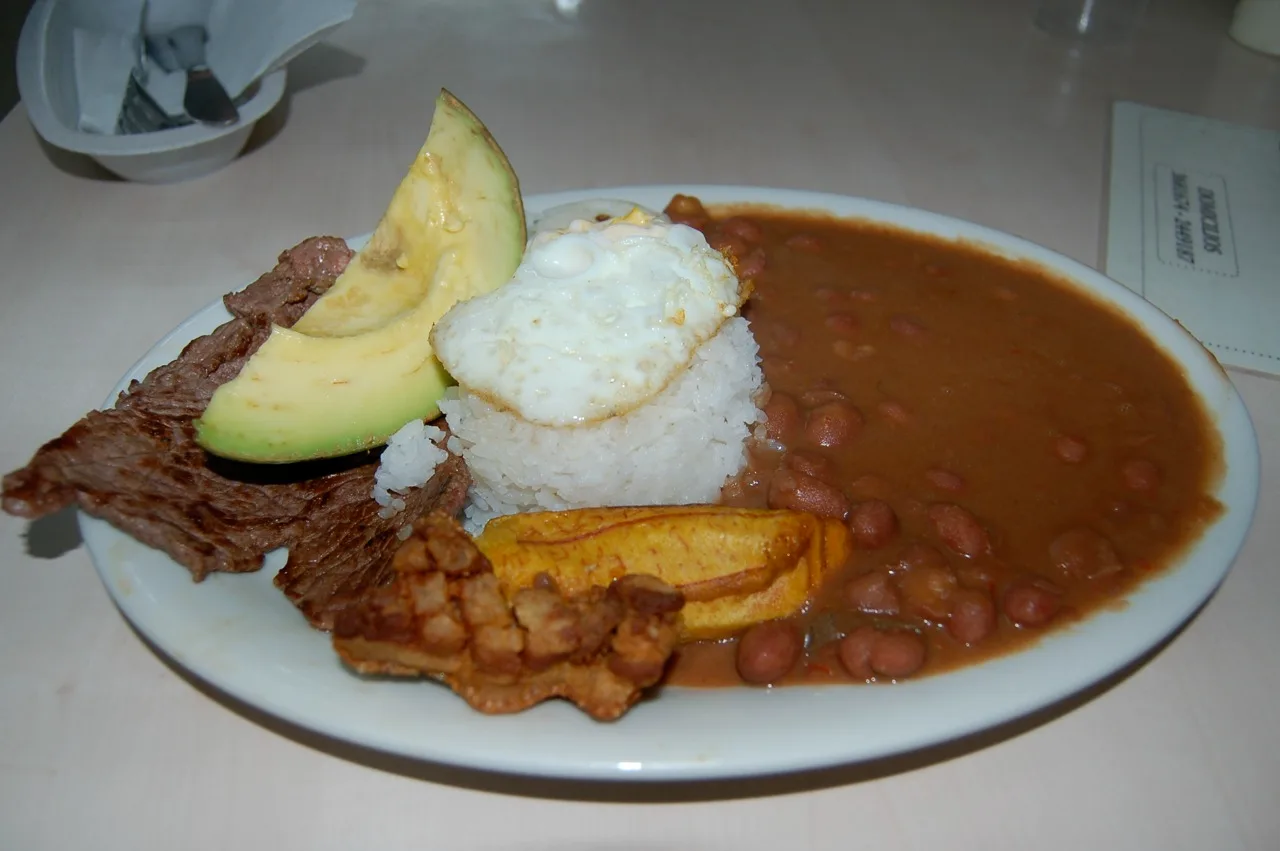
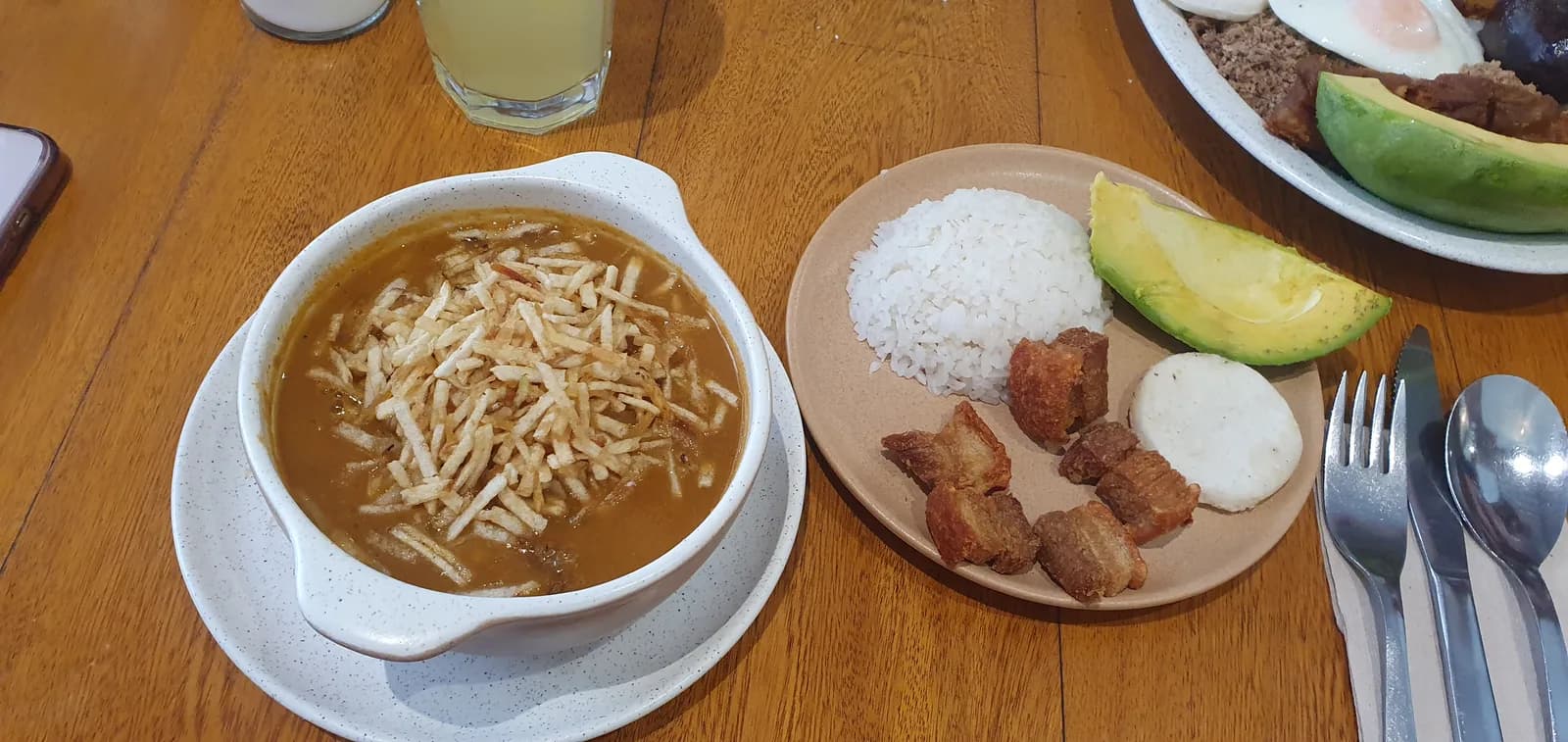
Start with the flagship. A bandeja paisa is a farmhand's day of calories on one platter: red beans, chicharrón, chorizo, morcilla, ground beef, white rice, a fried egg, avocado, a fried plantain and an arepa, all arriving at once. It is not a dish you eat before a hike, or really before anything. Prices have moved sharply: Medellin Guru had it at 48,600 pesos at Mondongo's in April 2025, and by January 2026 the Colombian press was reporting the same plate at 59,000. Budget 48,000 to 60,000 pesos.
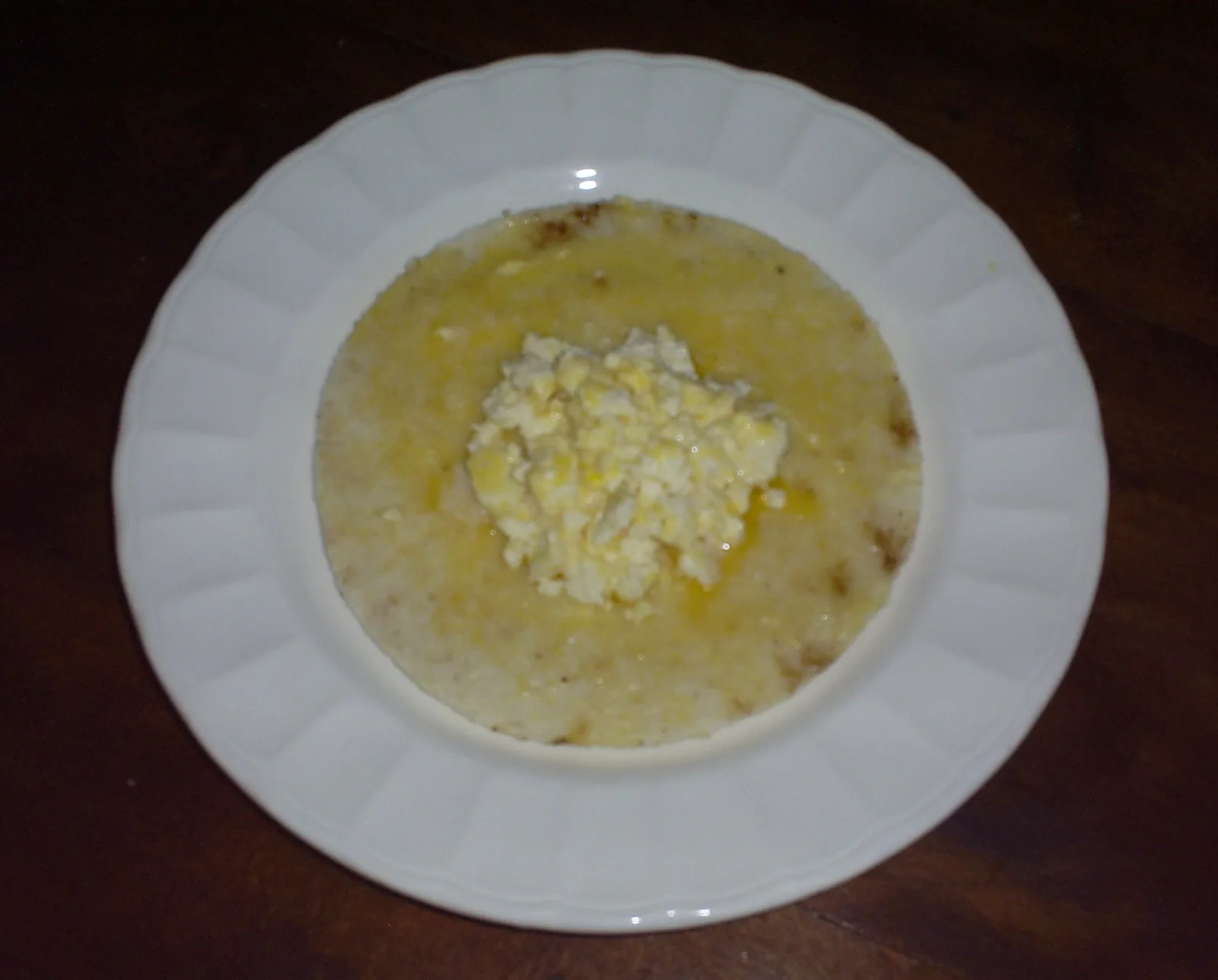
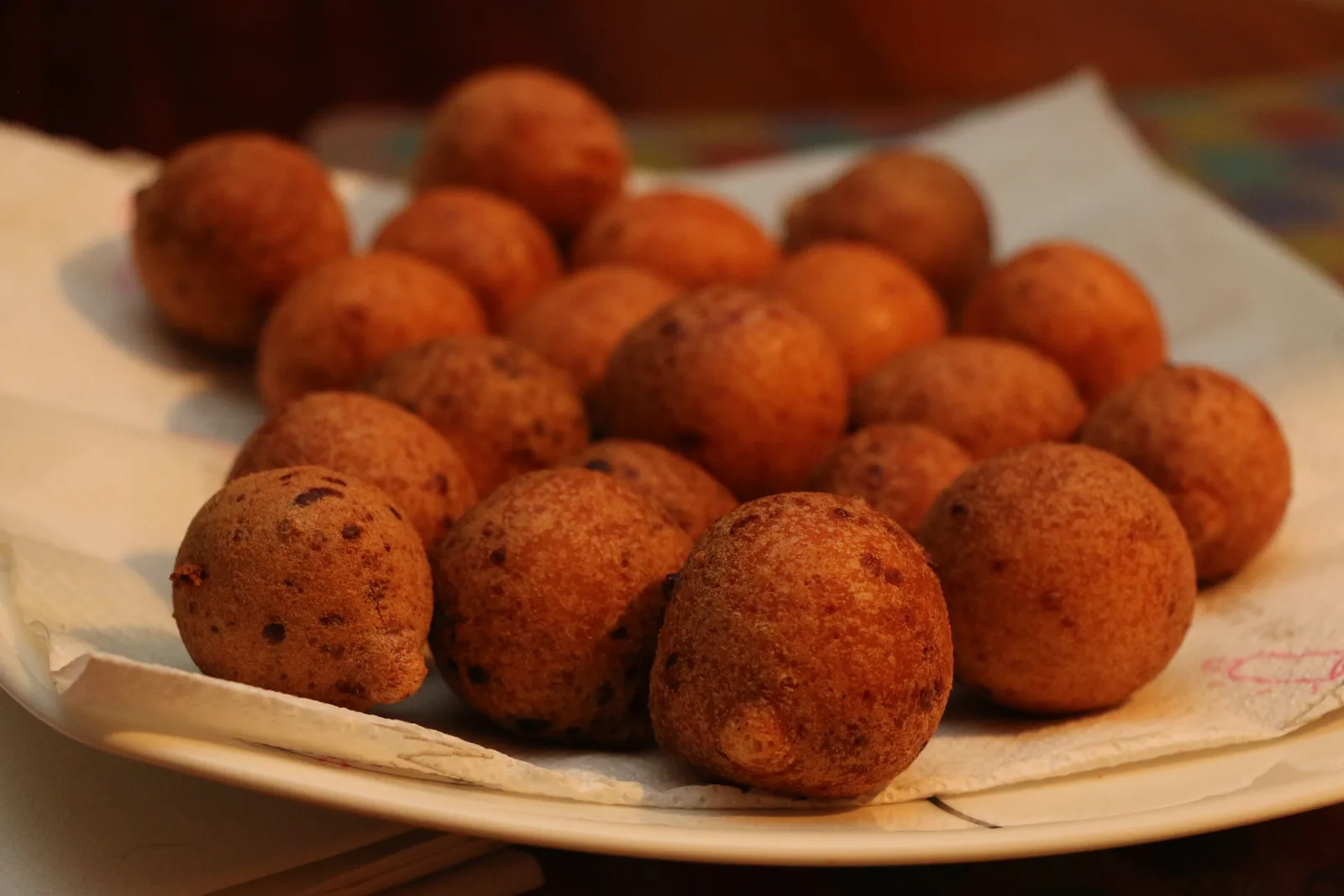
Around it sits the rest of the canon. Mondongo is tripe soup, slow and deeply savory, and the reason a restaurant named after it is one of the city's most popular. Ajiaco is chicken, three potatoes and guascas herb, technically Bogotá's dish but on every paisa menu anyway. The arepa here is not the stuffed Venezuelan version: it is a plain, unsalted corn disc, a vehicle rather than a destination, alive only under quesito, the soft fresh cheese Antioquia puts on everything. Buñuelos are fried cheese-dough spheres best within ten minutes of the fryer, paired with natilla, the panela-sweetened Christmas custard. Salpicón is a chopped fruit cup, the paisa version arriving with vanilla ice cream and, disconcertingly, grated mozzarella. Lulada is built from lulo, tart and green-tasting, and it takes aguardiente well.
Now the honest part, because a food guide that only flatters its subject is not much use. A resident food blogger in Laureles, writing in January 2025 after a local food tour, concluded that paisa cooking leans heavily on fried carbohydrates and pork, and said they would be eating Mexican, Thai and Italian instead. That is blunt and broadly correct. Everyday paisa food is not subtle: it is built on volume, pork fat and maize, and on the fact that Antioquia's economy ran on people who climbed coffee mountains all day and needed 1,800 calories at midday.
The mistake is treating that as a verdict. Judged as regional working food it is internally consistent and very good: the beans want the chicharrón, the chicharrón wants the plain arepa, the arepa wants the quesito, and the whole thing wants a tart lulada to cut it. Judged as a world cuisine against Oaxaca or Chiang Mai it loses, and pretending otherwise leaves travelers quietly disappointed.
The best restaurants in Medellín, shortlisted
If you want the answer without the argument, this is it. The best traditional restaurants in Medellín are Restaurante Hacienda Junín in El Centro, whose 1991 original still serves the plate most sources call the definitive bandeja paisa; Mondongo's on Carrera 70 in Laureles, the everyday anchor; and La Gloria de Gloria in Envigado, whose platter feeds three. The best high-end tables are Carmen, especially à la carte at roughly a third of its tasting-menu price, Test Lab Kitchen in Laureles, and El Cielo if the four-hour Michelin production is what you came for. The best cheap meals are any Laureles menú del día, Criminal Taquería's tacos in Provenza, and Empanadas de Laureles. Everything below explains where these sit, what they cost and when they close, because half of them keep hours that will catch you out.
Where to eat in Medellín, by neighborhood
This is the section the other guides skip. You are sleeping somewhere specific, and that should drive most of your meals. If you have not picked the neighborhood yet, my where to stay in Medellín guide covers the zones, metro and safety in full, and the food map below tracks it closely.
| Neighborhood | Best for | Price band | The one thing to eat |
|---|---|---|---|
| Laureles | Everyday eating, menú del día, traditional paisa | $ to $$ | Mondongo soup at Mondongo's, Carrera 70 |
| Envigado | The most local sit-down meal in the metro area | $ | The oversized bandeja paisa at La Gloria de Gloria |
| El Poblado | Fine dining, cocktails, international food | $$ to $$$$ | A tasting menu, or tacos in Provenza |
| El Centro | The best traditional bandeja paisa, daytime only | $ to $$ | Bandeja paisa at Hacienda Junín |
| Comuna 13 | Snacks between murals | $ | Mango biche popsicles at Cremas Doña Alba |
Laureles is the answer for most travelers most of the time: flat, gridded, residential, full of restaurants priced for people who live there. Mondongo's at Carrera 70 # C 3-43 is the anchor and shows up in every serious source on the city, with mondongo soup around 45,400 pesos and bandeja paisa in the high 40,000s to high 50,000s. Chicharron City on Circular 5 # 69-15 is an open-air place whose trilogía platter is three preparations of chicharrón, which tells you exactly how seriously to take it. Empanadas de Laureles on Carrera 71 # 4-03 has a real claim to the city's best and closes Sundays, and Guilli Arepas on Circular 76 opens at 4pm for the light dinner a heavy lunch demands.
The genuine gap in English coverage is costeño food, Colombia's Caribbean-coast cooking, which barely registers in Medellín guides despite the migration that brought it here. Cucayito Cocina Costeña on Circular 2 # 71-53 does sobrebarriga asada and sancocho de rabo, a useful counterpoint if your route also hits the coast; I covered that food at home in the things to do in Cartagena guide. Laureles ranges beyond paisa too: Bárbaro Cocina Primitiva on Carrera 76 # 73b-39 is a barrel-smoking steakhouse topping out at a 289,900-peso one-kilo tomahawk, and Caduff Pasta Fresca on Circular 73B makes its own pasta under a Swiss couple.
Envigado is Laureles pushed one step further from the tourist economy, a separate municipality at the southern end of the metro with the restaurant-lined Calle de la Buena Mesa as its spine. The destination meal is La Gloria de Gloria on Calle 37 Sur # 35-06, credibly the largest bandeja paisa in the metro area: roughly 60,000 pesos, a kilo of chicharrón, a platter engineered for two and survivable by three, with Gloria pouring free shots of aguardiente. Few tables, frequent lines, open 9am to mid-afternoon, shut Mondays and Tuesdays. Go early, go hungry, go with someone.
El Poblado is where the money is and where the markup is. That is not automatically a criticism: the tasting menus are real, and Karol G's three Provenza venues are exactly as advertised. Criminal Taquería in Provenza does al pastor and birria with a self-serve salsa bar at roughly 5,000 to 7,000 pesos a taco, the best cheap eating in the neighborhood. The traditional holdouts are Ajiacos y Mondongos on Calle 8 # 42-46, lunch-only to about 3:30pm, and Sr Buñuelo on Calle 10 # 43C-35, open from 6am for what its fans insist are the country's best buñuelos, closed Sundays.
El Centro has the best traditional bandeja paisa and the tightest constraint on when to eat it. Restaurante Hacienda Junín on Carrera 49 # 52-98 is the original location of a chain now running six restaurants, opened in 1991 with recipes from Antioquian home cooks, and it recurs more than any other name for the definitive plate. The Centro branch closes around 8pm, which suits the neighborhood: my stay guide covers why the consensus is to visit El Centro by day and sleep elsewhere. Afterwards, Salón Málaga on Carrera 51 # 45-80 has poured aguardiente and played tango since 1957.
Comuna 13 is a snacking neighborhood, and you will already be there for the murals the stay guide covers. Cremas Doña Alba on Carrera 110 # 35f-34 sells mango biche popsicles: unripe green mango with salt and lime, the most refreshing thing on that hillside.
The market halls, and the food hall that is not one
Medellín has both, and conflating them costs travelers a good morning. A market hall is where the city buys food; a food hall is where it eats out.
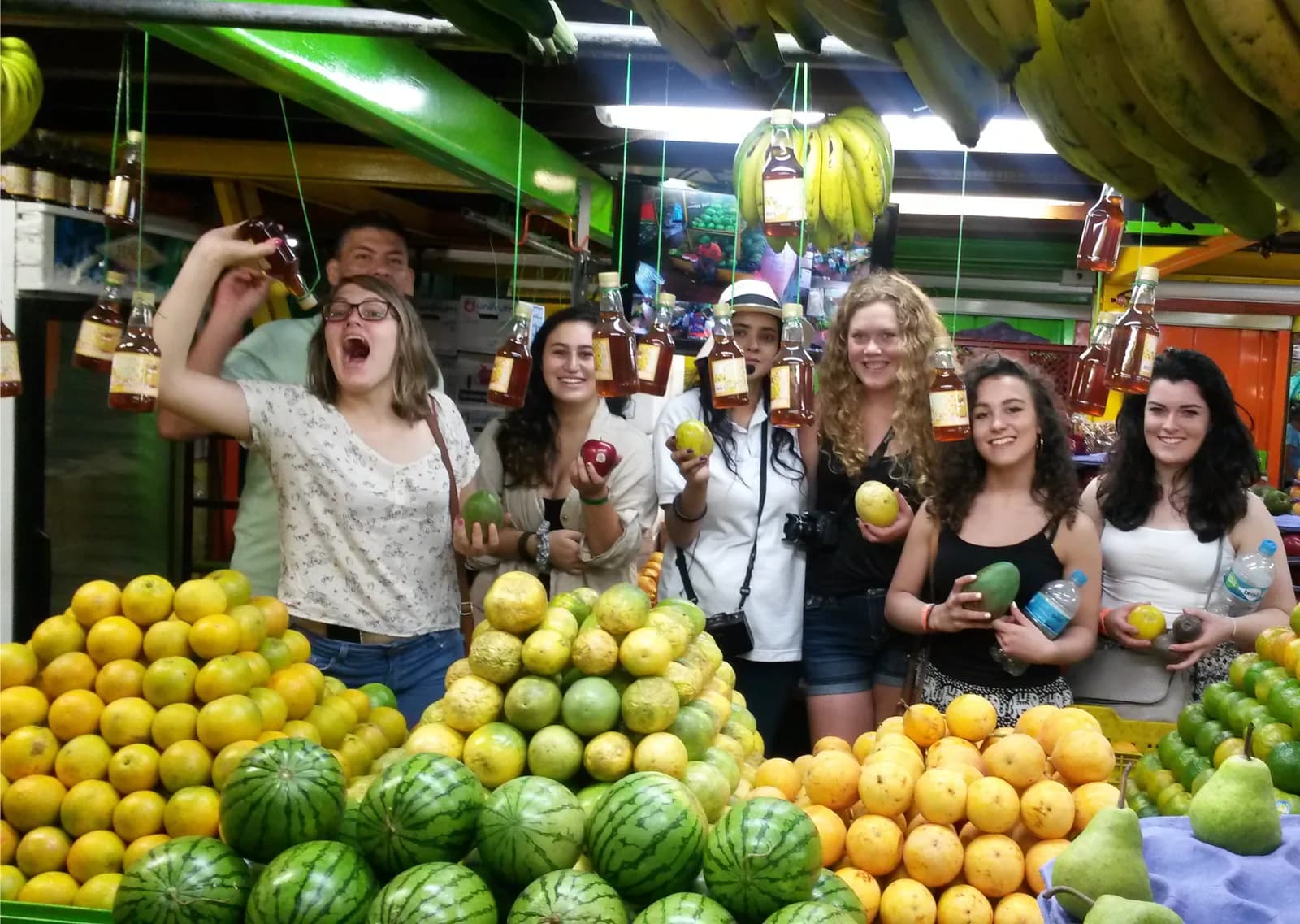
Plaza de Mercado La América at Calle 45 # 79A-100 opened in October 1969 and is the real thing: fruit, vegetables, flowers, butchers, fishmongers, plus a row of small eateries serving homemade paisa food that TripAdvisor forum users call delicious at very reasonable prices. It sits about six blocks from Floresta station on metro line B, a walk from Laureles, and it has not been renovated for anyone's benefit. Plaza Minorista José María Villa near the center is the larger equivalent. Both reward the same approach: eat where the vendors eat, go before noon, keep your phone in your pocket.
Mercado del Río on Calle 24 # 48-28 is the food hall, and it is good at being one. It occupies a late-nineteenth-century soap warehouse, keeps the industrial bones, and packs in dozens of vendors from salchipapas and choripán to Peruvian arroz chaufa and gelato, open late morning to 10pm on weeknights and later on weekends. It is the right call for a group that cannot agree, a solo dinner, or a rainy evening, and the wrong call if what you wanted was a market.
The splurges, and whether they are worth it
Medellín's high end is genuinely accomplished, and it is where the value question gets sharpest. El Cielo is Juan Manuel Barrientos's Michelin-starred project inside the Elcielo Hotel in El Poblado, a fusion of neuroscience and modern technique running about four hours. Pricing depends on format and has moved recently: current listings show the tasting at roughly $108 to $138, with wine pairing adding around $64.
Carmen, also in El Poblado, runs a seven-course tasting at about $118, but the more interesting number is its à la carte at roughly $41 per person: most of the kitchen at a third of the ticket. Moshi does a seven-course Japanese-Peruvian tasting at $108 with a $40 pairing. Nikkei is a real cuisine rather than a fusion gimmick, but if your route includes Peru you will eat it better and cheaper at its source, one of the arguments in my Lima guide. The value outlier is in Laureles, predictably: Test Lab Kitchen does a seven-course seasonal tasting with drinks at roughly $116 for two, less than one seat at El Cielo.
So: worth it? A $138 tasting menu is thirty-four menús del día. Spending one of four dinners at the top is a fair trade for a genuinely designed experience, and El Cielo's much cheaper lunch is the smart way in. Spending three there means you flew to Colombia and ate in an airport lounge with better lighting. My order of preference: Carmen à la carte, Test Lab Kitchen if you are already in Laureles, El Cielo if the theatre is the point.
Food tours and tastings worth booking
A food tour is the exception to my usual skepticism about guided anything, because paisa food's problem is legibility, not quality. You cannot tell from the street which of four identical lunch counters cooks well; three hours with someone who eats there daily fixes that.
Three things worth booking
 Best first meal
Laureles food tour
Six or more tastings walked through the neighborhood locals actually eat in, typically meeting near La Jugosa at Carrera 70 and Circular 5. Book it for day one; it makes every later meal easier to order.
Book this Best value
Traditional paisa food and market tour
Arepas, chicharrón, salpicón, patacones and guarapo, usually with a market stop. Street-food versions start cheap; the market-hall ones are where the actual education happens.
Book this Worth the detour
Coffee tasting and cupping
Colombia exports its best beans, so a proper cupping is the only reliable way to taste what the country actually grows. If you have days to spare, do this in the coffee region instead.
Book thisPrioritize the Laureles tours, several of which run on GetYourGuide at around 2.5 hours; Viator's Medellín street food category starts around $13. A coffee cupping is a good ninety minutes, but if your itinerary has room, do it in the coffee region proper, which my Salento guide covers.
Where to stay for the food
The full breakdown of neighborhoods, safety, transport and prices lives in my where to stay in Medellín guide. Here is the food version of that decision.
Book Laureles if eating well and cheaply is a priority, which for most people it should be: the highest menú del día density in the city, the traditional anchors on Carrera 70, and a walk to the La América market. Book Envigado if you are staying longer and want the least tourist-facing food in the metro area, accepting short taxis and thinner English. Book El Poblado only if fine dining and cocktails are the trip, because you will pay a premium on everything else and eat worse traditional food than twenty minutes west. And do not book El Centro for the bandeja paisa, however good it is; take the metro in for lunch and sleep elsewhere.
If Medellín is one leg of a wider Colombia route, the coast is the real cuisine counterweight, covered in my where to stay in Cartagena guide and things to do in Cartagena guide.
Practical notes I would tell a friend
- Eat your big meal at lunch, because that is when paisa kitchens are cooking and when the 14,000 to 22,000 peso menú del día exists.
- Order frijoles con chicharrón instead of the full bandeja paisa for the same flavors without losing the afternoon.
- Check opening days before crossing the city: La Gloria de Gloria closes Mondays and Tuesdays, Empanadas de Laureles and Sr Buñuelo close Sundays, Ajiacos y Mondongos is lunch-only.
- Take the food tour on your first full day, not your last, so the vocabulary pays off all week.
- Treat Plaza de Mercado La América and Mercado del Río as different plans: one is a working market with cheap homemade lunches, the other a food hall for a night out.
- Budget 48,000 to 60,000 pesos for a sit-down bandeja paisa in 2026; older guides quote numbers that no longer hold.
- Buy buñuelos only where you can see the fryer. They are excellent hot and structural engineering cold.
Prices in Medellín are moving faster than the guides that cover them, and restaurants close. If something here has shifted, tell me and I will update it. But if you are booking now, the plan is simple: sleep in Laureles, eat lunch at noon like a paisa, take one food tour early, splurge one evening if you want to, and let the other thirteen meals cost four dollars each.
Frequently asked
Where should I eat in Medellín?
Laureles and Envigado, for almost every meal. Laureles has the highest concentration of menú del día lunch spots, traditional paisa restaurants like Mondongo's on Carrera 70, and good-value independents, while Envigado is cheaper and even more local. El Poblado has the city's fine dining and the city's biggest tourist markup, and El Centro has the best traditional bandeja paisa but only works as a daytime trip.
What are the best restaurants in Medellín?
For traditional food: Restaurante Hacienda Junín in El Centro for the definitive bandeja paisa, Mondongo's on Carrera 70 in Laureles for mondongo soup, and La Gloria de Gloria in Envigado for the biggest platter in the metro area. For a splurge: Carmen à la carte at about $41 a head is the value play, Test Lab Kitchen in Laureles the under-the-radar tasting menu, and El Cielo the Michelin-starred theatre piece. For cheap and excellent: Criminal Taquería in Provenza and Empanadas de Laureles.
What is the menú del día in Medellín and how much does it cost?
The menú del día is a fixed-price set lunch served roughly noon to 2pm: a soup, a main with protein, rice and plantain, a small salad, and a fresh fruit juice. It runs about 14,000 to 22,000 pesos, roughly $4, and it is the single best-value meal in the city. Lunch is the big meal in paisa culture, so the quality at this price is genuinely high rather than a budget compromise.
Where is the best bandeja paisa in Medellín?
Restaurante Hacienda Junín in El Centro is the name that recurs most often, from the chain's original 1991 location on Carrera 49. Mondongo's on Carrera 70 in Laureles is the most convenient version for most travelers, and La Gloria de Gloria in Envigado serves the largest, with a kilo of chicharrón on a platter built for two or three people. Expect to pay roughly 48,000 to 60,000 pesos in 2026.
Is Laureles or El Poblado better for food in Medellín?
Laureles, for value and for everyday eating. It has the denser menú del día scene, the traditional paisa restaurants, and prices that reflect what residents pay. El Poblado wins on fine dining and on restaurants per block, particularly along Provenza, but you pay a tourist premium for the same dishes. Both are on the metro, so staying in one does not lock you out of the other.
Is El Cielo worth it in Medellín?
Only if you specifically want the theatre. El Cielo is Juan Manuel Barrientos's Michelin-starred project in El Poblado, and its tasting menu runs roughly $108 to $138 depending on the format, plus $64 or so for wine pairing, across about four hours. Carmen's à la carte at around $41 per person and Test Lab Kitchen in Laureles at roughly $116 for two are better value for the food alone.
What food is Medellín known for?
Bandeja paisa above all: beans, chicharrón, chorizo, morcilla, ground beef, rice, a fried egg, avocado, plantain and an arepa on one platter. Beyond it, the staples are mondongo (tripe soup), ajiaco, arepas topped with quesito, buñuelos, salpicón fruit cups, natilla at Christmas, and lulada. It is farmhand food from a coffee-mountain economy, and it is fried and carb-heavy by design.
How much does food cost in Medellín?
A menú del día lunch is about 14,000 to 22,000 pesos (~$4), tacos at Criminal Taquería in Provenza run roughly 5,000 to 7,000 pesos each, and a full bandeja paisa at a sit-down restaurant is 48,000 to 60,000 pesos. At the other end, tasting menus at El Cielo, Carmen and Moshi run $108 to $138. The spread between the cheapest and most expensive meal in the city is roughly 35 times.