Where to Stay in Salento: Town or a Coffee Finca?
Salento town or a coffee finca? An honest 2026 guide to the zones, the after-dark transport problem and what coffee tours actually cost now.
The decision that shapes a Salento trip is not which hotel. It is whether you sleep in the town or out among the coffee fincas, and the thing that should decide it is a question almost no English guide answers honestly: how do you get back after dark? The roads to the countryside properties are unlit and unpaved, there is no meaningful taxi fleet to call at 10pm, and the Willys jeeps that ferry everyone around run to tour schedules and stop in the early evening. Meanwhile Salento's entire evening life, the trout restaurants, the tejo courts, the plaza filling up after sundown, happens in town. So the finca that looks idyllic at booking time can quietly cost you every evening of the trip. Here is the trade-off laid out properly, along with what the coffee tours actually cost now that the prices have moved.
The short answer, for anyone booking between trains: the best area to stay in Salento is the town center for a first visit without a car, the countryside fincas if you are driving, and Filandia if you want the same architecture with fewer people.
| Area | Best for | Typical price per night | Named pick |
|---|---|---|---|
| Salento town center | First visits, no car, evenings out | 200,000–350,000 COP mid-range | Viajero (budget), Coffee Tree Boutique Hostel (mid) |
| Edge of town | Views without the unlit-road problem | Splurge territory | Kawa Mountain Retreat |
| Countryside fincas | Drivers, longer stays | 300,000–600,000 COP for the good ones | Ask about after-dark transfers first |
| Near Cocora Valley | Beating the jeeps to the palms | More than the fincas | Glamping domes and converted fincas |
| Filandia (30 min away) | Quiet, lower prices, thinner inventory | Below Salento's rates | Bidea Hostel (budget), El Reloj Casa Hotel (polished) |
Still deciding between the two towns themselves? That question gets its own guide: read Salento or Filandia first. This one assumes Salento won and covers where in it to sleep.
How Salento and the coffee region actually lay out
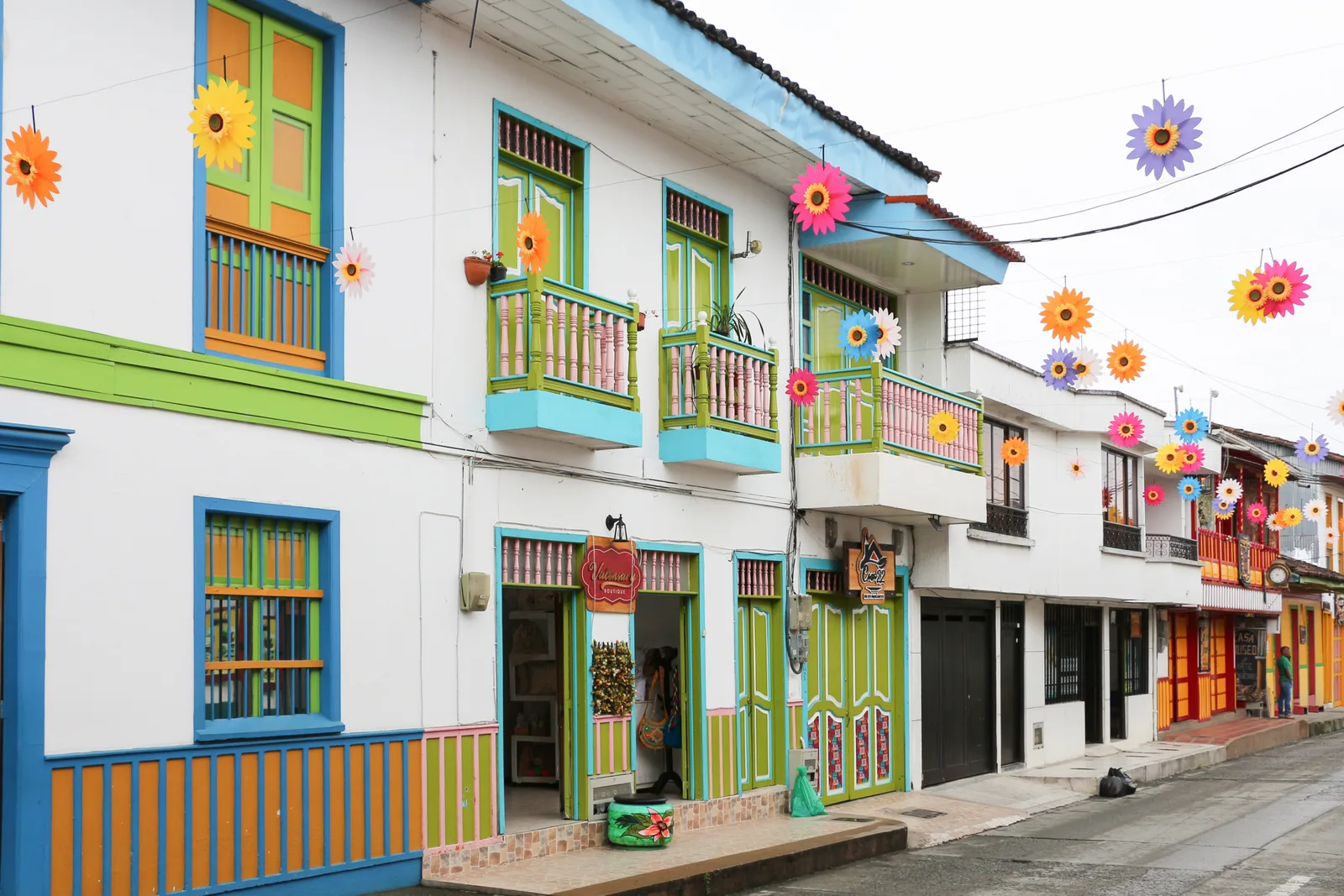
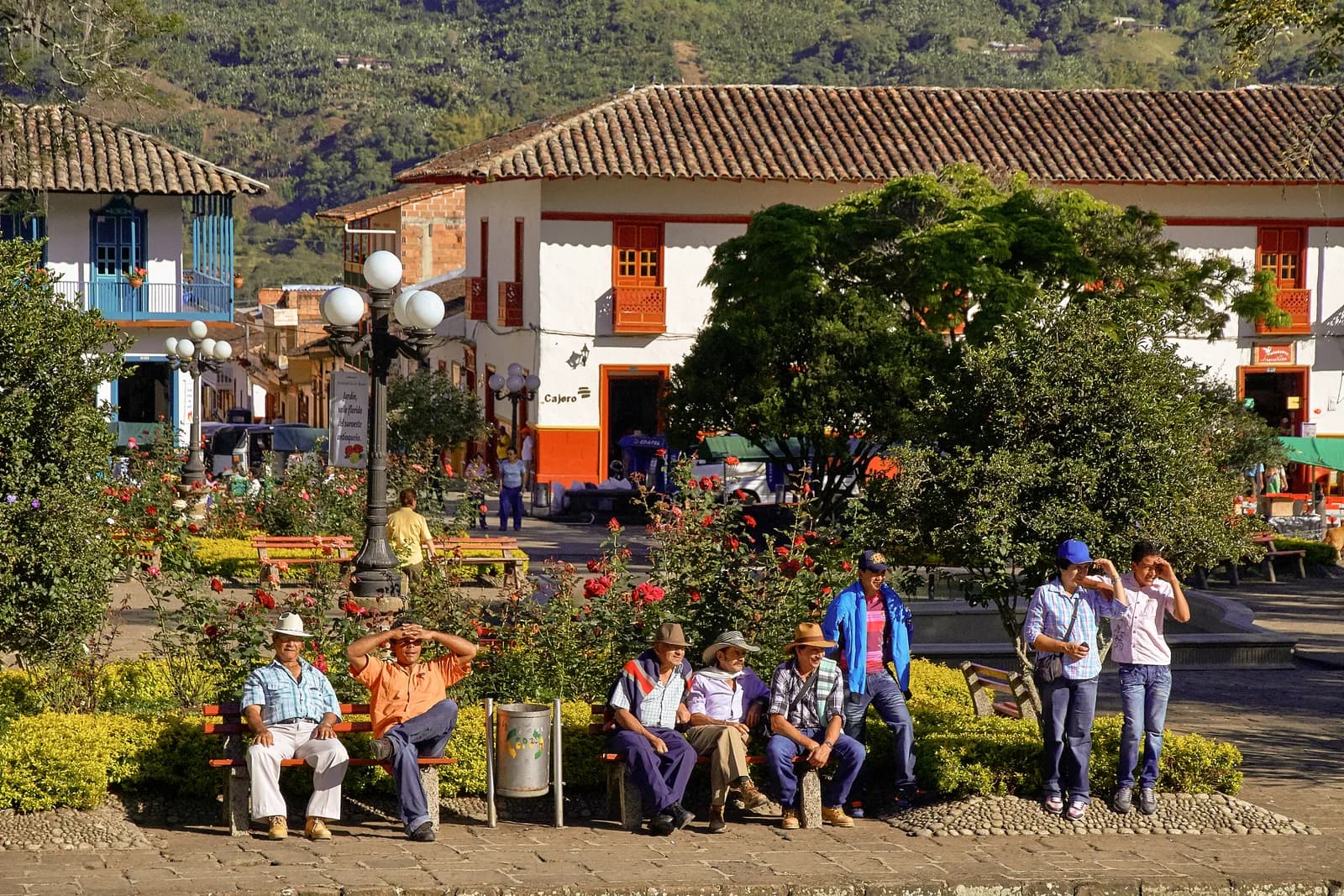
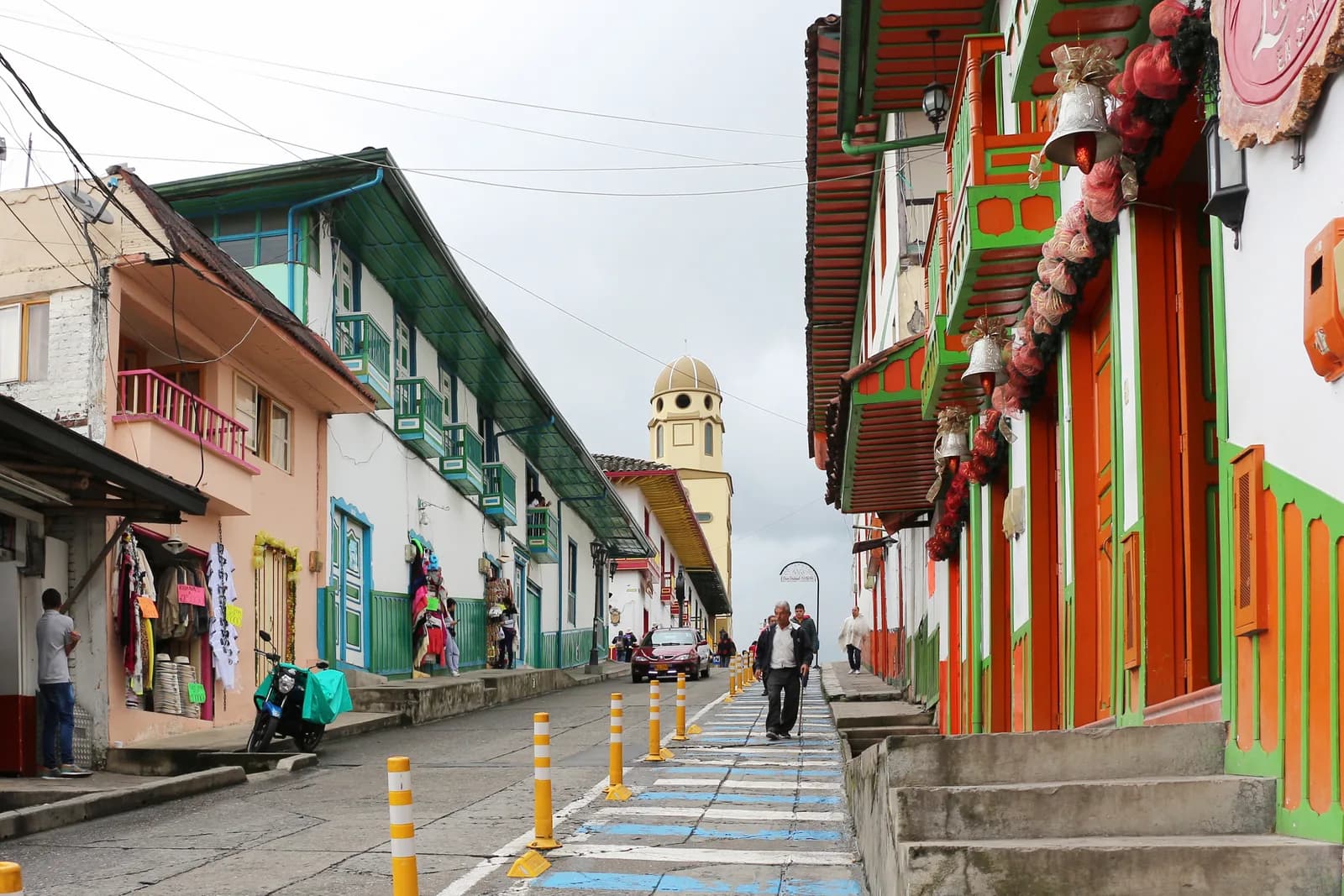
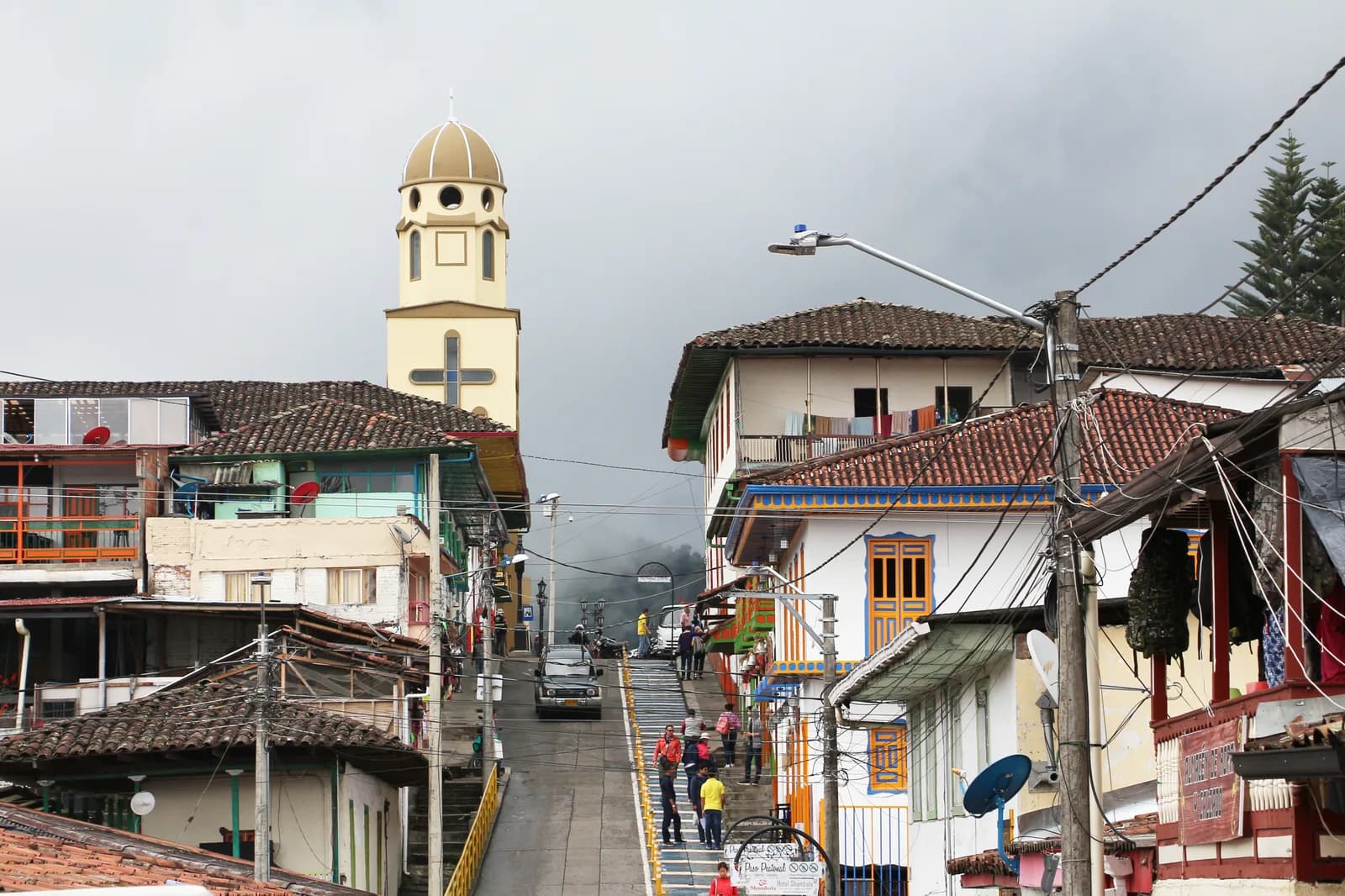
Salento is tiny. The whole town is a grid of maybe fifteen blocks around a main square, with Calle Real running uphill from the plaza toward the Mirador steps, and you can walk any of it in a quarter of an hour. That compactness is the single most underrated fact about the place. Everything that makes Salento worth the detour at night, the trout restaurants, the bars, the tejo courts where locals throw metal pucks at gunpowder targets, sits inside those fifteen blocks.
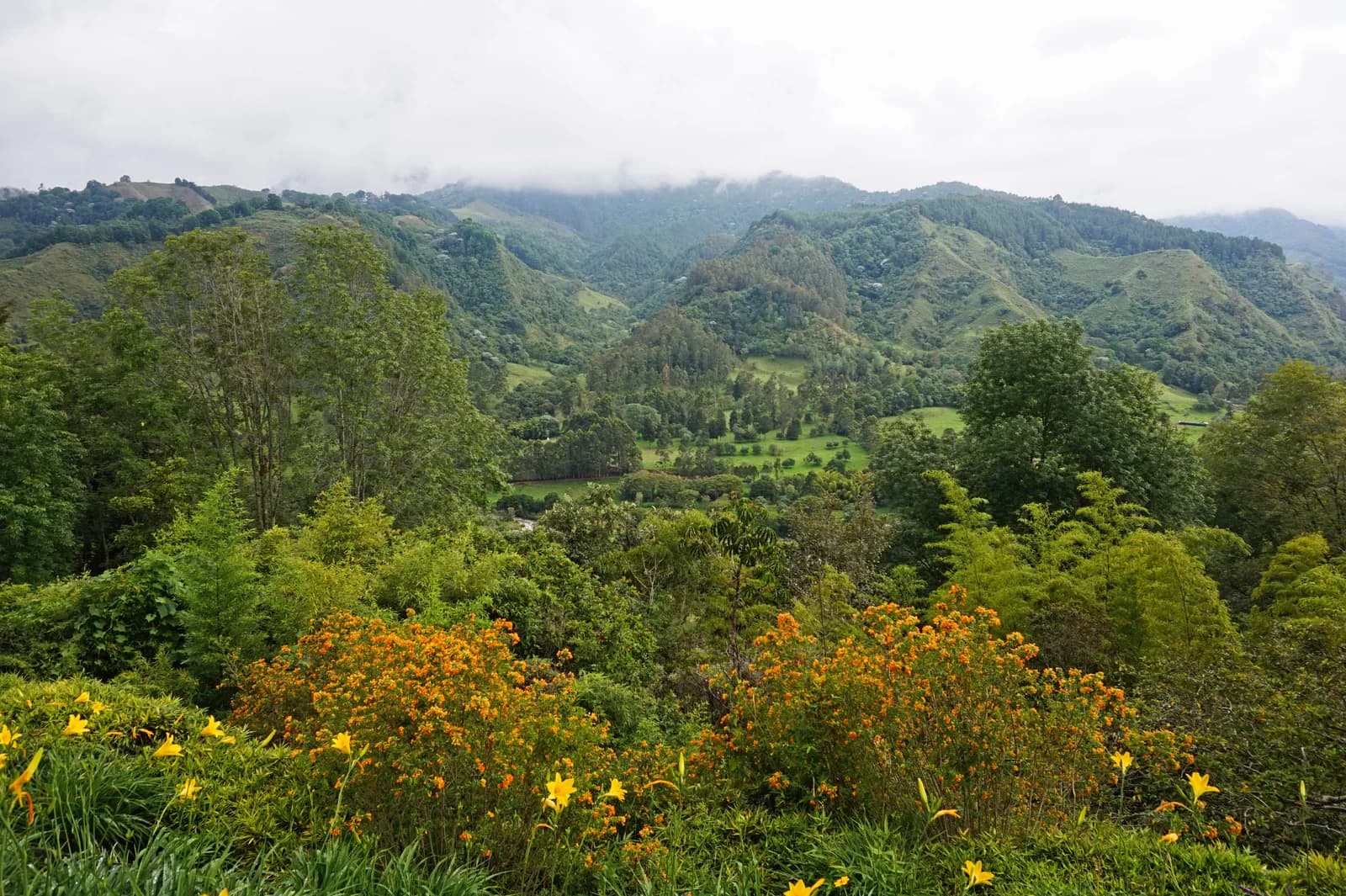
Everything else is outside. The coffee fincas are scattered through the hills in every direction, ten to thirty minutes out on roads that are mostly dirt and entirely unlit. Cocora Valley, with the wax palms that put this region on every Colombia itinerary, is a 20 to 30 minute jeep ride east. Filandia, the smaller and quieter town that most itineraries skip, is 30 minutes west, and about 50 minutes from Cocora. The airports are Armenia and Pereira, both under an hour away, which matters because the alternative is the long bus down from Medellín.
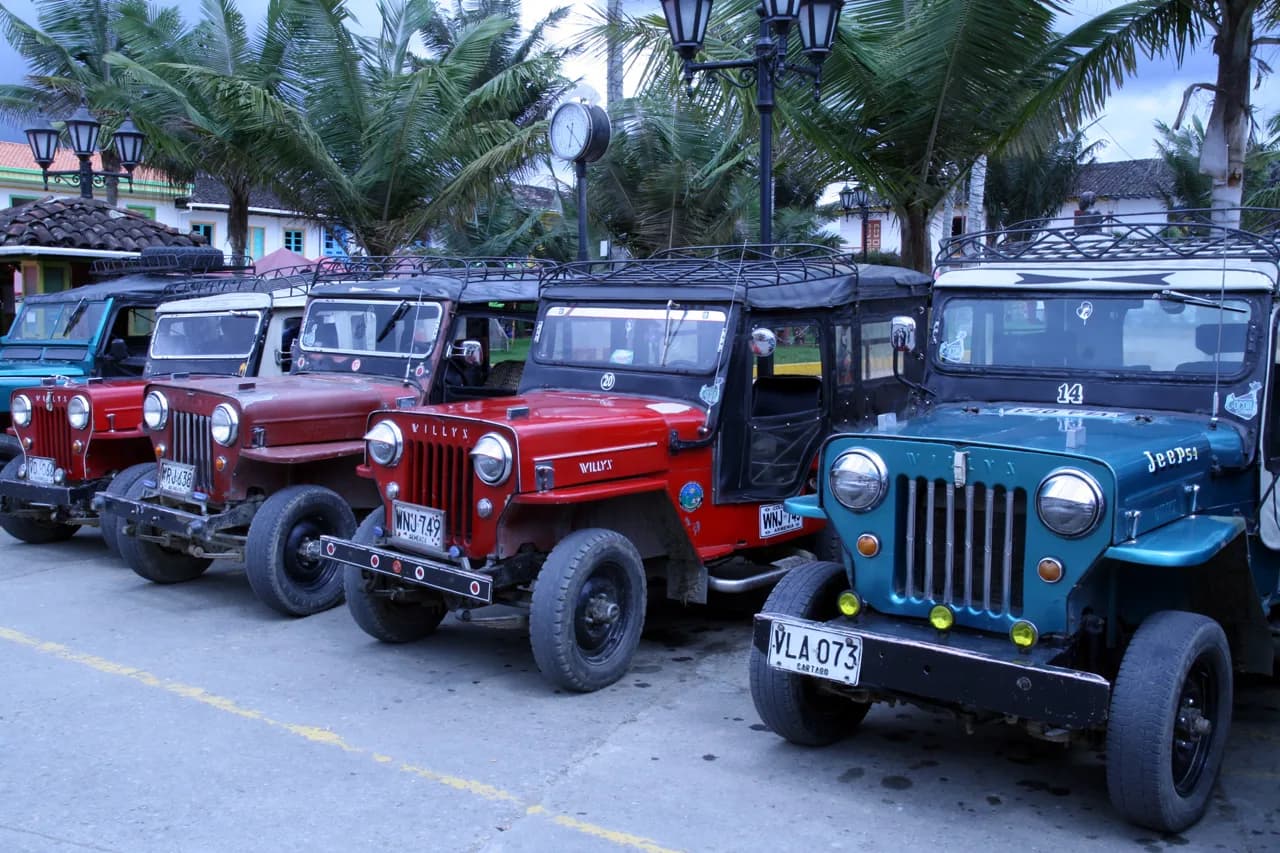
The connective tissue is the Willys jeep. These are surplus American Willys from the mid-century, still the region's working transport, and they leave from a white ticket booth on the main square: you name a farm, you get a ticket and a wristband. They are cheap, frequent and genuinely charming. They are also why the geography constrains your booking: they run when the tours run, not when the restaurants close.
The coffee tours, and what they actually cost
Three things worth booking
 The default
Finca El Ocaso coffee tour
The best-known farm in Salento and the one most travelers book. The traditional tour takes up to 30 people and needs no reservation; the premium caps at 10 and includes a proper cupping lab. Pay the difference if coffee is why you came.
Book this Best value
Cocora Valley jeep and hike
The wax palm valley, done independently for the price of a jeep ticket and two gate fees. Guided versions exist and add a driver plus a naturalist, which is worth it only if you want the cloud forest explained.
Book this Smaller groups
Finca Momota small-group tour
A smaller organic farm that runs the planting-to-cup walkthrough for groups a fraction of El Ocaso's size. The pick if the idea of touring a coffee farm with 29 other people puts you off.
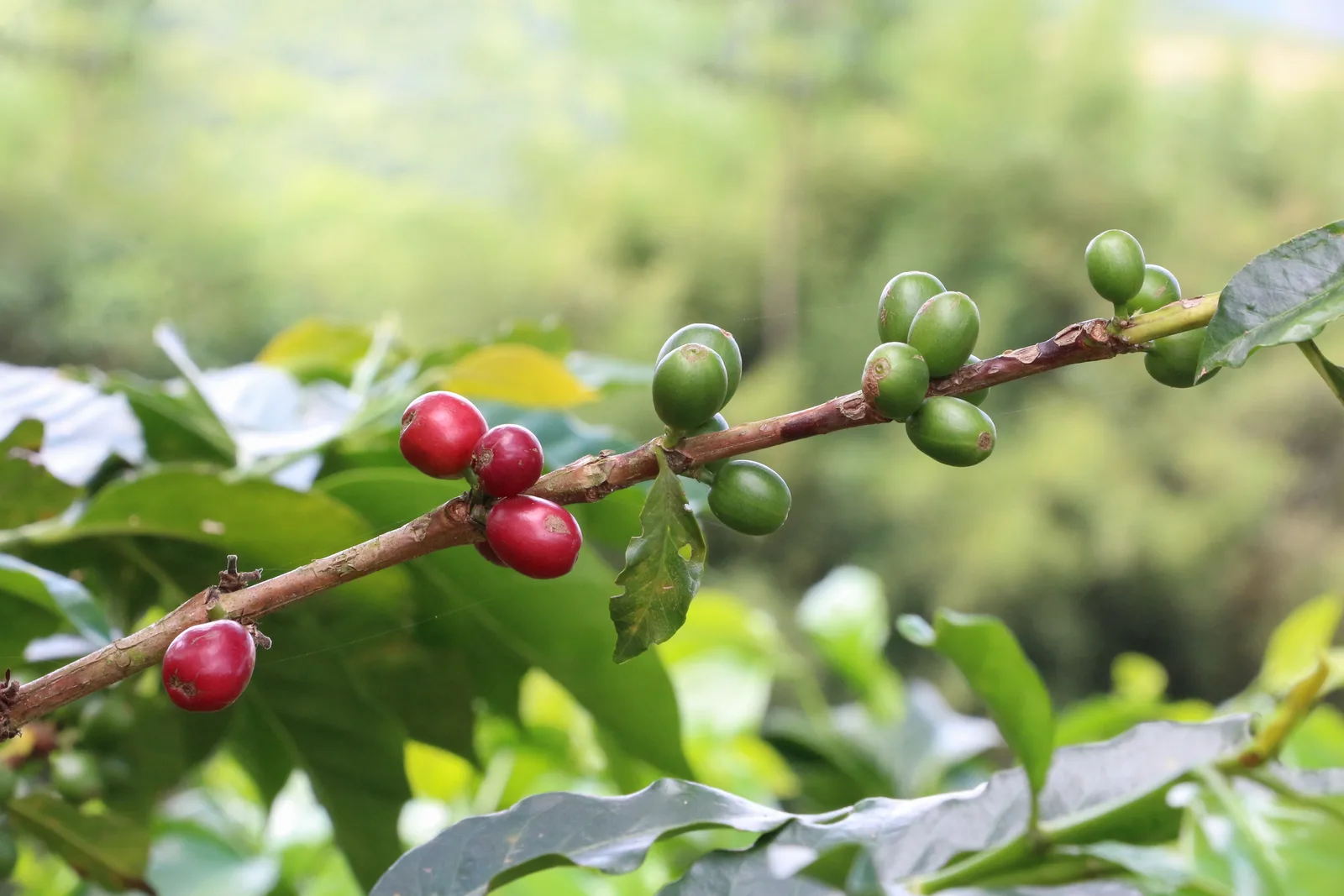
Book thisCoffee tour pricing in Salento is a mess in English, and it is worth being precise about why. Posts updated as recently as this year still quote Finca El Ocaso at 30,000 COP for the standard tour and 80,000 COP for the small-group version. Those numbers are stale. El Ocaso's own site currently lists the traditional tour at 50,000 to 60,000 COP and both the premium and brewing tours at 120,000 COP, with a roasting tour at 150,000. That is close to a doubling at the entry level in about two years. Assume the higher number, and treat any guide quoting 30,000 as out of date rather than a deal you have found.
| Tour | Price (COP) | Duration | Reservation |
|---|---|---|---|
| Finca El Ocaso, traditional | 50,000–60,000 | 1 hr 30 | Not required, up to 30 people |
| Finca El Ocaso, premium | 120,000 | 2 hr 45 | Required, max 10, ages 15+ |
| Finca El Ocaso, roasting | 150,000 | 2 hr 45 | Required, max 6 |
| Finca Momota | 35,000–60,000 | ~2 hrs | Recommended, small groups |
| Small walk-in fincas (e.g. Don Elías) | 12,000–20,000 | ~1 hr | Not required |
| Willys jeep to the fincas | 10,000–15,000 return | 20–30 min | Buy at the plaza booth |
The honest read: El Ocaso is the polished, well-run, heavily-visited option, and a 30-person traditional tour is a very different experience from the 10-person premium one. If I were booking a first trip and cared about the coffee rather than the photograph, I would skip the traditional tour entirely and pay for the premium, which includes the cupping lab and actually earns its price. If I cared mostly about seeing how a farm works, I would book Momota or walk into one of the small family fincas for a fifth of the money and get a better conversation. What I would not do is pay the traditional-tour price expecting the small-group experience the older posts describe.
Cocora Valley logistics
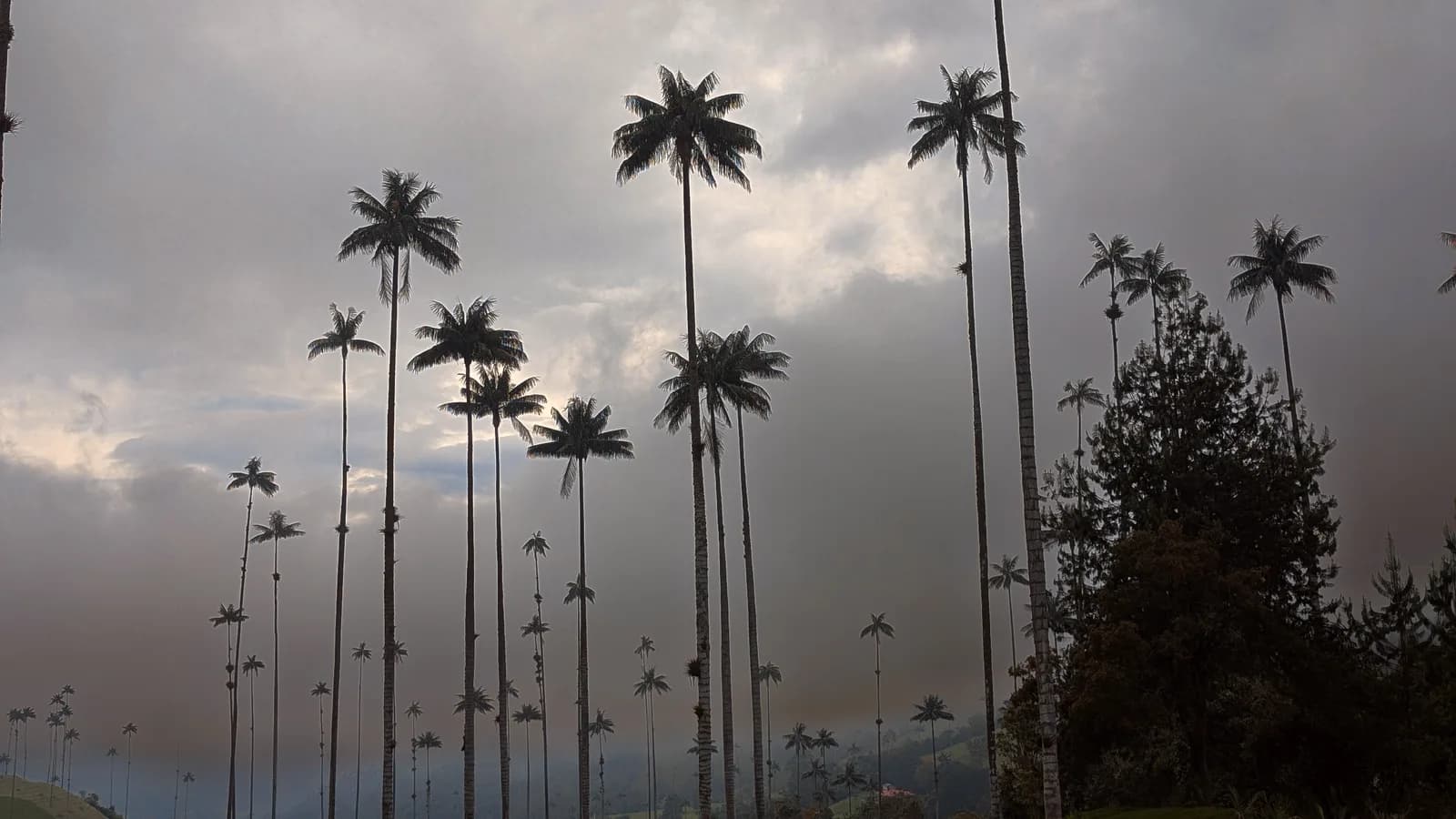
The wax palms are the tallest palms on earth and Colombia's national tree, and the valley they grow in is a 20 to 30 minute jeep ride from Salento's plaza. Jeeps start leaving the square around 7am from the white ticket booth, and cost in the region of 8,000 to 10,000 COP for the round trip. Buy the return leg at the same time. The last jeep out of the valley leaves somewhere between 6pm and 6:30pm, and missing it is a genuinely expensive mistake.
Fees are collected at gates rather than a single entrance, which is why the reported numbers vary so much. Reckon on about 5,000 COP for the valley itself plus roughly 6,000 COP to cross the private land the loop trail runs over, so around 11,000 COP for the standard circuit. Optional add-ons are charged separately: the Acaime hummingbird sanctuary is about 20,000 COP and includes a hot drink, and some private palm-forest entrances charge considerably more. Carry small notes; this is not a card economy.
The full loop is 6 to 8 hours and the direction matters. Going counterclockwise puts the cloud forest and the river crossings first and brings you down through the palms at the end, which is both the better light and the better reveal. Clockwise means a brutal uphill and the payoff early. If a full day of hiking is not the plan, you can walk 40 minutes in from the drop-off, stand among the palms and jeep back, and plenty of people do exactly that without regret. Start early regardless: the valley clouds over by early afternoon most days.
Where to stay in Salento, zone by zone
Three places to book in Salento
 Social budget
Viajero Salento Hostel
The biggest hostel in town and the one that comes up in nearly every recent report, with a bar, hammocks and free yoga. A short walk south of the plaza, so you keep the evening in town without paying for the plaza itself.
Check availability Quiet mid-range
Coffee Tree Boutique Hostel
Dorms and private rooms in a calm, well-kept building with valley views; breakfast is included with privates and around 25,000 COP for dorm beds. The pick for people who want a hostel's price without a hostel's volume.
Check availability Splurge
Kawa Mountain Retreat
The best views in Salento without committing to a road in the hills, sitting on the village edge rather than out in the countryside. It solves the finca problem by being walkable, which is most of the point.
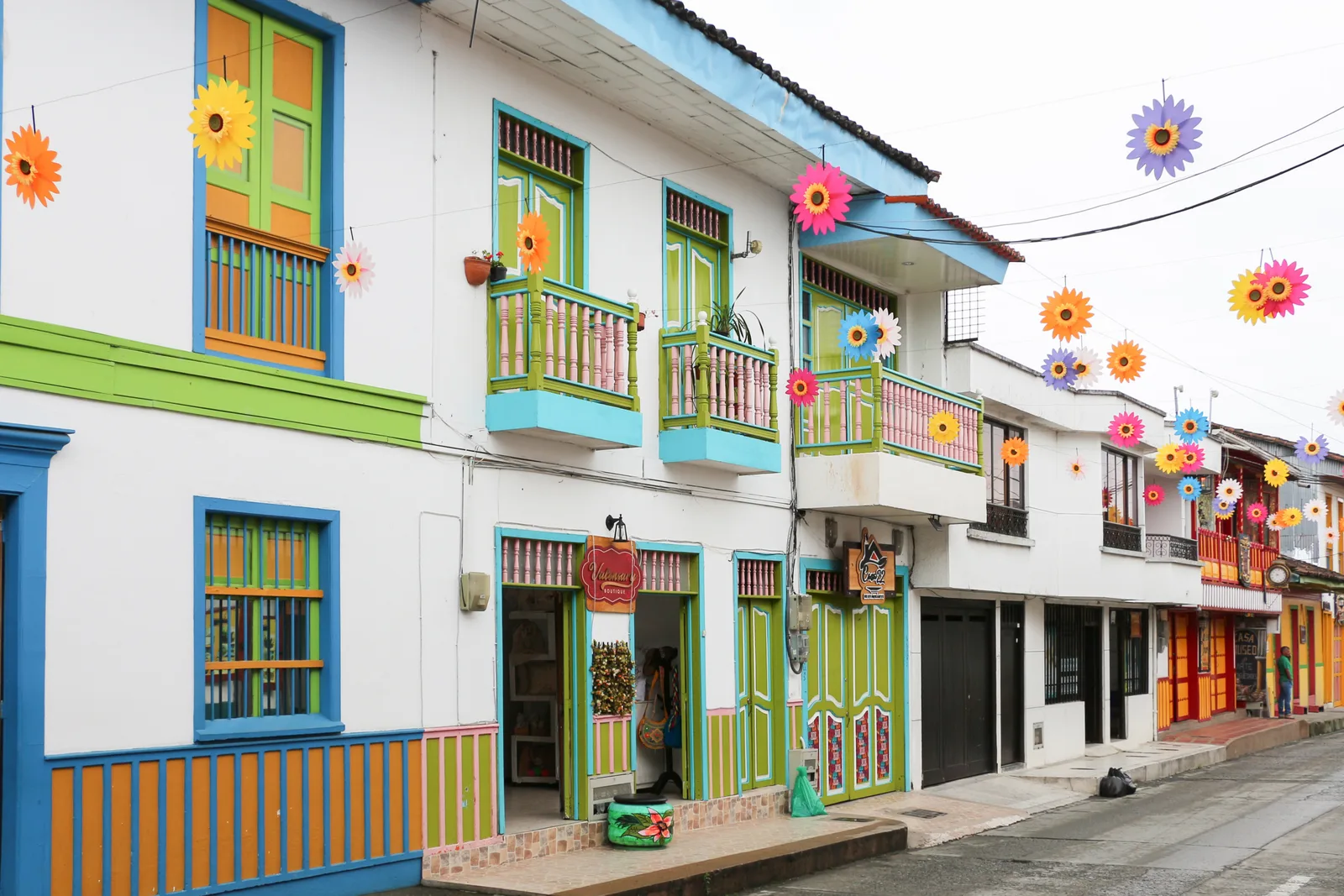
Check availabilityStay in Salento town center if this is a first visit, if it is short, or if you do not have a car, which covers most people reading this. The town is walkable end to end, it has the restaurants and the tejo and the plaza life, the jeeps to both Cocora and the fincas leave from the square you are sleeping beside, and it is markedly safer than the big Colombian cities, to the point that the Tripadvisor destination experts treat a rental car here as unnecessary rather than useful. Mid-range rooms run roughly 200,000 to 350,000 COP. The trade is noise: this is a town of hard surfaces and early jeeps, and the rooms facing Calle Real get engine noise from around 6:30am. Ask for something off the street and you have essentially solved Salento.
Stay in the countryside fincas if you have a rental car, or if you have confirmed in writing how you get back after dark. This is the zone worth being blunt about. The properties are lovely, waking up in the coffee hills is the version of this trip everyone pictures, and prices run roughly 300,000 to 600,000 COP for the good ones. But the roads are unpaved and unlit, Salento has no taxi fleet worth the name, and the jeeps stop when the tours do. Even guides who recommend the countryside note that finding a taxi out to their own hotel was a recurring problem. The practical consequence is that dinner in town becomes a logistics exercise, and most guests quietly stop going. Before you book anything out here, message the property and ask the exact question the destination experts recommend: how do guests without a car get to town, and back, at night? A property that answers with a specific transfer and a price is fine. A property that answers vaguely has told you everything.
A note for drivers, because this flips everything above. If you have a rental car, the finca zone stops being a problem and becomes the best version of Salento: a hotel or holiday house with parking in the hills costs the same as a parking-less room in town, the unlit roads stop mattering, and you get the coffee-country mornings everyone else is trading their evenings for. In-town parking is the scarce resource — the colonial blocks were not built for cars, and most central properties have no more than a couple of spaces — so drivers should use the parking filter when searching Salento hotels with parking and confirm the space by message, or simply book the finca they wanted anyway.
Stay in near Cocora if the valley is genuinely the reason for the trip and you want to be on the trail before the jeeps arrive. The lodges out this way, glamping domes and converted fincas, sit east of town toward the valley mouth, and being there at 6:30am with the clouds still low is a real advantage over everyone who is still queueing at the plaza booth. It costs more, the same after-dark constraint applies with the same force, and you are further from dinner than the fincas are. This zone earns its price for one specific traveler: the one who came for the palms and intends to be alone with them.
Stay in Filandia if you want the coffee-town architecture without the crowd, at lower prices, and you are willing to be 50 minutes from Cocora rather than 25. The full case for each town, crowds, food, prices and logistics, is in the Salento or Filandia comparison, so I will not relitigate it here. The booking-relevant facts: Filandia's accommodation inventory is thin, so the good places go early, and it fills up on Colombian weekends and holidays, when the calm you came for evaporates. Named options that recur in recent write-ups are Bidea Hostel for budget and El Reloj Casa Hotel for something more polished.
If you want one line to stop the scrolling: book in Salento town for a first trip, put the savings into the premium coffee tour, and come back for a finca once you have a car. Salento is almost always paired with Medellín, so it is worth reading my where to stay in Medellín guide alongside this one, and if the plan runs to the coast afterwards, the where to stay in Cartagena guide and the things to do in Cartagena guide cover that leg.
The food in Salento is small and worth planning around. Trucha, the farmed river trout, is the town's dish, served whole or in fillets under a blanket of garlic sauce with a patacón the size of a plate underneath it. Donde Laurita and El Rincón de Lucy are the two names that recur most in recent reports, and El Rincón in particular gets flagged for value rather than novelty. It is a narrow food scene compared to what Medellín offers, which is worth knowing before you plan four nights here; my where to eat in Medellín guide covers the gateway city for anyone stacking the two.
Getting there and when to go
Salento has no airport. The two that serve it are Armenia and Pereira, both under an hour out, and flying into either from Bogotá or Medellín converts a full travel day into a short one. From Armenia a taxi runs about 90,000 COP and local buses go roughly hourly; Pereira is similar. If you are still pricing the route, it is worth comparing fares into both airports rather than defaulting to one, because the difference between them can be substantial on any given date.
The overland route from Medellín is the classic, and it is long. Flota Occidental runs the only direct service, six to eight hours depending on the mountain traffic, with departures spread through the day including an early-afternoon and an overnight run, and fares from about 104,000 COP. It is a comfortable enough bus and a good road for scenery, but it will eat a day, which is the real argument for three nights in Salento rather than two. If you are breaking the journey, a night either side in Laureles or El Poblado and a meal from the Medellín food guide is a better use of the time than a pre-dawn departure. Coming from further south on a wider route, the coffee region slots naturally between Colombia and Peru, and my where to stay in Lima guide picks up that thread.
On timing: this is cloud forest, and it rains at some point in most weeks of the year, usually in the afternoon. The drier stretches run roughly December to February and July to August, which is also when Colombian domestic tourism peaks, so Salento and Filandia both get busy. The coffee harvests fall around October to December and April to June, and touring a farm mid-harvest is a substantially better visit than touring one in a quiet month. Long weekends and Colombian public holidays are the single biggest variable in what you pay and how the plaza feels; check the calendar before you book.
Recommendations
- Book in Salento town for any first visit without a car, and treat the countryside finca as the second trip, not the first.
- Before booking anything outside town, message the property and ask exactly how guests without a car get back after dark, and take a vague answer as a no.
- Ignore any coffee tour price under 30,000 COP for El Ocaso; the farm's own site now lists 50,000 to 60,000 for the traditional tour and 120,000 for the premium.
- Pay up for El Ocaso's premium tour if coffee is the point, or book Momota or a small walk-in finca if you would rather not tour with 29 other people.
- Buy the Willys jeep return leg at the plaza booth when you buy the outbound, and be clear that the last one leaves Cocora between 6pm and 6:30pm.
- Walk the Cocora loop counterclockwise so the palms come on the descent, and start by 8am before the cloud comes in.
- Carry cash in small notes: the Cocora gates, the jeeps and the smaller fincas are not a card economy.
- Ask for a room off Calle Real; the jeeps start running around 6:30am and the town has no soft surfaces.
- Give Filandia a night if you have three or more, and avoid it on Colombian long weekends when it fills with domestic visitors.
- Fly into Armenia or Pereira rather than busing eight hours from Medellín unless the road day is something you actually want.
If you are booking this week, the decision is simpler than the internet makes it: sleep in Salento town, spend a full day on the Cocora loop and a half day on a coffee farm you have chosen deliberately rather than defaulted into, and give Filandia the third night if you have one. The finca fantasy is real and the fincas are lovely, but they are built for people with car keys, and the guides that leave that out are the reason people spend their evenings watching the road. Prices in this region are moving fast enough that anything quoted here is worth a sanity check at the booth. If something has changed since you went, tell me and I will update it.
Frequently asked
Should I stay in Salento town or at a coffee finca?
Stay in town on a first visit, especially without a car. Salento's restaurants, tejo courts and evening life are all in the walkable center, and the countryside fincas sit on unlit, unpaved roads with no reliable taxi service after dark. Choose a finca only if you have a rental car, if the property runs its own transfers, or if you are staying long enough that a couple of quiet nights in are the point rather than a cost.
How do you get back to a finca outside Salento at night without a car?
Usually you do not, which is the part most guides skip. The Willys jeeps that serve the fincas run to tour schedules and largely stop in the early evening, and Salento has no meaningful taxi fleet to call at 10pm. The workable options are a private transfer arranged by the property in advance, a pre-booked driver, or accepting that you eat dinner where you sleep. Before booking anything outside town, message the property and ask exactly how guests without a car get back after dark, and get the answer in writing.
How much is a coffee tour in Salento in 2026?
Prices have risen sharply and older guides are out of date. Finca El Ocaso's own site now lists its traditional tour at 50,000 to 60,000 COP and its premium and brewing tours at 120,000 COP, against the 30,000 COP figures still quoted in posts from a couple of years ago. Smaller farms like Finca Momota sit around 35,000 to 60,000 COP, and the most basic walk-in tours at small fincas still run under 20,000 COP. Budget 10,000 to 15,000 COP more for the Willys jeep round trip.
What are the best hotels in Salento town?
The names that recur across recent traveler reports are Coffee Tree Boutique Hostel for its Cocora views and social-but-quiet balance, Hotel Salento Real just off the plaza for a mid-range private room, and the smaller casa hotels on the blocks between Calle Real and the plaza. Inventory in town is small colonial buildings, so the well-reviewed places sell out first on weekends; book the town center early and treat anything advertised as 'Salento' but 10+ minutes out as a finca stay with finca transport rules.
Do hotels in Salento have parking?
In the town center, mostly no. The colonial blocks predate cars, streets are narrow, and in-town hotels rarely have more than a couple of spaces, so filter for parking on the booking sites and confirm by message before you arrive. If you are driving, the smarter move is to flip this guide's usual advice: the countryside fincas and edge-of-town properties nearly all have room to park, and a car cancels the after-dark transport problem that makes them awkward for everyone else.
How do you get to Cocora Valley from Salento?
Shared Willys jeeps leave from the white ticket booth on Salento's main square from around 7am and cost roughly 8,000 to 10,000 COP round trip for the 20 to 30 minute ride. Entry fees are collected at the gates, around 5,000 COP for the valley plus about 6,000 COP to cross private land on the loop. The last jeep back leaves the valley between about 6pm and 6:30pm, so start early and do not miss it.
How many days do you need in Salento?
Three nights is the sweet spot: one full day for the Cocora loop, one for a coffee farm and the town, and a half day for Filandia or the Barbas-Bremen forest. Two nights works if you skip Filandia and accept that the Cocora hike will eat one of them entirely. Anything under two nights and the 6 to 8 hour bus from Medellín stops making sense.
How do you get from Medellín to Salento?
Flota Occidental runs the only direct buses, roughly six to eight hours depending on traffic on the mountain road, with departures including early afternoon and overnight services and fares from about 104,000 COP. The faster route is to fly into Armenia or Pereira and take a taxi (about 90,000 COP from Armenia) or an hourly local bus. Both airports sit under an hour from Salento.