Bacalar Cenotes and Lagoon Tours: Cenote Azul, Los Rápidos, Cocalitos and Which Boat Trip to Book
Every Bacalar cenote with 2026 entry fees, the Los Rápidos float, sailboat vs pontoon vs kayak prices, the no-sunscreen rules, and whether the Tulum day trip works.
Every recent report from Bacalar comes down to the same two bookings: which boat you take across the Lagoon of Seven Colors, and which of the cenotes you actually get in. The confusion starts because Bacalar's cenotes are not the cave pools of the Tulum belt. Two of them, Negro and Esmeralda, are sinkholes on the lagoon floor that you reach by water. One, Cocalitos, is a shallow bay ringed by living stromatolites. Only Cenote Azul is a proper walk-up swimming hole with a gate. Add the Los Rápidos channel, five boat formats and rules that tighten every year, and it is easy to book the wrong thing. This is the map I would work from: every cenote with its 2026 fee, every tour format with its price, and an honest answer on the day trip from Tulum. I wrote the broad overview in my things to do in Bacalar guide; this is the deep dive on the water itself.
The four Bacalar cenotes, and what each one costs
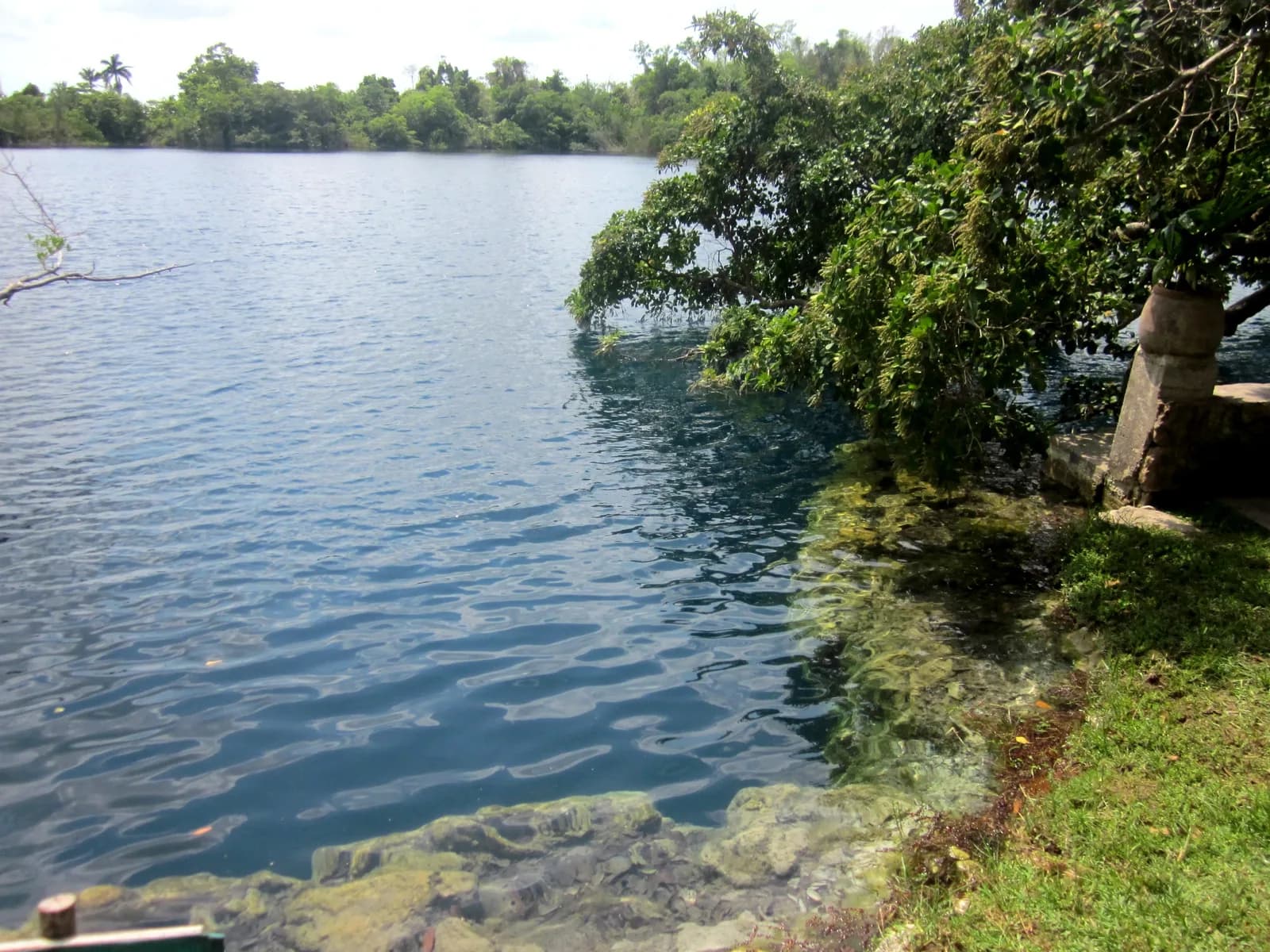
Start with the one everyone can reach. Cenote Azul sits on the southern edge of town, a few kilometers down the Chetumal highway from the Zócalo, and it is the only Bacalar cenote that behaves like the ones near Tulum: a gate, a ticket, a restaurant on the rim. It is a near-circular sinkhole around 90 meters deep, dark navy against the pale lagoon, with concrete platforms and a floating rope for weaker swimmers. The gate ran 25 to 35 pesos in reports from 2025 and early 2026, cash only, with life vests rented for about 50 pesos and mandatory for children. Hours are 10am to 6pm. Sundays and Mexican holidays are crowded; a windy weekday afternoon is when it earns its place.
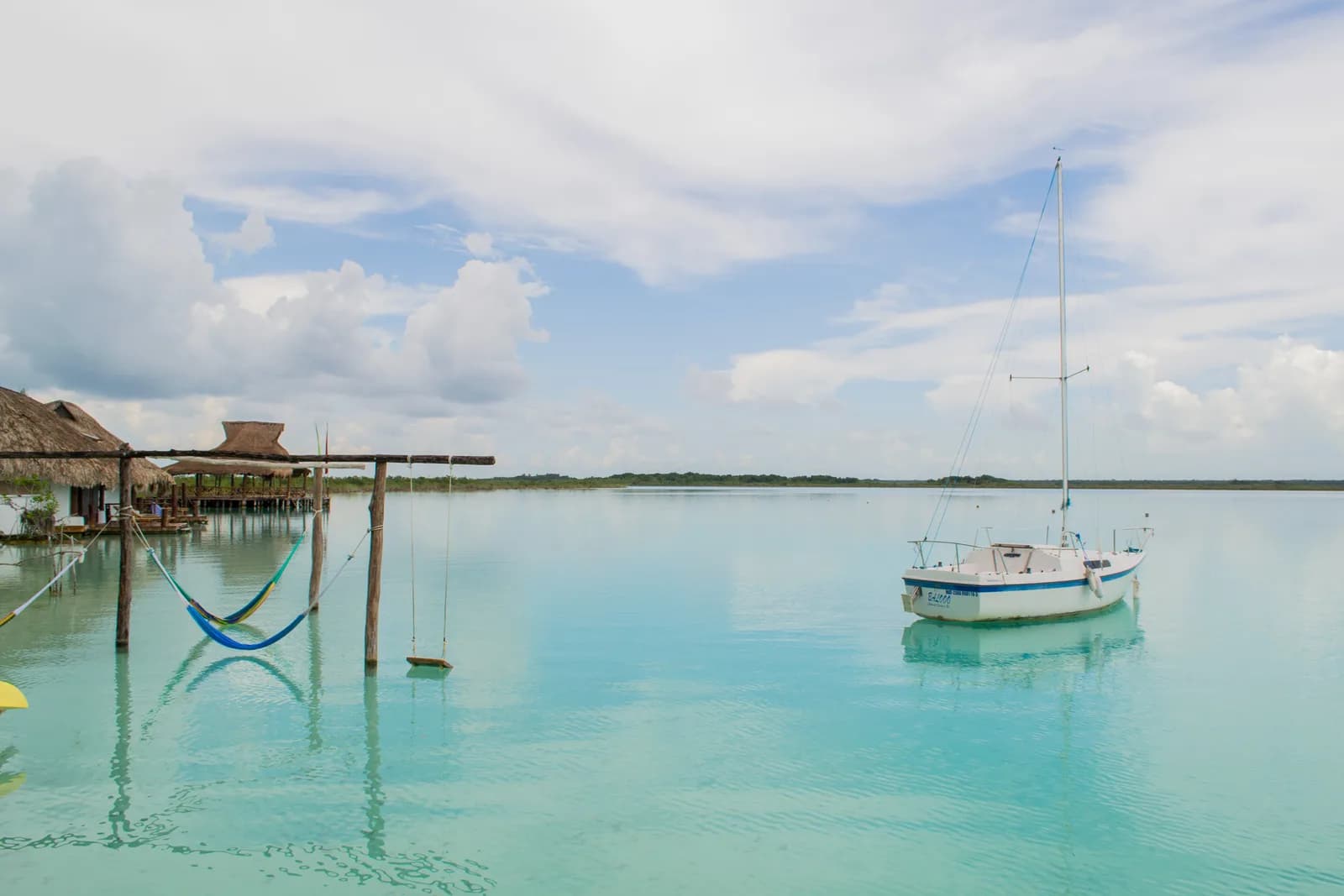
Cocalitos is the opposite kind of place. It is a shallow, glass-clear bay on the lagoon's west shore a short way south of the center, now run as a small beach club with hammocks slung at water level, swings, a bar and a 2-hour pontoon tour sold on site for around 300 pesos. Entry is 50 pesos in most 2025 reports, rising to 100 when the club bundles it, open Tuesday to Sunday from 10am to 5pm, and a taxi from the Zócalo is under 50 pesos. The draw is the stromatolites: this stretch is called the sanctuary, and the beige domes sit just under the surface a few meters from the swings. The deep hole itself is a small feature to one side; the real draw is a slow afternoon in warm, waist-deep water.
Cenote Esmeralda is the one most guides get wrong. It is a wide, shallow-edged sinkhole in the lagoon itself, south of town near Cocalitos, and its emerald color comes from the pale bottom dropping away. By water it is free: kayak tours and most boat routes swim it. By land you enter through one of the private properties on that shore, a restaurant or small hotel, for around 50 pesos.
Cenote Negro, also called Cenote de la Bruja, has no gate, no fee and no land access. It is a 90-meter-deep hole in open water off the town shore where light turquoise switches to near-black in the space of a paddle stroke, which is exactly why it is the closing stop on nearly every boat and sunrise-paddle route. Early morning, before the pontoon traffic, is when the color contrast is sharpest.
| Cenote | 2026 entry | How you reach it | Best for |
|---|---|---|---|
| Cenote Azul | 25–35 MXN, vest ~50 MXN | Walk, bike or taxi south of town | Deep-water swim, windy afternoons, restaurant |
| Cocalitos | 50 MXN (100 via beach club) | Taxi under 50 MXN, or kayak | Stromatolites, shallow water, hammocks |
| Cenote Esmeralda | ~50 MXN by land, free by water | Boat, kayak, or a shoreline property | Wide calm float, kayak destination |
| Cenote Negro | Free | Boat, kayak or paddleboard only | Drama, the deep-blue drop, sunrise paddles |
The stromatolite rules that apply to all of them
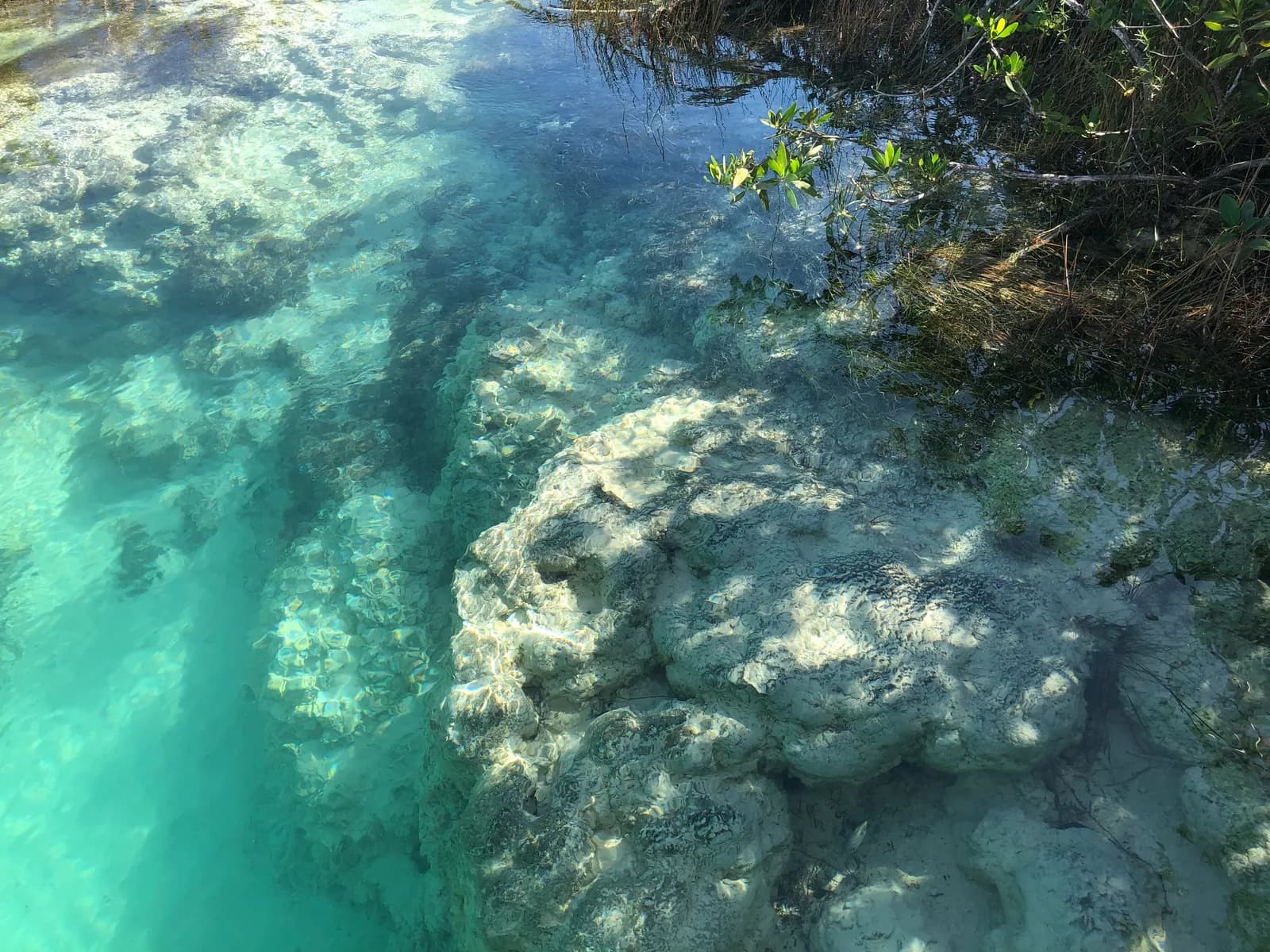
Bacalar's stromatolites are the reason the rules here are stricter than at any cenote near Tulum. They are living structures built by microbial mats over thousands of years, one of the largest freshwater colonies on Earth, and they look like nothing: beige rock, knee-deep, easy to stand on by accident. The municipal ecology office's lagoon guide puts the rules plainly. Keep at least three meters from any stromatolite. Never touch, climb or anchor on them. No boat may beach or tie up on them. And no sunscreen of any kind in the water, including the biodegradable and reef-safe formulas, because even those speed up the algae growth that is changing the lagoon's color.
The etiquette reads, to me, a lot like an onsen: you arrive clean, you put nothing on your skin before you get in, and the shared water is treated as something you are borrowing. In practice that means a long-sleeve rash guard, a hat, and water time in the early morning or the last two hours of light, when the sun is low anyway. Los Rápidos tolerates reef-safe sunscreen applied an hour before entry; the official guidance says skip it entirely.
The other rule that catches people is the calendar. Since 2023, Bacalar's tour operators have agreed a no-navigation day on Wednesdays, commercial and private boats alike, to let the lagoon rest, and the municipality was given a national environmental award for it in May 2026. Some peak-season Wednesdays around Christmas, Easter and the summer holidays are opened by a published navigation calendar, but the default is that no tours run. Los Rápidos is noticeably busier on Wednesdays for the same reason.
Los Rápidos: the fee, the float and the current
About 12 km south of town, where the lagoon squeezes through a channel toward Xul-Ha, the water picks up speed and becomes Los Rápidos. The channel narrows to roughly five meters, lined with mangroves on one side and stromatolites on the other, and a gentle but real current carries you down it. It is stronger than it looks: you float down, walk back along the boardwalk and go again. Entry in 2026 is 200 pesos per adult and 150 per child, life vest included and required, open 10am to 6pm, cash only. Two costs hide behind the ticket: a waterside table with chairs carries a minimum spend of around 300 pesos per person, and lockers take a 100-peso deposit with half returned.
The timing advice in the last two years of reports is unanimous. Be at the gate at 10am, because the tour vans begin arriving around 11, and avoid Wednesdays. Three to four hours is the natural visit; the on-site restaurant does decent shrimp tacos and ceviche, and given the minimum spend, lunch there is the sensible way to use it. A taxi from Bacalar is about 250 pesos each way and staff will call one for the return; a colectivo along the highway is under 30 pesos but leaves you a 1.5 km walk from the road. If you have done the rafting I covered in Lunahuaná, this is its slow, warm cousin.
Which boat trip to book
The lagoon tour is the centerpiece of any Bacalar stay, and the market has sorted itself into five formats. These are the three I would book first.
Three things worth booking
 Traveler favourite
Shared sailboat lagoon tour
Sail to the Pirate Channel, Bird Island and Cenote Negro with drinks and swim stops, no engine wake near the stromatolites. Hundreds of recent reviews rate this the best-value way onto the water.
Book this Golden hour
Sunset sailboat trip
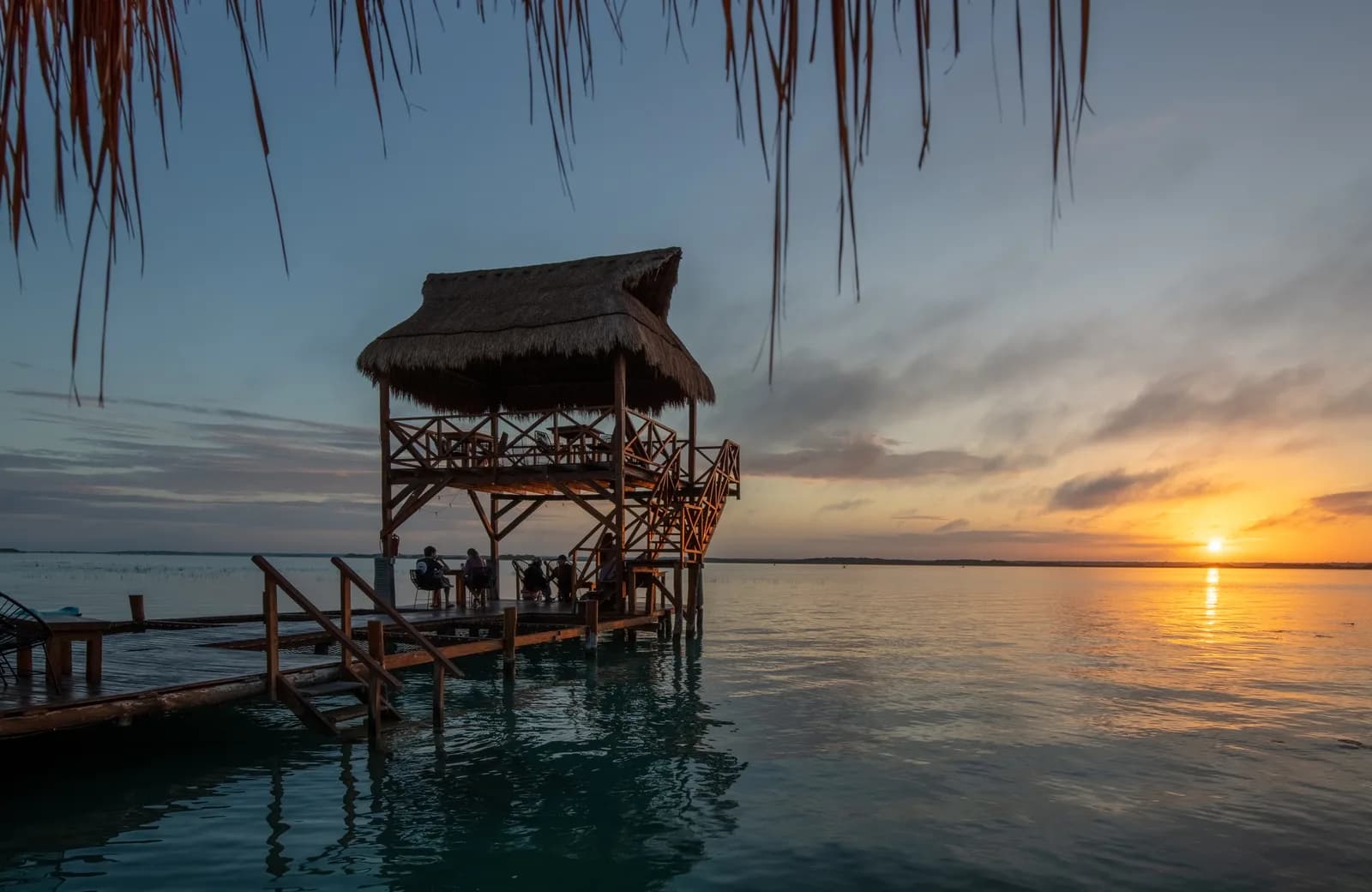
Cenotes, the Pirate Channel and Bird Island depending on wind, with fruit and guacamole as the light goes. The wind eases again toward evening, so this is the second-best time of day to be sailing.
Book this Best value
Kayak rental to the cenotes
A single or double kayak with snorkel gear and a dry bag, launched from the town shore toward Bird Island and Cenote Negro. Go at first light for glassy water, and remember Wednesday is the lagoon's rest day.
Book thisShared pontoon is the default and the cheapest guided option. A motor pontoon takes 10 to 20 people on a three-to-four-hour loop, and prices at the town docks run 400 to 800 pesos a head, most commonly 500 to 650, or roughly 27 to 40 dollars if you book a pontoon tour online. It is fast and hits every stop; the recurring complaint in 2025 and 2026 reviews is that midday departures are loud and rushed. If the pontoon is the budget, book the first departure of the morning.
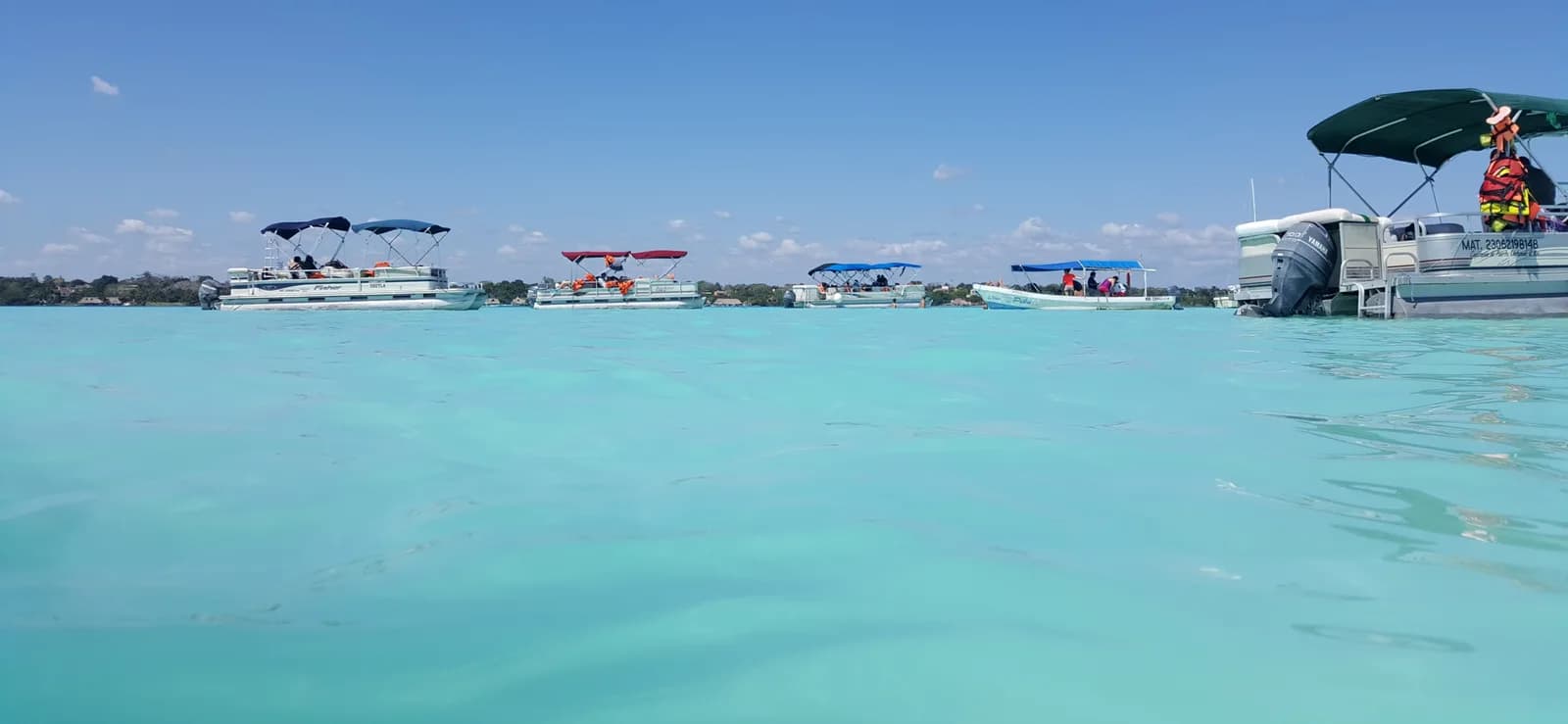
Sailboat or catamaran is the format recent travelers rate highest. Small sailboats capped at six to ten people run three-hour shared trips for around 36 to 56 dollars with beer, juice and fruit, and the five-hour versions with an open bar and a Mexican lunch reach about 80. There is no engine wake, which matters more now that motorized boats are being pushed away from the most delicate zones. Operators like Sailing Colibri and the Casa Sirena departures come up repeatedly in the reviews; the popular ones sell out in the December to April season, so book before you arrive.
Private boat makes sense for four or more. A private lancha or small pontoon quotes a flat 2,000 to 3,500 pesos for a boat holding four to eight, negotiated the evening before at the municipal dock, and a private catamaran runs 4,000 to 8,000 pesos for up to ten. One Chetumal-based operator sells a five-hour private pontoon for 12 at 5,499 pesos including the northern end of the rapids, cheaper per head than two shared tours for a family. Book it for 8am.
Kayak and paddleboard is the cheap, quiet option and the one I would not skip. A three-hour rental is 17 to 22 dollars; a guided sunrise paddleboard or kayak tour with coffee and a floating breakfast at Bird Island and Cenote Negro is about 360 pesos, or 27 to 40 dollars depending on the operator, and it is the single most loved Bacalar activity in recent reports. The catch is only that it is early: on the water by 6am, done by 9.
Sunrise versus sunset is really a question about wind. The lagoon is mirror-still at dawn, choppy by late morning, and calmer again toward evening. Sunrise gives you the color at its brightest and the cenotes to yourself; sunset gives you the light and a drink in your hand.
| Tour type | Typical price | Duration | Best for |
|---|---|---|---|
| Shared pontoon | 500–650 MXN / $27–40 | 3–4 h | Budget, groups, seeing every stop fast |
| Shared sailboat or catamaran | $36–80 | 3–5 h | Quiet, small groups, drinks, the stromatolites |
| Private lancha or pontoon | 2,000–5,500 MXN flat | 3–5 h | Families of four to twelve, custom route |
| Private catamaran | 4,000–8,000 MXN flat | 4 h | Groups up to ten, a longer day with lunch |
| Kayak or SUP rental | $17–22 | 3 h | Cheapest way to Cenote Negro, self-paced |
| Sunrise paddle tour | 360 MXN / $27–40 | 3 h | Glassy water, breakfast on the lagoon |
What a standard tour actually visits
Almost every route, sail or motor, strings together the same three stops, so it helps to know what they are before you compare itineraries. Canal de los Piratas, the Pirate Channel, is the main event: a narrow cut on the lagoon's east side where the water is knee-to-waist deep over white marl and the color goes electric turquoise. Boats anchor, everyone gets out, and on a still morning it is the photo that sold you on Bacalar. The name comes from the raiders who used it to reach the town.
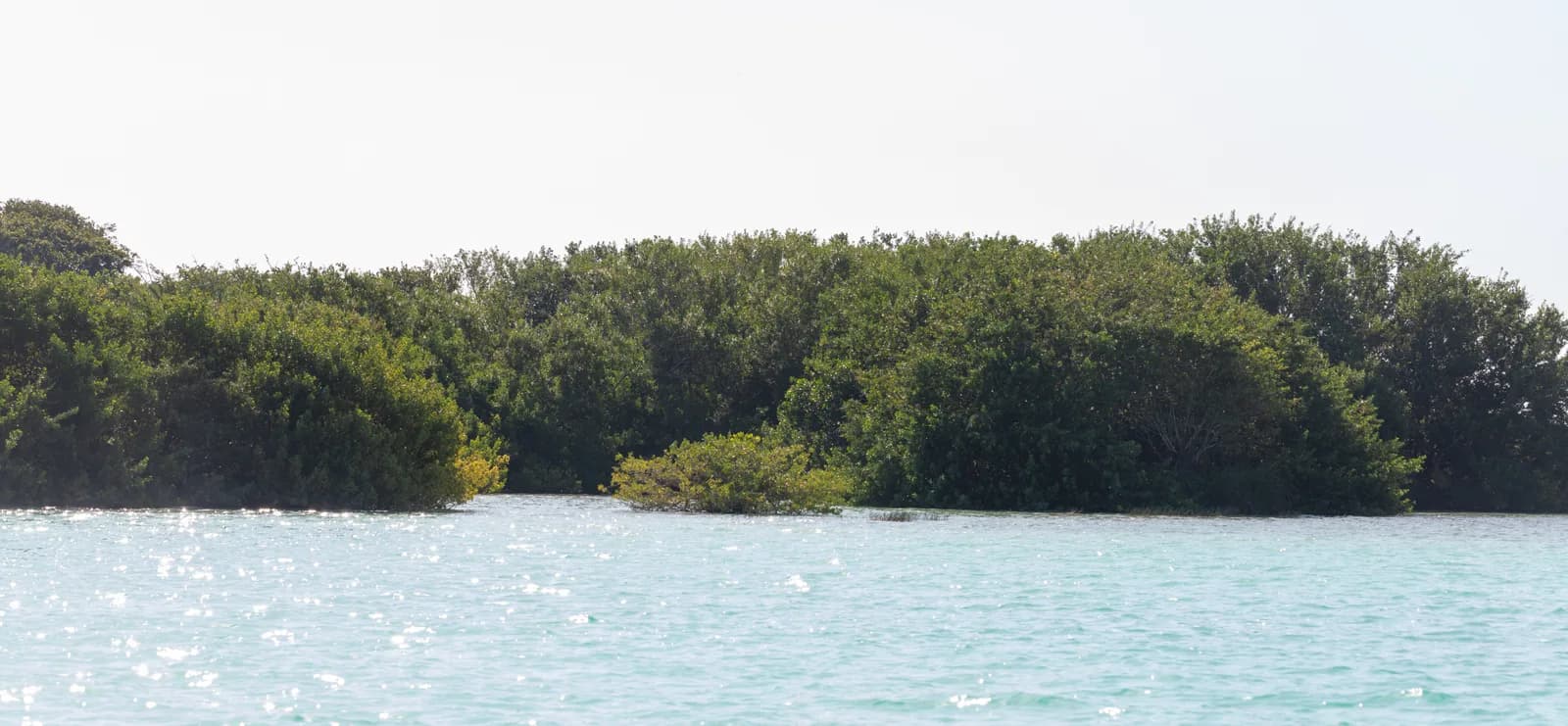
Isla de los Pájaros, Bird Island, is a small mangrove islet in the middle of the lagoon that boats circle slowly for the cormorants, herons and, in season, nesting birds. Nobody lands; it is protected. Cenote Negro is the last stop on most loops, the deep drop where guides cut the engine and let people float over the edge of the dark. Longer routes, especially the sailing and private trips, add a swim at Cocalitos or Cenote Esmeralda, and a few pontoons now finish at the northern mouth of Los Rápidos. When comparing two tours at the same price, the one with an early start beats the one with an extra stop.
The day trip from Tulum, honestly
This is the question I see most, and the numbers answer it. The ADO bus from Tulum to Bacalar takes about two hours and fifty minutes, runs roughly hourly, and costs 21 to 26 dollars each way, around 370 to 500 pesos depending on how far ahead you book. The earliest buses put you in Bacalar close to 8am if you leave Tulum before 5:30. From there the honest day looks like this: taxi to the dock, a 9 or 10am boat tour until early afternoon, a late lunch, an hour at Cenote Azul, and a 4 or 5pm bus that has you back in Tulum around 8pm. It also means you see the lagoon in exactly its worst window, late morning to mid-afternoon, when the wind has flattened the color and the pontoons are at their loudest.
The guided version costs more and removes the transport risk: a Bacalar lagoon and cenote day trip from Tulum runs about 13 hours for roughly 154 dollars and includes the boat, the Pirate Channel and a Cenote Azul swim. It is a long day in a van for one boat ride. My view, which I laid out in more detail in Bacalar vs Tulum, is that the same money buys two nights on the lagoon at Bacalar prices, with a sunrise paddle and a sailboat on separate mornings. If the day trip is genuinely all the calendar allows, book the earliest bus, pre-book a sailboat rather than a walk-up pontoon, and do not pick a Wednesday.
Where to stay to make the tours easy
Where you sleep decides how early you can be on the water, since most sunrise paddles and many sailing trips leave from hotel docks or the town shore. The full zone-by-zone comparison, with prices, is in my where to stay in Bacalar guide; these are the three picks that fit a tour-heavy stay.
Three places to book in Bacalar
 Dock at the door
Amainah Bacalar
Sixteen rooms facing the water on the southern shore, with an infinity pool and free kayaks and paddleboards, so the sunrise paddle starts from your own dock. Recent guests single out the staff and the restaurant.
Check availability Design pick
Casa Hormiga
A jungle-styled hotel a short walk from both the Zócalo and the dock, with a pool, free bikes and morning yoga. No water frontage, which is what keeps it mid-range, but the tour boats are minutes away.
Check availability Overwater cabins
Akalki Hotel y Centro Holístico
The lagoon's only overwater bungalows, on the clearest stretch near Los Rápidos, with kayaks and life vests included. Reviewers love the water and note the property could use some updating; you will taxi for dinner.
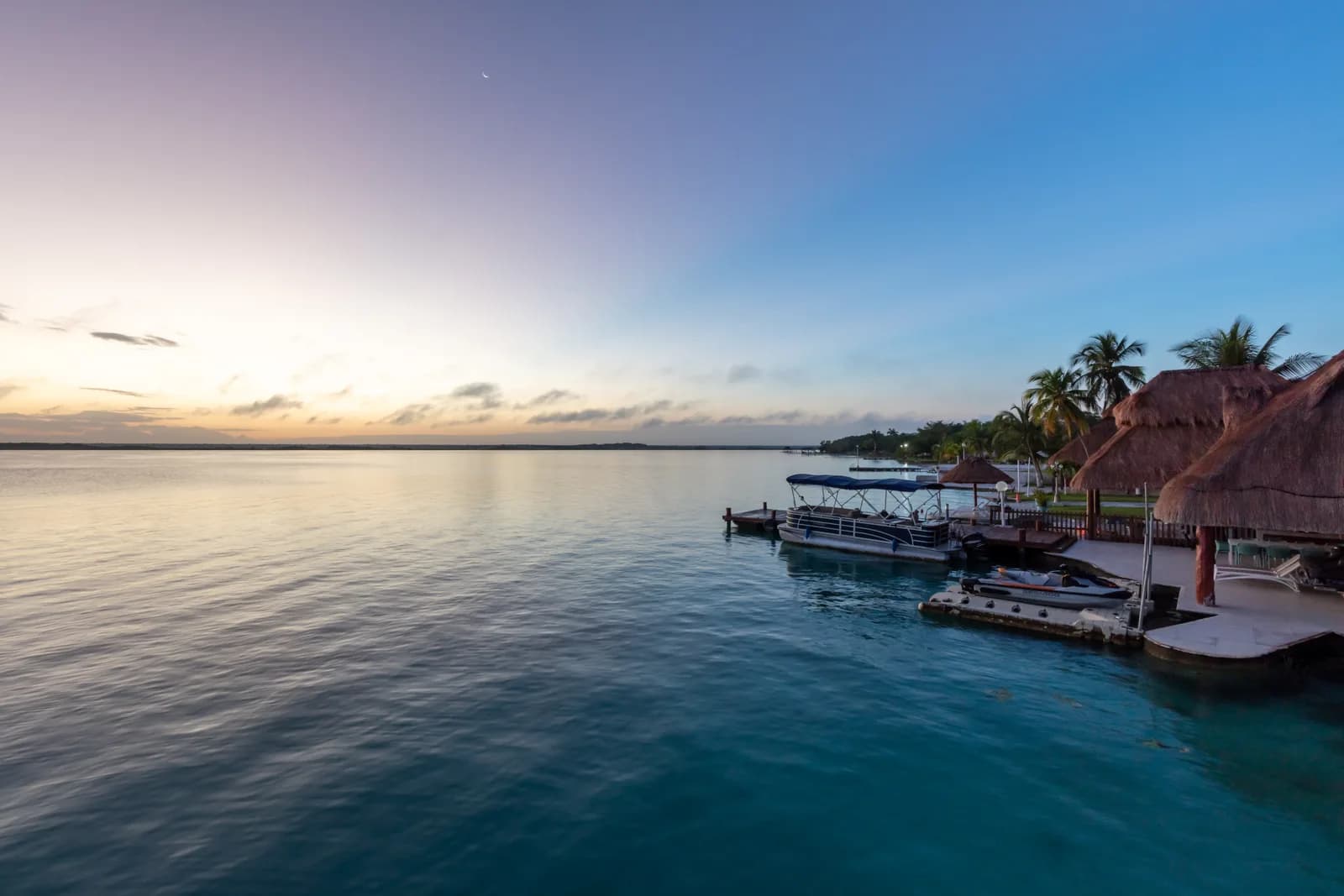
Check availabilityStay on the lagoon-front strip south of the centre if the water is the whole point of the trip. This is the run of docks along Avenida 1 and its continuation south, where places like Amainah and the mid-range Hotel CasaBakal put free kayaks at your door, so the dawn paddle is free and the sailboats collect you from a pier nearby. Most expensive strip, easiest logistics.
Stay in the town centre around the Zócalo if you want cheaper beds and the taco carts and marquesita stands at night; Casa Hormiga is the design option, and the municipal dock where the pontoon touts gather is a five-minute walk downhill. You give up the wake-up swim and gain the best food and the lowest prices in town.
Stay on the far shores, north of town or down at Xul-Ha if you came to switch off. The north shore has secluded docks and the south end near Xul-Ha has the clearest water, Akalki's overwater cabins and Los Rápidos a few minutes away, at the cost of a taxi for every meal in town and a longer transfer to the sailing departures.
Recommendations
- Book a sailboat over a pontoon if the budget stretches 15 to 30 dollars further; the quiet and the small group are what people remember.
- Get on the water by 8am; the color and the calm are gone by late morning.
- Do not plan a boat tour for a Wednesday, and check the operator's navigation calendar around Christmas, Easter and summer when the rule sometimes lifts.
- Wear a rash guard and skip sunscreen in the lagoon entirely; even reef-safe formulas are banned in the municipal guide.
- Keep three meters from every stromatolite and never stand on the beige rock at Cocalitos, the Pirate Channel or Los Rápidos.
- Reach Los Rápidos at the 10am opening, budget 200 pesos entry plus a 300-peso table minimum, and eat lunch there to use it.
- Carry small pesos: Cenote Azul, Cocalitos, Los Rápidos, the colectivos and the dock operators are all cash-only, and Bacalar's ATMs run dry.
- If you are coming from Tulum, sleep in Bacalar for two nights rather than day-tripping; the comparison post has the cost math.
The rules tighten and the fees drift up every season, so if you have been recently and something here has moved, tell me and I will update it. If you are booking now: sail rather than motor, paddle at sunrise, float Los Rápidos at opening, and give Cenote Azul the windy afternoon. When the lagoon days are done, the reef at Mahahual is an hour east, and if Bacalar is the opening act of a longer Caribbean and Andean run, my guides to Cartagena's old city, where to stay in Cartagena and Medellín pick up the thread from here.
Frequently asked
How much do the Bacalar cenotes cost to visit?
Cenote Azul charges 25 to 35 pesos at the gate in recent 2025 and 2026 reports, plus about 50 pesos to rent a life vest. Cocalitos is 50 pesos, occasionally 100 when the beach club runs the entry. Cenote Esmeralda is around 50 pesos through the land access and free if you arrive by kayak or boat. Cenote Negro has no gate at all because it sits in open water and can only be reached by boat, kayak or paddleboard. All of them are cash-only.
Which Bacalar cenote is the best one?
For a swim you can walk to, Cenote Azul, a 90-meter-deep sinkhole on the south edge of town with a restaurant on the rim. For the stromatolites and shallow water, Cocalitos. Cenote Negro is the most dramatic, a sudden drop from pale turquoise into near-black water in the middle of the lagoon, but it is only reachable on a boat or paddle tour. Most travelers do Azul on foot and get Negro thrown in with their boat trip.
Is a sailboat or a pontoon tour better in Bacalar?
A sailboat or small catamaran if you can afford the extra 15 to 30 dollars. Shared sailing trips run about 41 to 80 dollars for three to five hours with drinks, small groups and no engine wake near the stromatolites, and they draw the strongest recent reviews. Shared pontoons cost roughly 27 to 40 dollars, or 500 to 650 pesos booked at the dock, and cover the same stops faster. Both visit the Pirate Channel, Bird Island and Cenote Negro.
How much is Los Rápidos in Bacalar?
200 pesos per adult and 150 per child in 2026, with the mandatory life vest included, cash only. A table by the water carries a minimum spend of about 300 pesos per person on top, and lockers take a 100-peso deposit. A taxi from town is around 250 pesos each way, or a colectivo under 30 pesos with a 1.5 km walk from the highway.
Can you do Bacalar as a day trip from Tulum?
Physically yes, sensibly no. The ADO bus takes about two hours and fifty minutes each way for 21 to 26 dollars, so a day trip means leaving Tulum before 6am, getting one boat tour and one cenote, and eating dinner back in Tulum around 8pm. Guided day trips from Tulum run 13 hours for about 154 dollars. Two nights in Bacalar costs less per day than Tulum and gets you the calm morning water the day-trippers miss.
Is sunscreen banned in the Bacalar lagoon?
Yes. The municipal ecology guide bans sunscreen of any kind in the lagoon, including biodegradable formulas, because the chemicals feed algae and kill the stromatolites. Operators and Los Rápidos tell visitors the same thing: no sunscreen, repellent or lotion before swimming. Wear a rash guard and a hat, swim in the early morning or late afternoon, and keep at least three meters from any stromatolite.
Are Bacalar boat tours closed on Wednesdays?
Usually. Bacalar's tour operators agreed a weekly no-navigation day on Wednesdays so the lagoon can rest, in place since 2023 and recognised with a national environmental award in May 2026. It covers commercial and private boats. Some peak-season Wednesdays around Christmas, Easter and summer are opened by a published calendar, so confirm with your operator before planning a Wednesday tour, and expect Los Rápidos to be busier that day.