Hong Kong to Shenzhen Visa: Who Walks Through, Who Pays at the Border, and Who Has to Plan Ahead
Visa-free list, 240-hour transit, the 5-day port visa and the Indian passport answer: how every passport gets into Shenzhen from Hong Kong in 2026.
Since the Hong Kong to Shenzhen day-trip guide went up, the questions arriving from search have been almost entirely about one thing, and it is not the food. It is the visa. Do I need one, can I get one at the border, does the transit exemption count, and, most persistently, what happens if the passport in question is Indian. Fair enough: China's entry rules have changed more in the last two years than in the previous ten, and the answer genuinely is different for a Briton, an American and an Indian standing in the same West Kowloon queue. This post is the long-form answer, current as of August 2026 and date-stamped throughout, because with Chinese visa policy the date is half the information.
The answer, one row per passport
Every route into Shenzhen from Hong Kong is one of five mechanisms. Find your row first, then read the section that expands it.
| If you are | Your route | Cost | Advance planning |
|---|---|---|---|
| UK, Canada, Australia, NZ, Japan, South Korea, most EU, ~50 countries total | 30-day visa-free entry, any crossing | Free | None. Valid through 31 Dec 2026 |
| US citizen continuing to Macau, Taiwan or another country | 240-hour visa-free transit | Free | Onward ticket departing within 240 hours |
| US citizen on a Hong Kong round trip | 5-day Shenzhen port visa at Luohu, Huanggang or Shekou | ~CNY 800–971 (reciprocal fee) | RMB cash, photo, morning arrival |
| Other port-visa-eligible nationality without visa-free status | 5-day Shenzhen port visa | ~CNY 130–168 | Same as above |
| Indian passport (also Philippine and ~25 other excluded nationalities) | Full China visa in advance, or 144-hour group tour via a registered HK agency | Visa fees vary; group permit is free | Days to weeks for the visa; 1-2 days for a group booking |
Now the detail, because the table hides the traps.
The 30-day visa-free list: who just walks through
China's unilateral visa-free scheme is the reason most Western visitors reading this need nothing at all. As of August 2026 it covers around 50 countries for stays of up to 30 days, and it runs through 31 December 2026 (Russia's exemption runs on its own clock, through 14 September 2026). The list grew in stages: Sweden was added on 10 November 2025, and the United Kingdom and Canada joined on 17 February 2026, which quietly made most older Shenzhen visa guides wrong overnight. The full membership takes in nearly all of the EU plus Norway, Switzerland and Iceland, the UK and Ireland, Australia and New Zealand, Japan and South Korea, the Gulf states, and a South American contingent including Brazil, Argentina, Chile, Peru and Uruguay.
If your passport is on this list, the entire subject of this post collapses into one sentence: cross at any checkpoint, including the high-speed rail from West Kowloon, get stamped for 30 days, and spend your energy on what to actually do over there instead. My own New Zealand passport falls in this category, which is precisely why I am suspicious of guides written only from the easy seat. The rules below are where it gets interesting.
Two footnotes worth keeping. The scheme is unilateral and time-limited, so check the list the week you travel; Beijing has extended it twice, but an extension past December 2026 is an expectation, not a fact. And 30 days of mainland access is wildly more than a day trip needs, so if Shenzhen tempts you into the rest of the country, toward Chengdu or Guiyang, the same entry covers it.
The 240-hour transit exemption: free, generous, and useless for a round trip
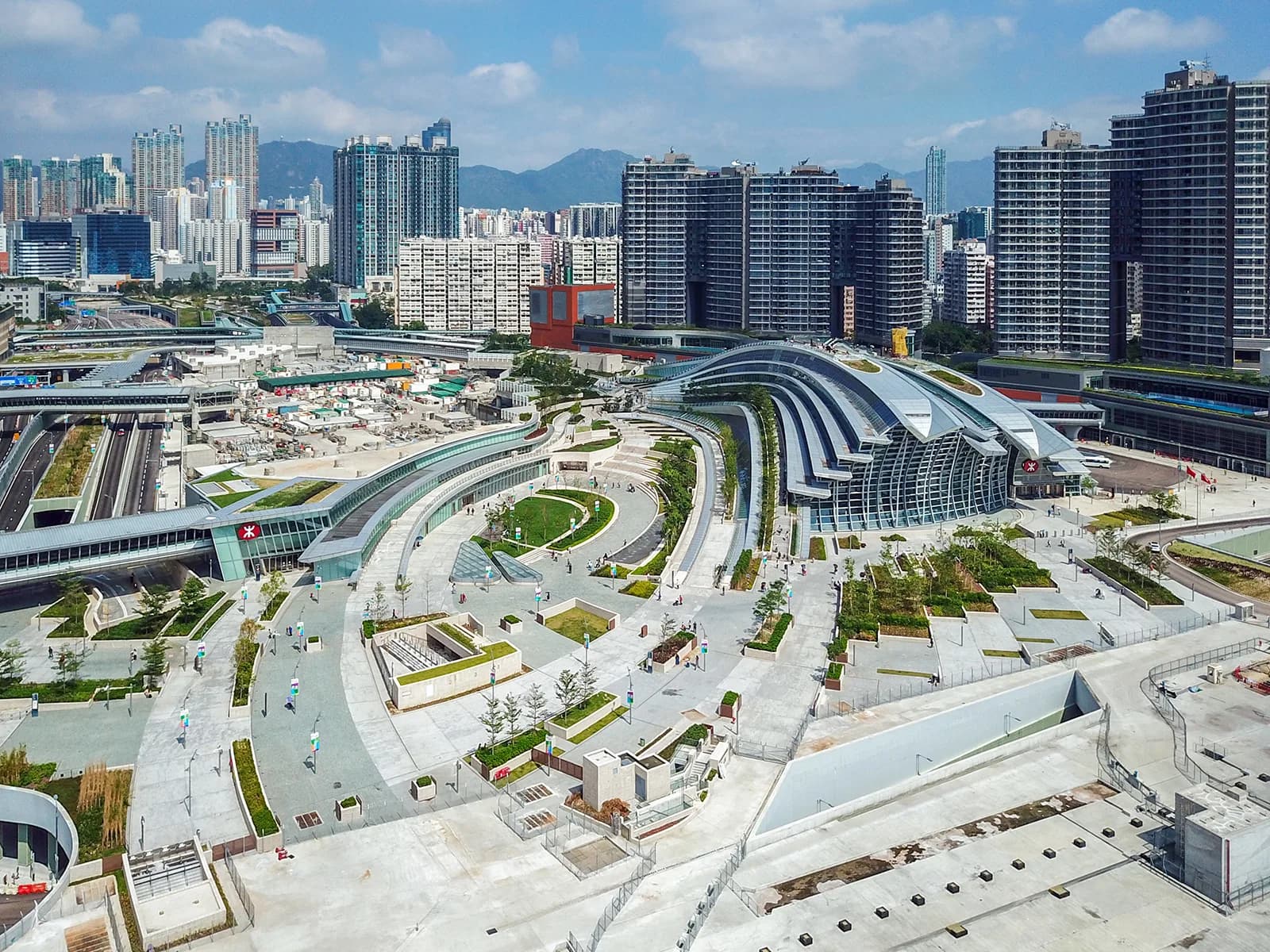
The 240-hour visa-free transit is the scheme Americans keep finding first, because the US is on it. Fifty-five nationalities qualify (Indonesia was the latest addition, on 12 June 2025), the stay is up to 10 days across 24 provincial-level regions, and it costs nothing. On 5 November 2025 the eligible ports expanded from 60 to 65 and, crucially for this post, Hong Kong West Kowloon station and the Hong Kong-Zhuhai-Macao Bridge joined the list, so the fast train into Futian is now a valid transit entry point.
The catch sits in the word transit. The rule requires arriving from one country or region and departing to a different one, with a confirmed onward ticket leaving within 240 hours. Hong Kong, Macau and Taiwan each count as separate regions, so Hong Kong to Shenzhen to Macau works, and so does New York to Shenzhen to Hong Kong. What does not work is the shape of almost every day trip: Hong Kong to Shenzhen and back to Hong Kong. Same origin, same destination, no transit, and border officers check the onward booking rather than taking your word for it.
So the honest framing for a US passport is this. If your itinerary already continues somewhere else, the 240-hour exemption is the best deal in Chinese immigration: free, ten days, and now reachable by a 14-minute train. If your itinerary is a Shenzhen lunch and a return to a Hong Kong hotel, stop trying to make transit fit and read the next section. On arrival you fill in an arrival card and receive a temporary entry sticker; hotels handle the required police registration automatically, and only travelers staying in private homes need to register themselves within 24 hours.
The 5-day port visa: Shenzhen's own visa on arrival
Shenzhen, as a Special Economic Zone, issues its own visa at the border, and this is what people mean when they search for a Hong Kong to Shenzhen visa on arrival. It exists, it works in 2026, and it is more constrained than the phrase suggests, so here are the constraints in descending order of how often they wreck someone's morning.
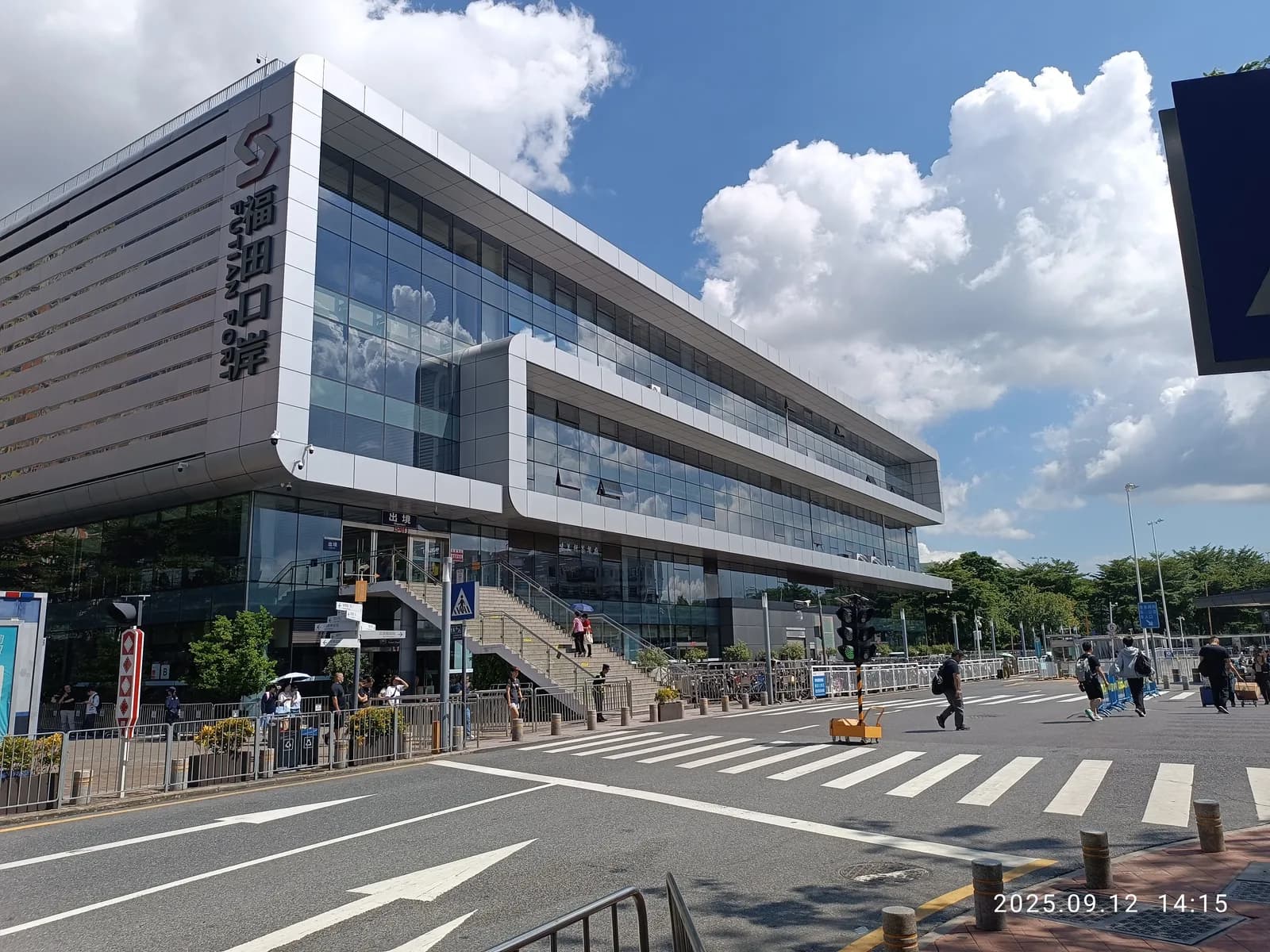
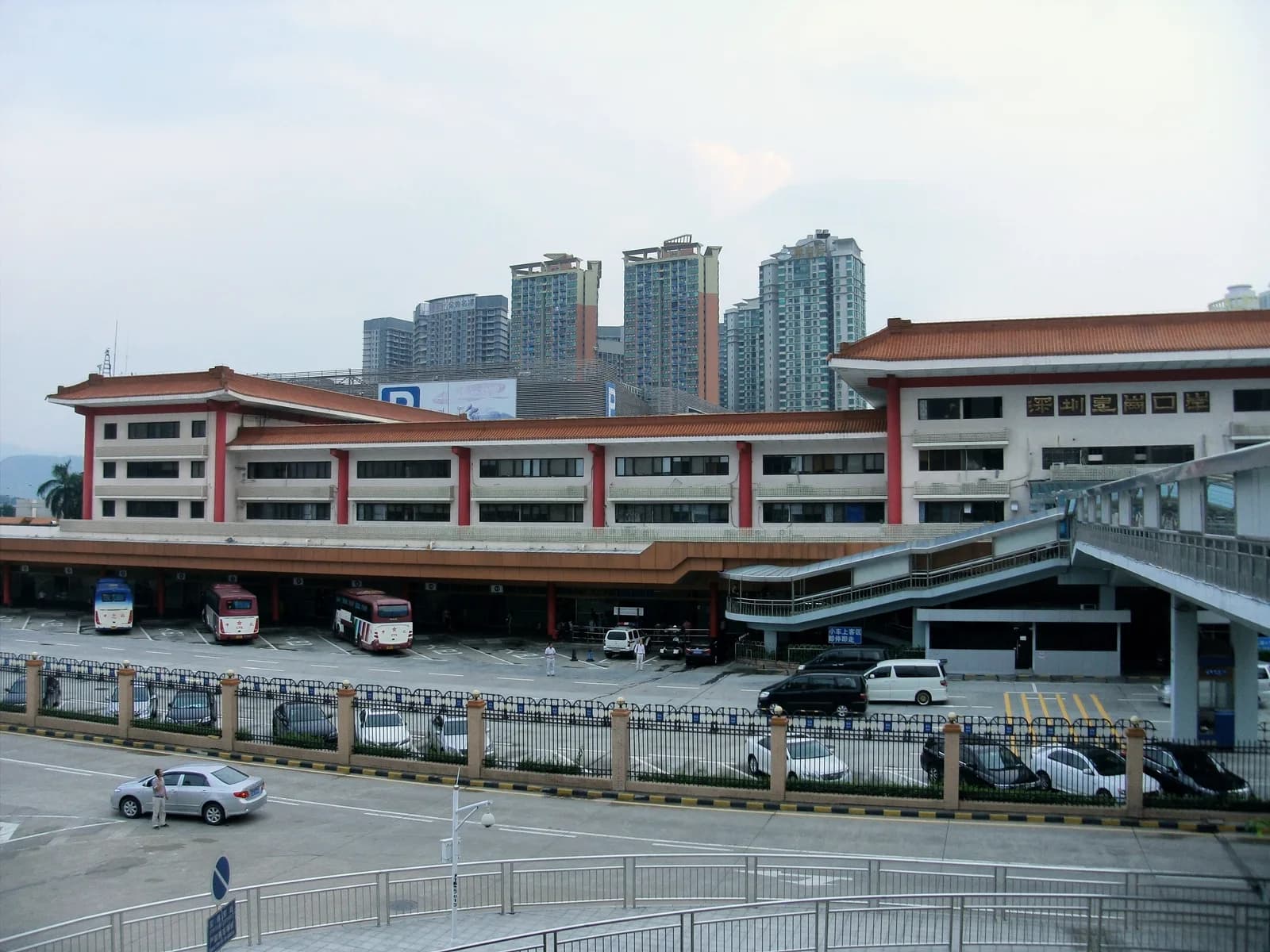
It is issued at three ports only: Luohu, Huanggang and Shekou. Not at Futian station, because high-speed rail passengers clear mainland immigration inside West Kowloon before boarding, where there is no visa desk. Not at Lok Ma Chau's Futian checkpoint, and in practice not at Shenzhen Bao'an airport either, despite what older posts claim. If you need this visa, you are taking the MTR to Lo Wu, a coach to Huanggang, or the ferry to Shekou.
Hours and quotas are less generous than the official numbers. The ports themselves run long days (Huanggang around the clock, Luohu roughly 06:30 to midnight), but recent traveler reports describe the visa offices keeping something closer to office hours: opening near 09:00, a lunch closure, last applications by mid-afternoon, and daily quotas that can be exhausted. Plan as the pessimists report it: arrive at 09:00, not at 16:00.
The price depends on your passport. Most eligible nationalities pay around CNY 130-168. US citizens pay a reciprocal fee that sources currently put anywhere between CNY 800 and 971, with recent firsthand reports clustering near the top, call it roughly US$130-140. Bring the fee in RMB cash; the desks are the one place in Shenzhen where the usual Alipay answer does not rescue you.
The visa itself is narrow. Five days, counted from midnight after entry. Single entry. Valid for Shenzhen's administrative area only, so no Guangzhou, no Dongguan, and it cannot be extended or converted. For a day trip or a weekend of Chaoshan beef hotpot and cheap dim sum it is exactly enough; for anything more ambitious it is the wrong tool.
Bring: a passport with three-plus months of validity and a blank page, a passport photo (self-service machines exist at the ports), the cash, and ideally a printed hotel booking or return ticket. The form is filled in on site and issuance takes roughly half an hour when the queue cooperates.
Eligibility is the murkiest part, and the reason the next section exists. Roughly the same Western nationalities covered by the transit scheme are reliably served; around 25 nationalities are excluded outright, and the exclusions are enforced at the desk, not published clearly anywhere official in English.
The Indian passport answer, properly
This is the question that lands in my inbox most, and most guides answer it with a shrug, so here is the position as of August 2026, stated plainly.
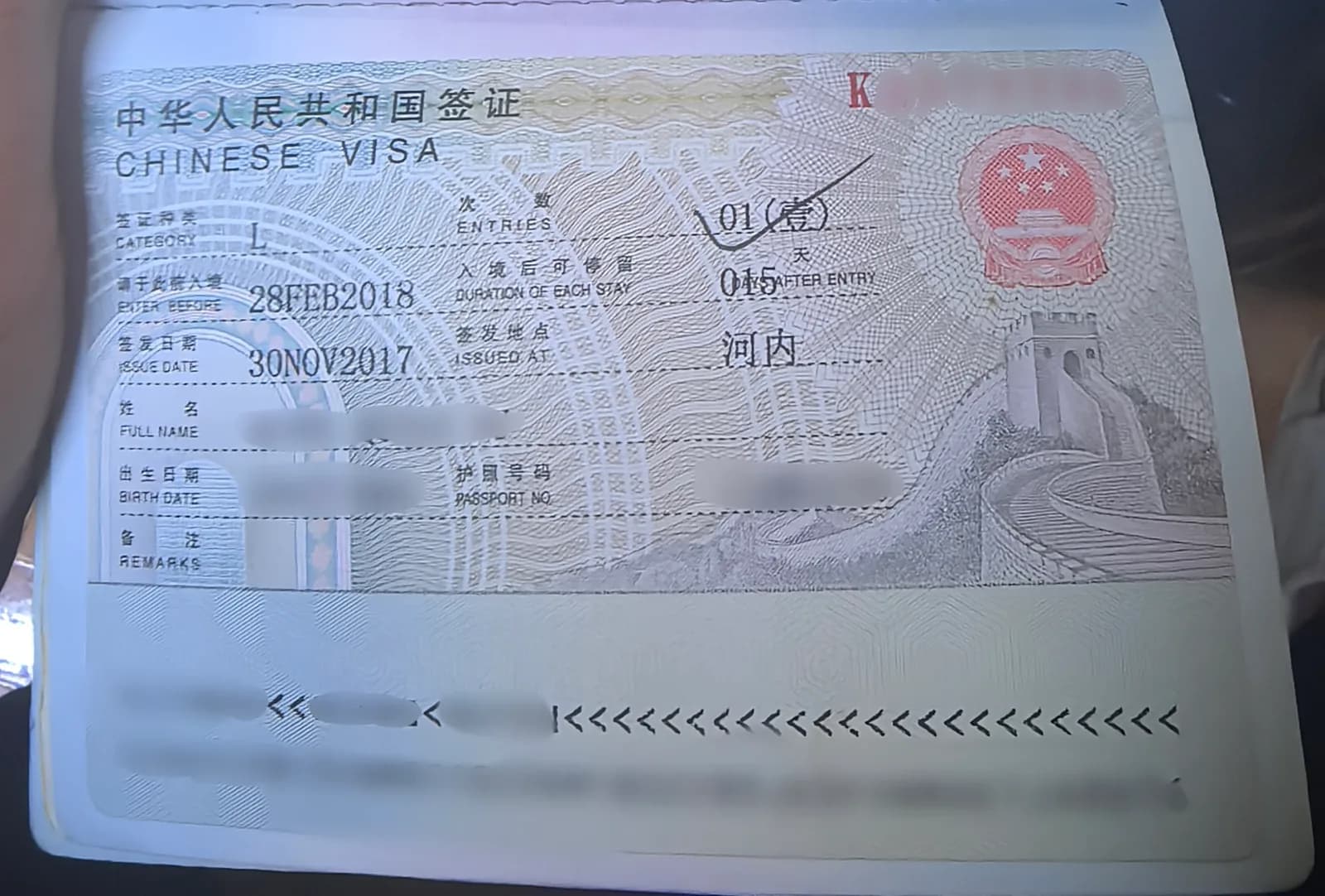
An Indian passport has no free route into Shenzhen as an individual traveler. India is not on the 30-day visa-free list. It is not among the 55 nationalities eligible for the 240-hour transit. And while one or two aggregator sites still list Indians as port-visa customers, the consistent recent reporting is the opposite: India sits on the excluded list of roughly 25 nationalities, and travelers describe being turned away from the Luohu desk. Do not build a trip around winning that argument at the border.
What works is one of two things. The first is a full China visa arranged before you leave home. This got materially easier recently: after the 2020 freeze thawed, China reopened tourist visas for Indian nationals in 2025 and moved the entire application online on 22 December 2025, covering tourist, business, student and work categories, with biometrics scheduled electronically. Apply in India before the trip. Do not plan to apply in Hong Kong instead: the visa centre in Wanchai runs online-first since April 2025 and prioritises Hong Kong residents, so a tourist passing through is the lowest rung of the queue, and four-plus working days of processing eats a short trip.
The second, and the one almost nobody mentions, is the 144-hour Pearl River Delta group-tour exemption. Any nationality with diplomatic relations with China qualifies, India included. The conditions: you join a tour organised by a travel agency legally registered in Hong Kong or Macau, you enter and exit with the group arrangement, and you stay within ten Pearl River Delta cities (Shenzhen, Guangzhou, Zhuhai, Foshan, Dongguan, Zhongshan, Jiangmen, Zhaoqing, Huizhou, Shantou) for up to six days. The temporary entry permit itself is free; you pay the agency for the tour. It is less spontaneous than a solo wander, but it is a legitimate, currently-operating route that turns "Indians cannot do a Shenzhen day trip" into "Indians book two days ahead." The same mechanism covers Philippine, Vietnamese and other excluded passports.
If you hold any excluded passport and Shenzhen is a one-off, weigh honestly whether the group route or the full visa better fits the trip: the group tour wins on speed and cost for a short hop, the full visa wins on freedom and on covering the rest of China.
Which crossing handles which visa
The crossings are not interchangeable, and matching your visa route to the right port is most of the game. The full speed-and-cost comparison lives in the border crossing guide, and the day-trip guide covers what to do once you are through; this table is only about what each border can legally do for you.
| Crossing | Visa-free (30-day list) | 240-hour transit | 5-day port visa |
|---|---|---|---|
| West Kowloon high-speed rail | Yes | Yes, since 5 Nov 2025 | No |
| Luohu (Lo Wu, MTR East Rail) | Yes | No, not a listed transit port | Yes, the main desk |
| Futian checkpoint (Lok Ma Chau) | Yes | No | No |
| Huanggang (coach, 24 hours) | Yes | No | Yes |
| Shekou ferry terminal | Yes | Yes | Yes |
| HK-Zhuhai-Macao Bridge | Yes | Yes, since 5 Nov 2025 | No (Zhuhai has its own scheme) |
Read it once and the logic falls out. Visa-free passports choose on convenience alone, and the 14-minute train usually wins. Transit users must use a listed port both directions, which in practice means the train or the ferry. Port-visa applicants are locked to Luohu, Huanggang or Shekou no matter how appealing the rail option looks.
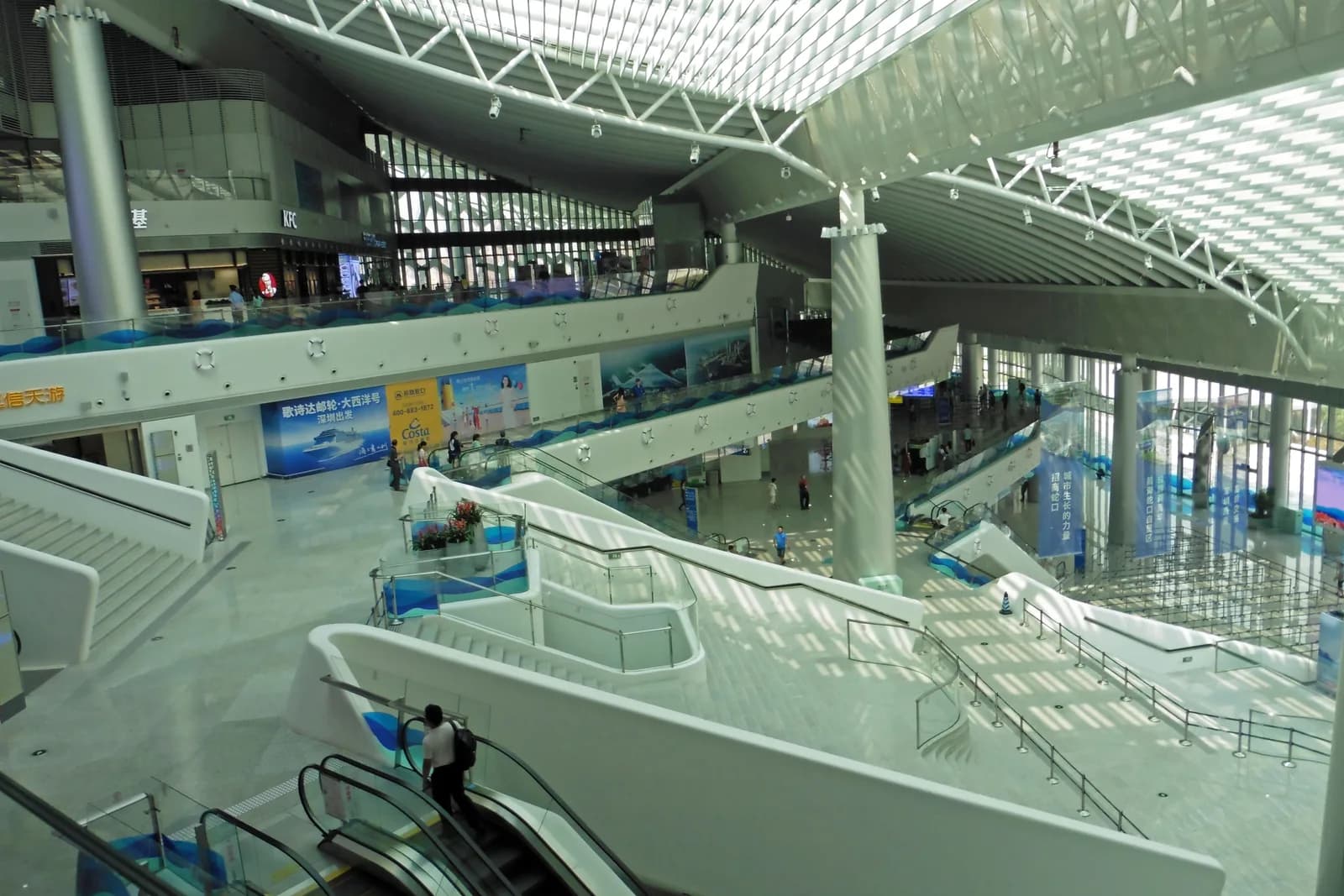
The hotel booking is a border document
One practical thread runs through every route above: immigration likes to see where you are sleeping. Transit applicants get asked for accommodation alongside the onward ticket, port-visa desks want a booking or return ticket, and even visa-free arrivals fill an arrival card with an address line. A refundable booking made the night before costs nothing and answers every version of the question, and if the day runs long you will be glad it is real.
Where to put it: Futian if you came by rail and want the station, the malls and the 14-minute retreat to West Kowloon within reach. Luohu if your route runs through the Lo Wu visa desk anyway and you would rather wake up next to Dongmen's food streets. Shekou if the ferry is your port and a calmer harbour evening suits you. The full district-by-district breakdown covers the other neighbourhoods and the specific hotels recent guests keep naming.
Getting the timing right
Visa desks and border queues share a rhythm. Weekday mid-mornings are calm; Friday evenings, weekends and Chinese public holidays are not, and Golden Week in early October is the single worst window of the year. If your route involves the Luohu visa desk, stack the odds: cross on a weekday, be at the desk for 09:00, and carry the cash counted out. If you are still shaping the wider trip, note that flying into Shenzhen Bao'an directly changes the visa maths entirely (the port visa is not reliably issued there, but the 30-day and 240-hour schemes both work), so it is worth comparing fares into Hong Kong against Shenzhen before you lock anything. The transport minutiae, apps and payment setup are covered in the day-trip guide, and none of it changed for this post.
What I would tell a friend at the border
- Check your passport against the current visa-free list the week you travel; the list changed in November 2025 and again in February 2026, and the scheme currently expires 31 December 2026.
- If you are American on a Hong Kong round trip, go straight to the port-visa section: the 240-hour transit will not cover you without a genuine third destination.
- If the 240-hour route does fit, book the onward ticket before you cross, because officers ask to see it, not hear about it.
- Port visa: Luohu, Huanggang or Shekou only, 09:00 arrival, RMB cash, passport photo, printed booking. Treat the quota reports as true.
- Indian, Philippine or otherwise excluded passport: apply online for the full visa from home (live since 22 December 2025) or book a Pearl River Delta group tour through a registered Hong Kong agency two days ahead.
- Do not plan to get any China visa at the Hong Kong visa centre as a tourist; it is online-first and residents come first.
- A refundable hotel booking answers every accommodation question at every desk; make one even for a day trip.
- Hotels register you with the police automatically; staying with a friend means registering yourself within 24 hours.
- The five-day port visa is Shenzhen-only. Crossing the city line to Guangzhou on it is an immigration violation, not a shortcut.
The pattern behind all of it: China wants short-stay visitors right now, and each scheme is generous inside its own lines and rigid at the edges. Match the mechanism to the actual shape of your trip and the border is a formality; force the wrong one and it is a ruined morning. If your passport walks through, stop reading about visas and go read what is worth crossing for and where to eat once you are across. And if the rules shift again after August 2026, which is the one prediction I will make with confidence, tell me and I will update this the same week.
Frequently asked
Do I need a visa to go from Hong Kong to Shenzhen?
It depends entirely on your passport. Holders of around 50 nationalities, including the UK, Canada, Australia, New Zealand, Japan, South Korea and most of the EU, enter mainland China visa-free for up to 30 days under a scheme that runs through 31 December 2026, so they cross with no paperwork at all. US citizens are not on that list and typically use the 5-day Shenzhen port visa instead. Indian citizens need either a full China visa arranged in advance or a registered group tour.
Can I get a visa on arrival from Hong Kong to Shenzhen?
Yes, if your nationality is eligible. The 5-day Shenzhen Special Economic Zone port visa is issued on the spot at Luohu, Huanggang and Shekou, and only at those three ports; the high-speed rail into Futian and Shenzhen Bao'an airport do not issue it. Most eligible nationalities pay around CNY 130-168, Americans pay a reciprocal fee most recently reported near CNY 950-970, and the visa covers Shenzhen only, single entry, no extensions.
Can I go from Hong Kong to Shenzhen without a visa?
Three groups can. Nationalities on China's 30-day visa-free list (about 50 countries as of August 2026) simply walk through any crossing. Nationals of 55 countries, including the US, can use the free 240-hour visa-free transit, but only if they continue on to a different country or region rather than returning to Hong Kong. And any nationality with diplomatic relations with China, including India, can enter visa-free for up to 144 hours on a group tour organised by a registered Hong Kong or Macau travel agency.
Do Indian passport holders need a visa for Shenzhen from Hong Kong?
Yes. India is not on the 30-day visa-free list, is not among the 55 nationalities eligible for the 240-hour transit exemption, and recent reports consistently describe Indian passports being refused the 5-day port visa at Luohu. The two working routes are a full China visa arranged before travel (China moved Indian applications to an online system on 22 December 2025) or the 144-hour Pearl River Delta group-tour exemption through a registered Hong Kong travel agency.
Can US citizens get the Shenzhen visa on arrival?
Yes. The US is not on China's 30-day visa-free list, so the 5-day port visa at Luohu, Huanggang or Shekou is the practical route for a Hong Kong round trip. Expect a reciprocal fee that recent sources put between roughly CNY 800 and 971, paid in RMB cash, against about CNY 130-168 for most other eligible nationalities. Arrive in the morning: recent travelers describe desks that open around 09:00, close for lunch, and run daily quotas.
Does the 240-hour visa-free transit work for a day trip to Shenzhen from Hong Kong?
No, and this is the single most common misreading of the rules. Transit requires arriving from one country or region and departing to a different one, and a Hong Kong to Shenzhen to Hong Kong round trip has the same origin and destination, so it does not qualify. Hong Kong, Macau and Taiwan each count as separate regions, which means Hong Kong to Shenzhen to Macau is valid. Border officers check the onward ticket.
What documents do I need to cross from Hong Kong into Shenzhen?
At minimum, a passport with at least three months of validity and a completed arrival card. For the 240-hour transit, add a confirmed onward ticket to a third country or region departing within 240 hours. For the 5-day port visa, add a passport photo (machines exist at the ports), RMB cash for the fee, and ideally a printed hotel booking or return ticket. Hotels handle the mandatory police registration; anyone in a private home must register within 24 hours.
More from the journal
Qianling Park, Guiyang: The Macaques, Hongfu Temple and How to Visit Without Losing Your Snacks
Emeishan Day Trip from Chengdu: What One Day on Mount Emei Really Buys You (and When to Stay the Night)
Hong Kong to Shenzhen Border Crossings: All Seven Doors Compared, and Which One Your Day Actually Needs