Things to Do in Filandia, Colombia: The Mirador, the Baskets and the Best Table in the Coffee Region
The best things to do in Filandia, Colombia: the mirador tower, bejuco basket workshops, Helena Adentro and the cafés, plus how many days to stay.
Most of the people who see Filandia this year will get about two hours there, the length of a photo stop on a coffee-region day tour, and the search results for what to actually do in the town are nearly as thin. That gap deserves fixing, because Filandia has quietly stacked up outside endorsements, from Time Out's most-underrated list to the UN's Best Tourism Villages, and recent traveler reports describe a town that rewards a slow day better than almost anywhere in Quindío. I haven't been to Filandia yet, and I don't pretend otherwise, so this is synthesis: the same recent-report research behind my Salento versus Filandia comparison, reorganized around one question. If you give Filandia a full day or two, what do you actually do with it? The honest answer involves a wooden tower, forest vines, howler monkeys, and more good food than a farming town this size has any business serving.
Start at the plaza, and take it slowly
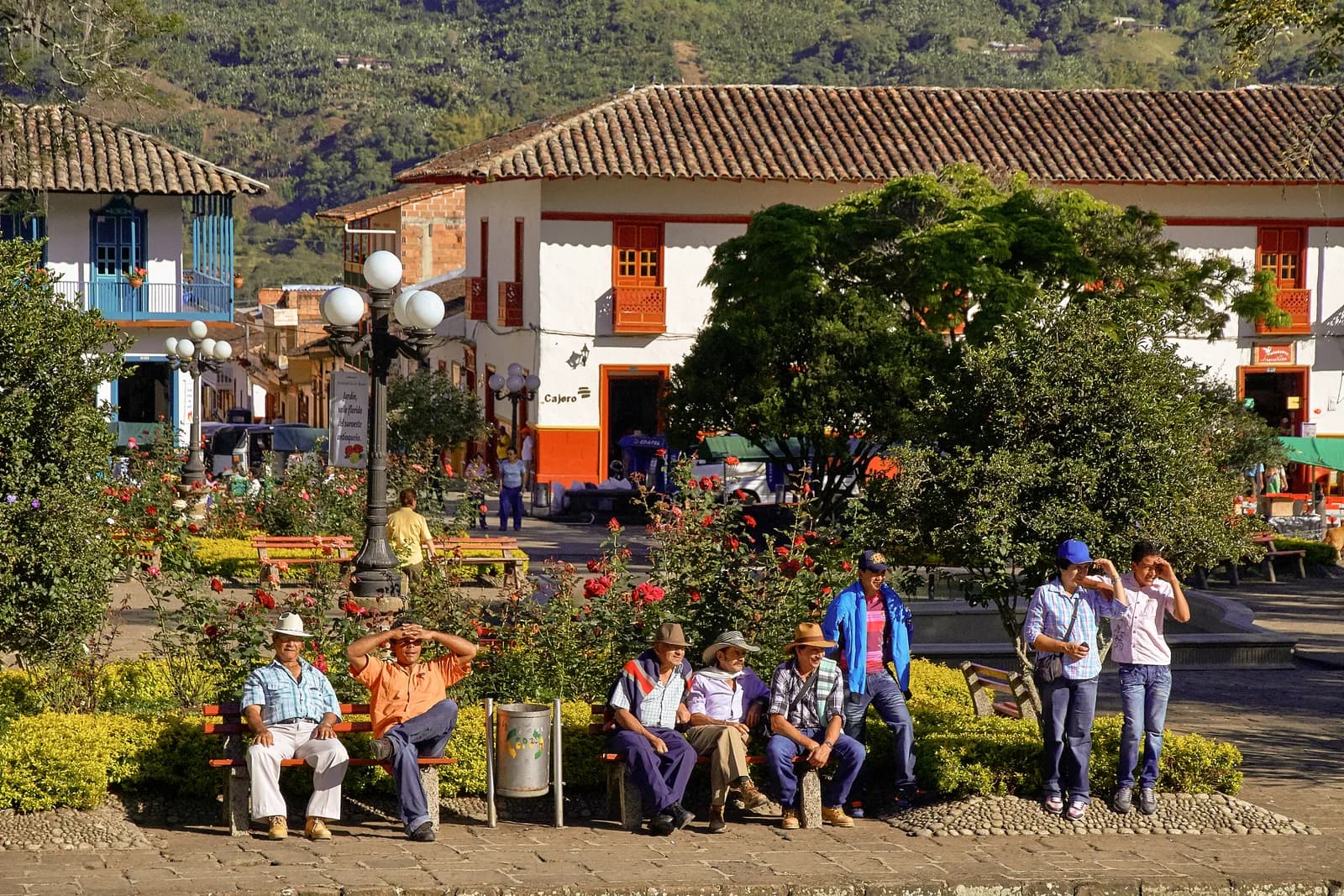
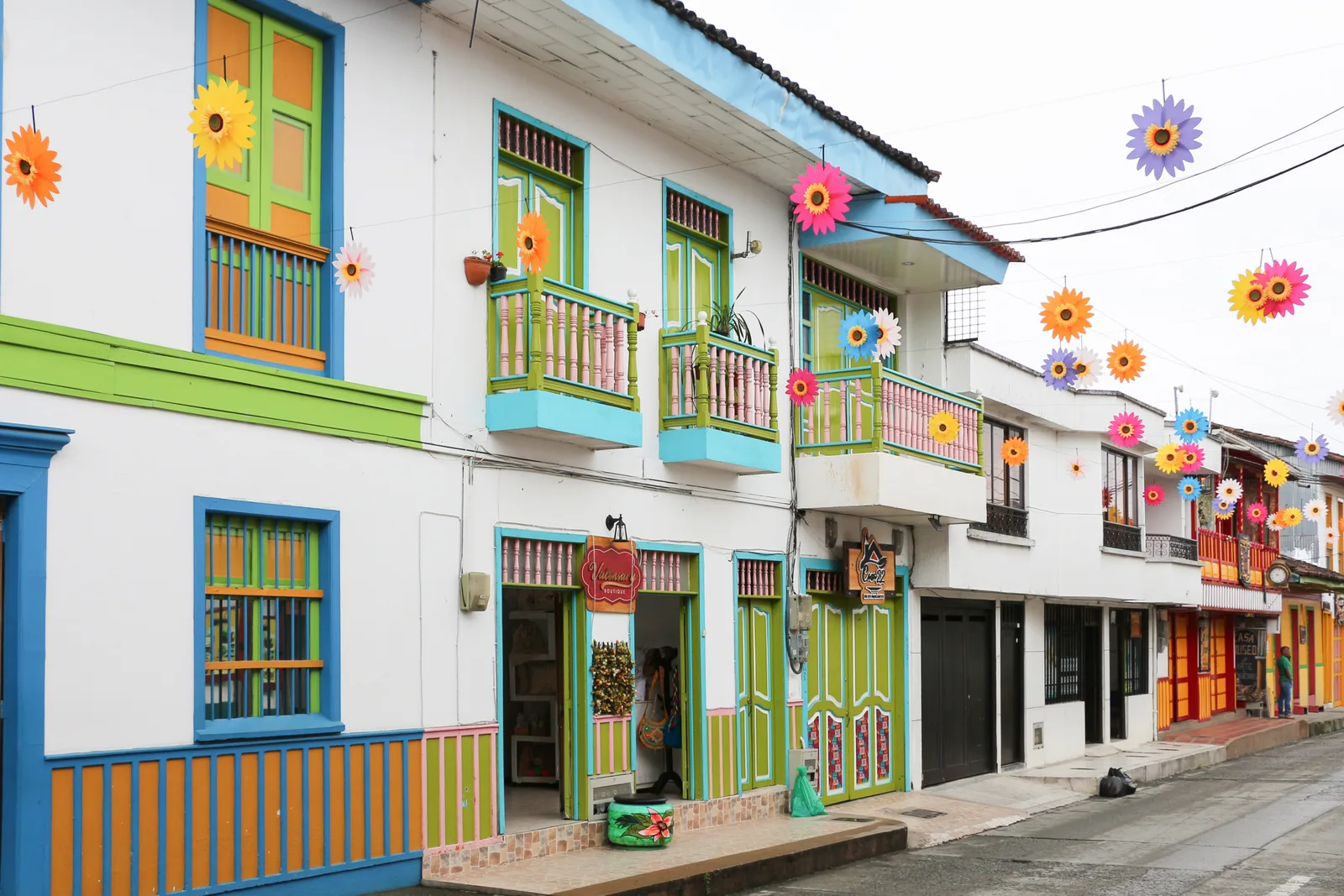
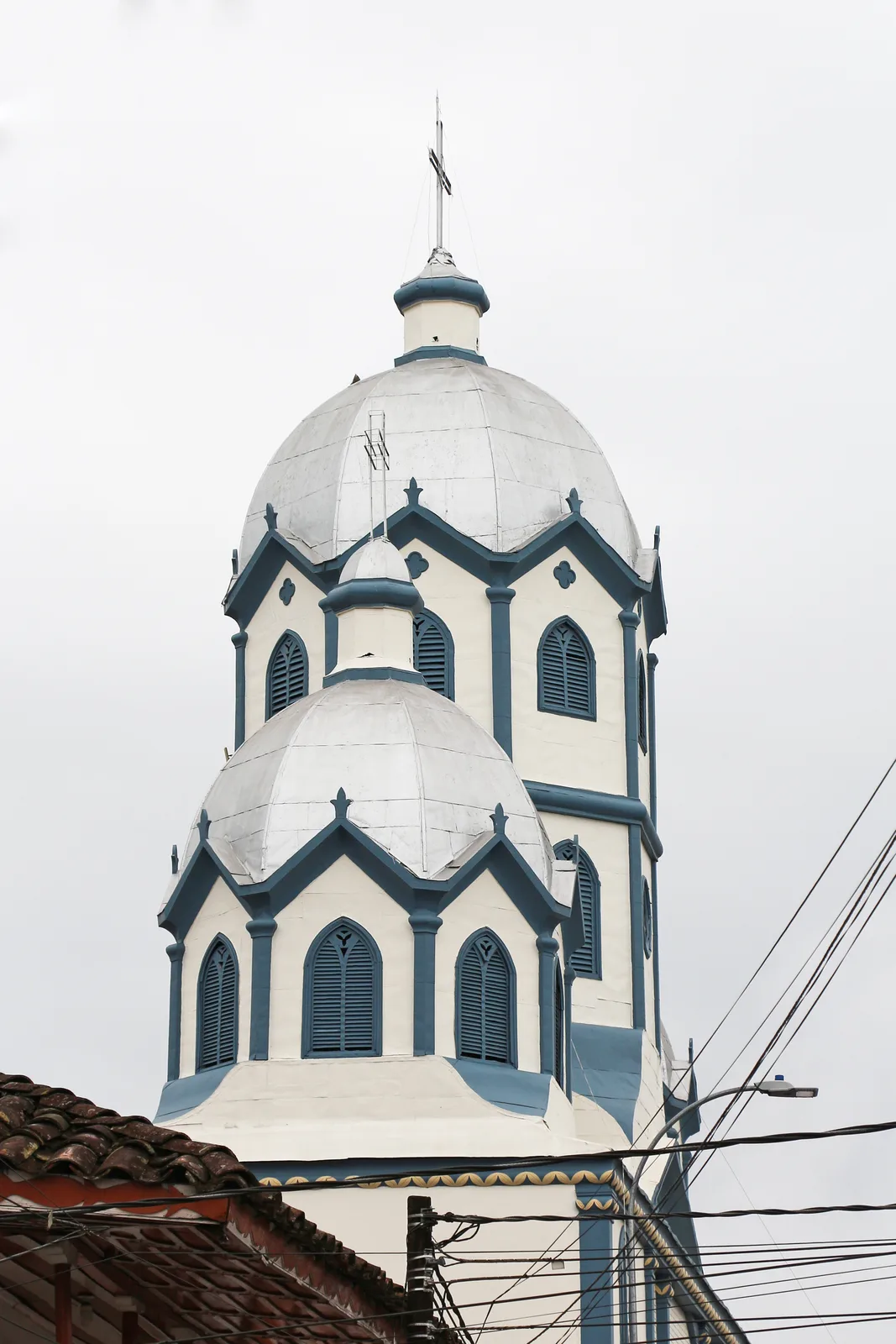
Filandia does not hand you an itinerary, which recent visitors consistently describe as the point. The town is a compact grid of painted blocks around Parque Bolívar, where the grey stone Iglesia de la Inmaculada Concepción faces a square ringed by cafés, and the weekend ritual is a bench, a tinto and an hour of watching the plaza work. Off the square runs the Calle del Tiempo Detenido, the "street where time stopped," a short cobbled stretch of balconies and flowerpots that locals will tell you helped inspire the town in Encanto. Whether Disney agrees is beside the point; it is the prettiest street in a town made of pretty streets.
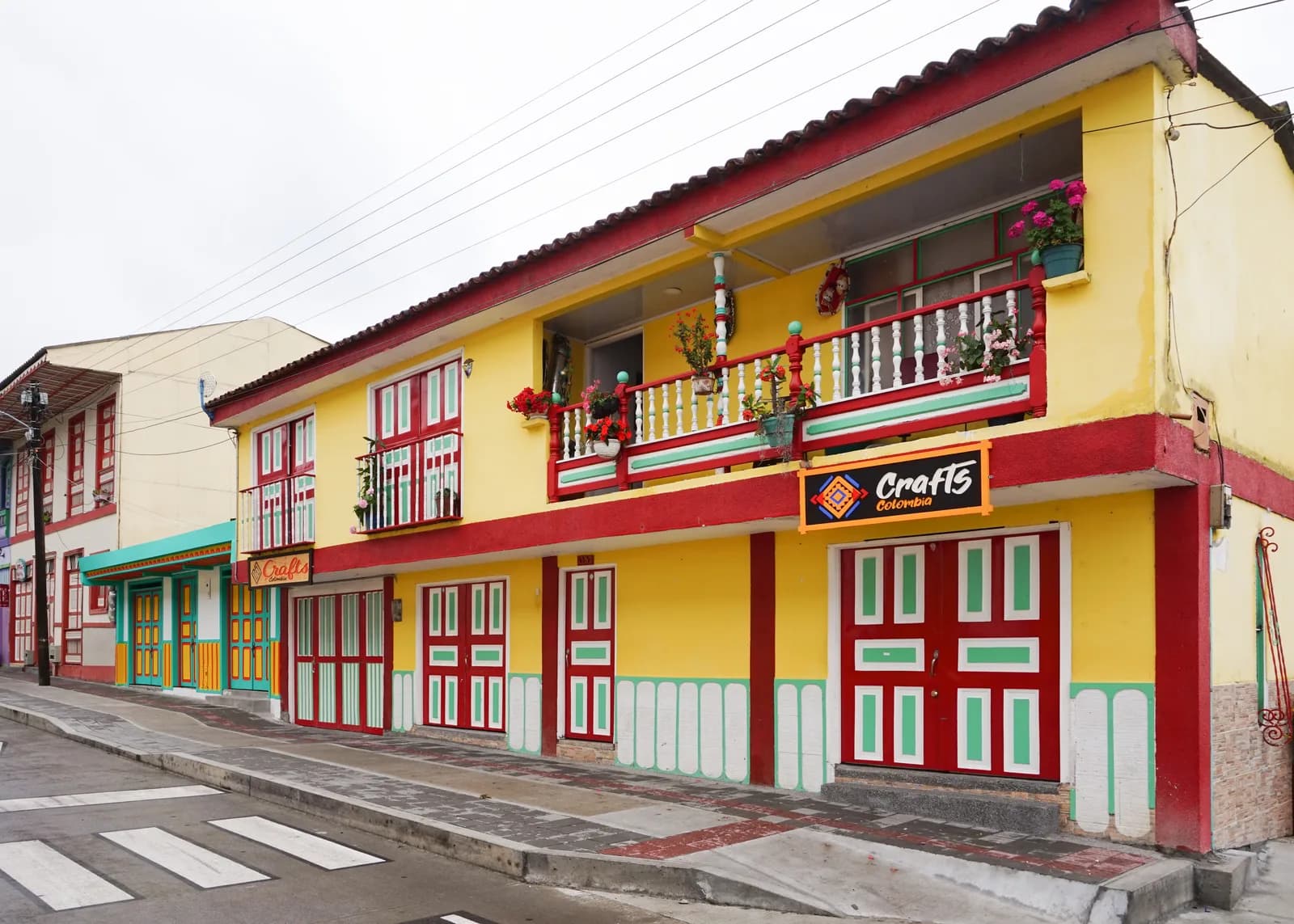
The comparison everyone makes is Salento, and the architecture invites it: same paisa doors in primary colors, same wooden balconies. The difference is the economy underneath. Salento's main street is a procession of trout restaurants and tour desks; Filandia's shops still sell hardware and horse tack alongside the craft stores, and the plaza belongs to residents on weekdays. Recent accounts are consistent that a morning of aimless walking here, no ticket required, is the first thing to do in Filandia, not the thing you do when you run out of activities.
Climb the Mirador Colina Iluminada on a clear morning
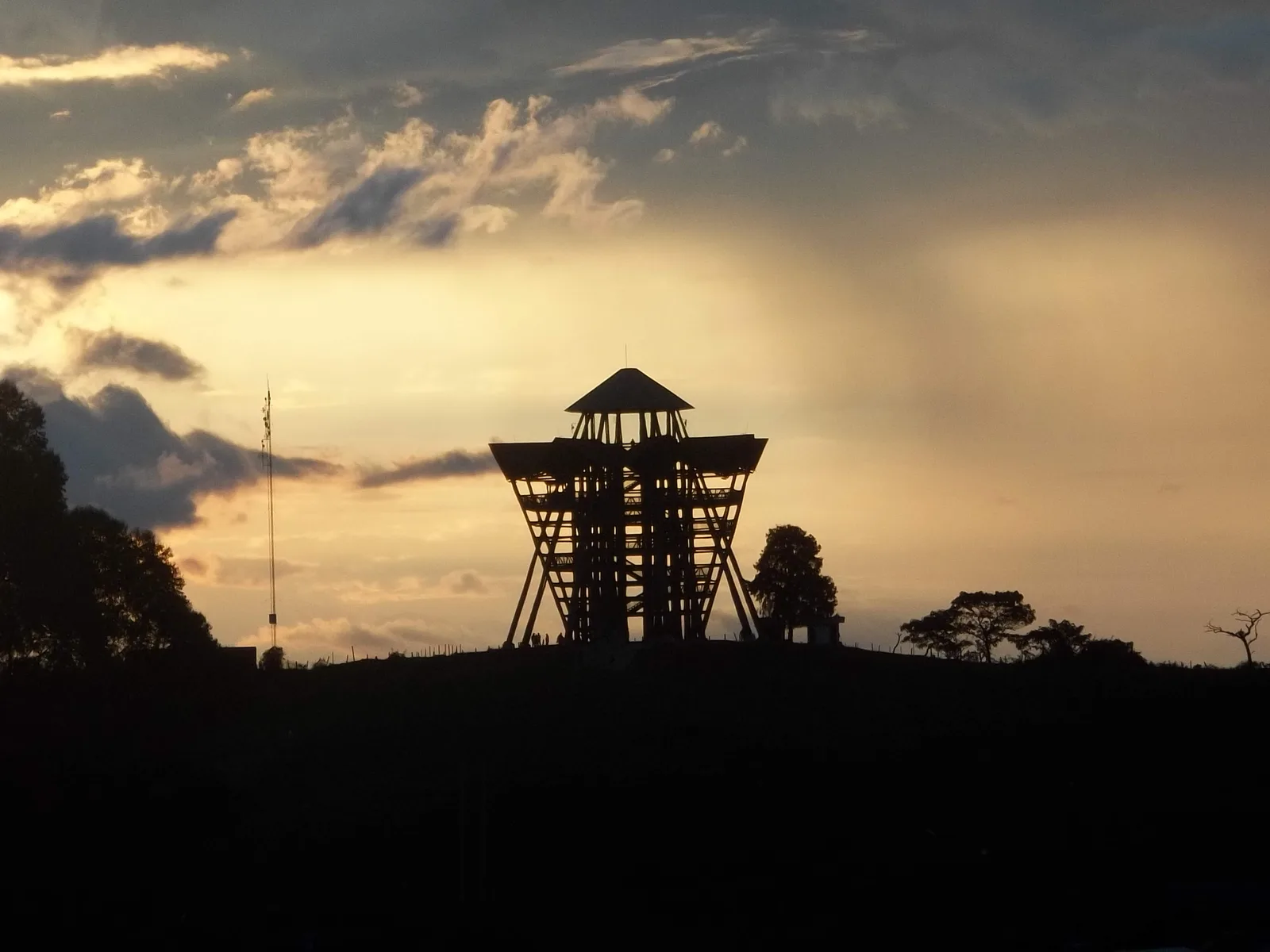
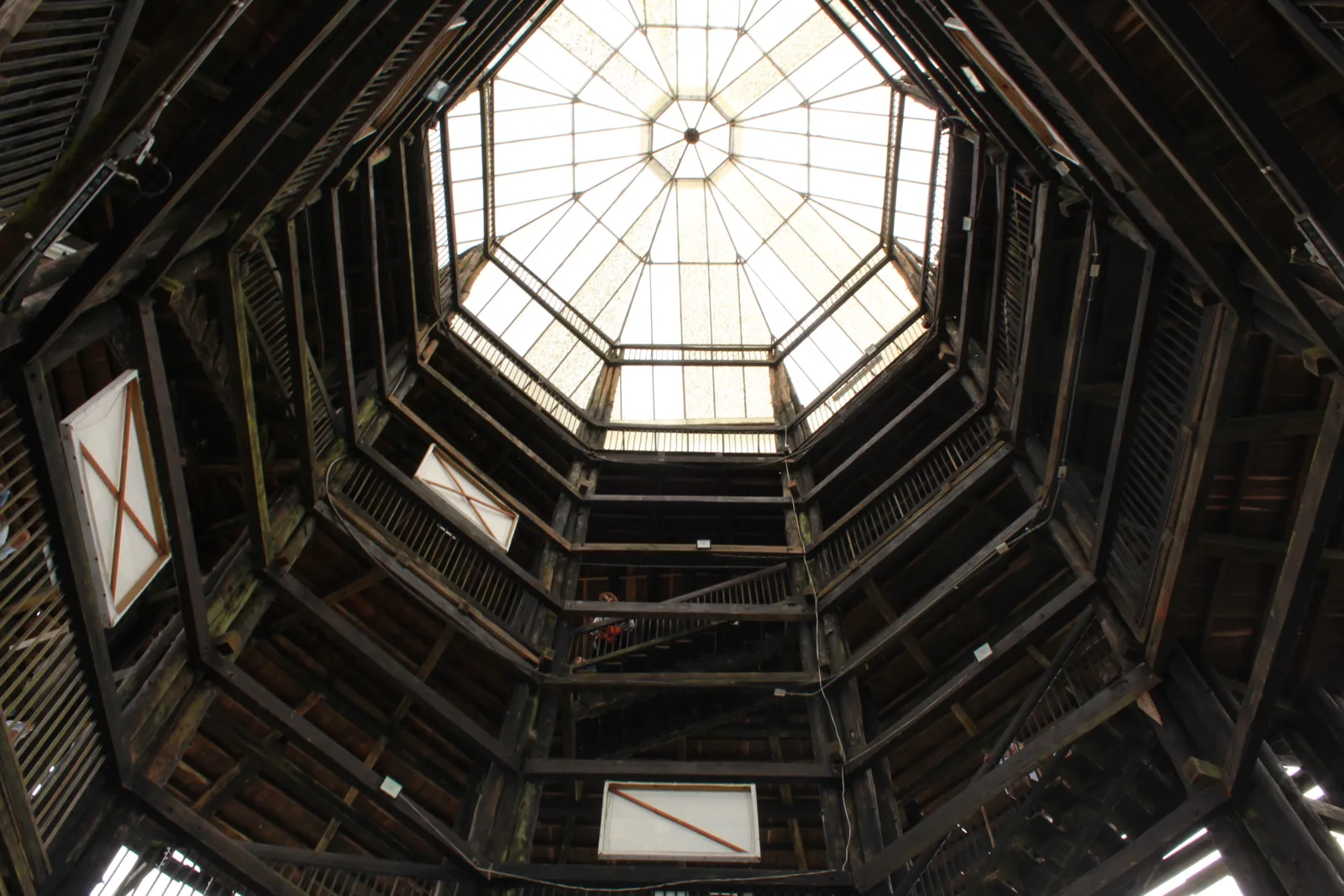
The town's one unmissable structure is the Mirador Colina Iluminada, the 27-meter wooden tower on the hill about fifteen minutes' walk above the plaza. The design is worth the climb on its own, an octagonal lattice of timber that spirals you upward to a 360-degree platform, and on a clear day the panorama runs across the whole Quindío valley system to the Cordillera. Entry is ticketed but modest, and the timing advice in recent reports is unanimous: go in the morning. The cloud builds most afternoons, and travelers who saved the tower for after lunch keep describing a view of the inside of a cloud.
One honest caveat from recent visitors: the hilltop around the tower has been developed hard for domestic tourism. The adjacent viewpoint patio now operates as Mirador Encanto, charging about 15,000 COP as of mid-2026, and at least one recent account describes the excavated hillside as a scar on the approach. The tower itself still earns its reputation. Treat the paid patio as optional, and the view as the reason you came.
Watch the bejuco weavers, or learn to weave yourself
Filandia's signature craft is bejuco basketry, weaving with forest vines, and it is the thing the town has that Salento genuinely does not. The tradition earned recognition as intangible cultural heritage, and the place to meet it properly is the Centro de Interpretación del Bejuco al Canasto near the plaza: part museum of traditional basketry, part garden of the plants the weavers use, part workshop-school training village kids to keep the craft alive. A visit cost about 5,000 COP in recent reports, and with a day's notice you can book a hands-on workshop, around 30,000 COP as of early 2025, and leave with a small basket you made badly and love anyway.
The looser version happens on the walk up to the mirador, where family workshops weave on their porches. Recent visitors report the artisans are welcoming if you simply ask, and more so with notice. None of this is on the tour platforms, which is rather the point; it is the one experience in the region you arrange by knocking. I will take a craft you can watch being made over any souvenir shelf, every time, so this would be my first booking in Filandia, before the restaurants.
Day trips: howler monkeys, coffee farms and the Cocora question
Three things worth booking
 Filandia's own
Barbas-Bremen howler monkey walk
A guided walk into the Andean forest reserve fifteen minutes from town, listening for red howler monkeys. Recent visitors paid around 110,000 COP; start at 6am for the best chance, and know that wild monkeys keep their own schedule.
Book this Fewer tourists
Coffee and panela finca visits
The farms around Filandia are smaller and far less visited than Salento's famous names, and several hostels run their own coffee and cacao walks. The trade for less polish is an actual conversation with the farmer.
Book this The regional headline
Cocora Valley day trip
The wax palms are doable from Filandia with an early start: hourly jeep to Salento, then the plaza jeeps to the trailhead, or a private driver. The valley clouds over most afternoons, so leave on the first connection.
Book thisThe day trip that belongs to Filandia is the Barbas-Bremen nature reserve, a stretch of Andean humid forest fifteen minutes from town by jeep, home to red howler monkeys whose roar carries for kilometers. A guide is required, the walk runs three to five hours depending on the trail, and recent visitors paid around 110,000 COP per person as of late 2025. The consistent advice is to start at 6am, when the forest is loudest, and to make peace in advance with the fact that wild monkeys owe you nothing. Even without a sighting, travelers describe the birdlife alone, over 300 species in the reserve, as worth the morning.
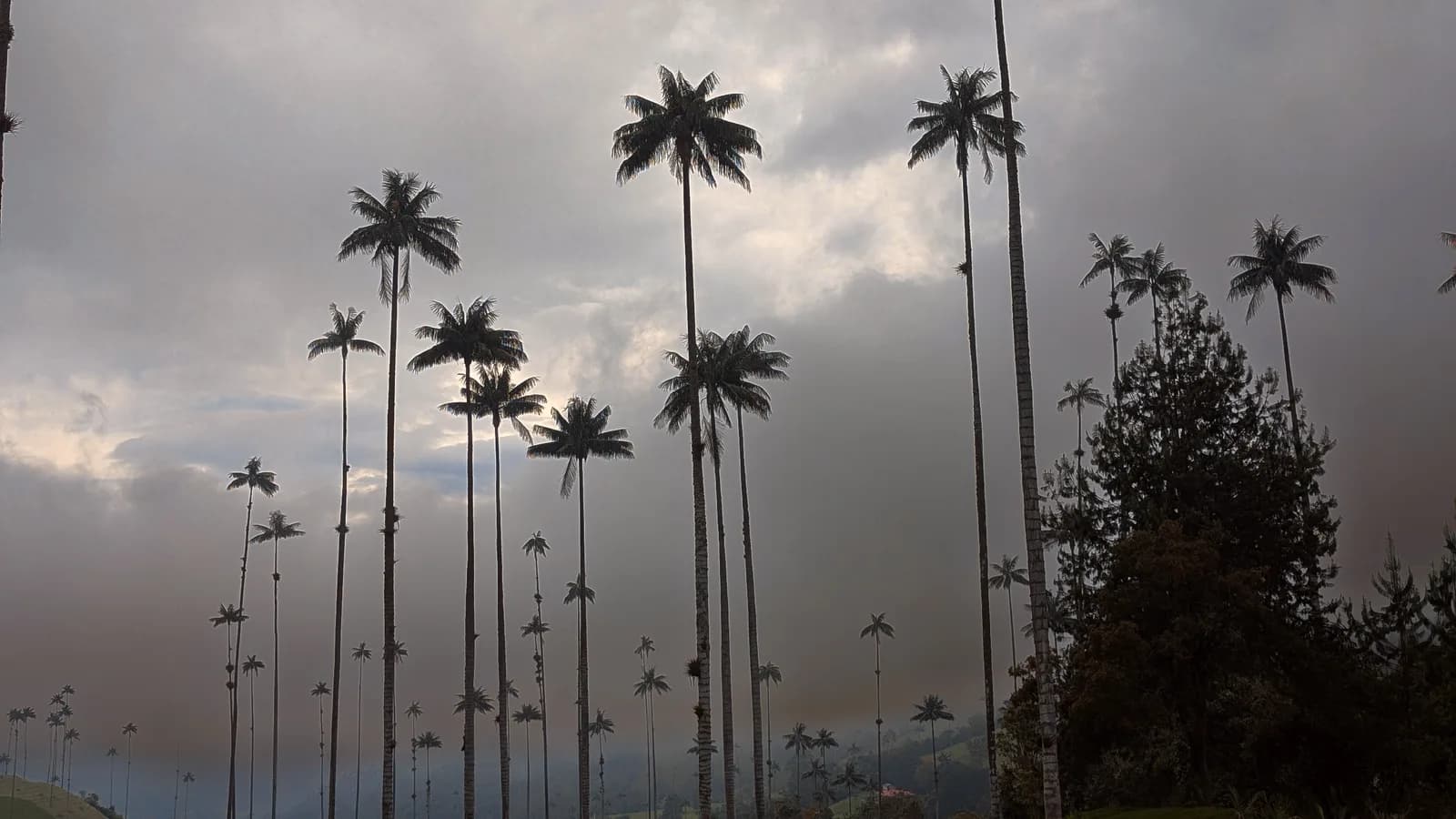
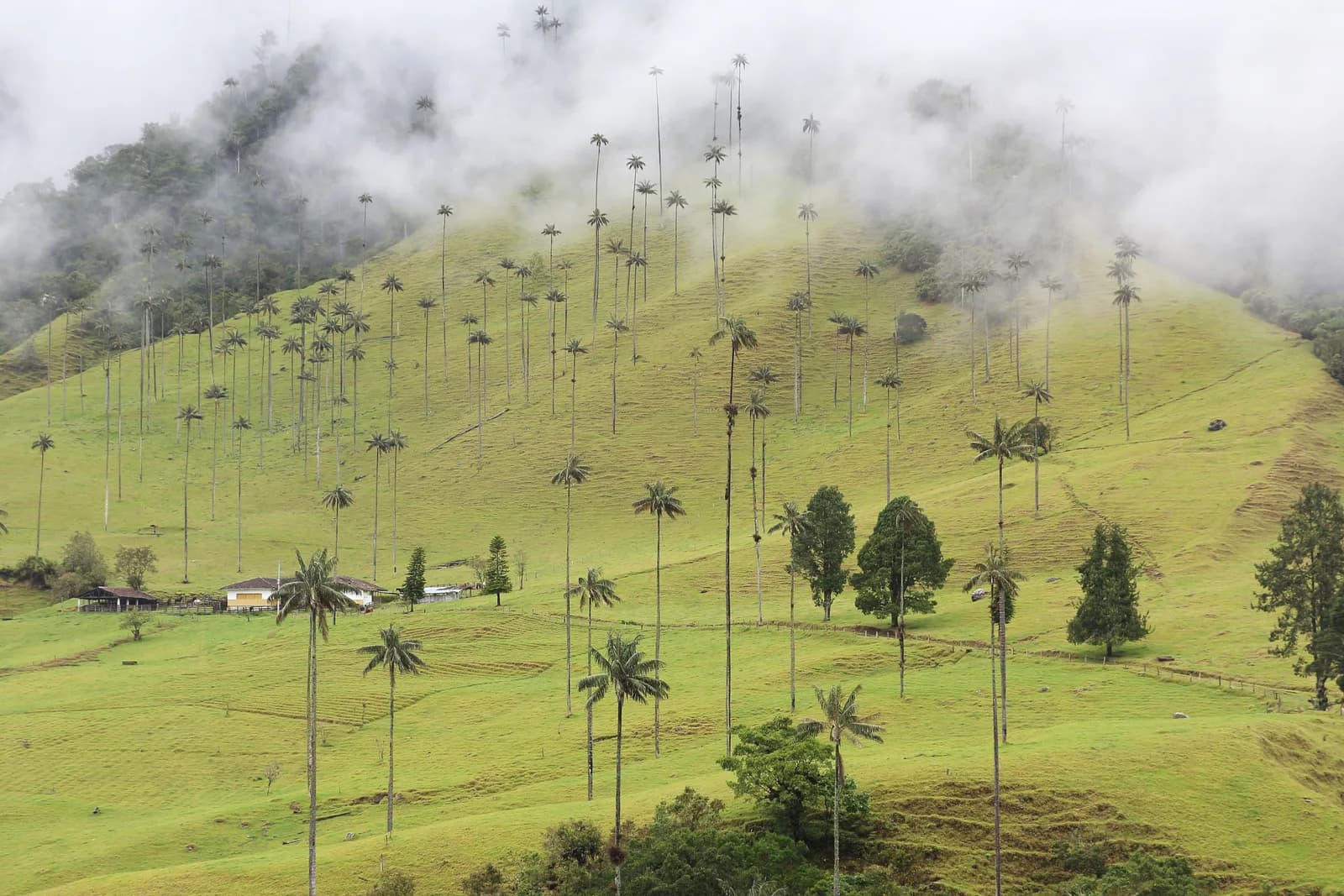
Then there is Cocora, and here I will repeat what the research keeps repeating. The wax palm valley sits about 50 minutes from Filandia against 25 to 30 from Salento, and the trailhead jeeps load in Salento's square. You can absolutely do it from here with an early alarm; you just should not pick Filandia as your base because of it. If Cocora is the headline of your trip, sleep Salento-side using my Salento stay guide and treat Filandia as the day trip instead, a 7,500 peso jeep experiment that recent visitors consistently call the best half day in the region. The full argument runs through the Salento versus Filandia comparison; the short version fits in a table.
| Based in Filandia | Based in Salento | |
|---|---|---|
| Cocora Valley | ~50 min, connect via Salento or private driver | 25-30 min, jeeps from the plaza from ~7am |
| Barbas-Bremen monkeys | 15 min by jeep | ~45 min away |
| Basket workshops | A short walk | A day trip |
| Evenings | Quiet, one great dinner table | Bars, tejo courts, busy plaza |
| Crowds and prices | Lower, thinner hotel inventory | Higher, ten times the rooms |
Where to eat, which is Filandia's real headline
Here is where Filandia stops being a pretty detour and becomes, for me, the point. The name in nearly every recent report is Helena Adentro, the farm-to-table kitchen in the pink house on the edge of the plaza grid, cooking Colombian ingredients from surrounding farms with real intent, and recently named the coffee region's best restaurant at Colombia's national restaurant awards. The founding story explains the reach: chef Alejandro Fajardo runs the kitchen and co-founder Jade Gosling, a New Zealander, built the bar and the room. As someone raised on Aotearoa's hospitality obsession, I find it entirely believable that the region's best cocktail list ended up in a Quindío farming town. The playbook from recent visitors: reserve before you arrive, ask for the patio, aim for sunset, and order the sharing plates. The marranitas, fried corn dough under slow-cooked pork, and the patacones come up constantly, and most people spend 40,000 to 60,000 COP a head.
The café scene is the quieter reason to linger. CoffeecolBean Roastery sources from small organic lots in the surrounding hills and roasts on site, and travelers who care about coffee call it a place to go deep on brews and filters rather than just refuel. MOCAFE, near the Calle del Tiempo Detenido, brews Chemex at the table with beans micro-roasted in the shop, and its cakes have their own following. In a region that exports its best beans and serves visitors the rest, a town where the cafés take their own cup seriously is worth noticing. Between coffees, La Casa del Pandebono handles the cheese-bread ritual, and La Cocina de la Loca keeps appearing in recent write-ups as the lunch move, a small room where the chef works the tables himself. It is a village-scale scene rather than a deep one, nothing like Medellín's proper food neighborhoods, and it does not need to be.
Where to stay, briefly
Three places to book in Filandia
 Polished pick
El Reloj Casa Hotel
Nine rooms five minutes from the plaza, with a breakfast recent guests rate as the best in town. The most finished option Filandia has, at roughly US$70-110 a night.
Check availability Best value
MuchoSur Filandia
Gardens beside a working coffee plantation, with a pool recent guests call the right reward after a hiking day. Rooms have been booking in the US$35-60 range.
Check availability The glamping dome
Ecohotel Monte Tierra
White domes above the green with a sauna and hot tub, holding near-perfect value scores on Booking. The pick if the point of the countryside is waking up inside the view.
Check availabilityThe full zone-by-zone breakdown lives in my where to stay in Filandia guide; here is the compressed version for planning purposes. Stay in the plaza blocks if this is a first carless visit or dinner at Helena Adentro anchors the plan, with El Reloj Casa Hotel as the polished pick and Bidea Hostel for budget; ask for a room off the street, because the old wooden buildings carry every sound. Stay in the walking-distance countryside if coffee-farm views outrank nightlife: MuchoSur and Ecohotel Monte Tierra both sit within a short taxi of town, and both undercut their Salento equivalents. Stay in the farm country proper only if disconnection is the goal, with Tukawa's rural hostel as the recurring name. Book earlier than feels necessary: under 30 hotels is not an inventory that absorbs spontaneity, especially around Colombian long weekends.
Getting there and when to go
Fly into Armenia or Pereira; Filandia sits between them, about 45 minutes from Armenia's terminal with buses roughly every 20 minutes, and around an hour from Pereira with hourly departures. It is worth comparing fares into both airports, because on any given date one is meaningfully cheaper from Bogotá or Medellín. There is no useful direct bus from Medellín; the overland route connects through Pereira, and most itineraries slot the coffee region between Medellín and the coast, where Cartagena picks up the thread.
From Salento, Willys jeeps link the two plazas roughly hourly until about 7pm, taking 35 minutes for 7,500 to 9,000 COP by recent reports. Each jeep seats about eight, and on weekends the tickets sell through, so buy your return seat when you arrive rather than when you want to leave. A taxi between the towns runs around 60,000 COP when the timetable fails you.
On timing, the calendar matters more than the climate. Weather is standard cloud forest, possible afternoon rain in any month with drier stretches roughly December to February and July to August. The bigger swing is the Colombian week: weekdays, recent visitors describe having the mirador and cafés nearly to themselves; weekends bring the domestic crowd the town actually serves; and puente long weekends fill every room in that thin inventory. For the quiet version of Filandia, aim Tuesday to Thursday, and climb the tower before the cloud does.
How long does Filandia deserve?
Two nights. That is the consistent verdict across recent reports, and the math backs it. Day one covers the town at the pace it asks for: mirador in the morning, basket workshops on the walk down, a café afternoon, Helena Adentro at sunset. Day two takes the Barbas-Bremen forest at dawn or a coffee finca, with a second crack at the plaza cafés. A third night earns its keep only if you insist on doing Cocora from here. Day-trippers on the two-hour tour stop see the street and the tower and miss the entire argument, which is what the town feels like once the tour buses leave.
| If you have | Do this |
|---|---|
| 2 hours (tour stop) | Calle del Tiempo Detenido, the plaza, one fast tinto |
| 1 full day | Mirador early, basket workshops, café afternoon, Helena Adentro at sunset |
| 2 nights | All of the above, plus Barbas-Bremen at dawn or a coffee finca |
| 3 nights | Add the Cocora day trip with a first-jeep start |
Recommendations
- Climb the mirador before 10am; the afternoon cloud is the most repeated regret in recent reports.
- Reserve Helena Adentro before you arrive in town, ask for the patio, and time it for sunset.
- Book the bejuco workshop at the Centro de Interpretación a day ahead rather than hoping to walk in.
- Start the Barbas-Bremen walk at 6am and treat a monkey sighting as a bonus, not a promise.
- Do Cocora from Salento even if you sleep in Filandia, and take the first connection of the morning.
- Buy your return jeep seat to Salento when you arrive; eight seats an hour disappears fast on weekends.
- Come Tuesday to Thursday for the quiet version of the town, or Saturday for the plaza at full volume.
- Carry cash; the jeeps, the plaza cafés and the family workshops are not a card economy.
- Skip the paid Mirador Encanto patio if the 15,000 COP grates; the tower next to it is the reason you climbed.
- Book rooms earlier than anywhere else on your Colombia route; the whole town holds fewer hotels than one Salento block.
I have not been to Filandia yet, so this is the day I would build from everything recent visitors keep saying, and they keep saying the same things: morning tower, vines and baskets, monkeys at dawn, one very good pink house at sunset. If you have been recently and something here has moved, prices, closures, a new table worth knowing about, tell me and I will update this. And if you are still deciding which coffee town gets your nights, the comparison post settles it honestly.
Frequently asked
What is Filandia, Colombia known for?
Three things keep coming up in recent traveler reports: the Mirador Colina Iluminada viewpoint tower above town, a bejuco basket-weaving tradition kept alive at the Centro de Interpretación del Bejuco al Canasto, and a food scene far better than a town this size should have, led by Helena Adentro. It is also the quieter, cheaper sibling of Salento, with the same painted-balcony architecture and a fraction of the crowds.
How much does the Filandia mirador cost?
The Mirador Colina Iluminada tower charges a small entry fee, and the adjacent Mirador Encanto viewpoint charges about 15,000 COP as of mid-2026. Go on a clear morning rather than the afternoon: the valley clouds over most days after lunch, and the 360-degree panorama is the whole point of the climb.
Can you visit Valle de Cocora from Filandia?
Yes, but it takes planning. Filandia sits about 50 minutes from the valley against Salento's 25 to 30, and the trailhead jeeps leave from Salento's plaza, so a Filandia start means connecting through Salento or hiring a private driver, with an early alarm to beat the afternoon cloud. If the wax palms are the headline of your trip, base in Salento and visit Filandia for a day instead.
Where should you eat in Filandia?
Helena Adentro is the name in nearly every recent report, a farm-to-table Colombian kitchen co-founded by a New Zealander, and reserving ahead for a sunset patio table is standard advice. Around it, MOCAFE and CoffeecolBean Roastery anchor a small but serious café scene, La Casa del Pandebono covers the cheese-bread ritual, and La Cocina de la Loca keeps coming up for lunch.
How many days do you need in Filandia?
Two nights is the sweet spot. One full day covers the town itself: the mirador, the basket workshops, the cafés and a long dinner. A second day fits a coffee finca or the Barbas-Bremen howler monkey walk. Add a third night only if you plan to day-trip to Cocora Valley from here, which works but needs an early start.
How do you get to Filandia?
Fly into Armenia or Pereira, both about an hour away, with buses running from each city's terminal through the day. From Salento, Willys jeeps connect the two plazas roughly hourly until about 7pm, taking 35 minutes and costing 7,500 to 9,000 COP; seats are limited to about eight per jeep, so buy your ticket early on busy days. There is no useful direct bus from Medellín; connect through Pereira or Armenia.