Cocora Valley Hike Guide: The Loop, the Jeeps from Salento, What It Costs and When to Start
Cocora Valley hike, planned properly: 2026 jeep fares from Salento, every gate fee in COP, loop distance and direction, mud, the no-hike option and a timeline.
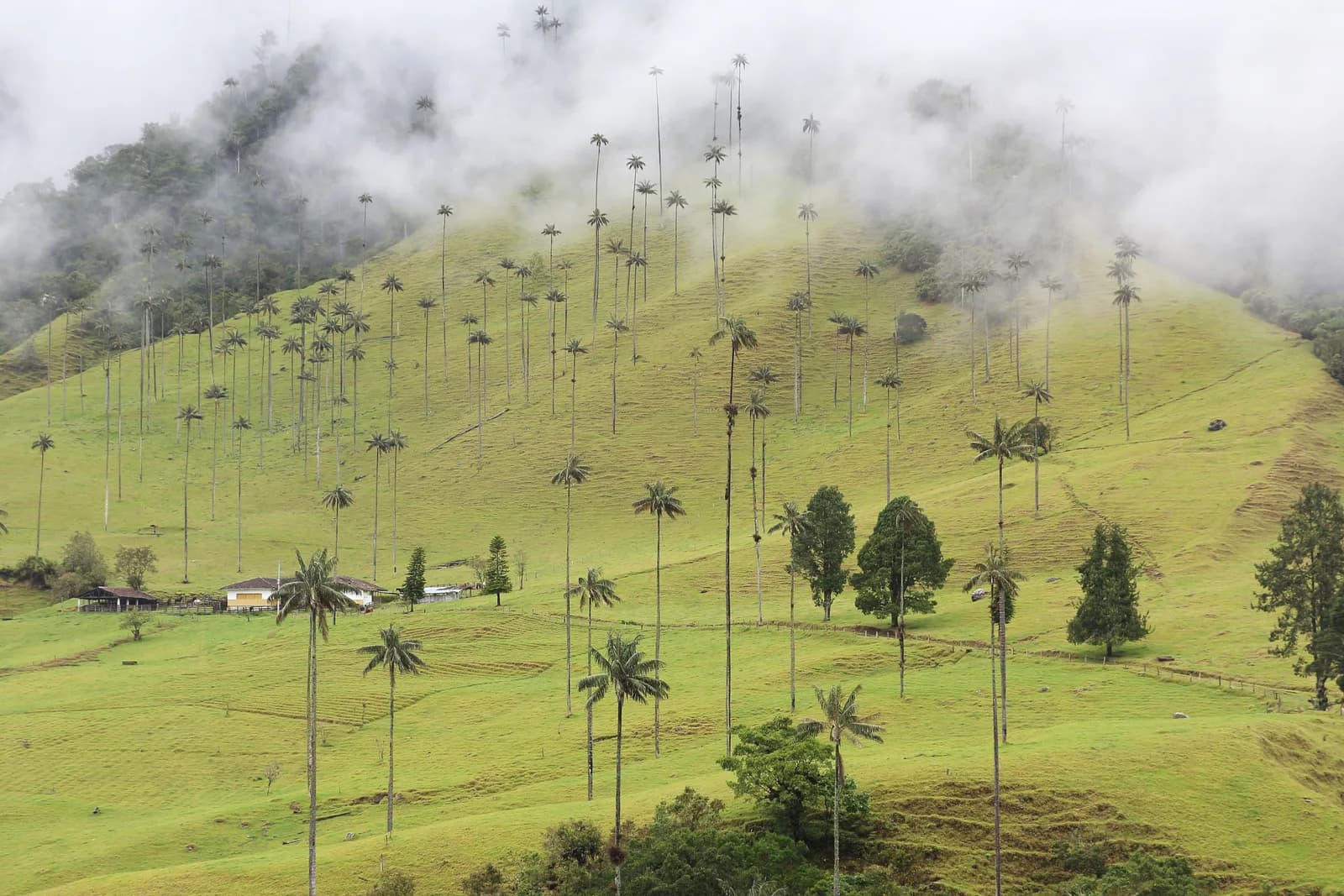
The Cocora Valley is the reason most people route through Salento at all, and I gave it a few paragraphs in my Salento things-to-do post. This is the long version, because the short one left questions on the table and because the numbers have moved. I have not walked the loop myself, so this is built the way the rest of my Salento series is: from a stack of dated traveler reports, most from 2025 and 2026, cross-checked where they disagree. On Cocora they disagree a lot. The jeep fare has crept up, the gate fees have roughly tripled as the private landowners along the trail added checkpoints, and the direction-of-travel argument has quietly flipped in the newer accounts. Here is all of it: the Willys from the plaza, every gate and what it charges, the three ways to see the palms, the loop leg by leg, and a timeline that gets you back on a jeep before the cloud and the queue.
The Willys jeeps from Salento's plaza
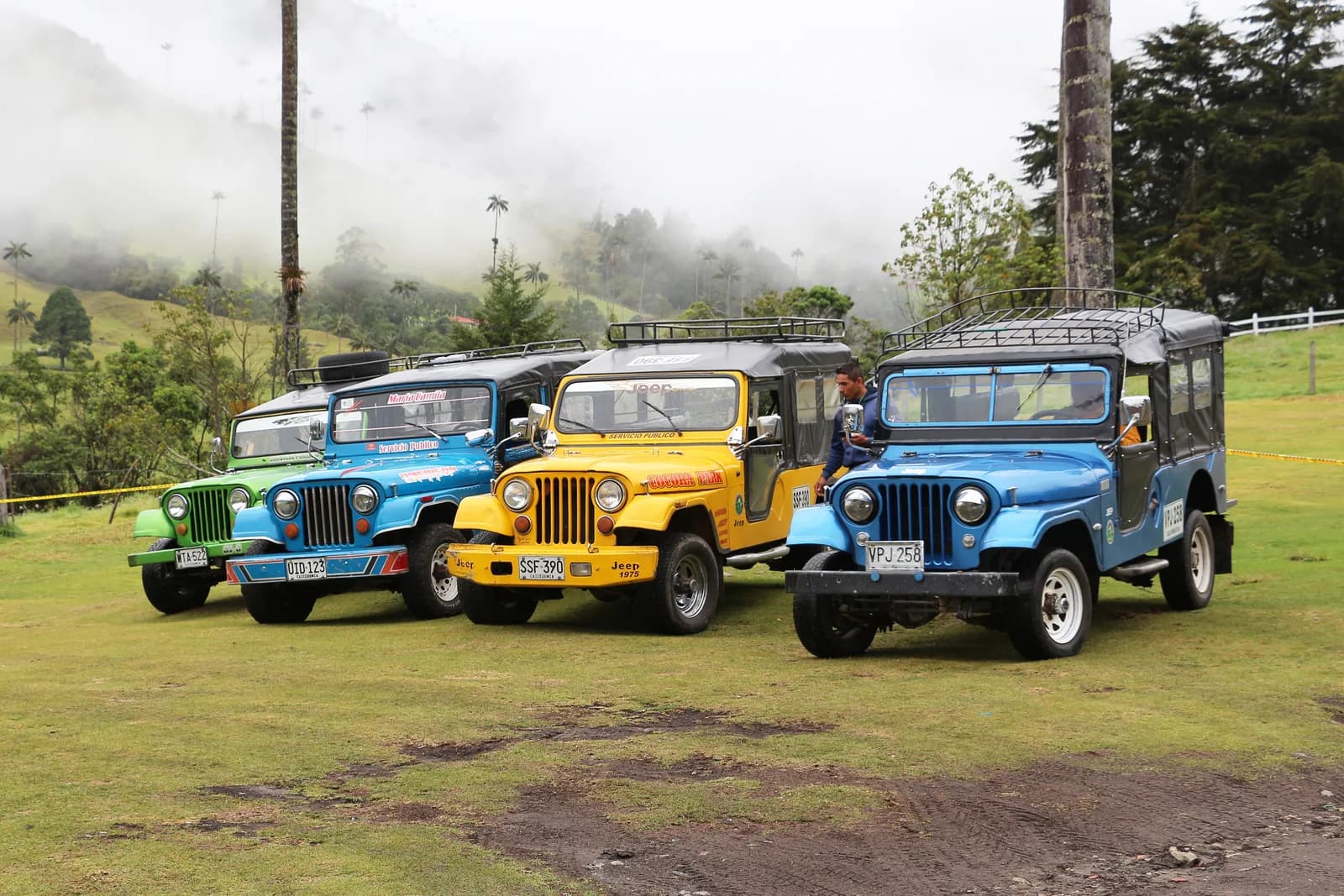
Everything starts at the white ticket booth on the Plaza de Bolívar, where the shared Willys jeeps line up from around 6:30am. Recent reports put the fare at roughly 5,000 to 7,000 COP each way, and a May 2026 account paid 12,000 COP for the round trip, which matches the 10,000 to 12,000 range that keeps coming up; anyone still quoting 3,600 COP a seat is working from a 2023 guide. The ride takes 25 to 30 minutes, and the jeeps leave when full rather than to a timetable, so the early ones fill fast and the 9am wave is the busiest of the day.
Buy the return leg with the outbound and keep the ticket. The last jeep back from the valley leaves somewhere between 5:30pm and 6:30pm depending on demand and season, and the reports that mention missing it describe an expensive scramble. A taxi runs 25,000 to 35,000 COP each way if the jeeps are mobbed, which on a Colombian long weekend is worth knowing.
What it costs in 2026: the gates
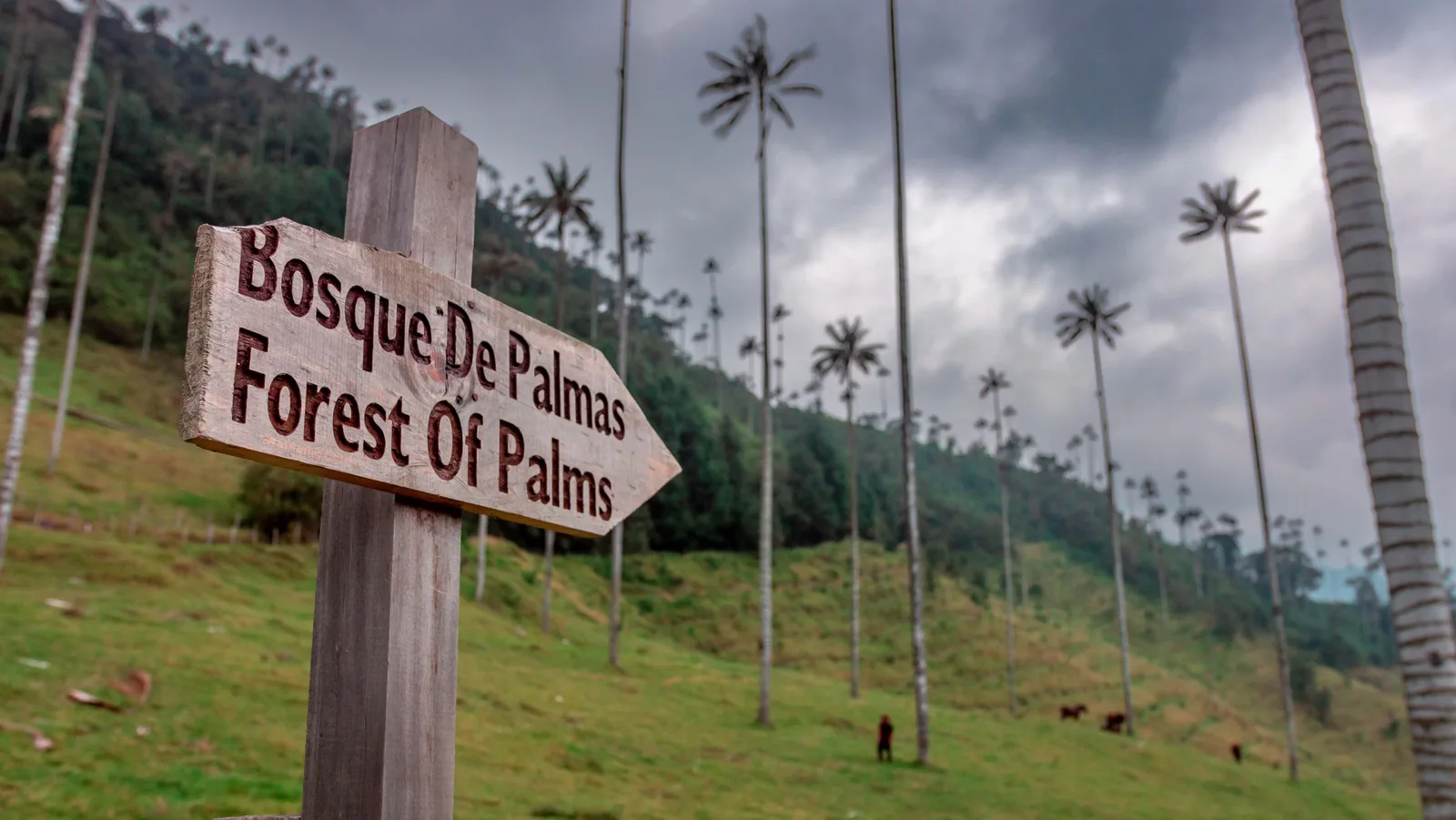
There is no single Cocora ticket, and that is why every English guide disagrees with every other one. The loop crosses a patchwork of private farms, and each owner collects their own fee at their own gate, in cash, with no exceptions and no card machine. When I wrote the Salento overview the standard figure was about 11,000 COP for the loop. The 2025 and 2026 reports tell a different story, and the direction is only up.
| Gate | What it covers | 2025-2026 reports (COP) |
|---|---|---|
| Entry-side gate (Finca El Portón / La Truchera) | Access to the loop from the car park side | 6,000–10,000 |
| Bosque de Palmas (Finca La Esperanza) | The main wax palm forest and its viewpoints | 20,000–30,000 |
| Finca La Montaña | Rest stop at the high point; charged in some reports, free in others | 0–5,000 |
| Acaime hummingbird reserve | Optional detour, hot drink included | 20,000 |
| Willys jeep, round trip | Salento plaza to the trailhead and back | 10,000–12,000 |
The ranges are real rather than hedging: a guide updated in July 2026 lists the palm forest at 20,000 COP, a May 2026 report paid 30,000 at the same gate, and the entry-side charge depends on which farm's gate the route crosses first. The honest budget for the full loop is 40,000 to 60,000 COP per person including the jeep, or 60,000 to 80,000 with Acaime. Carry 100,000 COP in small notes, because the gates do not make change gracefully and there is no useful ATM at the trailhead; withdraw in Salento the night before.
Coming from New Zealand, where one agency runs the Great Walks on a single fee, the gate-by-gate model takes a minute to accept. But the money goes to the farms whose pasture the palms stand in, and no recent report describes anything worse than a shrug at the gate.
Three ways to see the palms
Three things worth booking
 Naturalist included
Cocora Valley guided hike from Salento
The full loop with a guide who can explain the cloud forest and the palms, transport from Salento and gate fees handled. Worth it if the ecology interests you; the trail itself does not need it.
Book this Pairs with a short Cocora
Salento coffee farm tour with tasting
Do the short palm walk in the morning and a farm in the afternoon and Cocora becomes half a day rather than the whole one. Finca El Ocaso is the polished option; the small family fincas are the better conversation.
Book this From the cities
Salento, Cocora and coffee farm tour from Pereira or Armenia
The packaged version for anyone basing in the cities: van pickup, an hour or two among the palms, a coffee farm and Calle Real. It reaches Cocora at midday, which is the trade.
Book thisThe valley supports three very different days, and most of the disappointment in recent reports comes from booking one and expecting another.
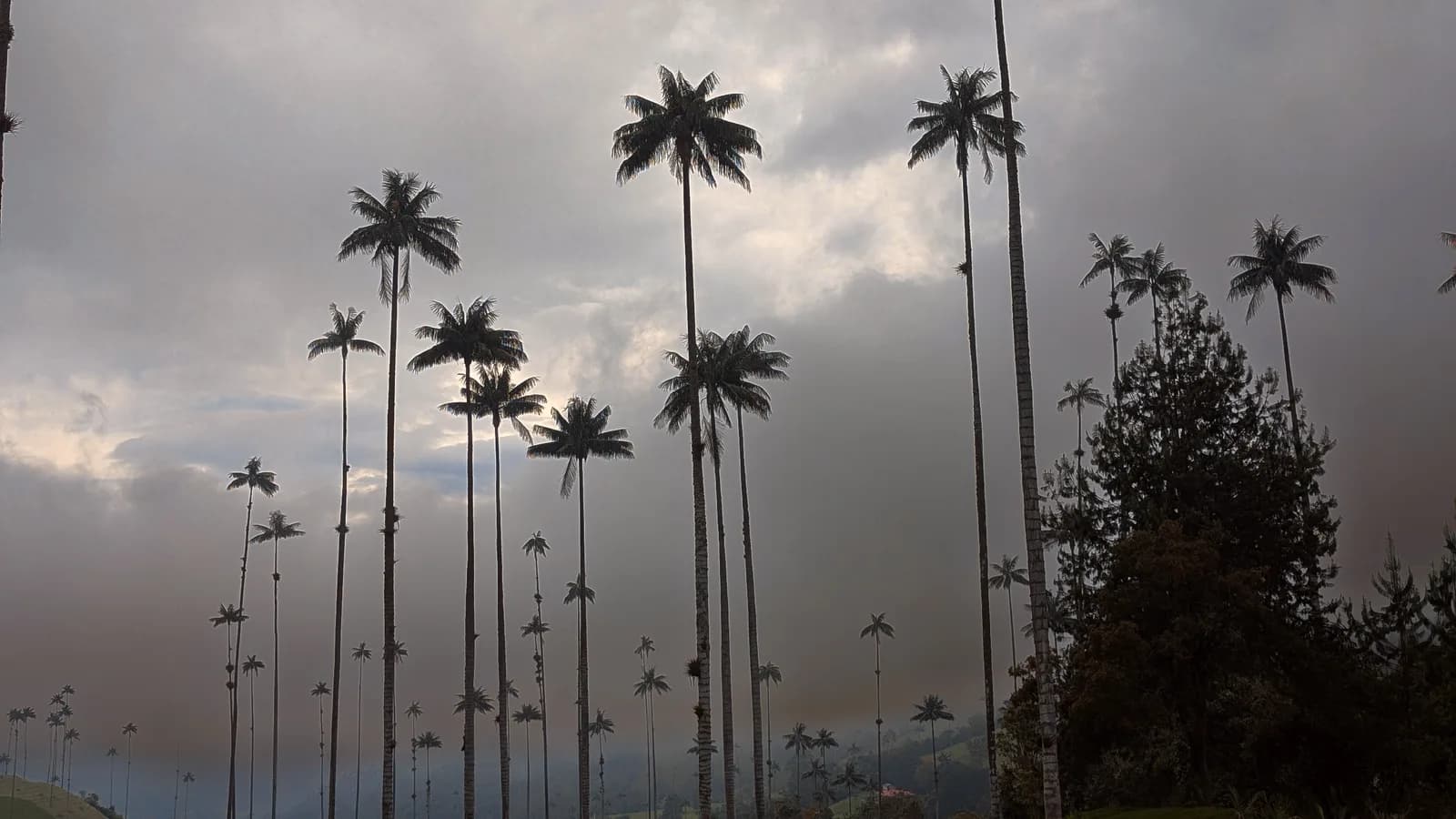
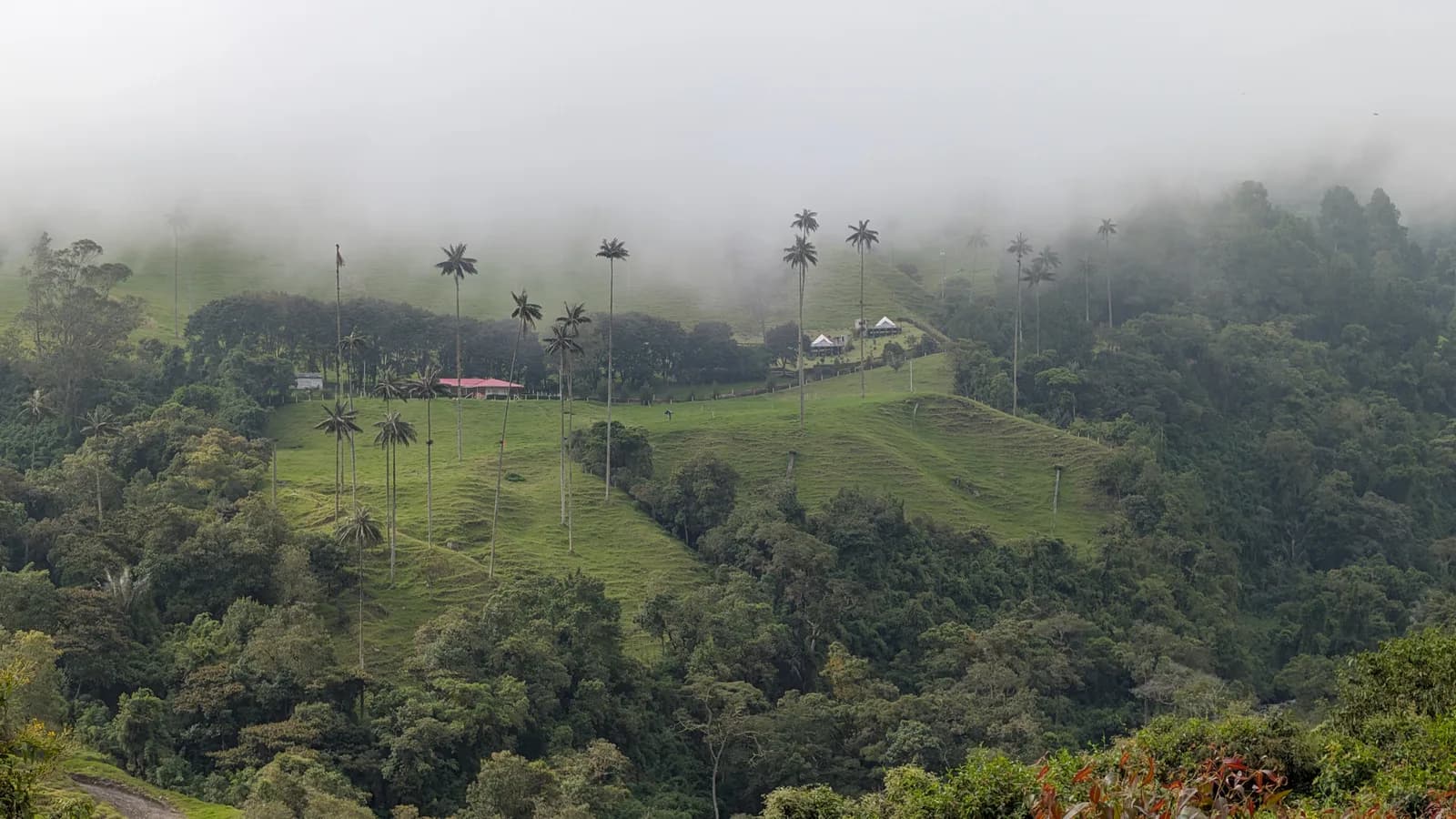
The short walk is for anyone with children, bad knees, a tight schedule or no interest in a cloud forest. From the jeep drop it is minutes to the first palms, and a 1 to 3 km wander through the Bosque de Palmas and its viewpoints takes one to two and a half hours with photo stops. It costs the entry-side gate plus the palm forest fee and delivers the exact photograph everyone came for. Plenty of recent visitors do only this and report no regret.
The full loop is 10 to 13 km depending on the route, with 550 to 760 m of climbing, and takes 5 to 7 hours at a normal pace with stops. It links the palm forest, the river valley with its wooden bridges, the climb to Finca La Montaña at about 2,860 m and a long descent. It is the version I would do, because the cloud forest is the half of the valley the day-trippers never see.
The guided tour is the same loop with a naturalist, transport and lunch, or, from Armenia and Pereira, a packaged day that folds Cocora, a coffee farm and Salento into one van. The guided hike is a real upgrade for anyone who wants the ecology explained. The city day tours are a compromise: they arrive at the palms around midday, after the light and often after the cloud.
| Short palm walk | Full loop | Guided tour | |
|---|---|---|---|
| Distance | 1–3 km | 10–13 km | Loop, or a short walk on city tours |
| Time in the valley | 1–2.5 hrs | 5–7 hrs | 5–7 hrs (loop) / 1–2 hrs (city tours) |
| Gate fees | ~30,000–40,000 COP | ~40,000–60,000 COP, +20,000 with Acaime | Usually included |
| Jeep | 10,000–12,000 COP | 10,000–12,000 COP | Transport included |
| Best for | Families, photographers, half-day plans | Hikers, cloud forest, birds | Ecology-minded, or city-based travelers |
| Weak point | Misses the forest and the river | Mud, and a real climb at altitude | Midday arrival on city tours |
Clockwise or anticlockwise: the argument has moved
In my Salento overview I passed on the long-standing advice to walk anticlockwise: forest and bridges first, palms saved for the descent. The 2025 and 2026 accounts lean the other way, and the reasoning matters more than the verdict.
The case for clockwise is light and mud. Starting through the Bosque de Palmas puts the palms in front of you while the morning is still clear and before the 9am jeep wave, and it means the steepest, muddiest stretch of the loop, the drop from Finca La Montaña through the forest to the river, is walked downhill rather than climbed. An October 2025 report and a January 2025 one both make exactly this argument, and a guide updated in July 2026 recommends clockwise outright. The cost is a long, unshaded pull up a farm road to La Montaña with the best views behind you.
The case for anticlockwise is the finale: bridges while the legs are fresh, the steep climb in the middle, and a walk down into the palms at the end, which is the better reveal and, on a dry day, the better photograph. The trade is that the palms may arrive in early afternoon, when the valley has usually clouded over.
My read: on the first jeeps, go clockwise and take the palms in the clear. Arriving at 9am or later on a dry day, anticlockwise still gives the better ending. The bad choice is the one nobody argues for: starting late in either direction.
The loop leg by leg, and the Acaime question
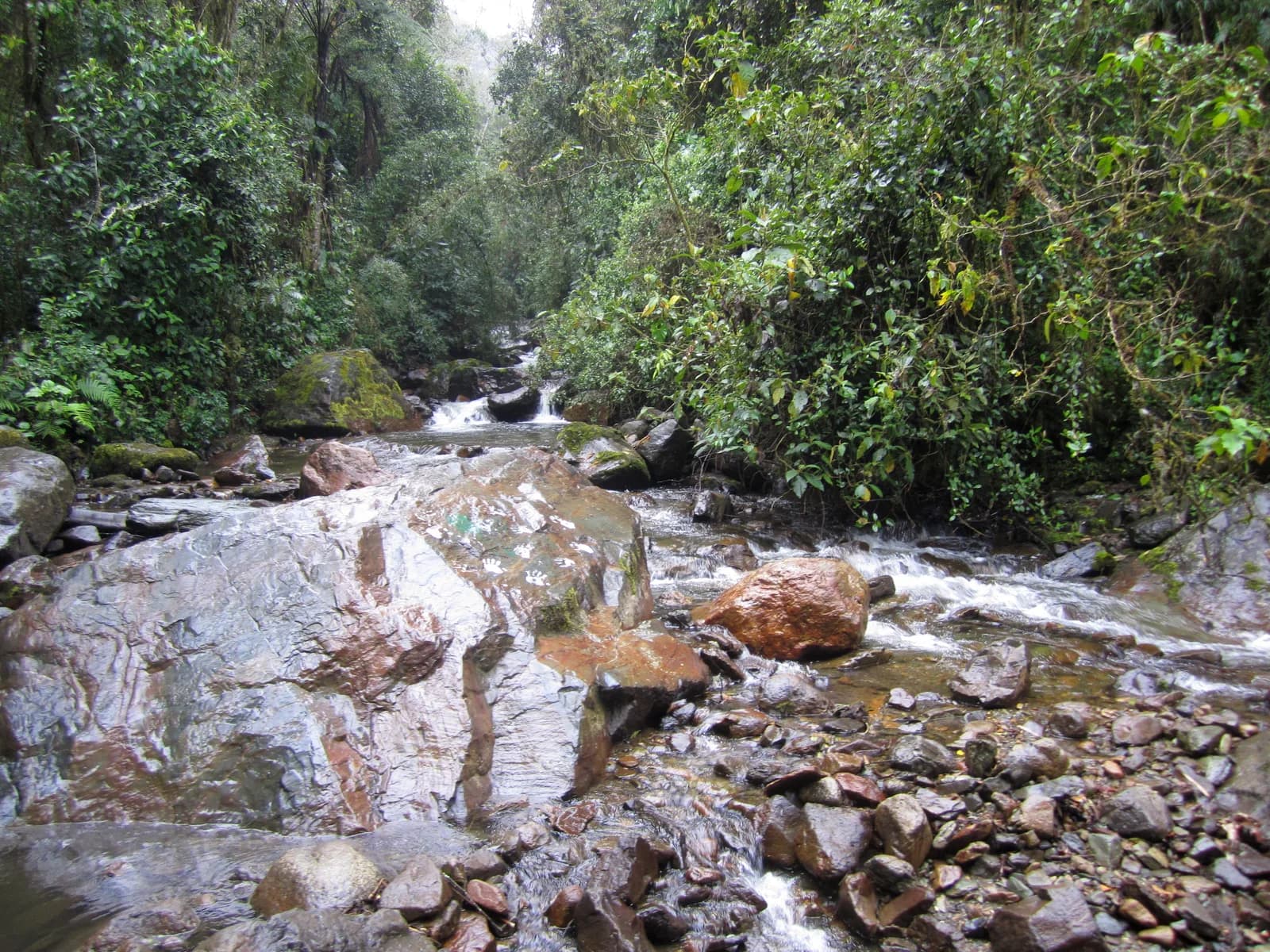
Walked anticlockwise, the loop opens through a blue gate east of the car park and follows the Quindío river upstream into forest for about an hour and a half, crossing it on suspension bridges that every report calls wobbly and also fine. The junction for Acaime comes about halfway up. The hummingbird reserve is a detour of roughly 4 km there and back, adds an hour or more, and charges 20,000 COP including a hot chocolate, aguapanela or coffee while hummingbirds work the feeders. Opinions split cleanly: birders and slow walkers call it the best part of the day, hikers on a clock call it the piece to cut. I would go, because a hot drink among hummingbirds at 2,800 m is the kind of thing Japanese mountain huts get right and I am predisposed to like it, but it is the first thing to drop if the last jeep is in doubt.
Back at the junction the trail climbs hard for about an hour to Finca La Montaña, the high point at around 2,860 m, with a small shop, benches and, on a clear day, a view across to Cerro Morrogacho. This is the stretch the altitude makes honest: steep, sometimes stepped, often a channel of mud in the wet months. From La Montaña a wide farm road descends for an easy hour into the top of the Bosque de Palmas, and the final section through the palms arrives when the legs are tired and the light has gone soft. Walked clockwise, reverse all of it. The distance figures vary because the gates do: entering via La Truchera or El Portón and exiting through the palm forest measures a couple of kilometres different either way, which is why 10 km and 13 km can both be right.
Mud, weather and what to wear
This is cloud forest at 2,400 to 2,900 m and it rains at some point in most weeks of the year, usually in the afternoon. The descent from La Montaña and the river section hold water for days; a January 2025 hiker described the trail after rain as "extremely muddy," with sections "almost deep" and running with water. Locals rent rubber boots in the valley for exactly this reason, and several recent reports rate them above hiking boots in the wet season. In the drier windows, roughly December to February and July to August, sturdy trainers with grip are enough.
Bring a rain layer in any month, a litre or two of water (the shops at Acaime and La Montaña sell more), sun protection for the farm road, and cash in small notes. The altitude is noticeable rather than dangerous; anyone arriving from sea level should treat the La Montaña climb as slow work, not a race.
Cocora without the hike: viewpoints, horses and trout
The no-hike version of the valley is more legitimate than the hiking blogs let on. From the jeep drop a few minutes' walk reaches the first palms, and the paid viewpoints around the Bosque de Palmas, including the giant hand sculpture at the Mirador Mano de Acaime, sit within easy reach of the road. On a clear morning this is an hour well spent; on a foggy one, sit down with a coffee and wait, because the valley's cloud moves fast.
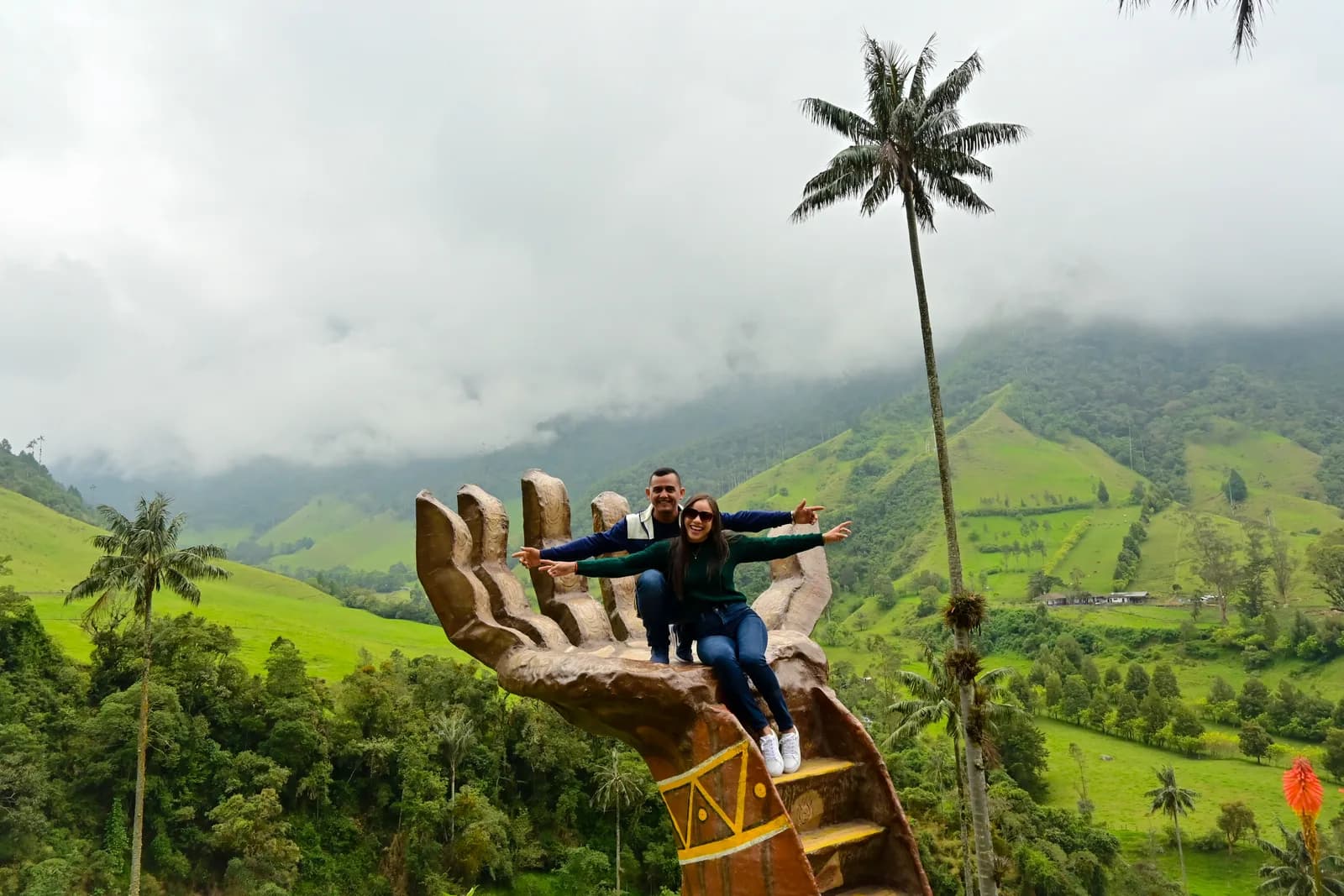
Horses wait at the valley entrance and cover the palm forest, the river and the viewpoints on rides of two to four hours: from around 50,000 COP per person with the local outfits, or 45 to 150 US dollars for platform-booked versions with a guide and insurance. They can also be hired for the climb to Acaime, which is how many families see the hummingbirds. The trails are shared, so hikers should expect to step aside on the narrow sections.
For food, the trailhead has a cluster of restaurants built around trucha, the trout raised in the cold streams above the valley. Bosques de Cocora Donde Juan B is the best known, an open-air place with the palms in view and a menu of 30-odd trout preparations, and the reports on it are genuinely mixed: the grilled trout gets praised, while two September 2025 reviews complained of slow service and cold plates at peak hours. My food-first read is to eat early or late, order the trucha al ajillo or the plain grilled fish, and treat anything more ambitious with suspicion. Or carry a bakery breakfast from Salento and save the appetite for a proper trucha dinner in town, where the plates are cheaper and the kitchens calmer.
A timeline that works
| Time | What happens |
|---|---|
| 6:30–7:00am | Coffee in Salento, cash withdrawn the night before, walk to the plaza booth |
| 7:00–7:30am | Jeep to the valley, return ticket bought and pocketed |
| 7:30am | On the trail. Clockwise on an early start: palms first, in the clear |
| 8:30–9:30am | Bosque de Palmas and its viewpoints before the 9am jeep wave arrives |
| 9:30–11:00am | The farm-road climb to Finca La Montaña; a drink at the top |
| 11:00am–12:30pm | The steep descent through the forest to the river; Acaime if time allows |
| 12:30–2:00pm | Bridges out along the river, back at the car park |
| 2:00–3:00pm | Trout at the trailhead, or straight onto a jeep before the afternoon cloud |
| 3:00pm | Back in Salento with the evening free for tejo or a coffee farm |
Add Acaime and the trout and that plan stretches to 4pm, still comfortable. Start at 9:30am instead and the same day ends at 5pm in the cloud with a queue for the jeeps, which is the day most of the negative reports describe.
Where to stay for an early start
Three places to book in Salento
 Early-jeep convenient
Hotel Salento Real
A colonial-style mid-range hotel with breakfast and parking, three blocks from the jeep booth. The name that comes up for travelers who want a private room and a 6:30am start without a taxi.
Check availability Quiet mid-range
Coffee Tree Boutique Hostel
Calm dorms and privates with valley views and a made-to-order breakfast that recent guests rate above most hotels. Hostel prices without the party, and hiking partners easy to find.
Check availability Social budget
Viajero Salento Hostel
The big social hostel in nearly every recent report, with a bar and a noticeboard full of people looking for someone to walk the loop with. A short walk to the plaza.
Check availabilityThe short version of a decision I cover properly in my Salento stay guide: sleep in Salento town centre for a Cocora day, because the jeeps leave from the plaza, the early ones fill first, and a bed ten minutes from the booth is the difference between a 6:30am departure and an 8:30am one. Book a finca outside town only with a rental car or a written promise from the property about early transfers, since the hill roads are unlit and nothing runs to the plaza before dawn. Choose Filandia if quiet and lower prices matter more than a 7am palm forest; it is about 50 minutes from the valley rather than 25, and my Filandia stay guide and the Salento versus Filandia comparison cover what that trade buys.
Getting there and when to go
Salento is the base, and reaching it is covered in the Salento things-to-do post: fly into Armenia or Pereira, both under an hour away, or take the six-to-eight-hour Flota Occidental bus from Medellín. It is worth comparing fares into both airports because the difference on a given date can be large. Most itineraries stack the coffee region between Medellín, where the things-to-do list and the food run deeper than anything in the coffee towns, and a second small town: Filandia next door, or Jardín in Antioquia, which has its own cloud-forest walks and, per my Jardín stay guide, a fraction of Salento's crowds.
For Cocora specifically, timing is about the hour more than the month. The drier windows, roughly December to February and July to August, mean less mud and better odds of a clear La Montaña, but they are also Colombian peak season. In any month, weekdays beat weekends, and the first jeeps beat everything.
Recommendations
- Be at the plaza booth by 7am and buy the return leg with the outbound; the 9am jeeps are the busiest and the last one back can leave as early as 5:30pm.
- Carry 100,000 COP per person in small notes and ignore any guide quoting 11,000 COP for the loop; the gates now total 40,000 to 60,000 COP without Acaime.
- Go clockwise on an early start to take the palms in clear morning light and walk the mud downhill; go anticlockwise on a dry day or a later start for the better finale.
- Give Acaime the extra hour and 20,000 COP if hummingbirds and a hot drink at 2,800 m sound like your kind of morning; cut it if the last jeep is in doubt.
- Rent rubber boots in the valley in the wet months; recent hikers rate them above hiking boots on the La Montaña descent.
- Skip the guide but not the offline map; the loop is signposted and heavily walked.
- If hiking is not the plan, do the short palm walk, the viewpoints and a horse ride, and stop apologising for it.
- Eat the trout at the trailhead early or late, or save the trucha for a calmer kitchen in Salento.
- Sleep in Salento town the night before, not at a finca, unless someone has promised a 6:30am transfer in writing.
That is the valley as the recent reports describe it: a cheap jeep, gates that keep repricing, a loop that rewards an early start and punishes a late one, and a palm forest worth every peso either way. If you have walked it since mid-2026 and a fee has moved again, tell me and I will update this. For the rest of the trip, the Salento things-to-do post covers the coffee farms and the tejo, and the stay guide settles the bed.
Frequently asked
How long is the Cocora Valley hike?
The full loop is roughly 10 to 13 km depending on which gates you route through, with about 550 to 760 m of climbing to a high point near Finca La Montaña at around 2,860 m. Most recent hikers report 5 to 7 hours including stops, and the Acaime hummingbird detour adds roughly 4 km and an hour or more. The short palm-forest walk from the jeep drop is 1 to 3 km and takes 1 to 2.5 hours with photo stops.
How much does Cocora Valley cost in 2026?
Budget 40,000 to 60,000 COP per person for the loop without Acaime, or 60,000 to 80,000 COP with it, all cash. That covers the shared Willys jeep from Salento at about 10,000 to 12,000 COP round trip, an entry-side gate of roughly 6,000 to 10,000 COP, the Bosque de Palmas gate at 20,000 to 30,000 COP, and Acaime at 20,000 COP including a hot drink. The 11,000 COP total quoted in older guides is out of date.
How do you get from Salento to Cocora Valley?
Shared Willys jeeps leave from the ticket booth on Salento's Plaza de Bolívar from about 6:30am, take 25 to 30 minutes and cost roughly 5,000 to 7,000 COP each way, so 10,000 to 12,000 COP round trip. They leave when full rather than to a strict timetable, and the last jeep back from the valley runs between about 5:30pm and 6:30pm. A taxi is 25,000 to 35,000 COP each way if the jeep queue is long.
Should you hike Cocora Valley clockwise or anticlockwise?
It depends on when you arrive. On an early jeep, clockwise puts the palm forest first in the best morning light and before the crowds, and sends you down the steepest muddy section rather than up it. Later starts favour anticlockwise, which does the cloud forest and river bridges first and saves the palms for the descent. Neither is wrong; the mistake is starting after 9am in either direction.
Can you visit Cocora Valley without hiking?
Yes. From the jeep drop it is a short walk of 5 to 15 minutes to the first wax palms, and the paid viewpoints near the Bosque de Palmas, including the hand sculpture at the Mirador Mano de Acaime, need no real hiking. Horses can be hired at the entrance from around 50,000 COP for a couple of hours, and the trout restaurants at the trailhead make a half day of it. The full loop is optional.
Do you need a guide for the Cocora Valley hike?
No. The loop is signposted, heavily walked and routinely done independently with an offline map; recent reports agree a guide is not a safety requirement. A guided tour earns its price if you want the cloud forest and the wax palms explained by a naturalist, or if you are coming from Armenia or Pereira and would rather have transport, the coffee farm and the valley packaged into one day.
What is the best time to hike Cocora Valley?
Early, on any day. The valley clouds over most afternoons year-round, so the first jeeps at 6:30 to 7:30am buy the clearest views and the emptiest trail. Seasonally the drier windows run roughly December to February and July to August, when the mud is manageable; the wet months turn the descent from Finca La Montaña into a bog. Weekdays are markedly quieter than Colombian weekends and holidays.