Things to Do in Salento: Cocora Valley, Coffee Farms, Tejo and the Town Itself
Every Salento day, planned honestly: Cocora Valley logistics and fees, 2026 coffee farm tour prices, tejo nights, the food scene and day-trip advice.
Salento is the corner of Colombia this site gets asked about most, and I have already written up where to sleep there and whether Filandia deserves your nights instead. This post is the missing piece: the days themselves. On paper the activity list looks short, one valley, some coffee farms, a painted street, and that brevity tricks people into treating Salento as a drive-through. The recent traveler reports I keep returning to say the opposite: the town rewards two or three full days, and the gap between a great visit and a frustrating one is almost entirely logistics. Which jeep, which farm, which direction around the loop, which numbers to trust. Here is all of it at 2026 prices, because the figures in most English guides are a couple of years and one price surge out of date.
Cocora Valley, without the guesswork
Three things worth booking
 The headline
Cocora Valley hike
The tallest palms on earth, done independently for the price of a jeep ticket and two gate fees. Guided versions add transport and a naturalist; the trail itself needs neither. Go counterclockwise and go early.
Book this Best known
Finca El Ocaso coffee tour
Salento's flagship farm. The 30-person traditional tour needs no booking; the 10-person premium adds a cupping lab and is the version worth paying for if coffee is why you came.
Book this The quiet alternative
Horseback ride to Santa Rita waterfall
Local outfits like Cabalgatas San Pablo ride along the Río Quindío, through old railway tunnels, to a waterfall with a swimmable pool. Town operators price by the hour; platform versions cost more and include a guide.
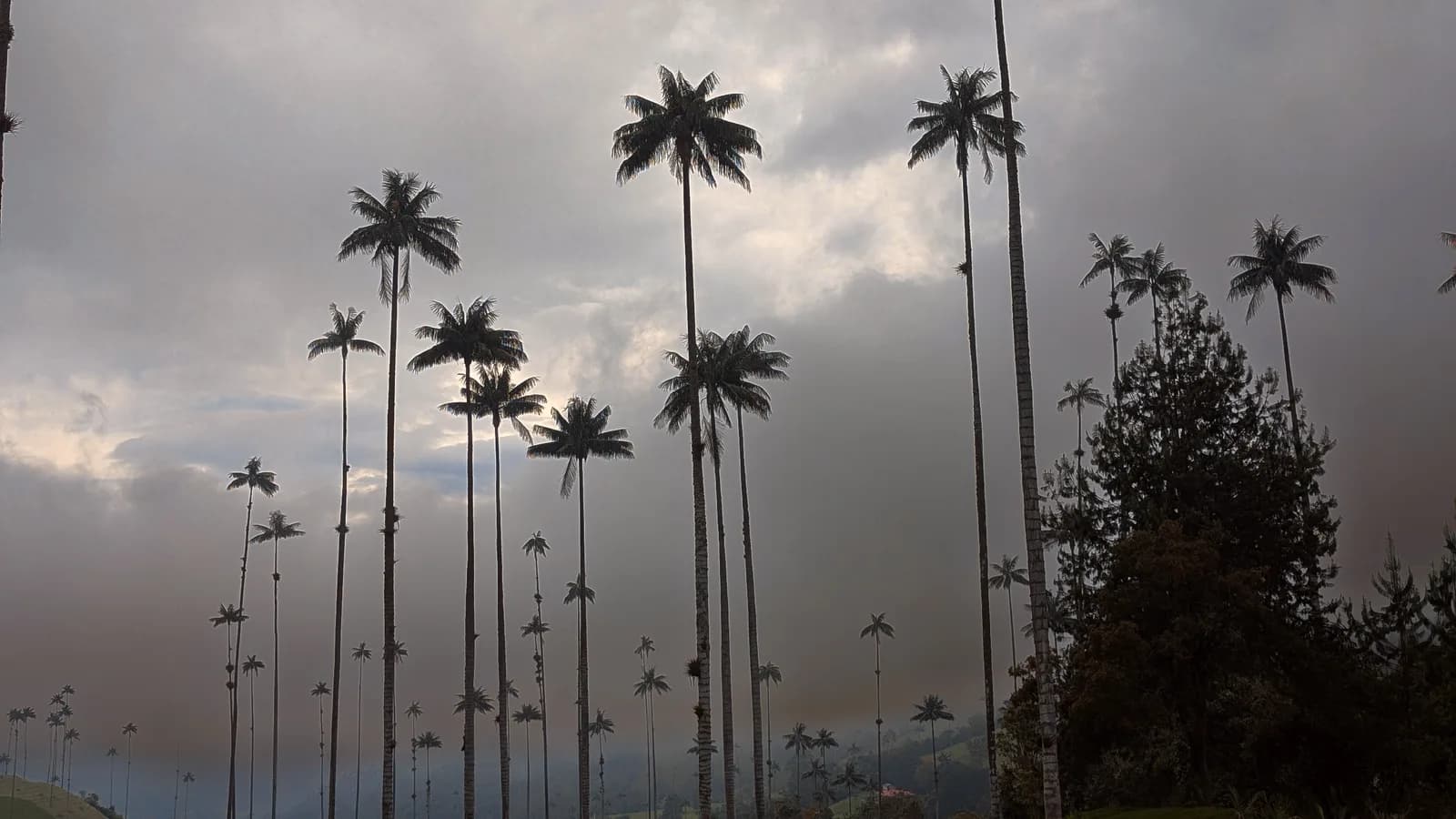
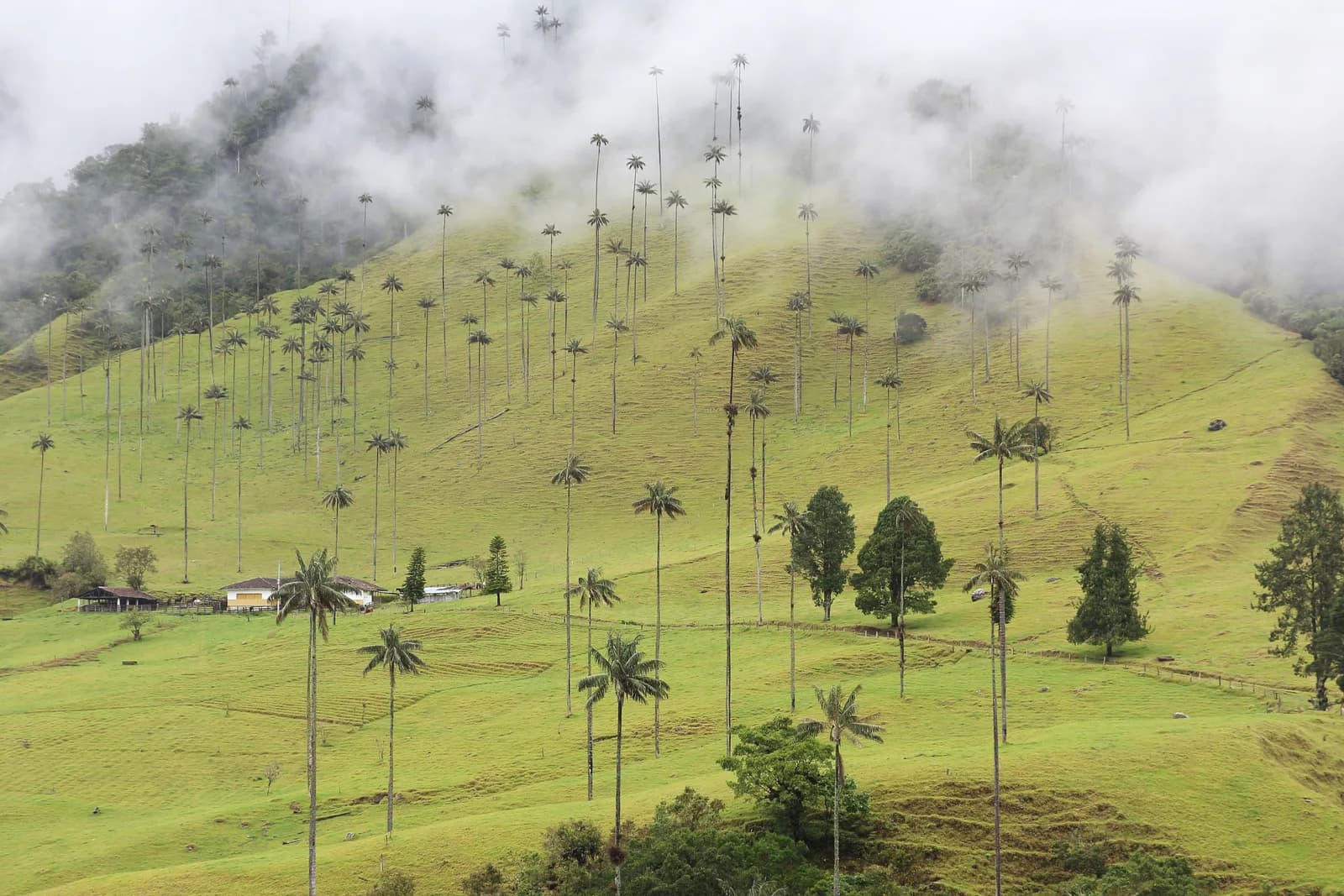
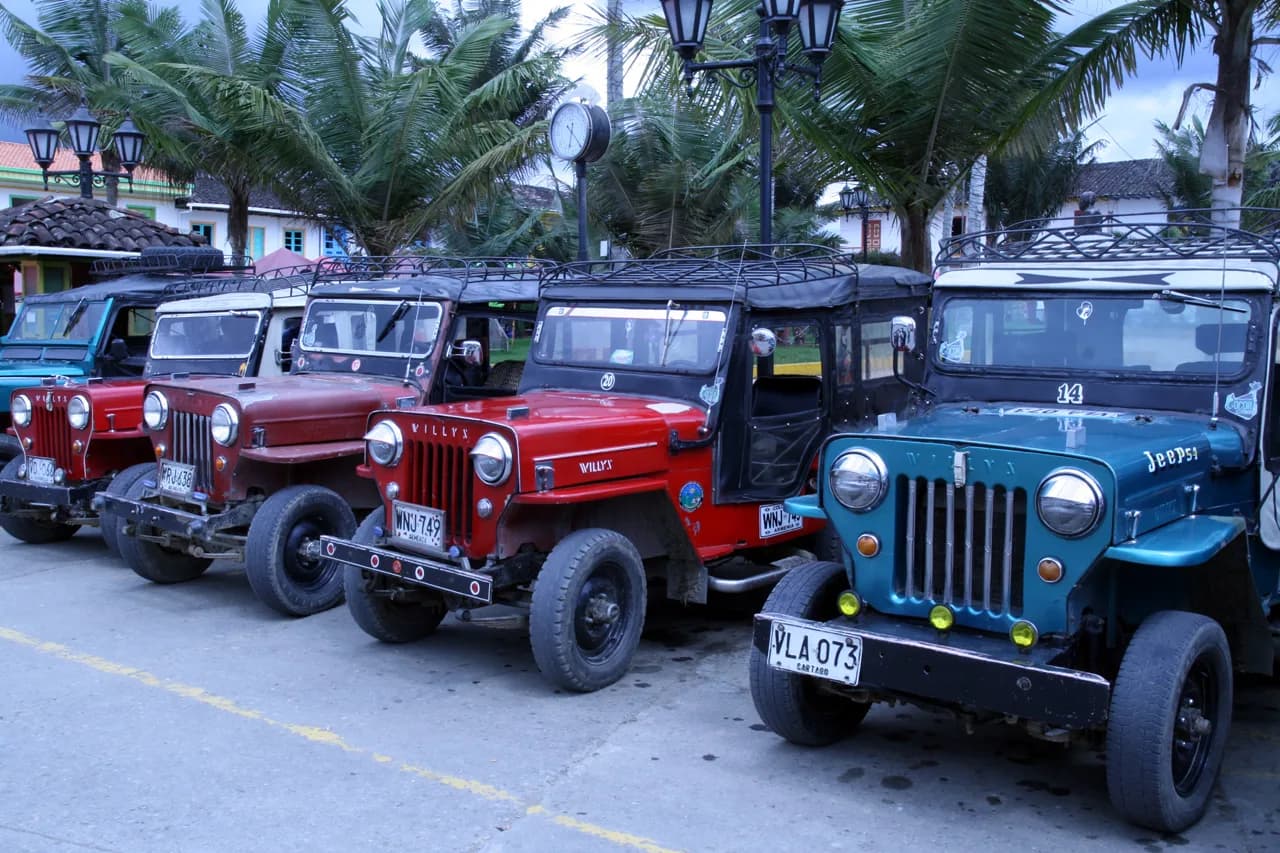
Book thisThe wax palms are Colombia's national tree and the tallest palms anywhere, and the valley they grow in is the single reason Salento appears on itineraries at all. The mechanics are simple once someone lays them out. Shared Willys jeeps leave from the white ticket booth on the Plaza de Bolívar from around 7am, take 25 to 30 minutes, and cost roughly 8,000 to 12,000 COP for the round trip depending on the season; buy the return leg with the outbound. The last jeep back leaves the valley between about 6pm and 6:30pm, and missing it turns a cheap day expensive.
There is no single entrance. Fees are collected at gates along the trail, which is why reported totals vary so much between guides: the 2025 and 2026 reports put the entry-side gate at 6,000 to 10,000 COP and the Bosque de Palmas gate at 20,000 to 30,000 COP, so budget 40,000 to 60,000 COP for the standard circuit rather than the 11,000 COP older guides quote. Every gate and the direction debate are covered in my Cocora Valley hike guide. The Acaime hummingbird sanctuary is an optional detour at about 20,000 COP with a hot drink included. Every peso of this is cash, in small notes.
The full loop takes 6 to 8 hours and direction is the one decision that changes the day. Counterclockwise puts the cloud forest and the wobbly river bridges first and saves the palms for the descent, in better light. Clockwise front-loads a brutal climb. And if a full hiking day is not the plan, the short version is legitimate: walk 40 minutes in from the jeep drop, stand under the palms, and ride back. Recent reports are consistent that no guide is needed for any of it, just an offline map and an early start, because the valley clouds over by early afternoon most days.
The coffee farms, by name and by price
Coffee tour pricing in Salento is genuinely messy in English, and it matters because the farms are half the reason to come. Plenty of posts, some updated this year, still quote Finca El Ocaso at 30,000 COP. The farm's own site lists the traditional tour at 50,000 to 60,000 COP and the premium and brewing tours at 120,000, close to a doubling at the entry level in about two years. Treat any guide quoting the old numbers as stale rather than as a deal.
| Tour | Price (COP) | Duration | Booking |
|---|---|---|---|
| Finca El Ocaso, traditional | 50,000–60,000 | 1 hr 30 | Walk-in, up to 30 people |
| Finca El Ocaso, premium | 120,000 | 2 hr 45 | Reserve, max 10 |
| Finca Momota, small group | 35,000–60,000 | ~2 hrs | Reserve recommended |
| Don Elías and small family fincas | 12,000–20,000 | ~1 hr | Walk-in |
| Willys jeep to the farms | 10,000–15,000 return | 20–30 min | Plaza booth |
The honest read has not changed since my Salento stay guide: El Ocaso is the polished operation, and its 30-person traditional tour is a different product from the 10-person premium with the cupping lab. If the coffee is the point, pay for the premium. If the farm is the point, the small family operations are the better hour: Don Elías is the name that recurs most, an organic finca where the tour is closer to a conversation over a filter brew than a presentation, for a fifth of El Ocaso's price. Momota splits the difference with small organic-farm groups. Several of the farms sit within an hour's walk of town on green hill roads, which travelers consistently describe as part of the experience rather than a cost; the jeep exists for the way back.
One Kaede note, because it comes up in report after report: the coffee region has historically exported its best beans, and the cup served at many tourist-strip cafés does not match the scenery. The farms themselves, and one roaster in town covered below, are where the actual good coffee is. Calibrate expectations accordingly and the region is a joy.
The town: Calle Real, the mirador and a tejo night
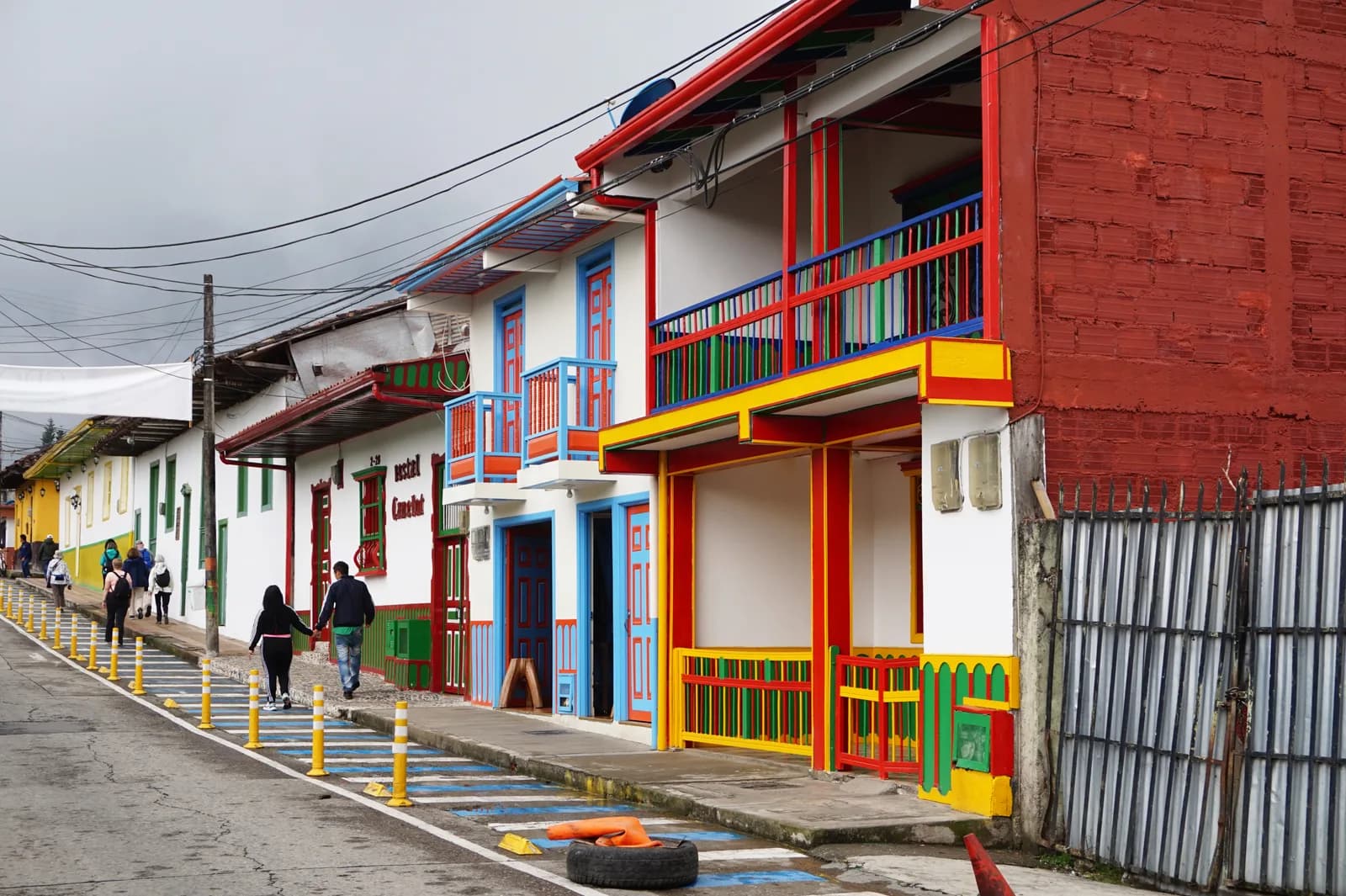
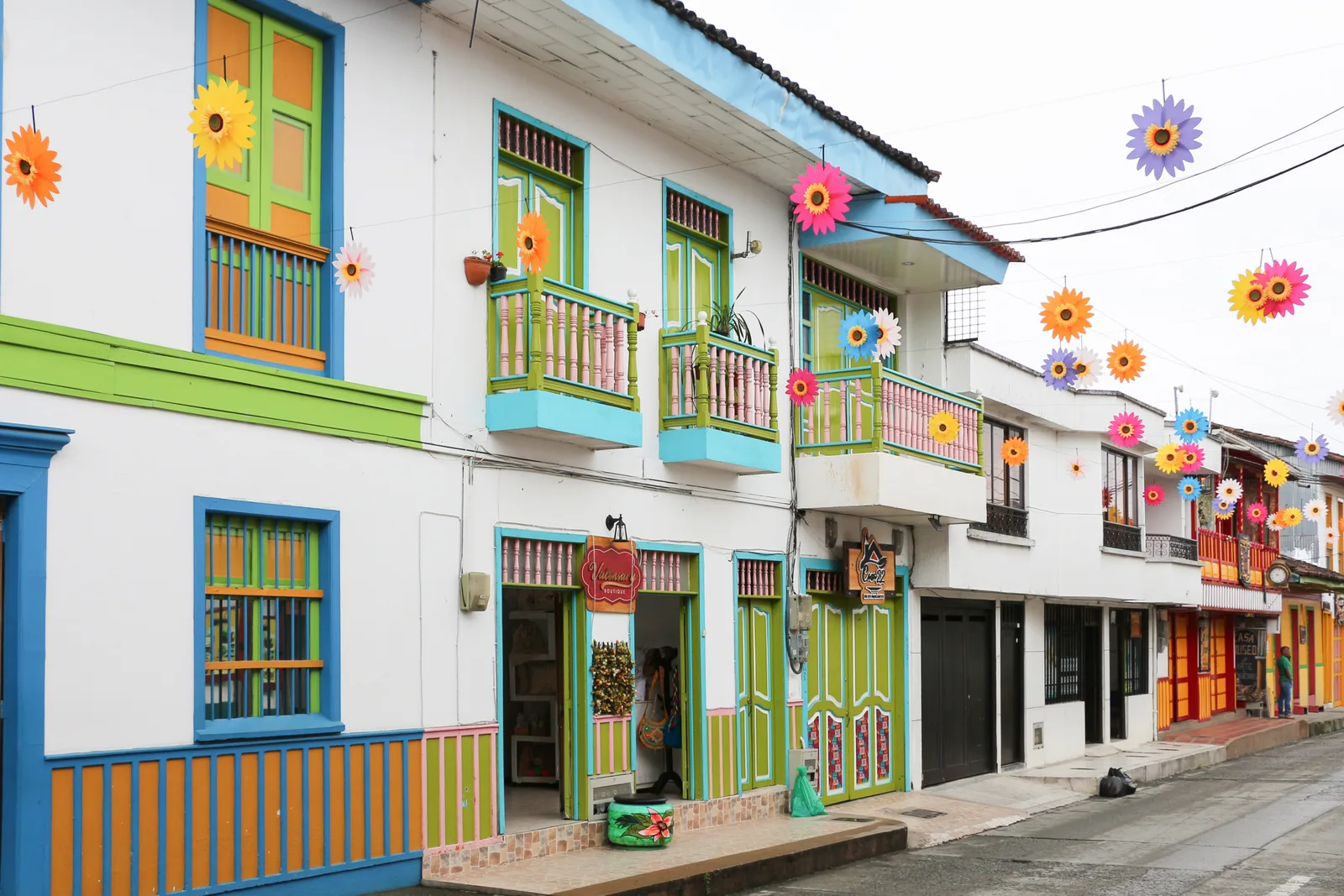
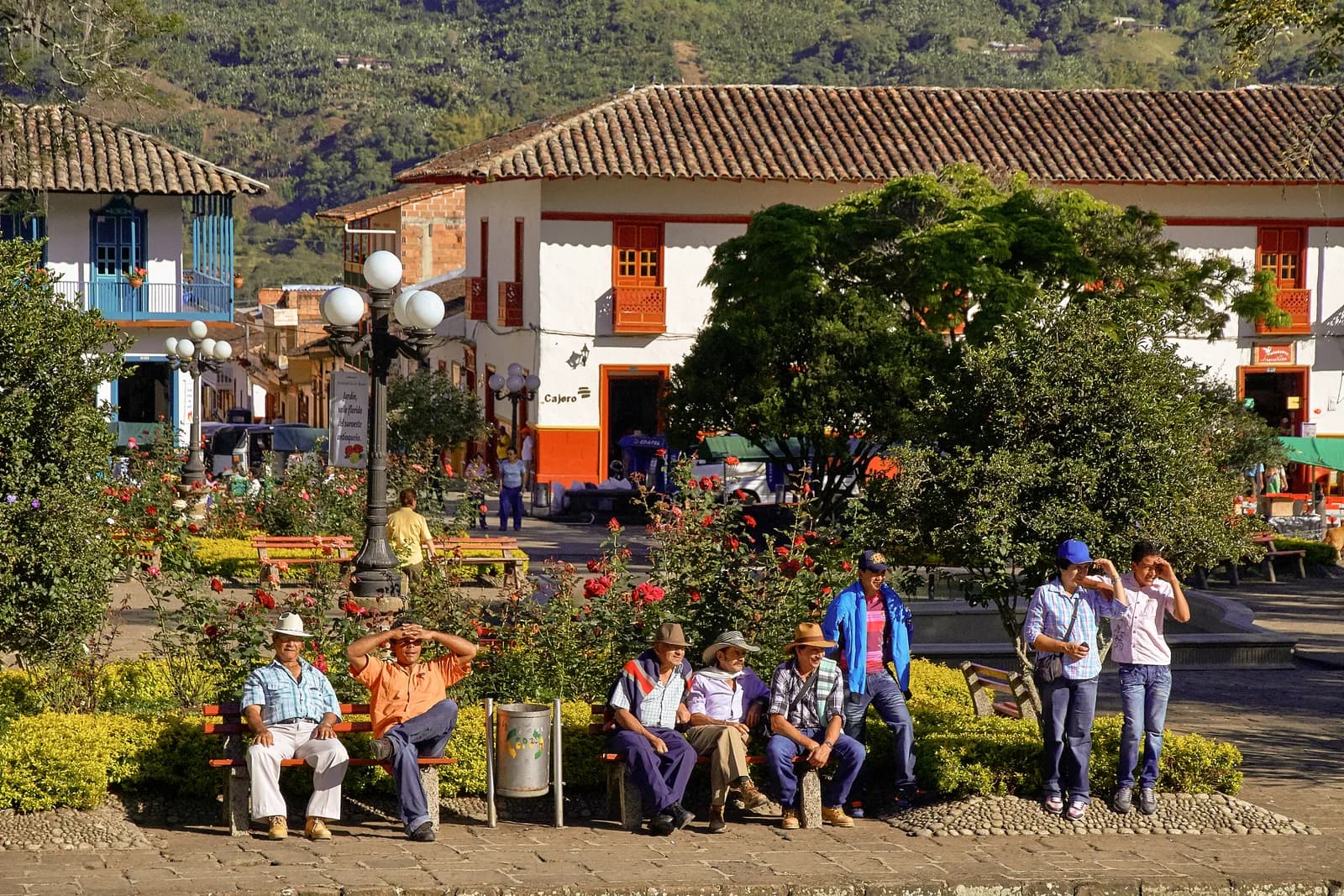
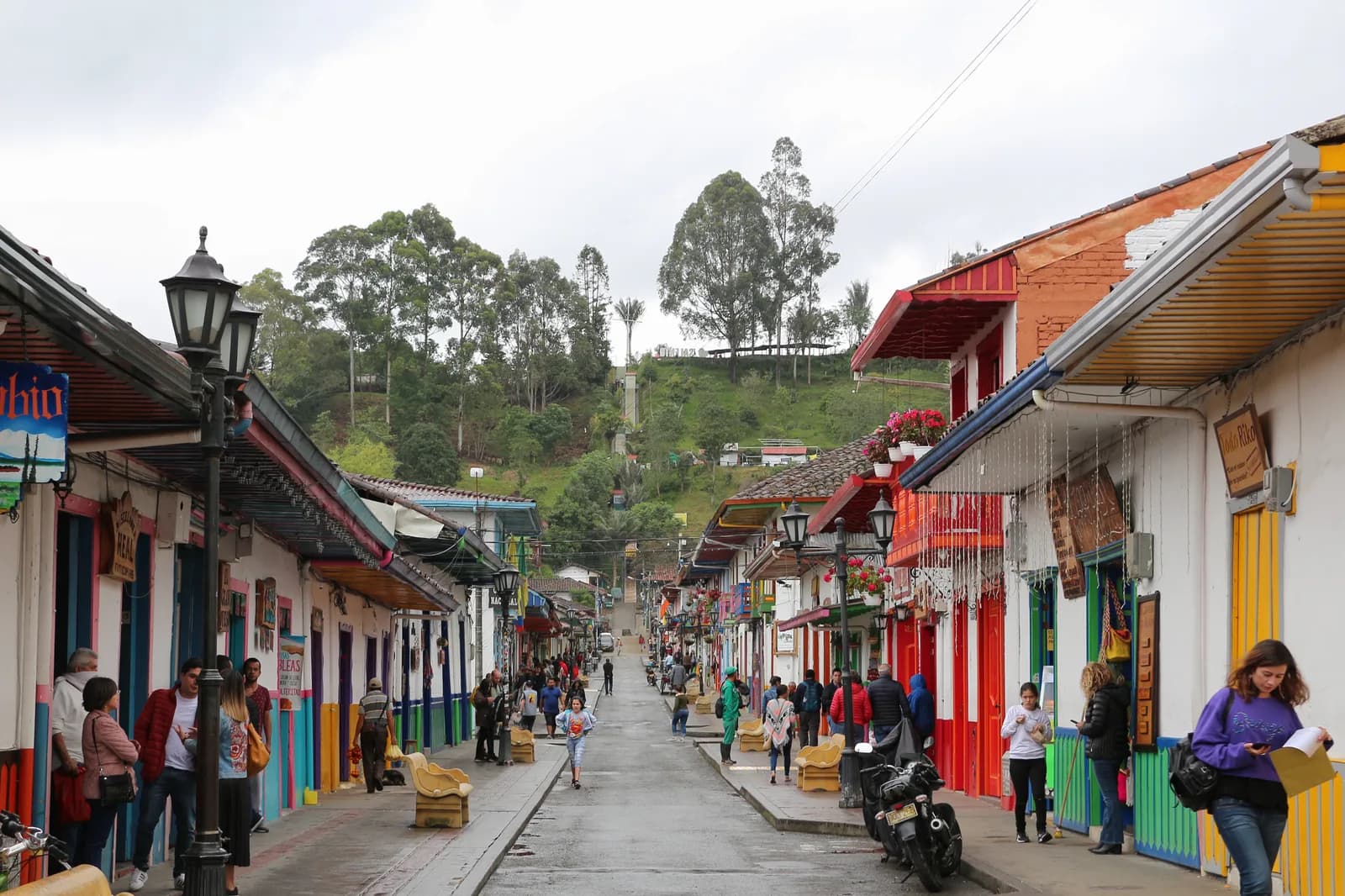
Salento town is fifteen-odd blocks and every English guide undersells how well those blocks fill a day. Calle Real, the main street, runs uphill from the Plaza de Bolívar in a strip of paisa architecture: primary-color doorways, wooden balconies, craft shops selling basketry and woodwork, trout restaurants and juice stands. It is touristy and it is also genuinely lovely, especially early, before the day-trip buses arrive from the cities. At the top of the street, a staircase of about 240 steps climbs to the Mirador Alto de la Cruz, where the view opens over the town's tin roofs and down the green valley system toward Cocora. Recent visitors flag late afternoon as the time to make the climb, when the light softens and the plaza below starts to fill.
The evening institution is tejo, and it is the cheapest good night out in the coffee region. The game: lob a metal puck down a lane at a clay pit rigged with paper envelopes of gunpowder, and when someone connects, the crack echoes off the courtyard walls and everyone cheers. Los Amigos is the court every recent report names, games running nightly, and the pricing model is essentially the beers, a few thousand pesos a bottle, sometimes with a small per-person court fee. Nobody is good at it and that is the point. It reminds me of the best kind of New Zealand small-town bowls club energy, competitive in theory, social in practice, and it is the easiest place in Salento to end up playing against strangers.
If the legs have another half day in them, the horseback rides are the other town-based outing that recurs in recent accounts: local operators such as Cabalgatas San Pablo run rides along the Río Quindío, through tunnels left over from an abandoned railway, out to the Santa Rita waterfall, where there is a pool worth a cold swim and a small entry fee at the farm gate. Rides are priced by the hour, roughly 25,000 to 70,000 COP for one to three hours booked in town, more through the tour platforms with a guide included.
Where to eat: trucha, patacones and the actual good coffee
The town's dish is trucha, river trout farmed in the cold streams above town, and the classic order is trucha al ajillo: the fish under a blanket of garlic cream with a fried patacón wider than the plate it arrives on. Donde Laurita and El Rincón de Lucy are the two names that come up most in recent reports, the latter flagged repeatedly for value, and the plaza fills with snack stalls and food carts in the evening for anyone eating on a jeep-ticket budget. It is a narrow scene compared to a city, worth knowing before anyone plans four nights of dinners; my Medellín food guide covers the gateway city where the eating gets serious.
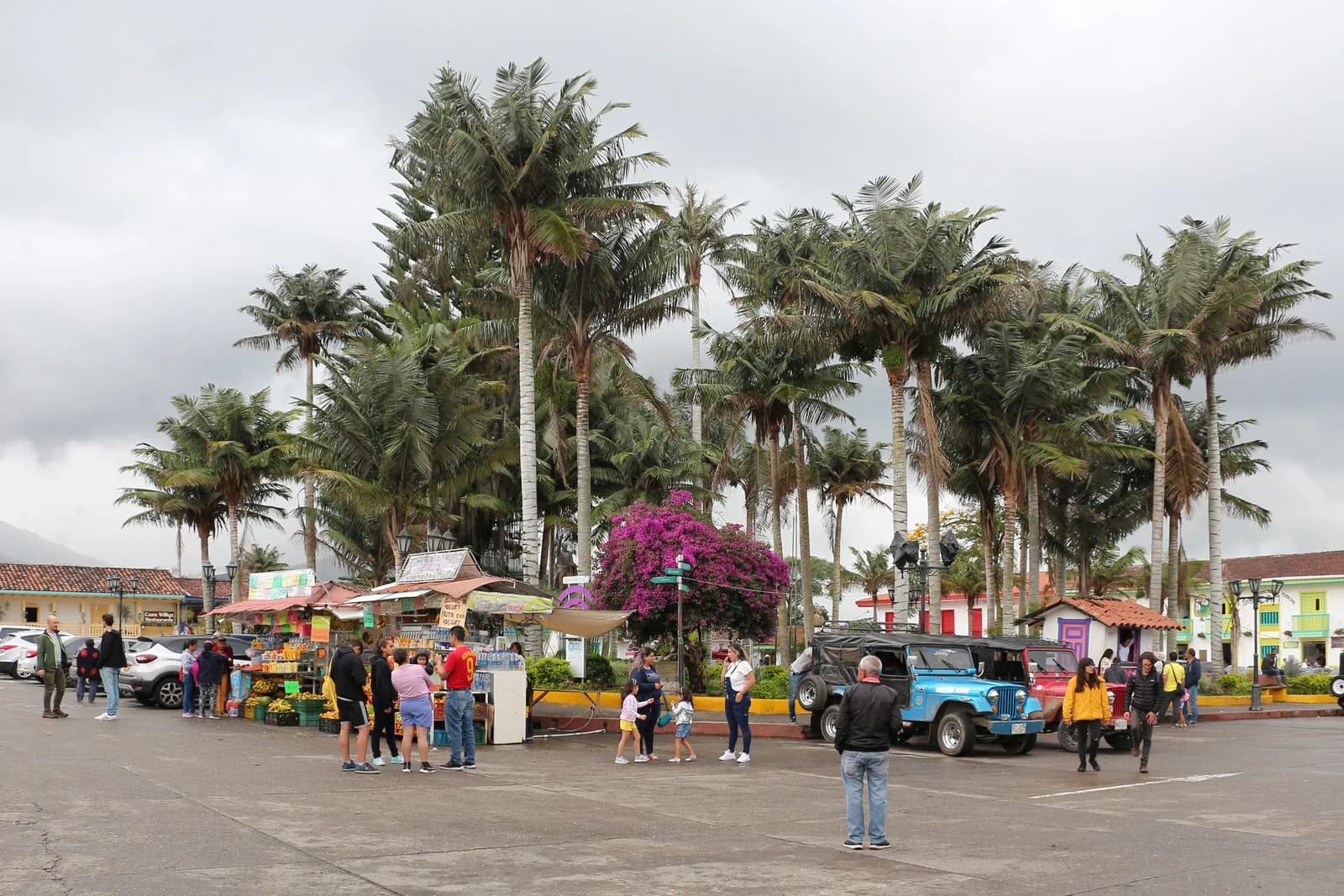
For the coffee itself, the name that separates from the pack in recent reports is Café Jesús Martín, a roaster with a café in the center that serious-coffee travelers consistently rate as the best cup in town, which in a region that exports its best beans is a real distinction. Brunch de Salento is the other institution, a backpacker landmark doing enormous breakfasts and American-style plates all day, less about Colombia than about feeding hikers, and reliably one of the busiest rooms in town. My food-first advice is simple: trucha for one dinner, the plaza stalls for another, Jesús Martín for the mornings, and save the serious tasting for whichever farm tour you booked.
Day trip or base?
The day-trip version of Salento exists and I understand the appeal: combined tours run from Pereira and Armenia, and even from the bigger cities, packaging Cocora, a farm stop and an hour on Calle Real into one long loop. The reports on them are polite rather than glowing, and the structural problem is timing. A tour puts you in Cocora at midday, after the morning light and often after the cloud has come in, and it removes the evenings entirely, which is half of what the town is for. The consistent recommendation in recent forum threads is at least one night, and my read of the reports agrees: this is a two-to-three-night place pretending to be a photo stop.
With a third day, the move is Filandia, Salento's quieter sibling 35 minutes away by the hourly jeep from the plaza, about 7,500 COP each way. Same painted balconies, a fraction of the crowd, and the region's most talked-about restaurant in Helena Adentro. The full comparison is in my Salento vs Filandia post, and for anyone whose reaction to Salento's crowds is to want the quieter town for the whole trip, I have a separate guide to where to stay in Filandia.
Where to stay, in brief
Three places to book in Salento
 Social budget
Viajero Salento Hostel
The big social hostel that appears in nearly every recent report, with a bar, hammocks and easy hiking-partner logistics, a short walk from the plaza.
Check availability Quiet mid-range
Coffee Tree Boutique Hostel
Calm, well-kept rooms with valley views for people who want a hostel's price without a hostel's volume. The name recent reports keep repeating.
Check availability Splurge
Kawa Mountain Retreat
Big views from the village edge, close enough to walk to dinner. It solves the countryside transport problem by not having one.
Check availabilityThe short version of a decision I cover at full length in the Salento stay guide: sleep in Salento town center on a first visit, because every activity in this post starts at the plaza and the town's whole evening happens within a fifteen-minute walk. Book a countryside finca only with a rental car or a written answer from the property on after-dark transfers, since the hill roads are unlit and the jeeps stop when the tours do. Sleep near Cocora only if being on the trail before the first jeeps arrive is the entire point of the trip. And pick Filandia for lower prices and quiet, accepting roughly 50 minutes to Cocora instead of 25.
Getting there and when to go
Salento has no airport; Armenia and Pereira both sit under an hour away, and flying into either from Bogotá or Medellín converts a full travel day into a short one, with a taxi from Armenia around 90,000 COP and local buses roughly hourly. It is worth comparing fares into both airports because the difference on a given date can be large. The overland classic is the Flota Occidental bus from Medellín, six to eight hours on the mountain road from about 104,000 COP, scenic and slow, which is the real argument for giving Salento three nights instead of two. Most itineraries pair the coffee region with Medellín on one side, where the things-to-do list runs deeper than the coffee towns', and continue toward the coast, covered in things to do in Cartagena.
On timing, this is cloud forest and it rains in most weeks of the year, usually in the afternoon, which is why every activity above starts early. The drier windows run roughly December to February and July to August, which is also peak Colombian domestic travel. The coffee harvests fall around October to December and April to June, and touring a farm mid-harvest, with the pickers out and the wet mills running, is a visibly better visit than a quiet-month walkthrough. Colombian long weekends are the biggest single variable in crowds and prices; check the holiday calendar before booking.
Recommendations
- Do Cocora on your first full day and start by 8am; the cloud rolls in most afternoons and the last jeep back leaves by about 6:30pm.
- Walk the loop counterclockwise so the palms arrive on the descent, and carry about 25,000 COP in small notes for the jeep and the gates.
- Skip the guide for Cocora but not the offline map; the loop is signposted and heavily walked.
- Budget coffee tours at 2026 prices, 50,000 COP and up at the named farms, and treat any 30,000 COP figure as out of date.
- Pay for El Ocaso's premium tour if coffee is the point, or walk into Don Elías for a fifth of the price and a better conversation.
- Play tejo at Los Amigos on the first night, not the last; it is the fastest way to meet people to hike with.
- Climb the Alto de la Cruz steps in late afternoon for the best light over the town.
- Eat trucha once, at Donde Laurita or El Rincón de Lucy, and take mornings at Café Jesús Martín rather than the strip cafés.
- Give Filandia a half day via the hourly 7,500 COP jeep if you have three days, and avoid Colombian long weekends if quiet matters.
- Do not day-trip Salento from the cities unless the calendar truly forces it; the valley at 8am and the plaza at 8pm are the two best hours here.
Laid out end to end, Salento holds two to three days without padding: the valley, a farm chosen on purpose, a mirador climb, a trout dinner and a gunpowder game. I have built this from the same body of recent traveler reports as the rest of my Salento series, so if you have been recently and a price or a schedule has moved, tell me and I will update it. And if you are still deciding where in the coffee region to sleep, the stay guide and the Filandia comparison finish the picture.
Frequently asked
What are the best things to do in Salento, Colombia?
Four things carry the trip: the Cocora Valley hike among the wax palms, a coffee farm tour chosen deliberately rather than defaulted into, an evening of tejo at Los Amigos, and the town itself, meaning Calle Real, the Alto de la Cruz viewpoint and a trucha dinner. With a third day, the hourly jeep to Filandia adds a quieter coffee town for about 7,500 COP each way.
How much does Cocora Valley cost in 2026?
Budget around 50,000 to 70,000 COP for the standard day. The shared Willys jeep from Salento's plaza runs roughly 8,000 to 12,000 COP round trip depending on the season, and the loop trail crosses several privately run gates that now total roughly 40,000 to 60,000 COP in 2025-2026 reports, with the Bosque de Palmas gate the biggest at 20,000 to 30,000 COP. The Acaime hummingbird sanctuary is an optional 20,000 COP extra that includes a hot drink. Everything is cash only.
Do you need a guide to hike Cocora Valley?
No. The full loop is signposted, well trafficked and routinely done independently with an offline map; the jeeps drop everyone at the same trailhead. A guided version adds transport and a naturalist who can explain the cloud forest, which is worth paying for if that interests you, but it is not a safety requirement. Start early regardless, because the valley clouds over most afternoons.
Which coffee farm tour in Salento is best?
It depends what the coffee tour is for. Finca El Ocaso is the polished, famous one: its traditional tour runs 50,000 to 60,000 COP with up to 30 people, and the 120,000 COP premium tour caps at 10 and includes a proper cupping. Don Elías is the small family farm where a walk-in tour costs under 20,000 COP and feels like a conversation. Finca Momota sits between them with small-group tours around 35,000 to 60,000 COP.
What is tejo and where do you play it in Salento?
Tejo is Colombia's national throwing sport: a metal puck lobbed at a clay pit rigged with small gunpowder envelopes that crack when hit. In Salento the place to play is Los Amigos, where courts run nightly and the cost is essentially the beers you drink, a few thousand pesos a bottle, sometimes with a small court fee. No skill is required and the staff will show first-timers the rules.
Can you visit Salento as a day trip from Pereira or Armenia?
It is possible, and combined Salento, Cocora and Filandia day tours run from both cities. The trade is that a day trip puts you in Cocora at midday, when the cloud has usually come in, and takes the evenings, which are half of what Salento is for. Recent traveler consensus leans clearly toward at least one night in town, and two or three if Cocora is the reason for the trip.
How many days do you need in Salento?
Three nights is the comfortable version: a full day for the Cocora loop, a day for a coffee farm plus the town and a tejo night, and a half day for Filandia or a horseback ride to the Santa Rita waterfall. Two nights works if you drop Filandia. A single night means choosing between Cocora and the farms, which is a hard choice to make well.