Where to Stay in Jardín, Colombia: The Plaza, the Quiet Blocks or the Hills
Jardín's boutique hotels outclass the town's size. The zones, real 2026 prices, the garrucha cable cars, Cueva del Esplendor and the plaza café culture.
Here is the situation with Jardín, laid out plainly. In 2024, UN Tourism put it on its Best Tourism Villages list, the only Colombian town to make the cut that year. The road from Medellín, long the thing that kept casual visitors away, has been upgraded to the point that the direct bus now does it in about three hours. And the boutique hotel inventory is better than a town this size has any right to hold: an adults-only eco hotel growing its own food, a nine-room boutique property that guests call the best stay of their Colombia trip, a couple of ecolodges in the hills with review scores that hover at 9.7. The English-language internet has barely caught up. I haven't filmed Jardín yet, but recent traveler reports converge on two warnings that shape everything below: weekends are a different town, and where you sleep relative to the plaza decides which Jardín you get.
The short answer, if you want the booking made before the bus fills: the best area to stay in Jardín is a block or two off the plaza, Casa Passiflora if the budget stretches and Volarte if it does not, with the edge of town for quiet as a feature and the hills only if you are happy planning dinner around a moto-taxi.
| Area | Best for | Typical price per night | Named pick |
|---|---|---|---|
| The plaza itself | Being inside the scene, heavy sleepers | Weekend noise is the real cost | Book weekdays; ask for a balcony over the square |
| Blocks just off the plaza | The best default, boutique value | Volarte at hostal prices, Casa Passiflora ~US$110–175 | Casa Passiflora (boutique), Volarte (value) |
| Edge of town | Quiet as a feature, still a short flat walk in | ~US$40 (Kantarran) to ~US$90 (Plantación) | Hotel Plantación (adults-only eco) |
| The hills and fincas | Views over the red roofs, birdsong, coffee farms | Varies by property | Gulupa Ecolodge, Finca Milena |
How Jardín lays out
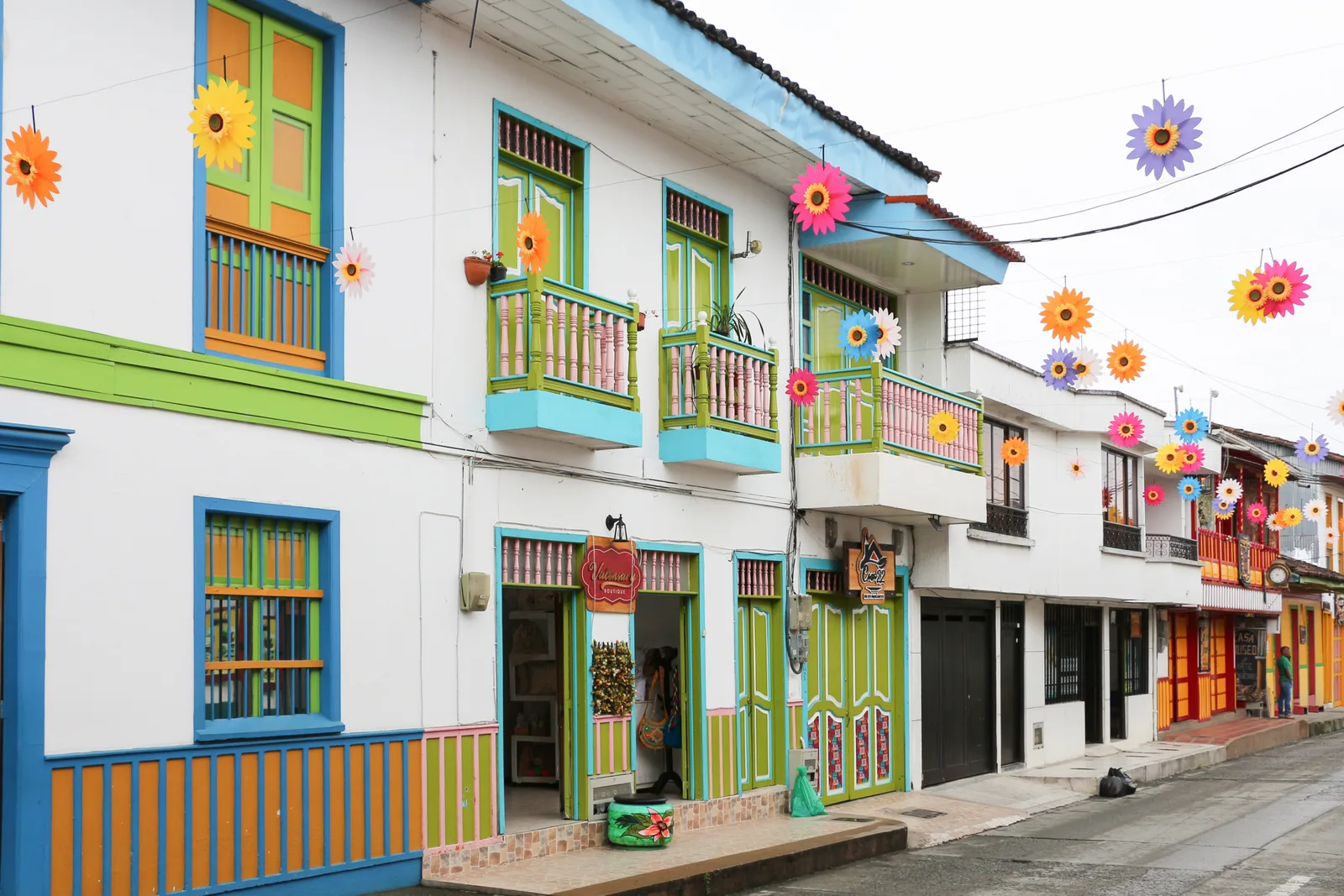
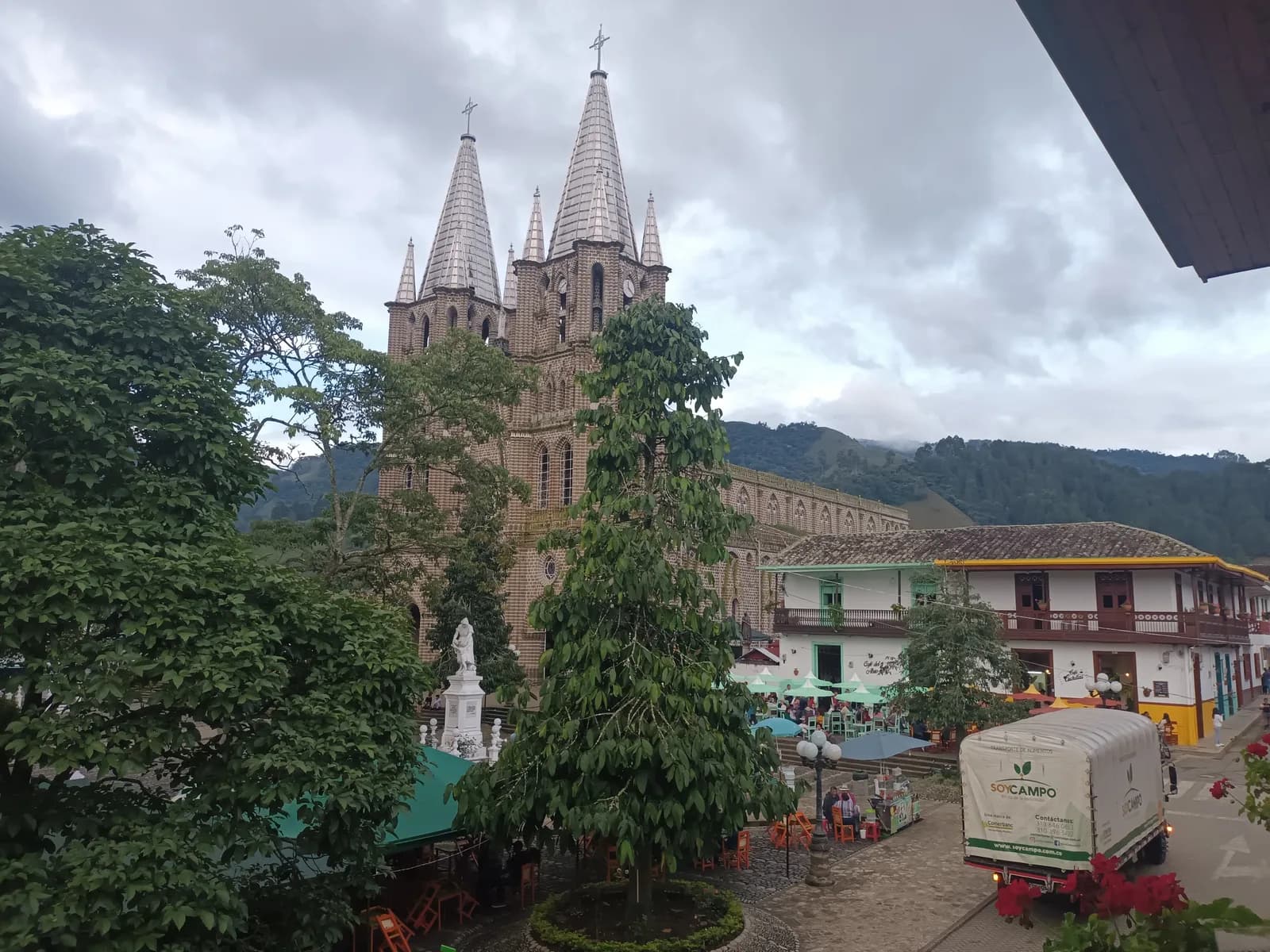
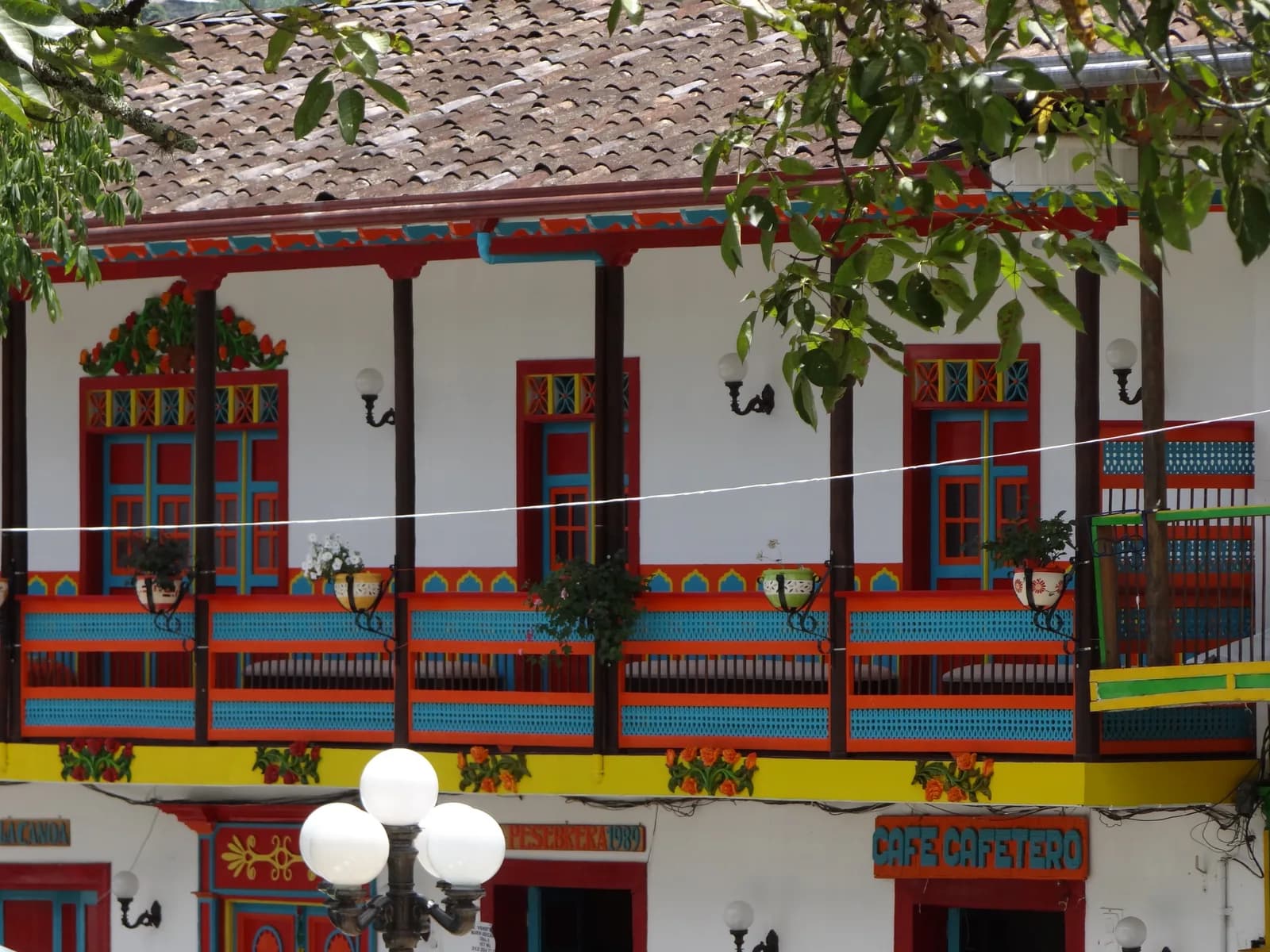
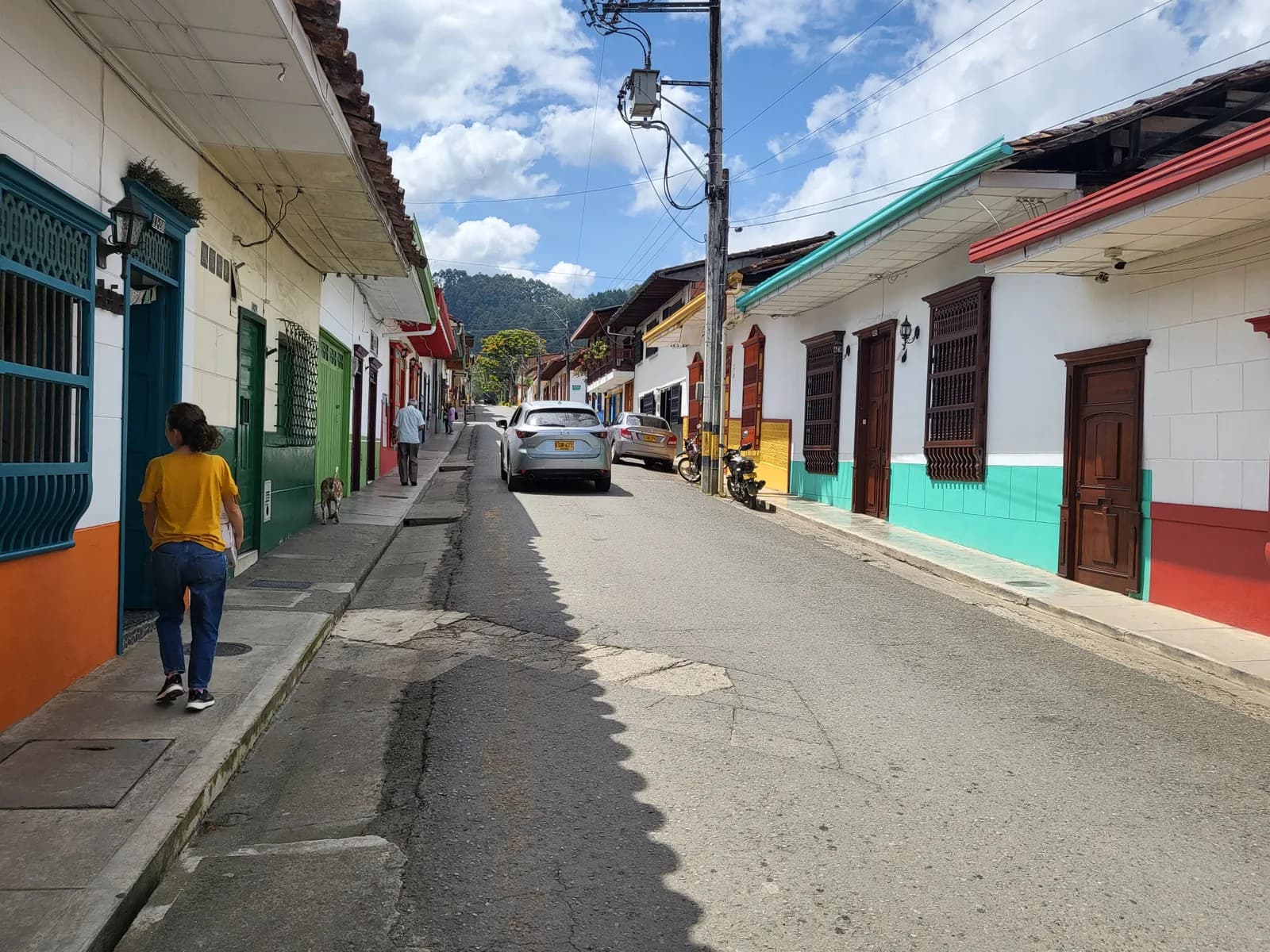
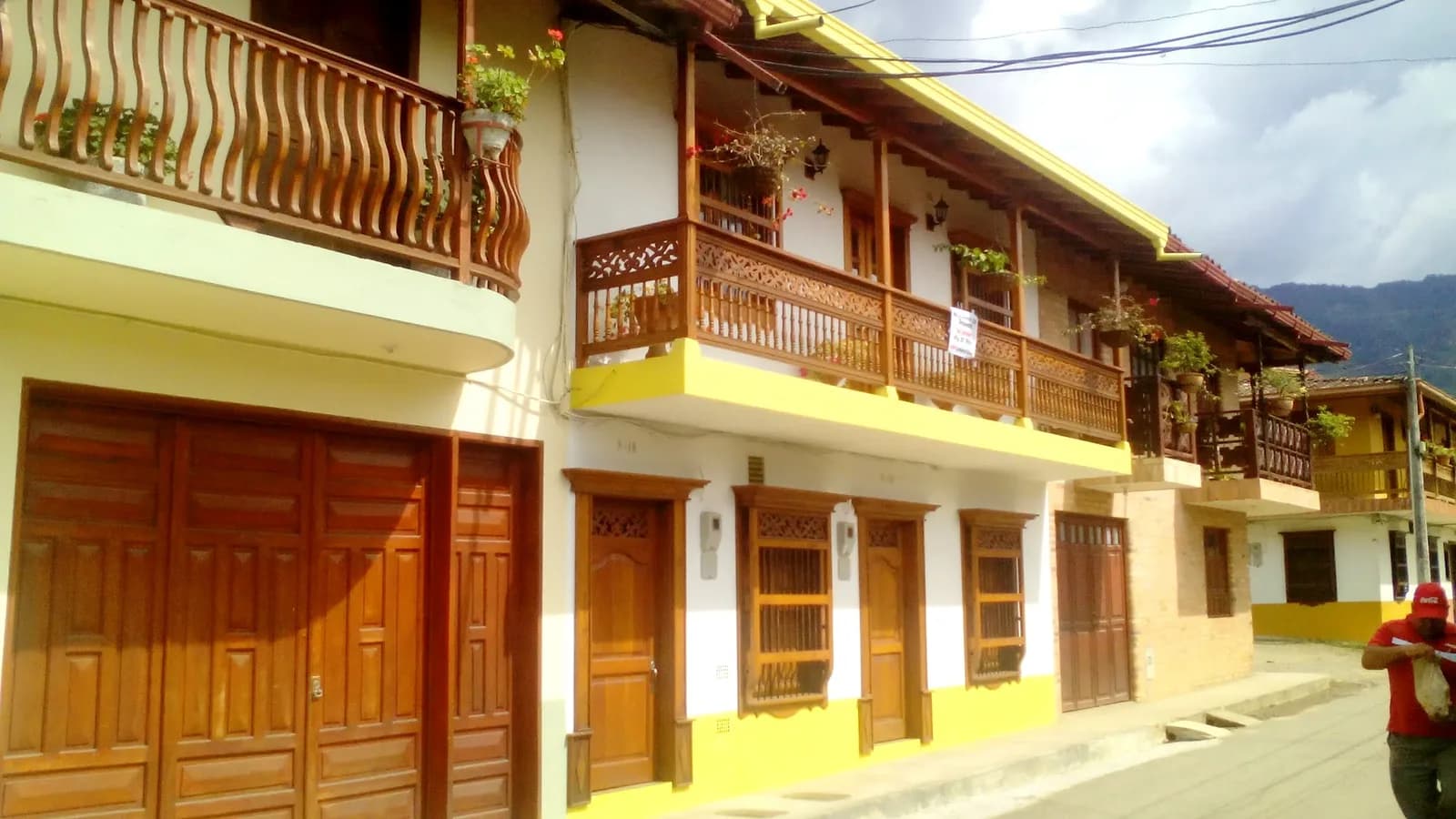
Jardín is a compact colonial grid folded into a green bowl of hills in southwest Antioquia, about 134 km from Medellín. The center of gravity is the Parque Principal, a broad cobbled square dominated by the grey stone Basílica Menor de la Inmaculada Concepción and ringed by cafés that put brightly painted wooden chairs out on the stones. Nearly everything you will book, eat or ride sits within five blocks of it. The town has been a Pueblo Patrimonio (one of Colombia's 18 designated heritage towns) for years, which is why the balconies and facades are intact rather than reconstructed.
The hills are the other half of the map. Two cable cars climb out of town: La Garrucha, the original wooden box on a wire, and the modern cabin up to the Cristo Rey viewpoint on the opposite side. Coffee farms and trout farms fill the slopes between, and the ecolodges sit up there with the views. That vertical split is the real where-to-stay question in Jardín. Down in the grid you get the plaza life and the food; up on the slopes you get silence, birds and a view over the red roofs, at the cost of a walk or a moto-taxi every time you want dinner.
Unlike Salento, which exists in English-guide terms as a staging post for Cocora Valley, Jardín's main event is the town itself. That changes the calculus: proximity to the plaza matters more here than proximity to any trailhead.
The garrucha, the cave and the birds
Three things worth booking
 The signature trip
Cueva del Esplendor half-day trip
A waterfall that pours through a hole in the roof of a cave, reached by jeep and about an hour of walking. The 80,000 COP guided price from mid-2025 includes transport, guide, snacks and entry; bring shoes you can soak.
Book this Do it here, not Salento
Coffee farm tour
Jardín's farms, Finca Milena and Finca Mariposa foremost, run small tours at roughly a third the group size of the famous Salento fincas. Milena folds the tour into the price if you sleep at its guesthouse.
Book this Best value in town
Cock-of-the-rock reserve at dusk
A tiny family-run reserve ten minutes' walk from the plaza protects a lek where crimson Andean cock-of-the-rock males display at dawn and dusk. Birders fly across continents for this; in Jardín it costs less than a coffee and cake.
Book thisThe garrucha is the thing to do first, because it doubles as orientation. The wooden car rattles across the Volcanes gorge from the edge of town up to a hillside café with the whole red-roofed grid laid out below, 6,000 COP one way or 12,000 COP return as of late 2025, running until 6pm on weekdays and 7pm on weekends. The Cristo Rey cable on the far side costs about 5,000 COP round trip and lands you at the white Christ statue with the opposite angle on the valley. Riding one up and walking back down through the coffee is the standard move, and the standard advice in recent reports is to do it before the afternoon cloud rolls in.
| Thing | Price (COP) | Notes |
|---|---|---|
| La Garrucha cable car | 6,000 one way / 12,000 return | Until 6pm weekdays, 7pm weekends |
| Cristo Rey cable car | ~5,000 return | Modern cabin, viewpoint at the top |
| Cueva del Esplendor, guided | ~80,000 | ~4 hrs, jeep + guide + snacks + entry |
| Cueva del Esplendor, independent | 20,000 entry | Plus ~3 km walk in from the gate |
| Coffee tour (Milena, Mariposa) | ~100,000 (US$25) | Free with a Finca Milena guesthouse stay |
| Gallito de roca reserve | ~US$4-5 | Go at dawn or dusk for the display |
| Bus from Medellín (Rápido Ochoa) | from ~50,000 | ~3-4 hrs, Terminal del Sur, 9 daily |
Cueva del Esplendor is the trip that fills the second day. The cave sits on private farmland in the hills above town, and the sensible way in is the roughly 80,000 COP guided half-day: jeep up, an hour or so of walking, a swim under the waterfall that drops through the cave roof, snacks on the way back. Independent visitors pay 20,000 COP at the farmhouse and add a 3 km walk from the gate. Multiple 2025 reports note the horseback variant costs more and is worth it mainly if riding is the point.
The one that surprises people is the Reserva Natural Jardín de Rocas, ten minutes' walk from the plaza, where a family protects a lek of Andean cock-of-the-rock, an absurd crimson bird that gathers at dawn and dusk to display. Entry is about US$4-5 and recent visitors describe close-range views that serious birders travel continents for. Jardín sits on a genuine birding circuit, and this is the free-throw version of it.

The plaza is the restaurant
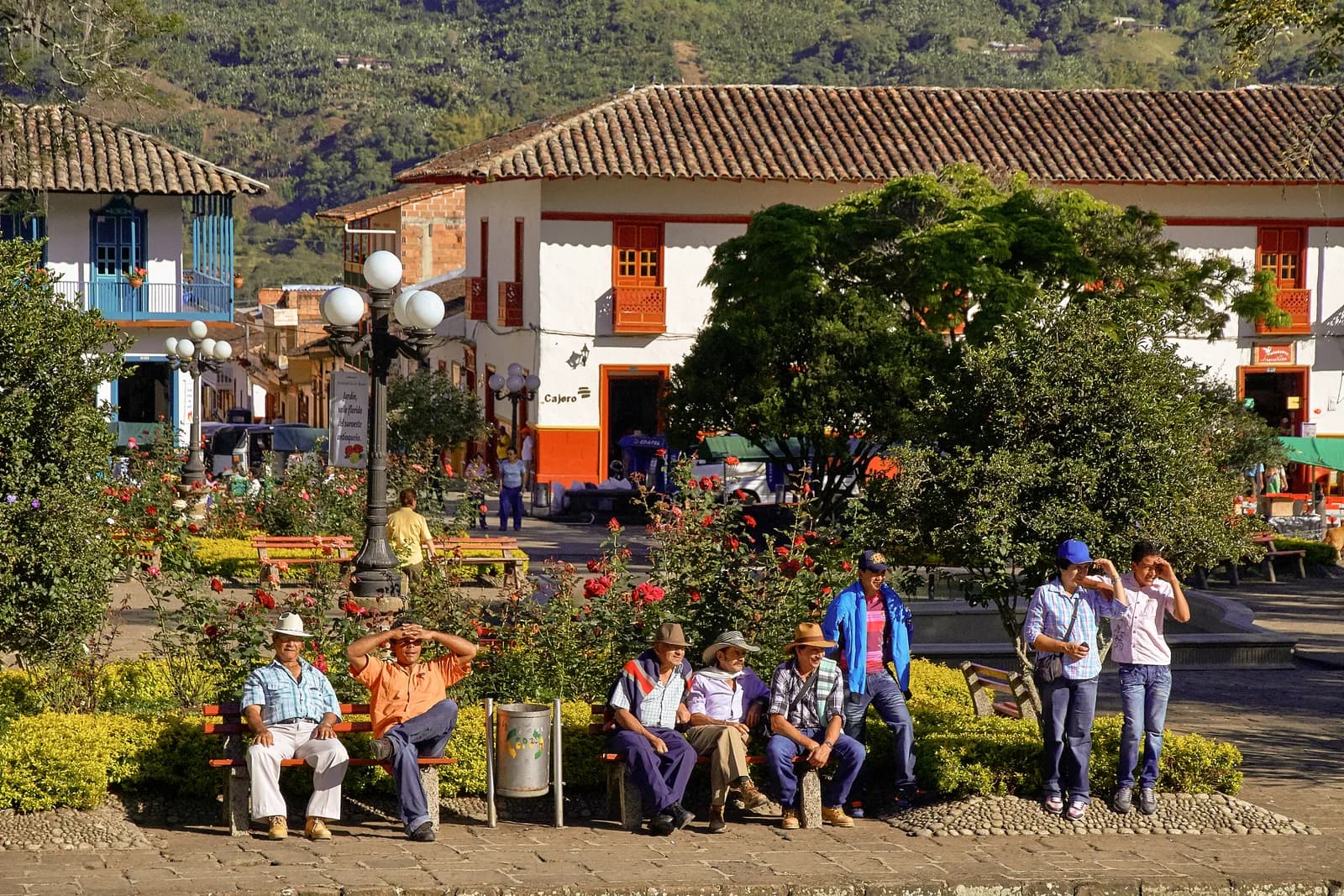
The food is why I keep circling this town from a distance. Jardín's plaza works like a giant open-air kissaten: you claim a painted chair, order one coffee, and hold the seat for an hour while horses, priests and fruit sellers move past. That ritual, coffee taken slowly in public, is the town's actual cuisine, and it is best consumed from the balcony at De Los Andes Café, which looks straight across at the basilica, or from Café Macanas on the south side of the square, a dulcería whose arequipe comes in flavors like coconut and fig.
The bakery bench is deep for a town this size. Pastelería Dulces del Jardín, founded by Mariela Arango in 1995 and now something of an institution on Calle 13, is the one recent reports name over and over, for alfajores and tres leches in particular. Between the dulcerías and the fruit stands, the smart move is to eat dessert twice a day and dinner light.
The savory anchor is trucha, the rainbow trout farmed in the cold streams above town, usually done a la plancha with a patacón underneath. Restaurante Gloria in town does the honest budget version as part of a menú del día. The better version, by most recent accounts, is out at the trout farms themselves, with Estadero El Arka the closest to town: trout eaten meters from the water it grew in, which is about as close to a mountain shokudo lunch as the Colombian Andes get. Café Europa covers the inevitable third-night pizza craving with a wood-fired oven. It is a small scene next to what the gateway city offers, and my Medellín food guide covers that side of the trip, but Jardín's version has something Medellín's does not: the whole town eats in one square, and you are in it.
Where to stay in Jardín, zone by zone
Three places to book in Jardin
 The benchmark
Casa Passiflora Hotel Boutique
Nine rooms, buffet breakfast, and the service that recent guests keep calling the best of their Colombia trip. Rates run roughly US$110-175, which buys what US$300 buys in bigger destinations. It books out first; plan weeks ahead.
Check availability Adults-only eco
Hotel Plantación
Rainwater collection, a garden that feeds the plant-based restaurant, and a quiet edge-of-town position a short walk from the square. Reviewers single out the eco concept as real rather than marketing. From about US$90.
Check availability Best value
Volarte Hotel
A newer small property scoring 9.7 across 170-plus Booking reviews, with free fruit and coffee, a guest kitchen, and a host, Gabriel, whom nearly every review names. Repeatedly called the best value of travelers' entire Colombia route.
Check availabilityStay on the plaza itself if being inside the scene is the point and you sleep like a rock. A balcony over the square is glorious at 7am and again at golden hour, and on weekend nights it is loud until late, because the plaza is also where the town drinks. Recent guests at square-facing properties flag exactly this, and the destination advice repeats it: the balcony you love at 5pm is over the party at midnight. Weekday stays soften the trade considerably.
Stay in the blocks just off the plaza for the best default in town, and probably the best boutique value in Colombia right now. This is where Casa Passiflora sits, a block and a half out, ranked first in town on Tripadvisor with guests calling it possibly the best hotel of their Colombia trip, and where Volarte puts you steps from the square at hostal prices with hotel housekeeping standards. Two minutes' walk buys you quiet nights without giving up a single café. If I were booking Jardín next week, this is the zone, and Passiflora is the room.
Stay on the edge of town if you want quiet as a feature rather than a compromise. Hotel Plantación anchors this zone: adults-only, genuinely eco-run rather than eco-labeled, with rainwater systems, a kitchen garden and a plant-based restaurant, from around US$90. Budget travelers get the same geography at 40 Amigos, ten minutes' walk out, or Hotel Kantarran from about US$40 with countryside views. The walk into the plaza stays flat and short; the walk home is dark but safe by recent accounts.
Stay in the hills and fincas for the view over the red roofs and the birdsong, accepting that dinner now requires intent. Gulupa Ecolodge is the standout here, 9.7 across 360-plus reviews, perched above town near the Cristo Rey side with a zipline, breakfasts built around its namesake fruit and owners whom guests describe as the reason they extended. Finca Milena runs a working coffee farm guesthouse and includes its well-reviewed tour in the stay. The trade is the same as every hill town: a steep walk or a moto-taxi between you and the plaza, and unlit paths after dark. Unlike Salento's finca problem, which I laid out in the Salento guide, the distances here are small enough that the hills are a real option rather than a car-owners' option.
One structural note that recent reports agree on: inventory is small. The whole boutique tier is maybe a dozen properties, Passiflora has nine rooms, and the UN Tourism listing plus the shorter drive is pulling more Medellín weekenders every month. This is a book-ahead town now, especially Friday to Sunday and any puente (Colombian long weekend).
Getting there and when to go
The route is simple because there is one of it. Rápido Ochoa runs the only direct buses from Medellín's Terminal del Sur, roughly nine departures a day from 4:45am, fares from about 50,000 COP (US$13), and the improved road has brought the run down to about three hours, closer to four in weekend traffic. Book the outbound a day or two ahead and buy the return when you arrive; weekend services sell out. Flying into Medellín's José María Córdova airport is the international entry point, and it is worth comparing fares into Medellín across dates because the domestic legs from Bogotá and Cartagena swing widely. A night either side in the gateway city is the natural shape of the trip; my where to stay in Medellín guide and things to do in Medellín cover that leg.
On timing, the weekday-versus-weekend question matters more than the season. Jardín is a genuinely Colombian destination, so Saturdays bring day-trippers, paso fino horses tied up outside the bars, and music on the plaza past midnight; Tuesday mornings bring the town back to its own rhythm. Both are worth seeing, but book the quiet zones if your stay spans a weekend. Climate is coffee-country standard: mild days, cool nights, afternoon rain possible in any month, with the drier windows roughly December to February and July to August. The drier months are also Colombian holiday season, which compounds the booking pressure.
Recommendations
- Book the blocks just off the plaza by default, and treat plaza-facing balconies as a weekday luxury, not a weekend one.
- Reserve Casa Passiflora or Hotel Plantación weeks ahead; nine rooms and an adults-only floor plan do not absorb a weekend rush.
- Ride one cable car up and walk down through the coffee, and do it in the morning before the cloud closes the view.
- Take the guided Cueva del Esplendor trip unless you actively want the 3 km walk; at about 80,000 COP with jeep, guide and entry, the tour is the better arithmetic.
- Go to the gallito de roca reserve at dusk, around 5pm, when the males display; it is a ten-minute walk and costs less than the cake you will have afterwards.
- Do your coffee tour here rather than saving it for Salento; Jardín's farms run smaller groups at lower prices, and Finca Milena includes the tour if you sleep there.
- Eat trucha at a trout farm, El Arka being the closest, rather than defaulting to a plaza restaurant.
- Save room for the bakeries: Dulces del Jardín for alfajores, Café Macanas for arequipe, and take the plaza seat for the hour it deserves.
- Buy your return bus leg the day you arrive; Sunday evening services back to Medellín fill first.
- Carry cash in small notes: the garruchas, the farmhouse gates and the fruit stands are not a card economy.
If you are weighing coffee towns against each other, the honest summary is that Jardín is where I would send someone who wants the town itself, and Salento is where I would send someone who wants Cocora; the Salento vs Filandia comparison covers the third option in that triangle. What makes Jardín specifically worth booking in 2026 is the mismatch: a UN-listed village with a three-hour road from Medellín and a boutique tier this good, still priced like nobody is looking. That mismatch never lasts. I haven't been yet, and I have written this from the pile of recent firsthand reports that finally made me want to go; if you have been more recently and something here has moved, tell me and I will update it.
Frequently asked
Where should I stay in Jardín: on the plaza or outside town?
A block or two off the plaza is the best default. You keep the café life and the restaurants within a two-minute walk but lose the weekend noise, which recent guests consistently flag as the main complaint about plaza-facing rooms on Friday and Saturday nights. Sleep on the plaza itself only if being inside the scene matters more than sleep, and go out to the hills or a finca only if you are happy planning dinner around a dark walk or a moto-taxi back.
How do you get from Medellín to Jardín?
Rápido Ochoa runs the only direct buses from Medellín's Terminal del Sur, about three hours on the improved road and closer to four with traffic, with roughly nine departures a day starting at 4:45am and fares from about 50,000 COP (US$13). The route sells out on weekends and holidays, so book the outbound a day or two ahead and buy your return leg when you arrive.
Is Jardín better than Salento?
They solve different problems. Salento is the base for Cocora Valley and has far more tourist infrastructure; Jardín is bigger on its own terms, far less international, and its plaza life is the attraction rather than a staging area for hikes. If the goal is coffee-town atmosphere with mostly Colombian visitors and a better boutique hotel for the money, Jardín currently wins. If Cocora's wax palms are the reason for the trip, that argument ends it: base in Salento.
How many days do you need in Jardín?
Two nights minimum, three if you want to do it properly. One day covers the garrucha, the plaza and a bakery crawl; a second covers Cueva del Esplendor or a coffee farm plus the cock-of-the-rock reserve at dusk. Day-tripping from Medellín exists as a tour but means six-plus hours on buses for an afternoon, which misses the point of a town whose best hours are early morning and evening.
What is the garrucha in Jardín?
The garrucha is Jardín's original cable car, a wooden box on a wire built so coffee farmers could cross the Volcanes river gorge, and it still runs from the edge of town up to a hillside café. A ride costs 6,000 COP one way or 12,000 COP return as of late 2025. A second, modern cable car climbs to the Cristo Rey viewpoint on the other side of town for about 5,000 COP round trip, so you can do a different hillside each day.
How much is the Cueva del Esplendor tour?
Guided half-day tours from Jardín run about 80,000 COP (roughly US$20) as of mid-2025, including the jeep ride up, a certified local guide, snacks and the entrance fee, with around an hour of real hiking. Going independently is possible: entry at the farmhouse is 20,000 COP per person plus a 3 km walk in from the gate. The cave itself, a waterfall pouring through a hole in the roof of a grotto, is only accessible with the fee paid either way.